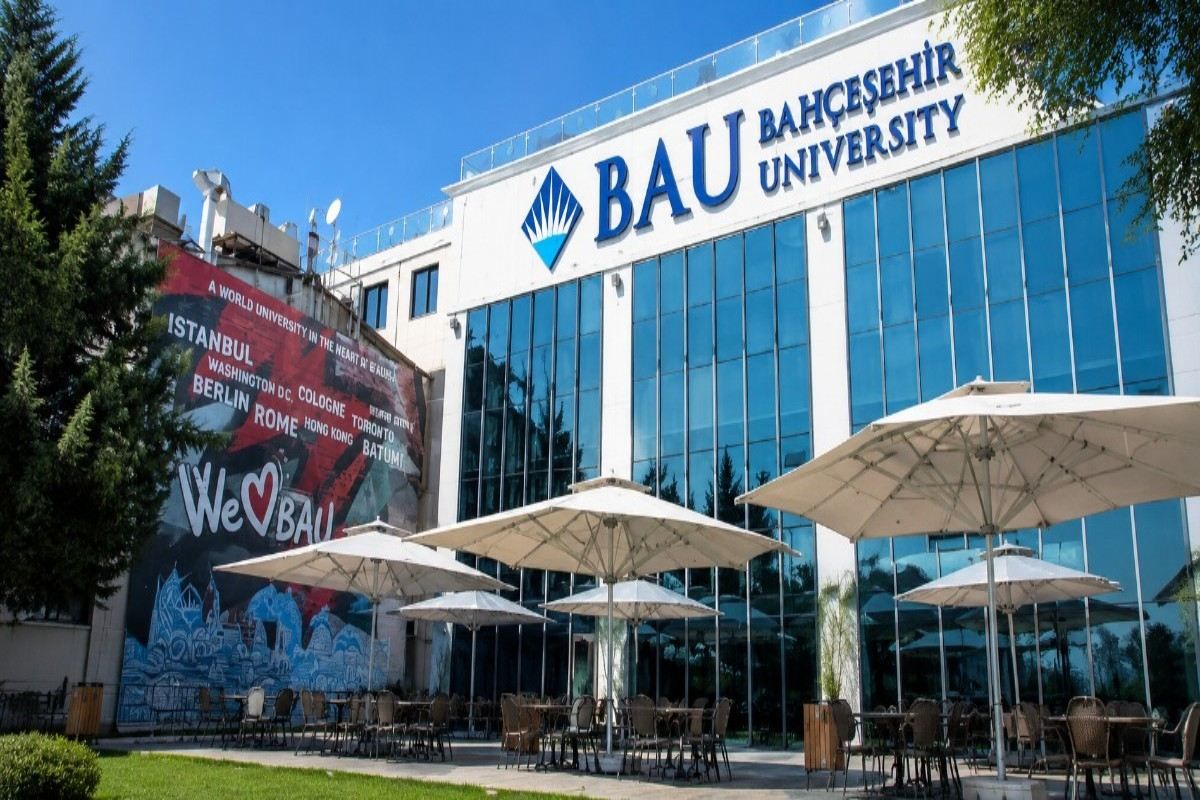
Most people just call it BAU, short for Bahçeşehir University. The wider university sits in Istanbul, spread across seven campuses on both sides of the city, with its main South Campus perched on the Bosphorus in Beşiktaş. It was founded in 1998 by the Bahçeşehir Uğur Educational Foundation, and within months signed an academic partnership with San Diego State University in California, a relationship that shaped its early identity as an internationally minded private university. Its first students enrolled for the 1999-2000 academic year, and BAU has since grown into one of Turkey's most recognised private universities, with campuses abroad in Berlin, Cologne, Hong Kong, Rome, Boston, Washington D.C. and beyond under its BAU Global network.
The Faculty of Medicine is a much later addition. It began accepting students only in the 2013-2014 academic year, formed through a partnership with Medical Park, one of Turkey's largest private hospital chains, backed by a reported 50 million dollar first-year investment into what became the BAU Medical Park Göztepe Hospital Complex. So while the university itself has been operating since the late 1990s, its medical school is closer in age to some of the newer schools covered elsewhere on this site, and it built its clinical training model from the ground up around a purpose-built private hospital partner rather than an older, inherited teaching hospital.
Here is the detail that matters most for an Indian applicant reading this page. Unlike the UK's graduate-entry schools such as Surrey, Worcester and Warwick, BAU's Faculty of Medicine does not require an existing bachelor's degree. It is a direct-entry programme, open to students straight out of high school, which puts it in a genuinely different category from those three pages and much closer to the kind of MBBS-abroad route a NEET-qualified class 12 student is usually looking for. The programme runs for six years, in line with the standard Turkish medical education structure, and is taught fully in English.
Admission does not run through the GAMSAT, UCAT or any single standardised medical entrance exam. Instead, BAU evaluates a high school transcript, with a strong emphasis on grades in biology, chemistry, physics and mathematics, alongside a personal essay covering the applicant's motivations, an interview, proof of English proficiency through IELTS, TOEFL or BAU's own English test, and any national or international exam scores the applicant chooses to submit in support, such as SAT or A-Level results. Most successful applicants report an overall academic average in the region of 80 to 90 percent. Places are genuinely limited. BAU's own admissions page states that the Faculty of Medicine admits around 36 international students a year from roughly 1,000 applications, drawn from about 25 different countries, though other sources citing more recent intakes put the figure closer to 80, suggesting the international cohort has grown gradually as the school has matured.
The course itself is unusually demanding in its structure. Classes run five days a week, from nine in the morning to five in the evening, and BAU says its curriculum includes roughly twice as many anatomy teaching hours as most comparable schools. Perhaps the most important detail for any prospective student to understand before applying is that BAU evaluates performance at the end of each academic year rather than by semester, which means there is no mid-year opportunity to retake or make up a failed term. A student who struggles in the first half of the year effectively has no safety net until the whole year is complete.
Clinical training is anchored at the BAU Medical Park Göztepe Hospital Complex, giving students a single large private hospital network for the bulk of their practical training, supplemented by the university's broader partnerships across the Medical Park hospital group. Graduates leave with a Turkish MD degree that is generally accepted internationally, including for the purposes of India's own licensing process, though it remains the applicant's own responsibility to confirm current recognition status with India's National Medical Commission before enrolling, since recognition rules can and do change over time.
Cost Breakdown
Cost Item | Amount | Notes |
Tuition Fee (International) | approx. USD 28,000/year | Fees are reviewed and subject to annual revision; confirm the current figure with BAU admissions |
Enrolment Deposit (Medicine) | USD 5,000 | Higher than the standard USD 1,000 deposit charged on most other bachelor's programmes; paid to the university's own bank account only, after a conditional offer letter |
Living Costs | approx. USD 6,000-7,000/year | Istanbul accommodation, transport, utilities and daily expenses; higher in central districts near the Bosphorus campuses |
Approximate All-In Annual Cost | approx. USD 35,000/year | Combined tuition and living costs, per independent study-abroad trackers |
Approximate Total Tuition (International, full 6-year MD) | USD 168,000+ | Based on the current USD 28,000/year rate held flat across six years; real cost will be higher once annual fee increases are applied |
Note: BAU's application process itself is free of charge, and no capitation fee is advertised. The figures above come from BAU's own published fee pages and independent study-abroad trackers as of mid-2026; always confirm the current-year figure directly with BAU admissions before applying.
Why BAU Deserves A Closer Look Than Most Guides Give It
Most generic 'study medicine in Turkey' guides mention BAU in the same breath as several other private Turkish universities, without pointing out what actually separates it from the UK schools covered elsewhere on this site. The single most useful fact for an Indian applicant is this: BAU is a direct-entry programme. There is no requirement to hold a prior bachelor's degree, unlike Surrey, Worcester or Warwick Medical School. A NEET-qualified student straight out of class 12 can realistically apply here in a way they cannot yet at those UK schools.
Many guides also gloss over BAU's annual, rather than semester-based, evaluation system. Most Western medical schools allow a struggling student to recover within a semester or retake a specific module. At BAU, performance is assessed across the whole academic year, so a difficult first term cannot easily be offset later, and there is no mid-year resit. This is a genuine structural feature of the course, not a minor administrative detail, and it deserves more attention than it usually gets in promotional material.
The deposit structure is another point worth flagging plainly. General BAU marketing often quotes a flat 1,000 US dollar deposit across its programmes, but medicine and dentistry applicants are asked for 5,000 US dollars specifically, a five-fold difference that a quick comparison table can easily obscure.
Finally, on NEET: BAU itself does not ask for a NEET score as part of its own admissions process. That does not remove the requirement from an Indian applicant's side. Indian regulations still expect a valid NEET qualification for any medical degree pursued abroad, and it remains relevant later for recognition and for sitting India's own licensing exam after graduation.