Q1. Is it compulsory to write the NEET to gain admission into the Brokenshire College School of Medicine?
+Yes. All Indians must take the exam due to the requirement of the National Medical Commission in India.
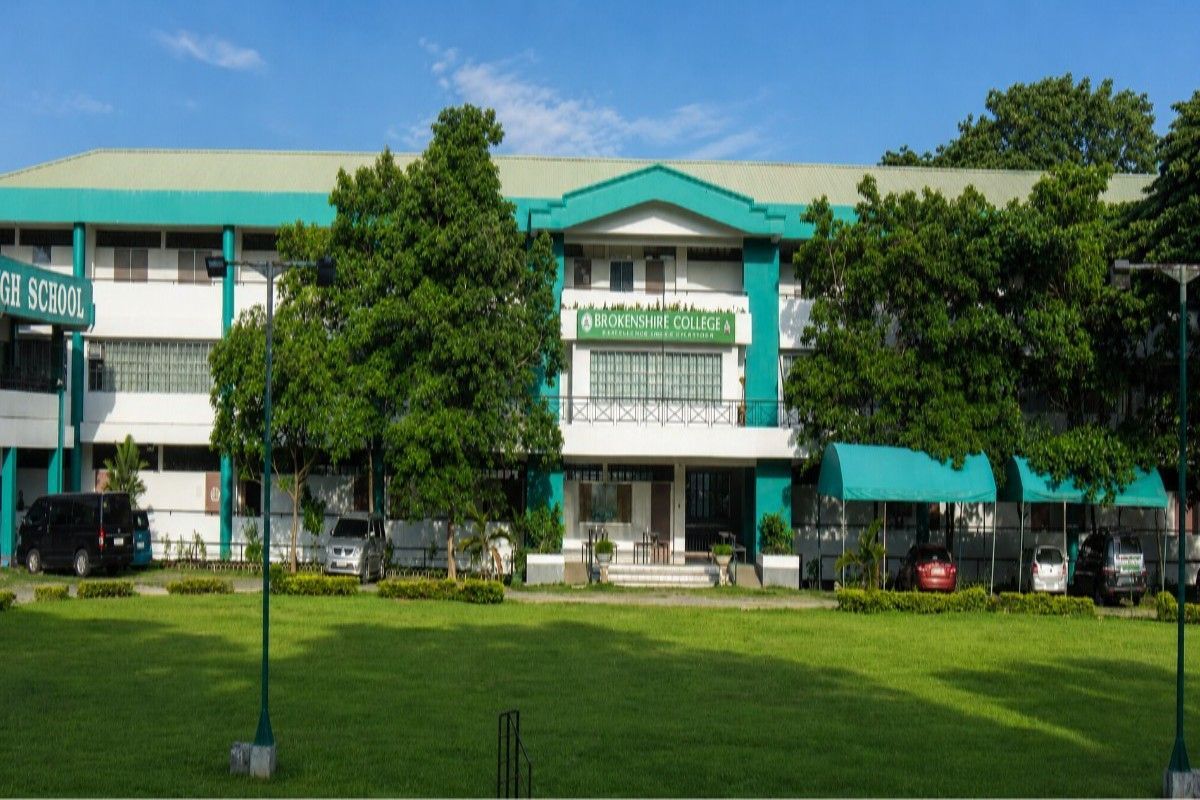
 Philippines | Est. 1954
Philippines | Accredited by the Commission on Higher Education (CHED), recognised by WHO. | English, throughout both the pre-med and MD phases medium
Expert will call you within 2 hours
About Brokenshire College School of Medicine, most blogs repeat the same two lines. Cheap fees. Indian food in the hostel. Neither line tells you why this school actually exists, or what makes it different from a dozen other Philippine medical colleges chasing Indian students. So, let's start with the real story.
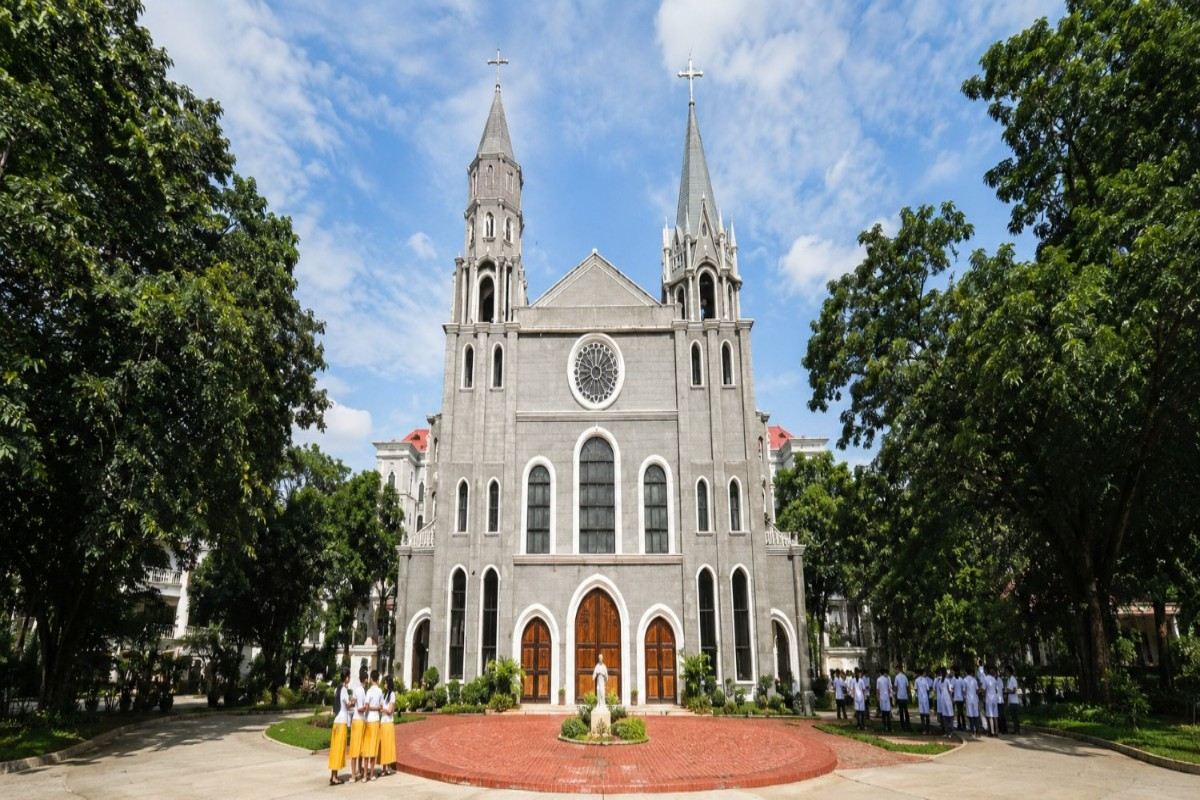
Brokenshire didn't begin as a medical college at all. In 1903, an American Red Cross nurse named Mary Matthewson opened a small clinic on the banks of the Bankerohan River to help a struggling local population that had almost no access to care. That clinic grew for decades under the United Church of Christ in the Philippines, and in 1954, it became Brokenshire College. So, this is a school with over 120 years of continuous service behind it, not a new college built purely around a foreign-student fee model. Its motto, Fides et Servitium, means faith and service in Latin, and that mission still shapes how the college talks about itself today.
Now, here's where several blogs get sloppy. Some pages list MCAT and GRE scores, or a US-style 3.0 GPA, as entry requirements. Those are American medical school tests. The Philippines doesn't use either one. Real Brokenshire admissions run on the NMAT, the Philippine National Medical Admission Test, alongside a GWA score, a transcript, and standard civil documents. That MCAT and GRE claim is a clear sign of copy-paste content built for a US audience and never corrected for this school.
Also, the course length gets reported inconsistently across the web. Some pages say 4 years. Others say 5.5. Others say 6. Here's the honest breakdown: Brokenshire runs a Bachelor of Science pre-medicine phase first, lasting about 1.5 years, built specifically for students who haven't completed an unrelated Bachelor's degree already. After that phase and a passing NMAT score, students move into the 4-year MD program. Add them together, and the realistic total for an Indian student coming straight from Class 12 is close to 5.5 years, not the flat 4 or 6 that different blogs throw around.
So, how does the admissions process actually work for an Indian student? NEET qualification is compulsory, since India's National Medical Commission requires it for any student pursuing medicine abroad. You'll also need at least 50 per cent marks in Physics, Chemistry, and Biology at the Class 12 level, and you must be at least 17 years old at the time of admission. From there, Brokenshire's own process runs an application, an NMAT and college entrance test, an interview, and finally an admission letter, followed by your student visa.
Davao City itself deserves a mention too, since almost no blog covers it. Brokenshire sits in a city shadowed by Mount Apo, the Philippines' tallest peak at nearly 2,954 meters and home to the critically endangered Philippine eagle, the country's national bird. Davao has a tropical climate with rain spread throughout the year, and it's widely regarded as one of the safest, best-organised cities in the Philippines, a fact that matters more to a parent than any ranking number.
None of this makes Brokenshire a top-tier global research university, and it shouldn't be sold as one. It's a mid-sized, faith-rooted, community-focused medical school with a long history and a real, working admission pipeline for Indian students. So, who does it actually suit? Students who want a straightforward NEET-based route into an English-medium MD, families comfortable with a smaller city over Manila or Cebu, and applicants who value a school's service history as much as its ranking number. For a student chasing a globally top-ranked name, this isn't that school. For a student who wants a genuine, working path abroad, it's a solid, honestly built one.
Quick Overview
Parameter | Details |
Origin | In 1903, it was founded as a Small Clinic by Mary Matthewson, an American Red Cross Nurse |
College Established | 1954, Under the United Church of Christ in the Philippines (UCCP) |
Location | Davao City, Mindanao, Philippines, at the Foot of Mount Apo |
University Type | Private, Non-Stock, Non-Profit, Faith-Based (UCCP-Affiliated) |
Course Duration | About 5.5 Years Total (1.5-Year Pre-Med BS + 4-Year MD), Plus a 1-Year Internship |
Medium of Instruction | English |
Entrance Test | NMAT (National Medical Admission Test), Score of 40 or Above |
NEET Requirement | Compulsory for Indian Applicants, as per NMC India Rules |
Fee Structure (2026–27, Estimated)
Fee Head | Per Year (Approx.) | Notes |
Tuition (Pre-Med BS Phase) | USD 4,500–6,000 (INR 3.8–5 Lakhs) | Covers the roughly 1.5-year pre-medicine phase before the MD begins |
Tuition (MD Program) | USD 3,200–4,000 (INR 2.7–3.4 Lakhs) | Runs across the 4-year core MD phase |
Hostel and Food | USD 1,400–2,100 (INR 1.2–1.8 Lakhs) | In-campus hostel, includes basic meals; Indian food is available in Davao City. |
Other Yearly Costs | INR 80,000–1.2 Lakhs | Books, uniforms, local transport, and small daily costs |
Total (Full 5.5-Year Program) | — | Roughly INR 22–28 Lakhs all-in, well below most Indian private medical colleges |
Note: These figures are estimates, drawn from several independent sources. Fee lists change often, so always confirm the current numbers directly with the Brokenshire College School of Medicine admissions office before making any payment.
Why Most Brokenshire Blogs Fall Short
Most Brokenshire pages online read like a template swapped in from another country. So, here's where they actually go wrong, and what they leave out.
First, the MCAT and GRE mix-up keeps showing up. At least one ranking page lists these US tests as Brokenshire requirements, alongside a 3.0 GPA cutoff. The Philippines uses the NMAT, not the MCAT or GRE, and Brokenshire's official page confirms this. That single error suggests the content was copied from an American medical school template and never fact-checked.
Second, nobody agrees on the course length, and almost no one explains why. A 4-year figure, a 5.5-year figure, and a 6-year figure all appear across different pages, often on the same site. The real answer needs both halves explained together, the pre-med BS phase plus the MD phase, not just one number picked at random.
Third, the founding story gets skipped entirely. Most pages jump straight to 1954, the year Brokenshire College formed. They miss the deeper story: a single American nurse's river-bank clinic in 1903, which quietly grew for half a century before the college even existed. That backstory tells you far more about the school's actual character than any fee table does.
Fourth, Davao City itself barely gets a mention beyond “safe” and “affordable.” Almost nothing covers Mount Apo, the Philippine eagle, or what daily life actually looks like in a mid-sized Mindanao city, details that matter to a family trying to picture five and a half years of their child's life.
Finally, what's missing everywhere is a clear-eyed take on what Brokenshire is and isn't. It's not a globally top-ranked research university, and pretending otherwise does a disservice to families. It's a smaller, mission-driven school with a genuine, working NEET-based pipeline for Indian students, and that honest framing is worth more than another recycled ranking number.
No hidden charges, no donation. The full picture of costs at MBBS in Brokenshire College School of Medicine.
Tuition Fee
USD 3,200 to 6,000, depending on the phase, among the lower-cost options in the Philippines
USD 3,200 to 6,000 a year across the 4-year core program
Hostel Fee
USD 116 to 175 a month, for in-campus, gender-separated housing
USD 116 to 175 a month for in-campus housing, with meals included
Food & Meals
INR 60,000 to 90,000, beyond hostel meals, for extras and local outings
per month
Insurance
INR 4,000 to 6,000 for mandatory, university-compliant health and visa insurance
per year
Donation
Zero donation
No capitation fees
Total Estimated Cost
Roughly INR 22 to 28 lakhs — Full 5.5-year path, plus internship-year costs
5.5-year
25–35%
Average FMGE first-attempt pass rates for students from many overseas medical universities. Students from structured programs consistently score higher.
Students returning to India need to clear the FMGE/NExT exam. MBBS in Brokenshire College School of Medicine integrates exam-oriented coaching into the regular curriculum so students are prepared from day one.
A structured program that takes you from foundational sciences to clinical mastery.
• Students sit the NMAT toward the end of this roughly 1.5-year phase, before moving into the MD program
• General biology, chemistry, physics, and English communication form the base coursework
• Basic clinical skills, such as patient history-taking, start early alongside the science load
• Anatomy, physiology, and biochemistry take over as the main subjects
• Organ-system teaching links each subject directly to common disease patterns
• Pathology, pharmacology, and microbiology dominate the coursework
• Community medicine and public-health training grow, reflecting the college's service roots
• Supervised hospital rotations start, giving students their first real patient contact
• A final licensing-exam-focused review runs alongside the last clinical rotations
• Rotations run across internal medicine, surgery, OB-GYN, and paediatrics

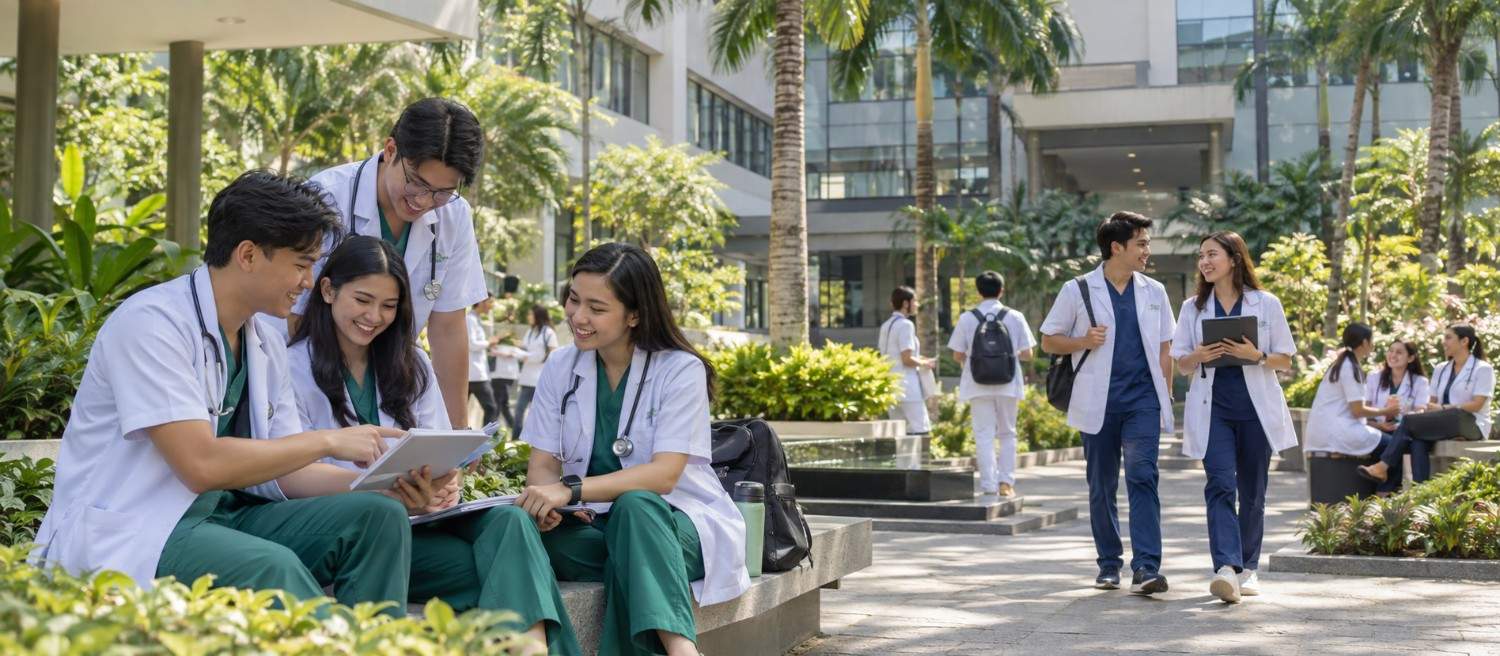
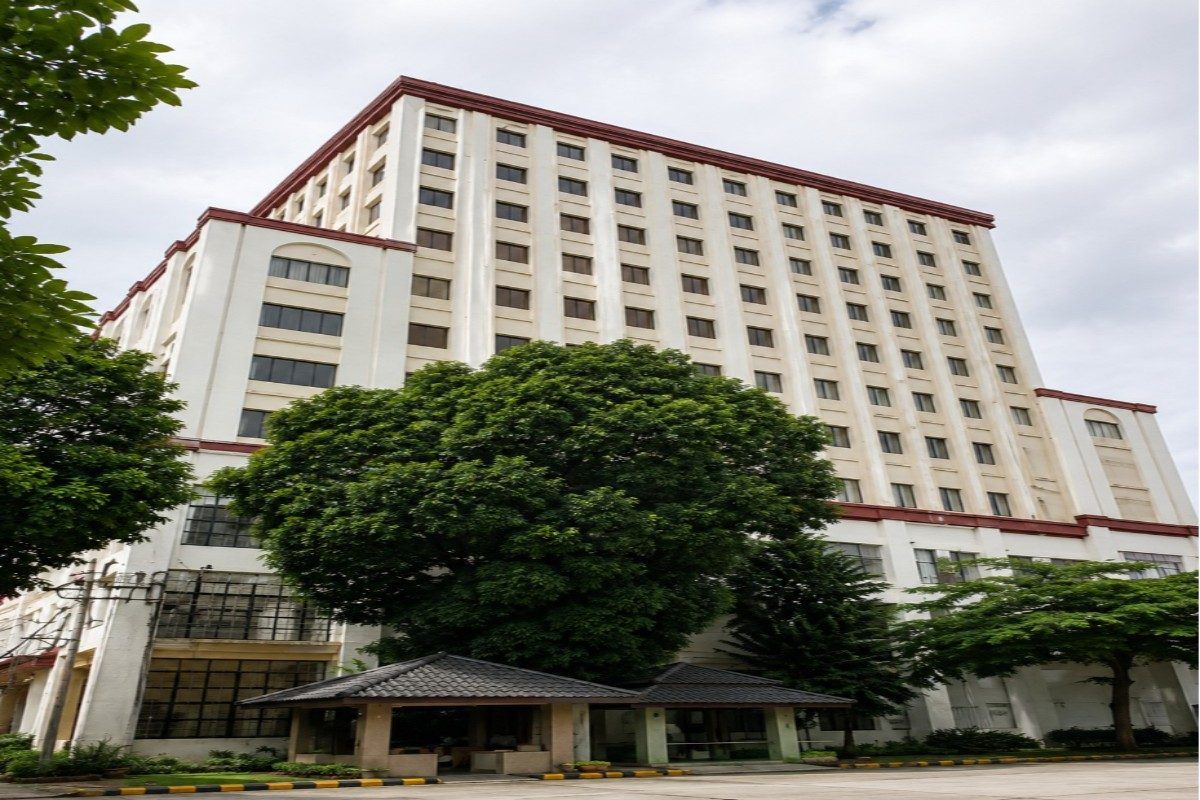
Furnished hostel rooms with Wi-Fi, laundry, 24/7 security, and Indian mess on or near campus.
Indian restaurants and mess facilities serving vegetarian and non-vegetarian home-style food daily.
Strong Indian community with cultural events, festival celebrations, and peer support groups.
Students get hands-on clinical training in government and private hospitals affiliated with the university.
Practical information for students planning to study at MBBS in Brokenshire College School of Medicine.
Prepare for all seasons. Thermal wear for winters, light clothing for summers. University provides heating in hostels.
Student visa processed with university invitation letter. Direct and connecting flights from major Indian cities.
Health insurance included in fees. Medical facility on campus plus city hospitals easily accessible.
Local SIM cards available. WhatsApp and video calls keep you connected with family back home.
Average monthly expenses of $150–$250 covering food, transport, and personal needs.
University library, online databases, and study groups. Seniors mentor juniors through academic challenges.
Our team guides you through every step — from application to arriving on campus.
The first step is to have a free phone counselling session. This is not a sales promotion or sales pitch. Here, we analyse all the universities mentioned side by side. We go through FMGE rates, total fees, city life, and whether the USMLE or NExT path better suits your goals. Most students walk out of this call with a clear first choice and a backup.
Once you pick a university, we will hand you a Philippines-specific document checklist. It is not a generic list. Every item on it is there for a reason, either for the university application, the 9(f) visa conversion, or the ACR I-Card registration. We check everything before a single paper goes anywhere.
Your application goes directly to the university through our partner channel. Most students get an acceptance letter within 10 to 21 days. However, December intake applications move faster than June ones, so timing matters. We follow up on all applications and will be in touch if there is any delay.
Once you receive your offer letter, we will have an in-depth discussion with you on the fees charged. The first instalment of fees will be deposited without any ambiguity. What you pay, when you pay, and what it covers, all of it is clear before any money moves.
Indian students do not need a pre-departure visa for the Philippines. You enter visa-free for 30 days. However, the 9(f) Student Visa conversion must start within the first week of arrival; it is time-sensitive. We also advise on the best flight route, whether Cebu or Manila, depending on your university.
About a week before you fly, we do a full pre-departure briefing. We cover accommodation options, campus location, Indian food sources near your university, how to transfer money from India, which SIM card to buy, and what the first week on campus actually looks like—students who attend this briefing land in the Philippines significantly less stressed than those who skip it.
On arrival day, our local team in the Philippines meets you at the airport, whether in Cebu or Manila. You are not landing in a new country alone. Someone who knows the ground is there from the first minute.
Within the first week, the 9(f) visa conversion process starts. Our team submits your documents to the Bureau of Immigration and closely tracks your application. The ACR I-Card, your official alien registration card, is processed at the same time. This step is strictly managed because delays here cause real problems later.
By the end of Week 2, your university enrollment is complete, your hostel room is confirmed, and your BS pre-medical orientation is done. You know your timetable, your faculty, and where everything is. Furthermore, our team has already flagged your NMAT preparation schedule, so there will be no surprises at the bridge stage.
After enrollment, our on-the-ground team in the Philippines stays in contact throughout all six years. If there is a university issue, a hostel problem, a visa renewal, or a health concern, there is a local contact to call. Moreover, from Year 3 onward, our FMGE and USMLE coaching track begins, because academic support does not stop at the airport.
Admission Helpline — Contact our counsellors for step-by-step assistance.
“The faculty here is incredibly supportive. The clinical training during hospital rotations has given me real confidence in patient care.”
“Affordable fees without compromising on quality. The campus facilities and hostel life made my transition abroad very smooth.”
“English medium instruction and WHO-recognized curriculum were the deciding factors for me. No regrets so far — excellent experience overall.”
“The university helped with everything from visa to accommodation. Hospital exposure from year three has been invaluable for my FMGE prep.”
“Just cleared my licensing exam on the first attempt. The structured coaching and mock exams during final year were a game-changer.”
“Safe campus, good food options, and a strong Indian student community. The teaching methodology is very practical and hands-on.”
Yes. All Indians must take the exam due to the requirement of the National Medical Commission in India.
Around 5.5 years. For a candidate who has just completed Class 12, it is 1.5 years of pre-medical studies, followed by 4 years in the MD course, and finally 1 year of internship.
No. That claim appears on a few blogs, but doesn't apply here. Brokenshire uses the NMAT, the standard Philippine medical admission test, not any US-style exam.
Yes. It's recognised by NMC India on the same terms as other Philippine medical colleges, meaning graduates can appear for the FMGE or NExT screening test after their MD.
Approximately INR 22-28 lakhs for 5.5 years.
Yes, Davao City offers Indian cuisine; however, availability may be lower than in big cities like Manila, and the college hostel also offers meals.
Mary Matthewson, an American Red Cross nurse, started it as a small clinic in 1903. It became Brokenshire College in 1954, under the United Church of Christ in the Philippines.
Yes, Davao is considered one of the safest and most organised cities in the country, compared with cities such as Manila and Cebu.
No donation or capitation fee has been observed at Brokenshire to date, unlike at other private medical colleges in India.
NEET-qualified students looking for a genuine, English-medium MBBS-abroad route, who are comfortable with a smaller city and a mission-driven, faith-rooted school rather than a globally top-ranked name.
Our expert counsellors will guide you through the complete admission process — from documents to airport pickup.