
1. What makes University of Cambridge School of Clinical Medicine unique?
+It combines Cambridge's collegiate system with a rigorous six-year MB BChir, including full-body dissection, one of the few UK medical schools to retain it.
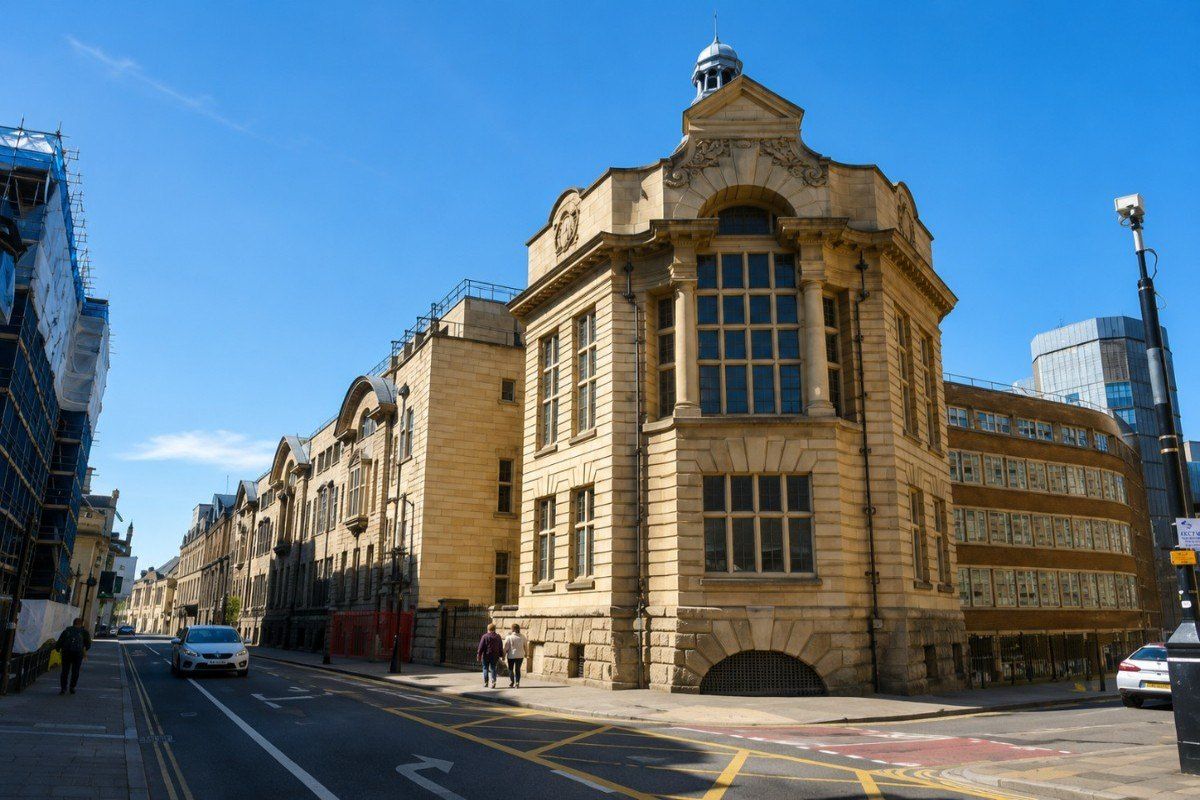
 Uk | Est. 1976
Uk | General Medical Council (GMC), United Kingdom | English medium
Expert will call you within 2 hours
The Cambridge Medicine course is not structured in the same manner as other university-run medical programs; it is taught in a School of Clinical Medicine within a University founded in 1209, making it one of the oldest still functioning universities and the first three years of the six-year program do not confer any medical qualification whatsoever – only a BA in Medical Sciences through Tripos. That is, in large part, what makes it possible for Cambridge to still teach full-body dissection of cadavers, which was abandoned by most medical schools in the UK decades ago in favor of prosection or digital anatomy.
Cambridge Medicine is often colloquially referred to as the best medical school in the UK; yet, the thing that makes its admissions procedure truly unique and set apart from Oxford, UCL or Imperial is, first of all, that it abandoned the BMAT test after 2024. Also, unlike almost all UK medical schools, Cambridge did not introduce the UCAT test after abandoning BMAT. Thus, admissions are now done based on academic grades (a standard offer of A*A*A with Chemistry), college references and an academic interview, which takes place at the applicant's college. Furthermore, there are no more than 22 to 28 places reserved for overseas fee-paying students in total across all colleges, meaning that being accepted in Cambridge is far more difficult than it may appear from the average offer rate; finally, unlike interviews at other UK medical schools, the one at Cambridge is both scientific and problem-based.
Each student of Cambridge, be it a medic or not, belongs to a college, such as Trinity, Christ's, Girton and others. Those colleges handle admissions, provide accommodation and conduct supervisions, as well as give financial assistance, which is not dependent on the department that provides lectures and exams for those students. This means that the experience of two students of Cambridge University medics may be quite different depending on which college allocated each of them, including accommodation age, supervisions and additional financial support from the college. In addition to that, a separate College fee must be paid besides the University tuition, a fee that international students are particularly supposed to pay; that is, indeed, unique among UK universities and a bit confusing for families that have budgeted just for the tuition fee that is stated on the course page.
First three years of the course comprise Medical Sciences Tripos, namely anatomy, biochemistry and physiology in Part IA, systems-based pharmacology and neuroscience in Part IB, and then a specialized Part II, which allows the students to choose and specialize in a particular topic and even to write an independent research project before receiving a BA. Clinical training starts only in the fourth year and involves Addenbrooke's Hospital, one of the biggest teaching hospitals in the country, along with GP and district hospital placements across East Anglia. One needs to note that students who complete their pre-clinical tripos in Cambridge are not automatically assigned a clinical place there and a significant portion of students moves to London teaching hospitals for their last three years of training, which may surprise some families who believe that all of the six years take place in Cambridge.
That said, the question is, of course, does any of the above justify the international tuition fee of around £70,554 per year along with College fee of £11,500 to £14,950? First of all, to be clear, Cambridge does not actually offer any kind of shortcut to become a doctor; the workload, supervisions and exams are reported to be heavier than at most other UK medical schools. Yet, the value offered in exchange for that fee is the Cambridge brand in front of a UK medical degree and almost assured entry into NHS Foundation Training; since all graduates of those courses tend to get their Foundation post regardless of the competition level, that is not too difficult a task.
Finally, one should mention that, first of all, Cambridge itself is quite small and well-known as bicycle-friendly; secondly, most of the College accommodation contracts run between 27 to 39 weeks rather than a year, which means that the students do not actually pay rent in the long vacations, although international students tend to stay on campus for research or work. All living costs (excluding tuition and College fee), including accommodation, food and all other expenses are typically about £12,000 to £15,000 a year, a sizable amount, although it is dwarfed by the tuition amount that stands next to it and, generally, one of the smallest components of studying medicine in Cambridge.
No hidden charges, no donation. The full picture of costs at MBBS in University of Cambridge School of Clinical Medicine.
Tuition Fee
Approximately GBP 70,554 (Approx. Rs. 91.72 lakh)
GBP 70,554 / Approx. Rs. 91.72 lakh
Hostel Fee
GBP 8,000–10,000 Approx /Rs. 10.40 lakh–13.00 lakh
GBP 8,000–10,000 Approx /Rs. 10.40 lakh–13.00 lakh
Food & Meals
GBP 3,500–4,500 Approx. Rs. 4.55 lakh–5.85 lakh
PER YEAR
Insurance
GBP 776 Approx. Rs. 1.01 lakh
PER YEAR
Donation
No Donation
No Hidden Fee
Total Estimated Cost
Approximately USD $789,000–$816,000 / ₹7.53 crore–₹7.79 crore
6 Year
25–35%
Average FMGE first-attempt pass rates for students from many overseas medical universities. Students from structured programs consistently score higher.
Students returning to India need to clear the FMGE/NExT exam. MBBS in University of Cambridge School of Clinical Medicine integrates exam-oriented coaching into the regular curriculum so students are prepared from day one.
A structured program that takes you from foundational sciences to clinical mastery.
• Introduction to the clinical and social context of medicine, including early patient contact
• Core pre-clinical sciences: anatomy, biochemistry and physiology, taught through lectures, full-body dissection and small-group supervisions
• Continued dissection-based anatomy alongside a growing emphasis on applying science to clinical problems
• Systems-based modules covering pharmacology, neuroscience, human reproduction and mechanisms of disease
• Completion of the Tripos, leading to the BA degree before progressing into clinical training
• In-depth study of a chosen specialist subject, often involving an independent research project or dissertation
• Training in history-taking, clinical examination and core diagnostic reasoning
• Introduction to clinical medicine and surgery through hospital-based teaching, mainly at Addenbrooke's Hospital
• Continued small-group clinical supervisions alongside hospital and general practice attachments across East Anglia
• Rotations across major specialties including general medicine, general surgery, obstetrics and gynaecology, and psychiatry
• Final preparation for qualifying examinations and provisional GMC registration
• Specialist and elective clinical placements, including options for study away from Cambridge
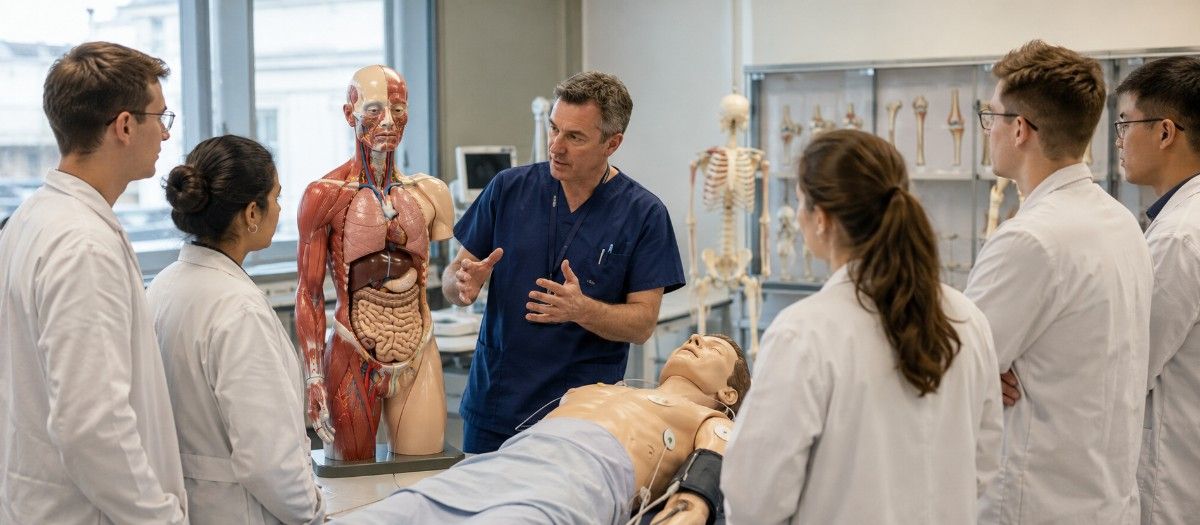

Furnished hostel rooms with Wi-Fi, laundry, 24/7 security, and Indian mess on or near campus.
Indian restaurants and mess facilities serving vegetarian and non-vegetarian home-style food daily.
Strong Indian community with cultural events, festival celebrations, and peer support groups.
Students get hands-on clinical training in government and private hospitals affiliated with the university.
Practical information for students planning to study at MBBS in University of Cambridge School of Clinical Medicine.
Prepare for all seasons. Thermal wear for winters, light clothing for summers. University provides heating in hostels.
Student visa processed with university invitation letter. Direct and connecting flights from major Indian cities.
Health insurance included in fees. Medical facility on campus plus city hospitals easily accessible.
Local SIM cards available. WhatsApp and video calls keep you connected with family back home.
Average monthly expenses of $150–$250 covering food, transport, and personal needs.
University library, online databases, and study groups. Seniors mentor juniors through academic challenges.
Our team guides you through every step — from application to arriving on campus.
Compare universities based on fees, city, UCAT requirements, and clinical exposure, starting 12–18 months before your intended entry, not the cycle you’re applying in.
Registration opens in May; the testing window runs July–September. Most successful applicants begin focused preparation 3–4 months ahead, alongside board exam preparation.
Book and complete IELTS, PTE, or TOEFL well ahead of the UCAS deadline, allowing time for a retake if needed.
Submit your application, including personal statement and up to 4 medicine choices, before the 15 October deadline.
Prepare for and attend interviews (MMI or Panel format) typically scheduled November through February.
Offers (conditional or unconditional) typically arrive through winter and spring; conditional offers require meeting stated academic and English-score conditions.
Once Class 12 results and any other conditions are confirmed, your university issues the Confirmation of Acceptance for Studies (CAS), which is required for your visa application.
Apply using your CAS reference number; arrange maintenance funds according to the 28-day rule well in advance rather than at the last minute.
Book flights, confirm accommodation, complete any on-arrival formalities during orientation week, open a local bank account, and begin building connections with your university’s Indian/South Asian student community.
Admission Helpline — Contact our counsellors for step-by-step assistance.
“The faculty here is incredibly supportive. The clinical training during hospital rotations has given me real confidence in patient care.”
“Affordable fees without compromising on quality. The campus facilities and hostel life made my transition abroad very smooth.”
“English medium instruction and WHO-recognized curriculum were the deciding factors for me. No regrets so far — excellent experience overall.”
“The university helped with everything from visa to accommodation. Hospital exposure from year three has been invaluable for my FMGE prep.”
“Just cleared my licensing exam on the first attempt. The structured coaching and mock exams during final year were a game-changer.”
“Safe campus, good food options, and a strong Indian student community. The teaching methodology is very practical and hands-on.”
It combines Cambridge's collegiate system with a rigorous six-year MB BChir, including full-body dissection, one of the few UK medical schools to retain it.
Yes. The programme is accredited by the General Medical Council and leads to provisional GMC registration on graduation.
Cambridge does not use a standardised admissions test; selection is based on academic grades, references, and a college-based subject interview.
Cambridge's own admission process does not require NEET, but Indian students should hold a valid NEET UG score for future recognition of the qualification in India.
Graduates must clear India's National Exit Test (NExT), the mandatory screening exam for all foreign medical graduates, regardless of the country they trained in.
Overseas fee-status places are strictly limited to around 22–28 per year across all Cambridge colleges combined.
Clinical teaching is based primarily at Addenbrooke's Hospital in Cambridge, along with NHS partner sites across East Anglia.
Every student belongs to a college, which provides teaching, accommodation and pastoral support, and charges a separate annual College fee alongside University tuition.
Yes. Colleges guarantee accommodation for first-year students, with contracts typically covering 27 to 39 weeks rather than a full year.
Applicants typically need academic transcripts, English proficiency scores, a passport copy, references, a personal statement, and any additional college-specified documents.
Our expert counsellors will guide you through the complete admission process — from documents to airport pickup.