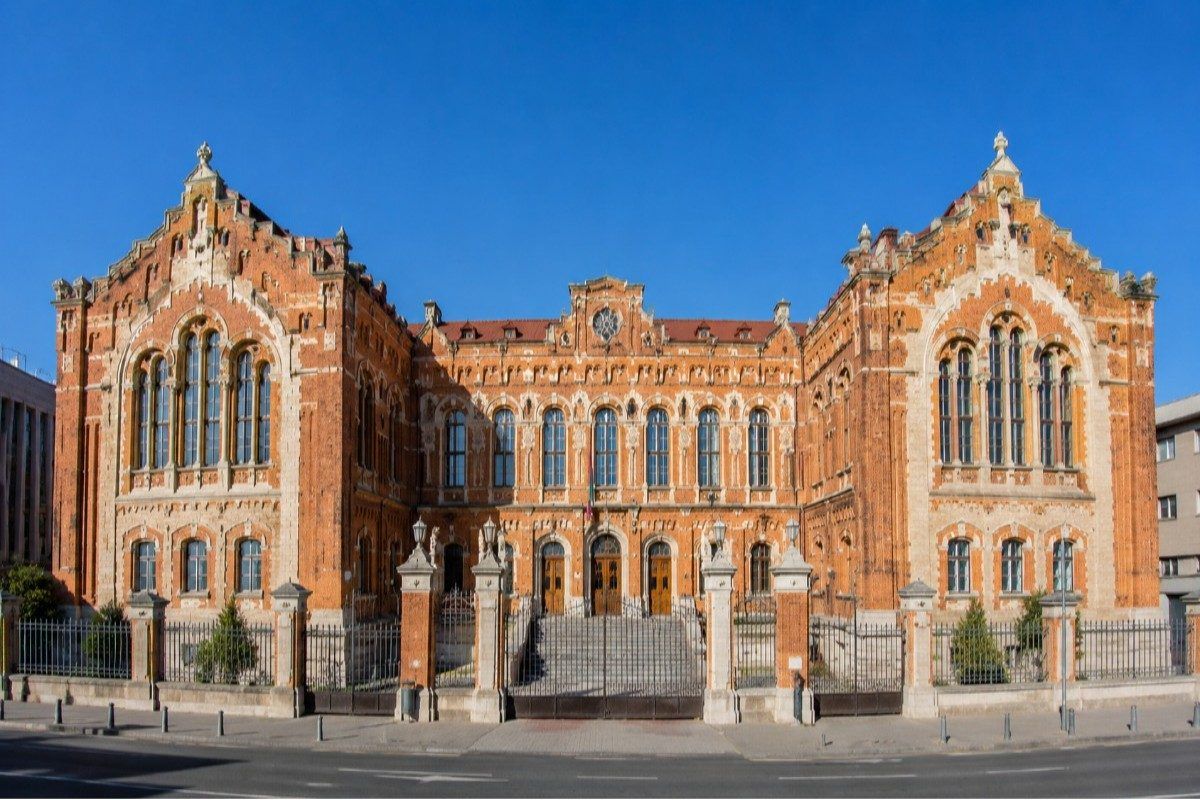
The Universidad de Oviedo was founded as a result of the legacy of a man more famous for setting fires than for founding institutions of learning. Fernando de Valdes y Salas, Archbishop of Seville and Grand Inquisitor of Castile, in his will and testament dated 1568, ordered the construction of a university in his native region of Asturias. However, he did not live to see it come to fruition, for the university that his money paid for was not founded until 1608, forty years after his death, via royal charter of King Philip III. The reason this is important is because it explains why the building that currently houses the university in Calle San Francisco still has the coat of arms of Fernando de Valdes on its facade, and also why Oviedo, a provincial capital far from the national capitals of Madrid and Barcelona, has housed one of Spain's ten oldest universities for the last four centuries.
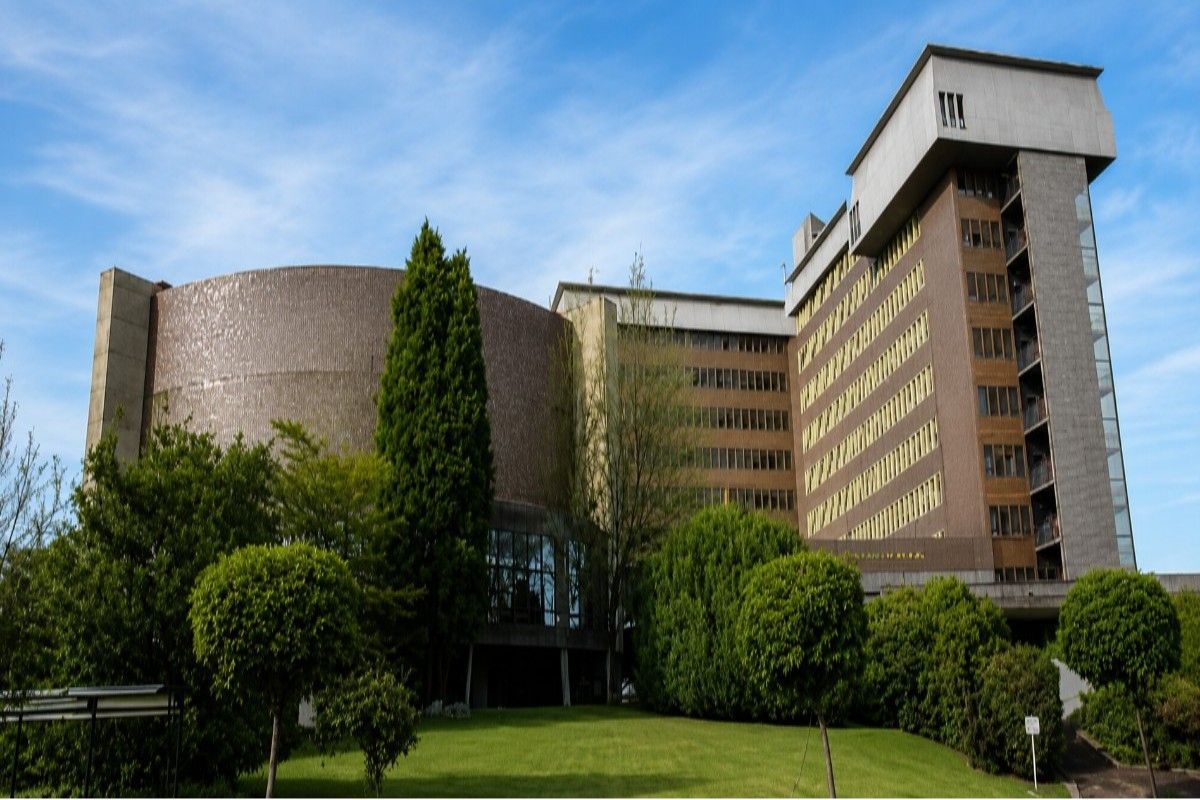
Medicine, however, has a significantly newer history at Oviedo. The subject was taught there between 1768 and 1800, and not again until the Faculty of Medicine was re-established in 1968 and began classes the following year, under Dean Antonio Perez Casas. The modern home of the Faculty, which was purpose-built on the Campus del Cristo by the architect Ignacio Alvarez Castelao, is itself now considered a historically protected building, but as medical faculties go, it dates closer to the mid-twentieth century than to the Inquisition.
While the faculty itself is relatively new compared to some others in Spain, it makes up for that in terms of the hospital attached to it. The Hospital Universitario Central de Asturias, popularly referred to by its acronym, HUCA, took up residence in its 1,039-bed hospital building in 2014. The hospital is a national centre of reference (CSUR) for Parkinson's disease surgery and skull-base surgery. The clinical training offered by the 165 medicine places at Oviedo is done almost exclusively in HUCA, which means that the third-, fourth-, and fifth-year students get all their training at the one large hospital, rather than travelling to different teaching hospitals.
So, given the well-trodden route to Georgia, Central Asia, and the Caribbean, and the fact that this is a programme of study in Spanish and not English, the obvious question posed to any Indian family considering the choice is why anyone would pick this option over one that is built around English-language courses for international medical students. The simple answer is that the Oviedo Faculty of Medicine was never meant as an international medical education product, and it shows: there is no English language track available; there is no special international admissions process; and anyone studying at the faculty would need to have fluent Spanish rather than basic conversational skills to benefit from clinical rotations. What Oviedo can offer in return is the kind of fee structure which is not found elsewhere. As Oviedo is a public university in Spain, and not an international programme of study for profit, the fees per credit are fixed by regional decree, and not based on international market rates. Even the fee charged to non-EU nationals is quite low compared to the English-language programmes in Croatia, Georgia, or the Caribbean. There is a clear target market for such a programme: someone willing to spend a year developing fluency in Spanish before entering the programme, in return for six years of medical education in the European framework for a tiny fraction of what international tuition charges usually are.
The city of Oviedo itself is an important part of that equation. It is a small, walkable provincial capital of around 220,000 inhabitants, with a reputation as the most beautiful city in Spain (which Woody Allen confirmed when he said it was the most beautiful he had ever visited; the city likes it so much that they put up a statue of him on Calle Gascona). Term-time weather is grey and rainy, owing to the Atlantic climate of the 'Green Spain', but the upside of this is that it is very easy to get to the Picos de Europa range and the beaches of Gijon, which are each just an hour's drive away. And Asturias is considerably cheaper in terms of living costs than Madrid or Barcelona, which is helpful for six years of studies.
All of that does not replace thorough work to find out how admissions work. Admission to an Indian class 12 student through credential homologation with the Ministry of Education of Spain, and through a university-access test and not through NEET or an agent-run seat allocation process. But for those that make it through the process, they get to a degree that works on Bologna-compliant ECTS credits, a hospital with decent surgical volume, and tuition that resembles that of a Spanish student, not of an international one.