Curtin Medical School is new. It started in 2017. It is the only medical school in Western Australia that takes students straight from high school. Every other WA medical school needs a degree first. Curtin built its program around one problem. Western Australia lacks doctors outside Perth. It lacks doctors who will work in rural areas. This shapes how the school teaches. It shapes how the school picks students, too.
Curtin University started in 1966. Back then, it was called WAIT. It became a full university in 1986. It has grown fast since then. Today it sits in the top 1% of universities worldwide. It holds a QS Five Stars Plus rating. Only 20 universities worldwide hold this rating. Curtin sits at 183rd in the 2026 QS World Rankings. It also runs campuses in Malaysia, Singapore, Dubai, Mauritius, and Sri Lanka. This gives it a real global reach. Over 50,000 students study at Curtin across all its campuses. This includes tens of thousands of international students from more than 130 countries.
The MBBS degree at Curtin runs for five years. It is full-time. School leavers can apply. They need a WA Certificate of Education or its equal. Graduates from any field can also apply. This runs through a separate path. International students can apply too. But most spots go to WA residents. This means a few spots will stay open for international students. Competition runs tough. Go in with clear eyes about this.
School leavers need strong marks. Entry rests on ATAR and the UCAT test. These get weighted 60:40. An interview follows for strong candidates. Recent ATARs have sat near 95. There is no fixed UCAT cut-off score. Students get ranked by their test scores instead. Graduates go another way. They must have a completed degree in any subject. They must have a GPA of 5.5 out of 7.0. They need a GAMSAT score too. They also need to pass an interview called the MMI. Chemistry matters for both paths. You can meet this through Chemistry ATAR. IB Chemistry also works. Curtin's own bridging courses work too.
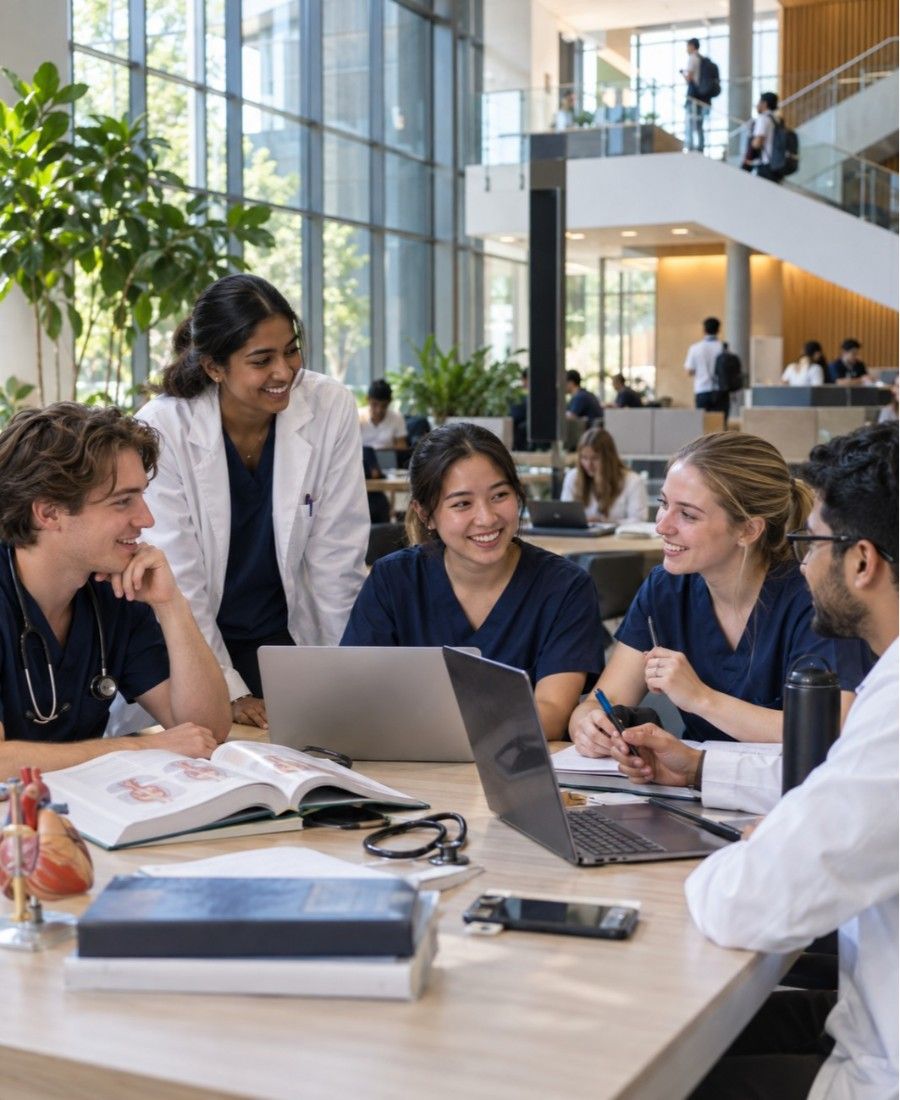
The course runs in three stages. This differs from five plain years. An early study covers basic science. This means anatomy, physiology, biochemistry, and drug science. It also covers early clinical skills. Students learn to talk with patients from year one. They do not wait for placements to start this work. Students also learn alongside other health science students during these early years. This includes nursing, pharmacy, and physiotherapy students. This mirrors how real health teams work later on. By year four, students move into full clinical work. They rotate through general practice and surgery. They also cover internal medicine and child health. All this happens under close watch. The final year goes deeper still. Students rotate through birth care, mental health, rural health, and emergency care. This year ends with strong prep for an internship.
Clinical training happens across many sites. These span Perth and regional WA. Students train at Royal Perth Hospital. They train at Fiona Stanley Hospital too. St John of God Midland Public Hospital hosts students as well. So does Peel Health Campus. Curtin Midland adds another key site. This is a new building in Midland. It sits inside a state plan. The plan turns an old industrial site into a health hub. Students get strong tools for hands-on learning there. Students also train at the Kalgoorlie Rural Health campus. This pushes training well past Perth. It reaches deep into regional WA. This fits the school's core goal well.
Research plays a real role too, even in a young medical school. Curtin runs strong programs in areas like Aboriginal health, chronic disease, and health services research. Students can join research projects during their degree. This gives them a taste of academic medicine alongside clinical training. Curtin's wider research record backs this up. Curtin scored highly in Australia's national research assessment. Most of its research fields are rated at or above a world-class level.
The findings of Curtin serve to validate its assertions. The 2026 Good Universities Guide ranks Curtin University top in the state of Washington, across most of the metrics, including the development of skills, the engagement of students and the quality of instruction, as well as the outcomes of jobs and the support of students. This is an impressive achievement for a school that only opened its doors in 2017 and shows a genuine focus on the outcomes for students. It is not merely idle chatter.
International students should know some facts first. Finishing this course does not grant automatic rights back home. Each country sets its own rules for foreign doctors. Students must check these rules themselves. Inside Australia, the university does not control internship spots. As an international student, you get no guarantee of an internship. Full doctor registration needs this internship step. This matters a lot for planning. Check current rules with the Postgraduate Medical Council of WA before you enrol.
Perth makes a strong case as a study city. It often ranks among the world's most liveable cities. Costs run lower than in Sydney or Melbourne. Students often call Perth safe and warm. Curtin's main campus sits in Bentley. This is six kilometres from Perth's centre. The campus feels like its own small city. It has cafes, labs, art spaces, and even a health clinic. The on-campus housing is near teaching buildings and sports facilities, so students seldom have to travel long distances. WA's economy leans on mining and resources. But health care ranks as a strong job sector too. This helps students who think beyond graduation.
Curtin draws a large mix of students. They come from over 130 countries. Clubs and events help new students settle in fast. Over 100 student groups run on campus. For medical students, this means real support from day one. Support services include academic advisers, counselling, and disability support, alongside services aimed specifically at international students settling into life in Perth. The medical program itself stays small. But it sits inside a big, connected university.
A degree that is recognised by the Australian Medical Council is awarded to graduates. Because of this, they are eligible for early registration. In addition, it paves the way for a year of internship under supervision. This phase is followed by the whole AHPRA registration. The majority of graduates take jobs in primary care. This is a good fit for the primary objective of the institution. As well, other avenues remain available. Both hospital specialities and rural medicine are included in this category. Students who intend to work in their home country should first investigate the local regulations. This should be done early because the rules change over time.
In short, Curtin fits a clear type of student. This student wants a modern medical path. This student cares about primary care and rural health needs. Training happens in a livable, lower-cost city. Curtin lacks the long history of older medical schools. But its early results speak well. International students should stay clear-eyed about limited spots. They should also plan around the internship gap. Still, for the right student, Curtin offers a sharp, focused path into medicine.