
Q1. When was Julius-Maximilians-Universität Würzburg founded?
+It traces back to 1402 and was re-founded in 1582 by Prince-Bishop Julius Echter von Mespelbrunn.
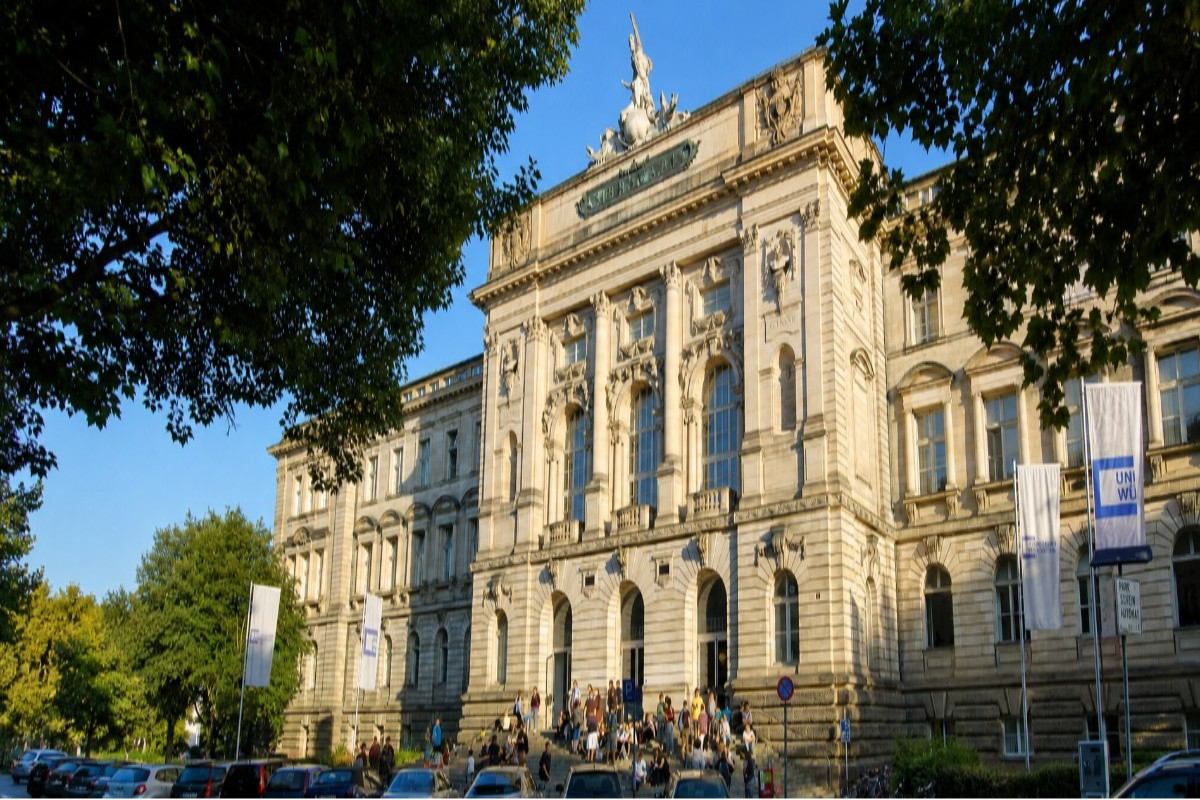
 Germany | Est. 1582
Germany | A public university under Bavarian state law. Graduates who pass the Staatsexamen and complete registration requirements receive the Approbation, Germany's medical licence to practise. | German runs through nearly all of the Humanmedizin course medium
Expert will call you within 2 hours
The University and What Makes It Different
People just call it JMU, or Uni Würzburg for short. Its roots go back to 1402. That makes it one of the oldest universities in the German-speaking world. It was actually the sixth such school founded in this region, right after Prague, Vienna, Heidelberg, Cologne, and Erfurt.
The university closed for some years after that. Prince-bishop Julius Echter von Mespelbrunn reopened it in 1582. His name and that of Bavarian King Maximilian Joseph both live on in the university's title today.
Here is a fact most study-abroad guides skip. Wilhelm Conrad Röntgen discovered X-rays right here, in 1895. He later won the first-ever Nobel Prize in Physics for that work. Fourteen Nobel laureates carry some connection to this university, and several worked directly in medicine.
This is a public university. The Free State of Bavaria runs it, not a private trust. So it does not chase profit the way some private medical colleges do. Around 25,000 students study here in total, and roughly one in ten comes from outside Germany.
Medical training runs through the university's own teaching hospital, Universitätsklinikum Würzburg. Reports place its structure at around 20 specialist clinics and 14 scientific institutes, staffed by close to 120 professors. So students see real depth here, not just a single hospital wing.
The Würzburg Campus and Its Setting
Würzburg sits in Bavaria, on the Main river, roughly 100 kilometres from Frankfurt. The old town holds the Baroque Würzburg Residence, a UNESCO World Heritage site, right beside the historic Old University building. So daily campus life happens beside genuine architectural history.
Newer teaching spaces sit on the Hubland plateau. This expansion began in the 1960s. A further 39-hectare area, Campus Nord, joined it in 2011. So students move between centuries-old lecture halls and fresh, modern labs, often within the same week.
The university hospital campus sits a short ride from the main university grounds. Clinical years and the practical year both run through this hospital site. So the classroom-to-clinic jump feels less disjointed than at many schools.
Course Structure, Cost, and Practical Details
Here is where this page has to be direct with you. Medicine at Würzburg is not an MBBS degree. It is Huma\nmedizin, and it ends in a Staatsexamen, a State Examination, under German law. The qualification is different in name, though the training covers similar clinical ground.
The standard course length runs about 12 to 13 semesters. That works out to roughly six years and three months, including the mandatory practical year and final exams. The path splits into a preclinical phase, a clinical phase, and then the practical year itself.
Teaching happens almost entirely in German. This is not a program built around English-medium instruction. So a strong, certified level of German, usually DSH-2 or an equivalent TestDaF score, is expected before you can even begin.
Admission does not work like most private overseas medical colleges either. You cannot apply straight to the university for this course. Seats are nationally restricted and allocated centrally, through Germany's Stiftung für Hochschulzulassung, using a mix of Abitur-equivalent grades, aptitude test scores, and the university's own selection criteria. So competition runs nationwide, not just within one college's applicant pool.
On tuition, there is genuinely good news. Bavaria charges no tuition fees at its public universities, medicine included. You still pay a semester contribution, though. Reports place this at roughly EUR 150 to 250 per semester, covering student services and a public transport ticket, not the degree itself.
Quick Overview
Parameter | Details |
Founded | 1402; re-founded in 1582 by Prince-Bishop Julius Echter von Mespelbrunn |
Institution Type | Public state university, run by the Free State of Bavaria |
Location | Würzburg, Bavaria, Germany (about 100 km from Frankfurt) |
Programme | Humanmedizin (Medicine), leading to the German Staatsexamen |
Duration | Around 12 to 13 semesters (about 6 years, 3 months), including the practical year |
Medium of Instruction | German; certified German proficiency (e.g., DSH-2 or TestDaF) is required |
Centrally managed nationwide through Stiftung für Hochschulzulassung; not a direct university application | |
Teaching Hospital | Universitätsklinikum Würzburg (around 20 specialist clinics) |
Fee Structure
Fee Component | Amount | Notes |
Tuition Fee | None | Bavaria charges no tuition fees at public universities |
Semester Contribution | Approx. EUR 150 to 250 per semester | Covers student services and a public transport ticket |
Living Costs (rent) | Approx. EUR 300 to 500 per month | Depends on hostel, shared flat, or private rental |
Food and Other Costs | Approx. EUR 400 to 500 per month | Groceries, personal expenses, and leisure |
Health Insurance | Around EUR 100 to 120 per month | Mandatory for all students in Germany |
Donation | No Donation | No capitation fees exist under German public law |
Why Julius-Maximilians-Universität Würzburg Deserves a Harder Look Than You've Given It
A University Tied to Real Scientific History
Most rival pages skim past this. Röntgen's discovery of X-rays did not happen in some generic old lab. It happened at this exact university, in 1895. Add fourteen Nobel-linked names across the institution's history, and you get a research culture that shows up in actual output, not just prospectus copy.
A Teaching Hospital Built for Depth, Not Just Numbers
Many guides quote bed counts and stop there. Würzburg's structure runs differently. Around 20 specialist clinics and 14 scientific institutes sit inside one teaching hospital network. So students rotate through genuine subspecialty depth, not one crowded general ward.
Honest Assessment
Be clear about a few real points here. This is not a typical "study medicine abroad" pathway built for international, fee-paying applicants. German fluency is not optional, and it must be certified before entry. Seats are won through a competitive, nationwide German process, not a college-specific admission office. So, who fits here best? Students who already speak strong German, or plan to invest years reaching that level, fit well. Students hoping for a quick, English-medium route into a medical degree should look elsewhere. Still, for those willing to meet its language and academic bar, Würzburg's low-cost structure and research pedigree are genuinely hard to match.
No hidden charges, no donation. The full picture of costs at MBBS in Julius Maximilian University of Würzburg.
Tuition Fee
€182.10 per semester
None — Public Bavarian universities charge no tuition for medicine
Hostel Fee
€375/month for housing within its €1,000/month overall living-cost estimate.
approximately €27,000
Food & Meals
EUR 400 to 500
per month
Insurance
EUR 100 to 120 mandatory
Per month
Donation
no donation
no hidden fee
Total Estimated Cost
Confirm directly with the university — Living costs form the bulk of total spending, not tuition
6 year
25–35%
Average FMGE first-attempt pass rates for students from many overseas medical universities. Students from structured programs consistently score higher.
Students returning to India need to clear the FMGE/NExT exam. MBBS in Julius Maximilian University of Würzburg integrates exam-oriented coaching into the regular curriculum so students are prepared from day one.
A structured program that takes you from foundational sciences to clinical mastery.
• Ends with the Physikum, the first major state examination stage.
• Covers Anatomy, Physiology, Biochemistry, and core scientific foundations.
• Training runs largely through Universitätsklinikum Würzburg.
• Covers Internal Medicine, Surgery, Paediatrics, Obstetrics and Gynaecology.
• Leads into the final Staatsexamen and, on completion, the Approbation licence.
• A full year of supervised clinical rotations across major departments.
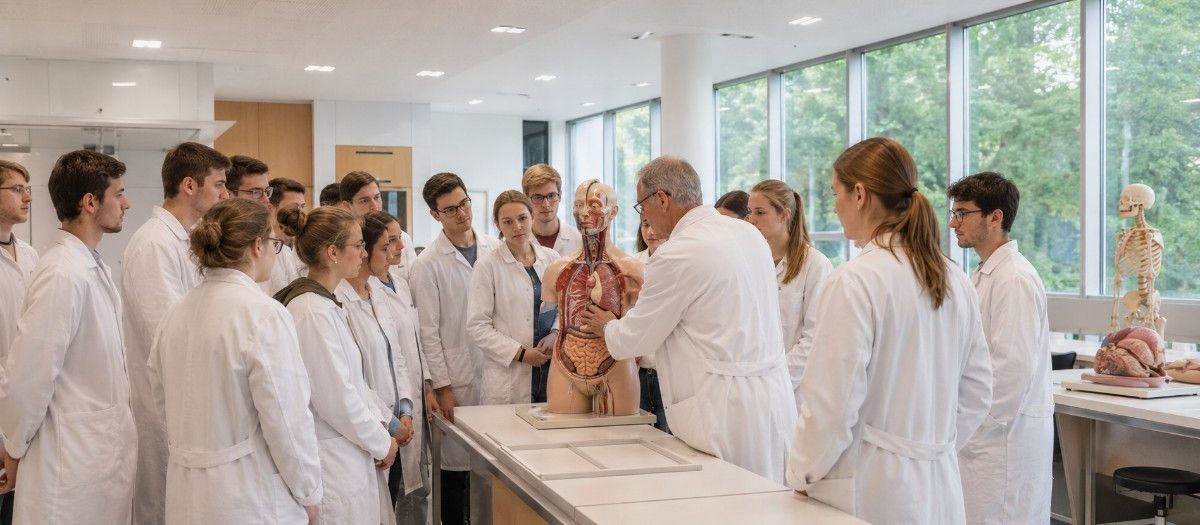

Furnished hostel rooms with Wi-Fi, laundry, 24/7 security, and Indian mess on or near campus.
Indian restaurants and mess facilities serving vegetarian and non-vegetarian home-style food daily.
Strong Indian community with cultural events, festival celebrations, and peer support groups.
Students get hands-on clinical training in government and private hospitals affiliated with the university.
Practical information for students planning to study at MBBS in Julius Maximilian University of Würzburg.
Prepare for all seasons. Thermal wear for winters, light clothing for summers. University provides heating in hostels.
Student visa processed with university invitation letter. Direct and connecting flights from major Indian cities.
Health insurance included in fees. Medical facility on campus plus city hospitals easily accessible.
Local SIM cards available. WhatsApp and video calls keep you connected with family back home.
Average monthly expenses of $150–$250 covering food, transport, and personal needs.
University library, online databases, and study groups. Seniors mentor juniors through academic challenges.
Our team guides you through every step — from application to arriving on campus.
Begin German lessons as early as possible, ideally alongside Class 11–12, targeting B1 within 12 months and progressing toward the required B2–C1 level.
Submit Class 10, 12, and any higher-education transcripts for verification. Processing typically takes 3–5 weeks; apply early, since this gates every subsequent step.
portal and apply to the correct track, the M-Kurs for medical aspirants, at your shortlisted Studienkolleg institutions.
Complete the roughly 10–12 month M-Kurs program covering Biology, Chemistry, Physics, and German, then pass the Feststellungsprüfung (FSP), the qualifying exam for university entry.
Submit applications to your shortlisted universities. Uni-assist fees run €75 for the first program and €30 for each additional program in the same semester.
University decisions follow Uni-assist’s document evaluation and forwarding; final admission is always the university’s own decision.
Deposit €11,904 into a blocked account (via Fintiba, Expatrio, or a similar provider) and arrange either public (€140–€160/month) or private health insurance; both are mandatory prerequisites for the visa stage.
Submit your visa application at the German consulate in India (Delhi, Mumbai, Bengaluru, or Chennai), with your admission letter, APS certificate, language proficiency proof, blocked account confirmation, and insurance proof. Realistic processing time is 6–12 weeks.
Bring originals of every document submitted digitally. Be prepared to discuss your study plans, financial arrangements, and reasons for choosing Germany.
Book travel around your intake date (October for Winter, April for Summer), and complete formal university enrollment on arrival. Medical study then begins with the Pre-Clinical phase.
Admission Helpline — Contact our counsellors for step-by-step assistance.
“The faculty here is incredibly supportive. The clinical training during hospital rotations has given me real confidence in patient care.”
“Affordable fees without compromising on quality. The campus facilities and hostel life made my transition abroad very smooth.”
“English medium instruction and WHO-recognized curriculum were the deciding factors for me. No regrets so far — excellent experience overall.”
“The university helped with everything from visa to accommodation. Hospital exposure from year three has been invaluable for my FMGE prep.”
“Just cleared my licensing exam on the first attempt. The structured coaching and mock exams during final year were a game-changer.”
“Safe campus, good food options, and a strong Indian student community. The teaching methodology is very practical and hands-on.”
It traces back to 1402 and was re-founded in 1582 by Prince-Bishop Julius Echter von Mespelbrunn.
Around 12 to 13 semesters, roughly six years and three months, including the practical year.
No. Humanmedizin is taught almost entirely in German, and certified proficiency is required beforehand.
No. Seats go through Germany's centralised admission body, Stiftung für Hochschulzulassung.
No tuition applies at Bavaria's public universities, though a small semester contribution is required.
Graduates receive a Staatsexamen and, after registration, the Approbation, Germany's medical practice licence.
Yes, Universitätsklinikum Würzburg, with around 20 specialist clinics, serves as its main teaching hospital.
Not automatically. Indian graduates would still need to clear India's usual foreign-degree licensing route, such as NExT.
It is a public university, run by the Free State of Bavaria.
Yes, Wilhelm Conrad Röntgen discovered X-rays here in 1895, and fourteen Nobel laureates are linked to the university overall.


Our expert counsellors will guide you through the complete admission process — from documents to airport pickup.