
1. Is this program taught in English?
+Yes, on the 6-year track; a separate 7-year track is taught in Russian.
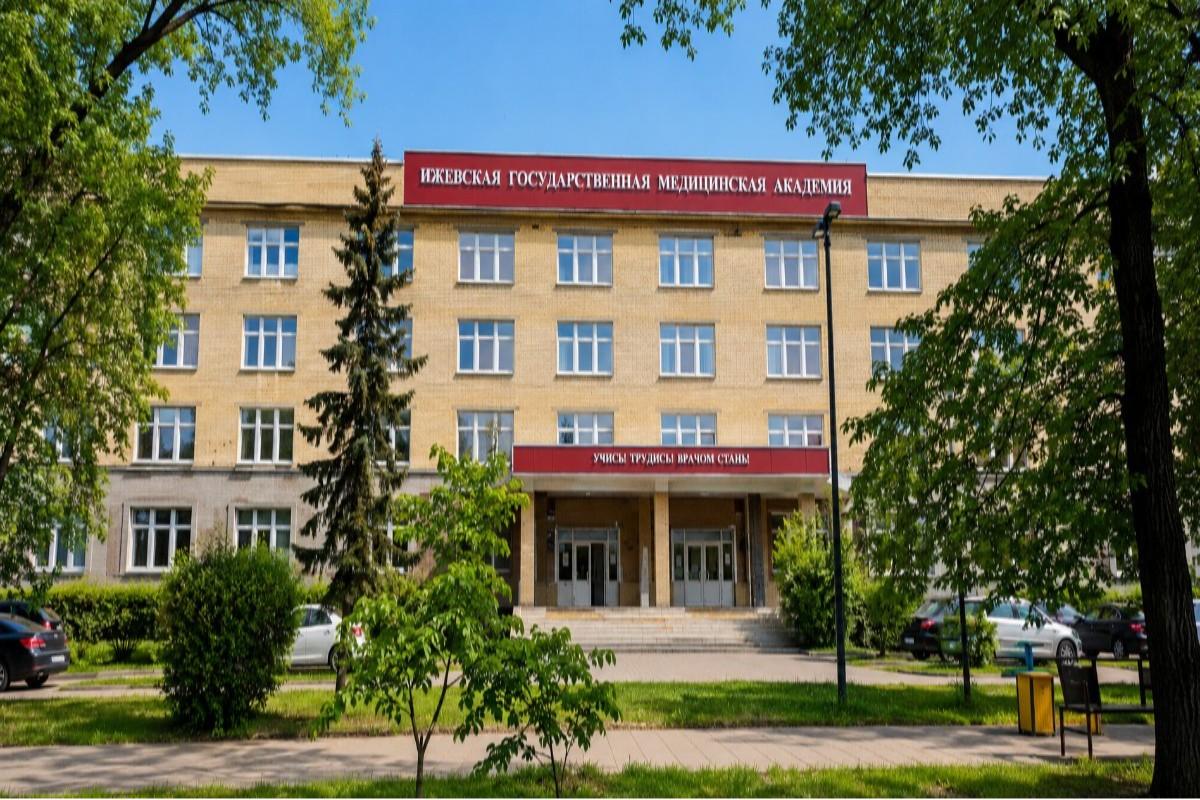
 Russia | Est. 1994
Russia | Recognised by Russia's Ministry of Science and Higher Education. Consistently described across multiple independent sources as recognised by the WHO (WDOMS listed), India's NMC, ECFMG (USA), the Australian Medical Council (AMC), the UK's GMC, and FAIMER | English (6-year track) or Russian (7-year track) medium
Expert will call you within 2 hours
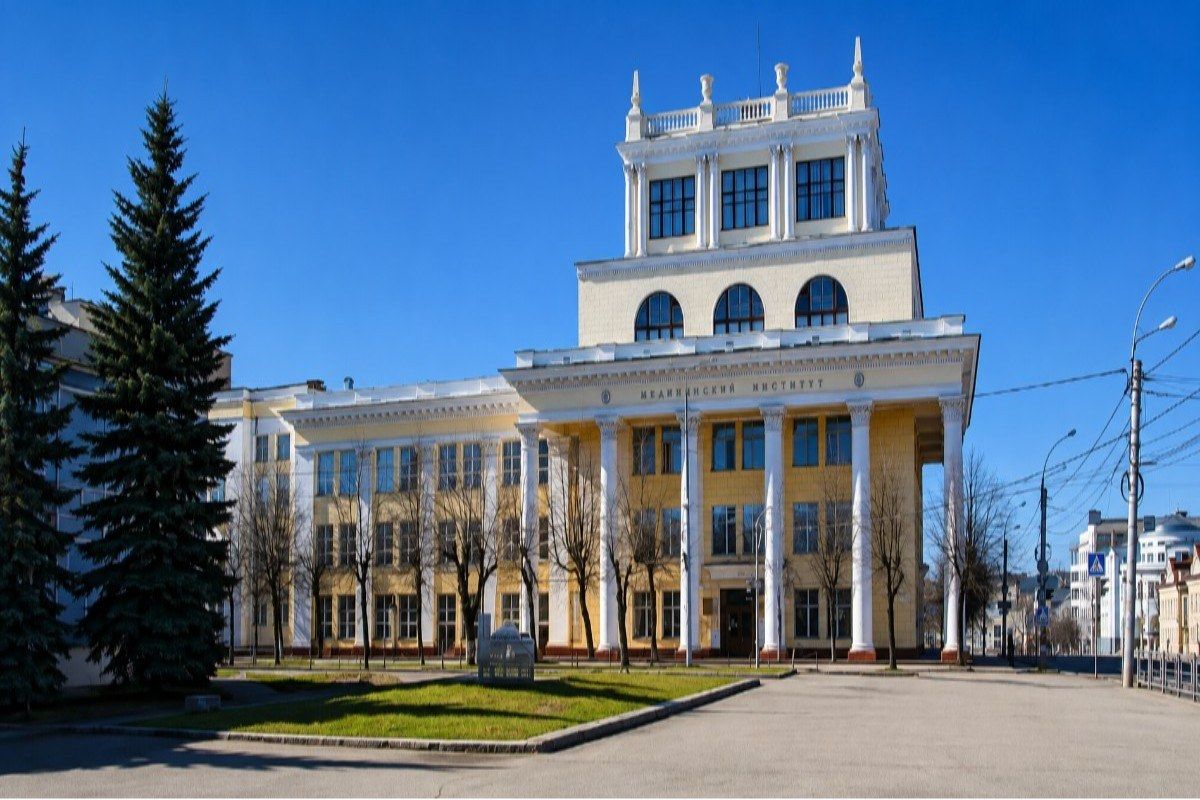
Khakas State University, or KhSU, is in Abakan, which is the capital of the Republic of Khakassia and is in the southern part of Siberia. Different sources disagree on when the university was founded, which is something that should be brought up right away. Two different sources say that the university was started in 1939 as a teacher's institute. This gives it more than 85 years of history, and one source says that it has been training people for 83 years. Instead, two different sources say that it was founded in 1994, calling it a "31-year-old" institution as of a recent review. There is a big gap here—more than fifty years—and it's likely because this university is older than a few of the others in this series. At some point, it changed its name, form, or legal status, and different sources started counting from different points. People who want to attend the university should directly ask the institution what date it uses as its official founding year. This is important for understanding how long the school has been around.
It does not matter what time it is; the university is now the largest school in the Republic of Khakassia. Their school is open to everyone and doesn't make money. The Russian Ministry of Science and Higher Education recognizes it. It is not a separate medical college; it is a big university with many different departments. College of Medicine is part of the Institute of Medicine, Psychology, and Sociology. The university has many schools. This means that medical students can get to know the whole university campus and community, not just a small group of people working toward a single goal. Different sources say that there are between 6,000 and 7,000 students at the university as a whole. When we compare it to some of the bigger, more diverse Russian universities we've talked about so far, this school is really medium-sized.
The framework of the MBBS program is very helpful, and you should fully understand it. Students who study English do it for six years, while students who study Russian do it for seven years. Different students choose different language tracks, and the program lasts a different amount of time. The shorter six-year structure is for international students who want to focus on the English-medium track. Most of the other Russian medical schools in this line are built in the same way. The course work for the six-year track is spread out over twelve quarters. Anatomy and histology are taught in the first two semesters. Biochemistry and physiology are taught in the third and fourth semesters, and pathology, microbiology, and medicine are taught in the fifth and sixth. You will do practical work in oncology, internal medicine, neurology, psychiatry, pediatrics, general surgery, gynecology, ENT, emergency medicine, and cardiology over the last few semesters.
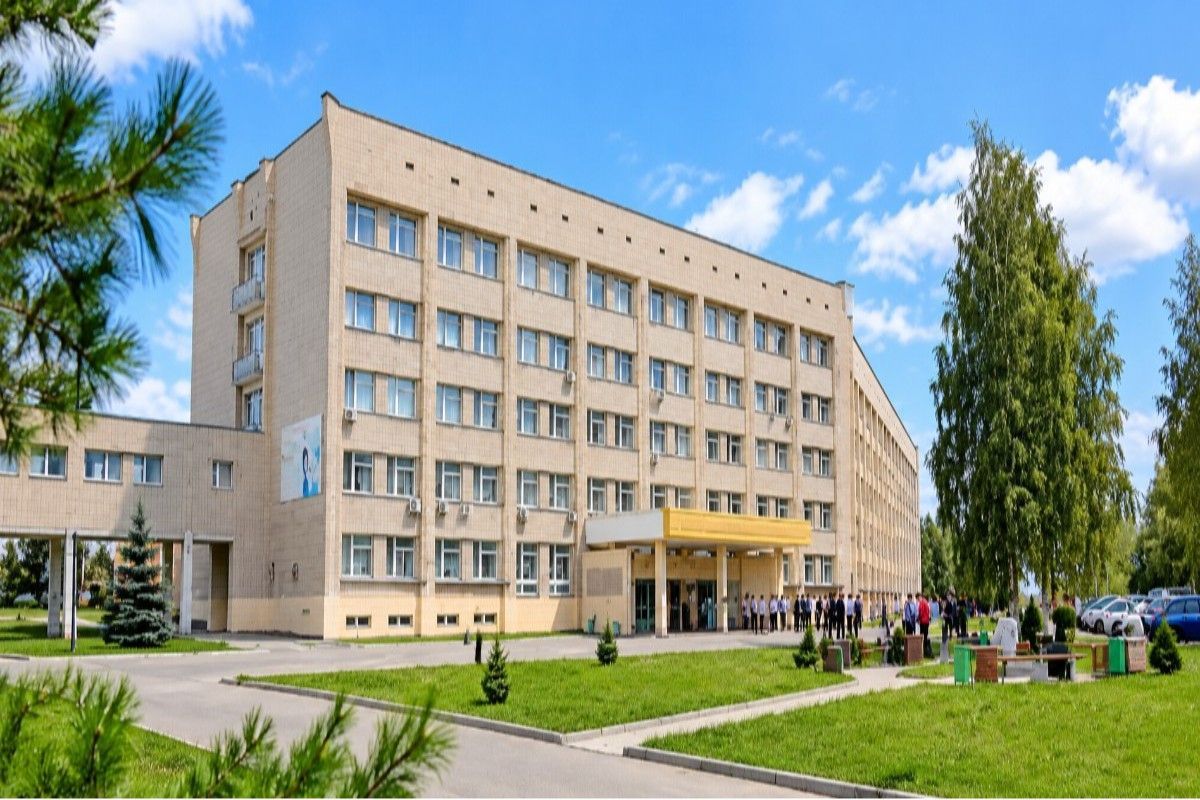
Sources say the campus is very well-equipped, with a library, student housing, sports facilities, services for academic career counseling and study abroad exchanges, a hospital on campus, and services that are meant to give students more chances to learn and do research outside of the core curriculum. People say that the medical programs at the Institute of Medicine, Psychology, and Sociology are on par with those in other countries and that students get a lot of real-world experience in addition to classroom learning.
When it comes to recognition, this picture is really broad and consistent across a lot of different sources. To name a few, the World Health Organization (WDOMS listing), India's National Medical Commission, the Australian Medical Council, the UK's General Medical Council, and FAIMER are some of these groups. This really is a lot of recognition claims for one school to have, and the fact that this list is repeated in the same way on a lot of different, seemingly unrelated admissions and consulting sites gives it real weight. As with any claim of this kind in this series, tho, a potential student should still check the current status directly with each body's main listing before relying on it completely.
When it comes to cost, the specific numbers found for this profile also come with a real catch that needs to be made clear. According to sources, the average annual tuition fee for KhSU is between INR 2.8 lakh and INR 4.5 lakh. This number is written the same way on what appear to be multiple separate consultancy pages. This suggests that it may be a generic, templated range that is used on several different university profiles by the same underlying source network, rather than a number that was specifically researched and confirmed for KhSU. This should be flagged honestly instead of giving it more credit than it deserves. If someone wants to go to KhSU, they should get a written, specific, up-to-date fee quote from the school's admissions office. The amount given above is just a rough idea; it's not a confirmed university-specific number.
Regardless of the exact fee amount that ends up being charged, living in Abakan has real, useful benefits. Sources say that the monthly costs of living for students are about INR 15,000 to 20,000, which covers the most important day-to-day costs. Many colleges in the area, including this one, serve Indian food to cater to the tastes of Indian students. Hostels are said to be open to both Russian and international students, and they are usually suggested for newcomers because they are safe and offer structured support while they get used to their new country. Several sources say that Abakan has a good and cheap public transportation system, a truly international student community with students from many continents and cultures, and a safe and affordable nightlife scene with cafes, clubs, and themed restaurants. These details suggest that Abakan is more than just an academic outpost; it is a real city where people can live and have fun.
The process for getting in is the same at all of these Russian medical colleges. To get in, applicants must get at least the minimum number of points on the NEET, get at least 50% on their 12th-grade tests in Physics, Chemistry, and Biology, and be at least 17 years old at the time of admission. At least one source says that the university's admissions process is "selective," based on entrance exams and academic records. This is something that should be confirmed directly, since most of the other Russian medical schools we've talked about in this series don't have a separate university-level entrance exam on top of the NEET.
For Indian applicants, the standard national rule still applies, just like it does at all the other schools in this series: they need to have a valid NEET score and graduates must pass India's FMGE or NExT exam before they can work back home, even if KhSU says they are recognized.
Simply put, Khakas State University is a truly broad and multidisciplinary academic environment in a regional capital in Siberia. Its different six-year and seven-year Russian program lengths are a real and useful structural detail, and the university consistently makes claims of wide recognition from many independent sources. There is a real, unresolved difference between sources about when it was founded that needs to be cleared up directly. Also, the tuition number given seems to be a general regional estimate rather than a confirmed, university-specific rate. If a student wants a well-rounded, multidisciplinary campus in a unique Siberian city and is willing to find out directly about the university's founding history and current fee structure, KhSU is a good choice among the Russian schools we've looked at so far.
No hidden charges, no donation. The full picture of costs at MBBS in Khakas State University named after N.F Katanov Institute of Medicine Psychology and Sociology.
Tuition Fee
INR 2.8 to 4.5 lakh/year (~USD 3,349 to 5,383/year)
USD 4,200 INR 3.51 lakh
Hostel Fee
USD 700 INR 0.59 lakh
USD 700 INR 0.59 lakh
Food & Meals
USD 1,000 INR 0.84 lakh
per month
Insurance
USD 250 INR 0.21 lakh
per year
Donation
No Donation
No hidden fee
Total Estimated Cost
USD ~6,150 INR ~5.15 lakh
6-year
25–35%
Average FMGE first-attempt pass rates for students from many overseas medical universities. Students from structured programs consistently score higher.
Students returning to India need to clear the FMGE/NExT exam. MBBS in Khakas State University named after N.F Katanov Institute of Medicine Psychology and Sociology integrates exam-oriented coaching into the regular curriculum so students are prepared from day one.
A structured program that takes you from foundational sciences to clinical mastery.
histology, biochemistry, microbiology and other fundamental medical sciences.
Focus on anatomy, physiology
diagnostic fundamentals, introductory surgery and internal medicine.
Students study pathology, pharmacology,
surgery, pediatrics, obstetrics and gynecology and multiple specialist disciplines
Training expands into medicine
strengthen independent clinical decision-making skills and prepare for graduation examinations
Students complete extensive supervised clinical rotations
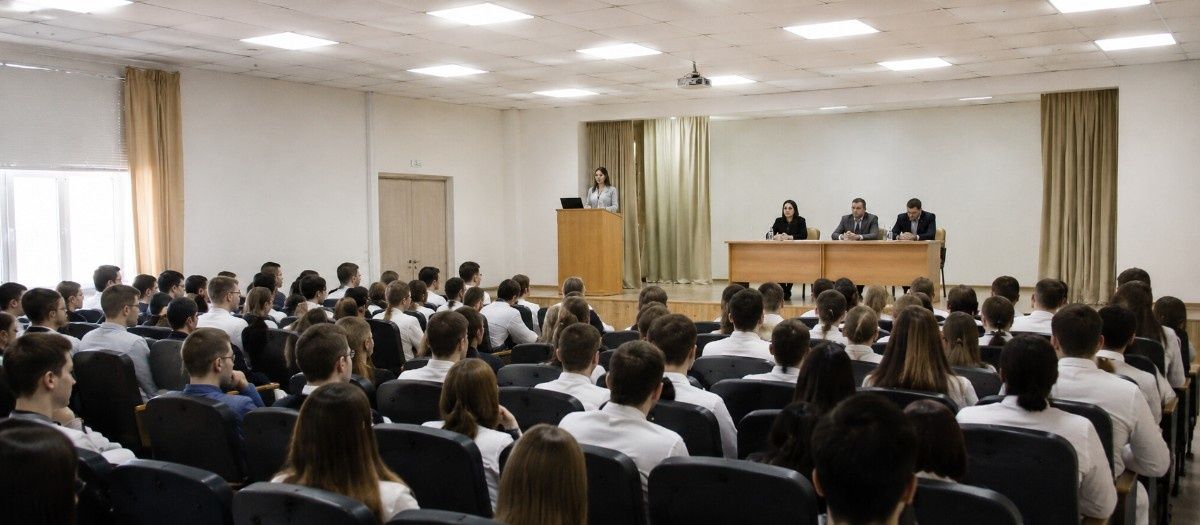
Furnished hostel rooms with Wi-Fi, laundry, 24/7 security, and Indian mess on or near campus.
Indian restaurants and mess facilities serving vegetarian and non-vegetarian home-style food daily.
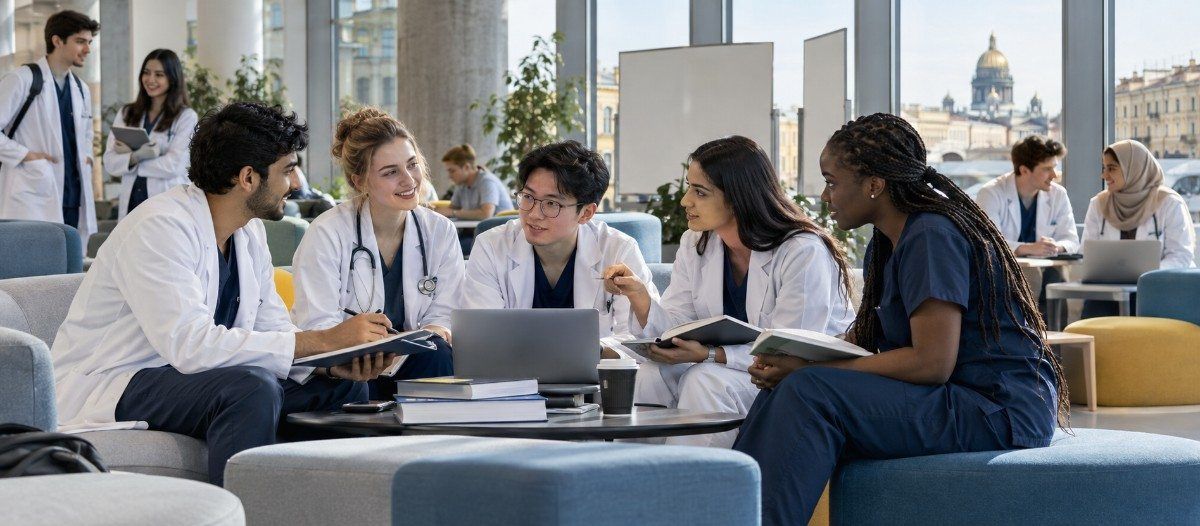
Strong Indian community with cultural events, festival celebrations, and peer support groups.
Students get hands-on clinical training in government and private hospitals affiliated with the university.
Practical information for students planning to study at MBBS in Khakas State University named after N.F Katanov Institute of Medicine Psychology and Sociology.
Prepare for all seasons. Thermal wear for winters, light clothing for summers. University provides heating in hostels.
Student visa processed with university invitation letter. Direct and connecting flights from major Indian cities.
Health insurance included in fees. Medical facility on campus plus city hospitals easily accessible.
Local SIM cards available. WhatsApp and video calls keep you connected with family back home.
Average monthly expenses of $150–$250 covering food, transport, and personal needs.
University library, online databases, and study groups. Seniors mentor juniors through academic challenges.
Our team guides you through every step — from application to arriving on campus.
Shortlist 3–5 NMC-approved universities on fees, city, FMGE reputation, and hostel quality.
Submit the application with academic documents and NEET scorecard.
Receive the Admission/Offer Letter from the university.
Pay the initial tuition instalment via the official channel.
Receive the Invitation Letter, issued by Russia's Ministry of Foreign Affairs — your visa depends on this.
Apply for the Student Visa via Embassy/VFS; realistic processing time is 2–4 weeks.
Arrange winter clothing, travel/health insurance, and a 5–8% currency buffer for ruble fluctuation in the final weeks before travel.
Travel, typically late August to early September.
Complete enrollment, a medical check-up, and hostel allotment on arrival.
Attend orientation; classes begin in the first/second week of September.
Admission Helpline — Contact our counsellors for step-by-step assistance.
“The faculty here is incredibly supportive. The clinical training during hospital rotations has given me real confidence in patient care.”
“Affordable fees without compromising on quality. The campus facilities and hostel life made my transition abroad very smooth.”
“English medium instruction and WHO-recognized curriculum were the deciding factors for me. No regrets so far — excellent experience overall.”
“The university helped with everything from visa to accommodation. Hospital exposure from year three has been invaluable for my FMGE prep.”
“Just cleared my licensing exam on the first attempt. The structured coaching and mock exams during final year were a game-changer.”
“Safe campus, good food options, and a strong Indian student community. The teaching methodology is very practical and hands-on.”
Yes, on the 6-year track; a separate 7-year track is taught in Russian.
Sources are mixed; at least one describes a selective process based on entrance exams and academic records, while most comparable Russian schools in this series describe no separate exam beyond NEET. Confirm directly with the university
Yes, per standard National Medical Commission rules
Cited across sources as approx. INR 2.8 to 4.5 lakh/year, though this figure appears identically worded across multiple pages, suggesting a generic estimate. Confirm the exact current rate directly with admissions.
Yes, per multiple consistent sources: WHO, NMC, ECFMG, the Australian Medical Council, the UK's GMC, and FAIMER
Sources conflict significantly, citing either 1939 or 1994. This is a genuine, unresolved gap worth confirming directly with the university.
The English-medium MBBS track runs 6 years, while the Russian-medium track runs 7 years, a genuine structural difference worth understanding before choosing a track.
Inside the Institute of Medicine, Psychology, and Sociology, one of several faculties within the broader, multidisciplinary Khakas State University.
Described as affordable and diverse, with efficient transport, Indian food availability, and a safe, pocket-friendly nightlife scene, alongside hostel accommodation recommended for newcomers
Students seeking a broad, multidisciplinary Siberian university with a genuinely useful dual-language program structure, who are prepared to confirm both the university's exact founding history and its current specific tuition rate directly, given the inconsistencies found across public sources
Our expert counsellors will guide you through the complete admission process — from documents to airport pickup.