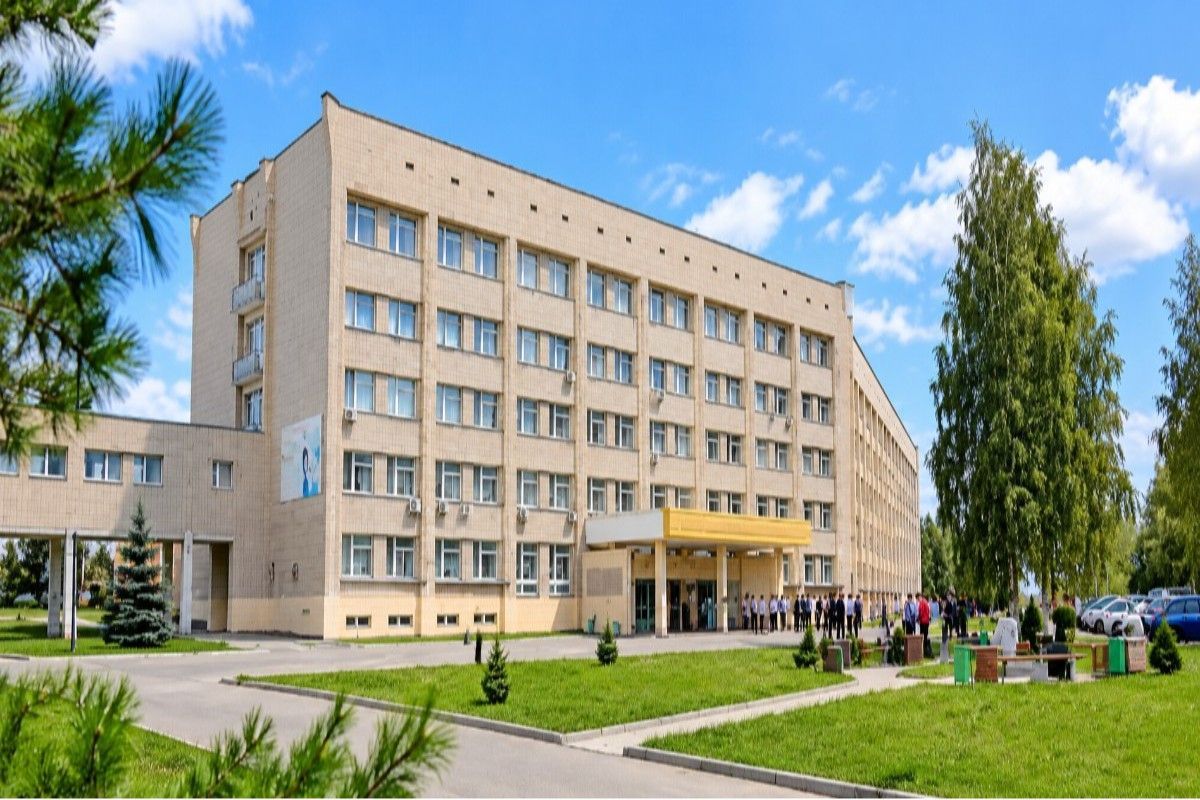
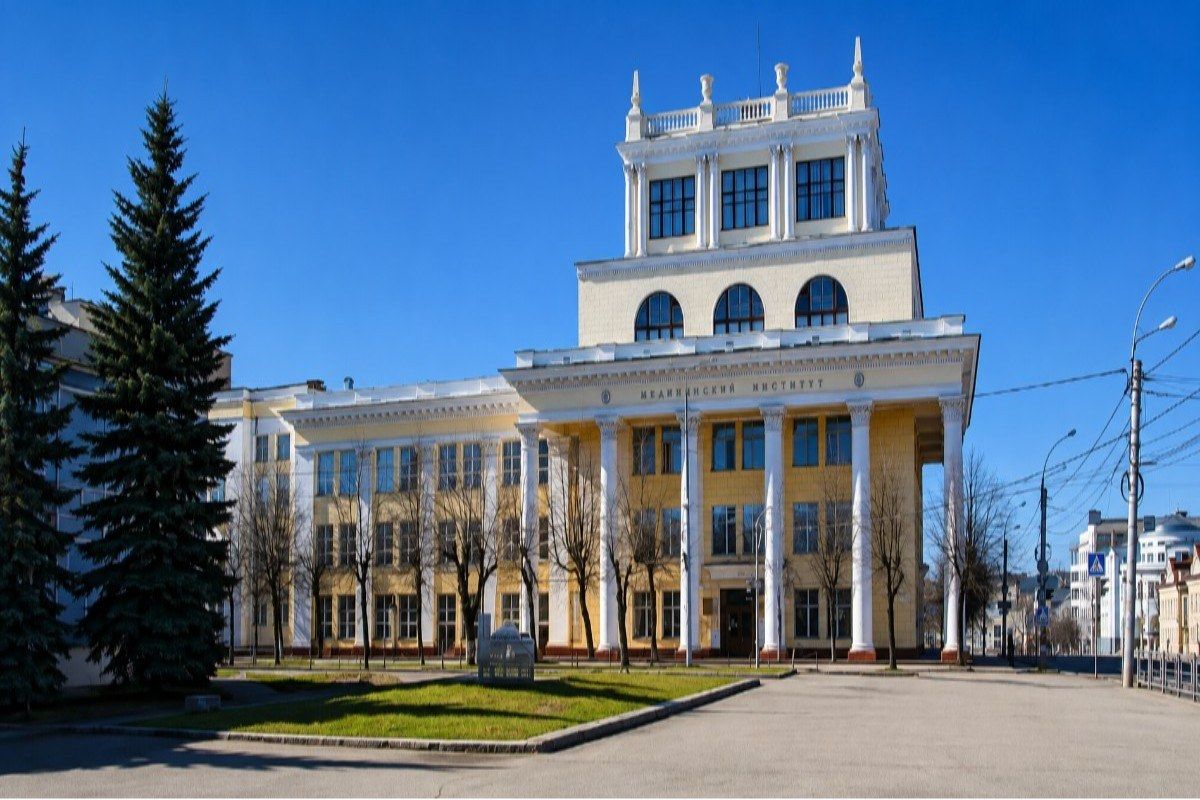
Izhevsk State Medical University is a public medical university in Izhevsk, the capital of the Udmurt Republic in Russia. The institution began as Izhevsk State Medical Institute in 1933. It was created at a time when the region faced a serious shortage of trained doctors. The Soviet Council of People's Commissars of the RSFSR approved the opening of a medical institute in Izhevsk on April 15, 1933. The local authorities then arranged for the institute to begin work from September 1 of the same year. The first intake had 171 students. The institute initially had only one faculty, the Faculty of Medicine.
The early years focused on building a complete medical education system in the region. By September 1933, the institute had 24 teachers, including four professors and three associate professors. Four departments operated during the first stage. These included normal anatomy, general chemistry, physics and biology. New departments were added as the institution developed. By 1940, the institute had strengthened its teaching structure and brought in academics from medical institutions in cities such as Perm, Odessa, Gorky, Leningrad and Saratov. This helped establish its teaching and research base before the Second World War.
The Second World War became an important part of the institution's history. Between 1941 and 1945, the institute continued medical education despite difficult conditions. It completed five graduating classes during the war and produced 762 doctors. Most of these graduates were sent to the front or to military hospitals in the rear. Research during this period also focused on wartime injuries and the treatment of wounded patients. Teachers worked in evacuation hospitals in Udmurtia. The institute's surgical departments also contributed to the treatment of serious injuries, including work related to reconstructive surgery and rehabilitation.
The institution continued to expand after the war. Its academic and clinical departments grew with the healthcare needs of Udmurtia. The Pediatrics Faculty was established in 1975 and the Dentistry Faculty followed in 1980. The institution also developed postgraduate and professional training. Its name changed several times as its legal and academic status developed. The World Directory of Medical Schools records the institution as Izhevsk State Medical Institute from 1933, with later changes that included the Ustinov State Medical Institute during 1985 to 1987. It returned to the Izhevsk State Medical Institute name in 1987. In 1995, it received academy status and became known as Izhevsk State Medical Academy.
A further change came in November 2025. The Russian Ministry of Health issued Order No. 684, changing the official name from Izhevsk State Medical Academy to Izhevsk State Medical University. The current official name is Federal State Budgetary Educational Institution of Higher Education "Izhevsk State Medical University" of the Ministry of Health of the Russian Federation. This makes the university's current status different from the name under which many international students and older sources still know it.
The university now offers several areas of medical education. Its current programmes include General Medicine, Pediatrics and Dentistry at specialist level. General Medicine and Pediatrics are six-year programmes, while Dentistry is five years. The university also offers residency, postgraduate education and professional development programmes. A Faculty of Foreign Students was established in September 2022. It supports international students enrolled in General Medicine, Pediatrics, Dentistry and related programmes. Since 2025, the faculty has also supported international students in residency programmes.
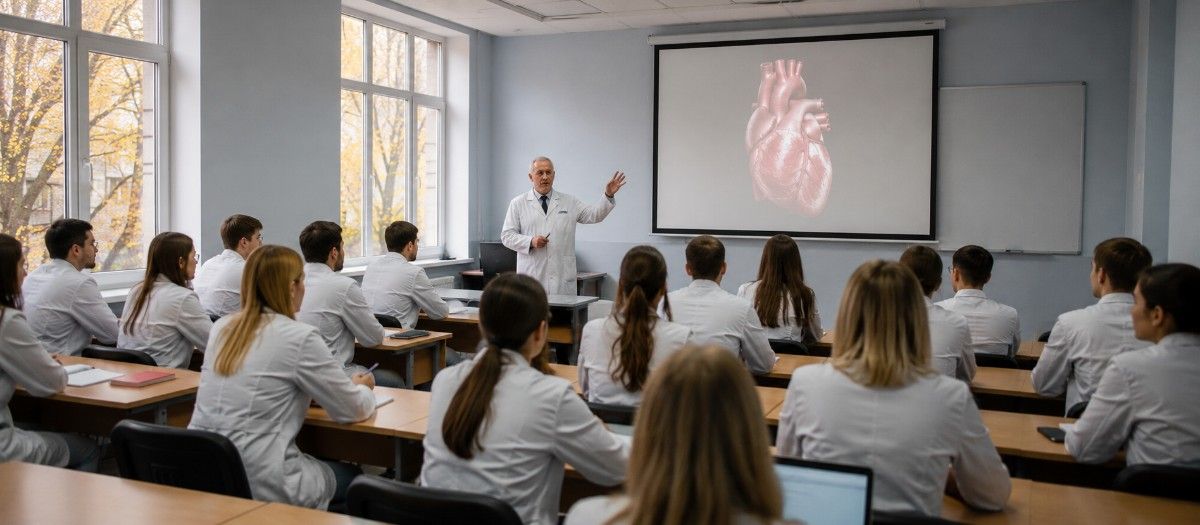
For students seeking a medical degree, General Medicine is the main programme. The programme lasts six years and leads to the Doctor of Medicine qualification recorded by the World Directory of Medical Schools. The curriculum includes basic sciences, medical sciences, clinical subjects and practical training. The university's General Medicine faculty has 22 departments and a large clinical base. University information states that its clinical network includes more than 5,000 beds across major medical institutions in Izhevsk and the Udmurt Republic. These include the First Republican Clinical Hospital and other city hospitals and diagnostic facilities.
English-medium General Medicine is available for international students. The university states that General Medicine is offered in both Russian and English, while Pediatrics and Dentistry are offered in Russian. Its foreign students faculty specifically confirms that English-medium study is available for General Medicine. The 2025 published tuition schedule also lists a separate fee for General Medicine taught in English. This is an important point for international applicants because the language of instruction affects eligibility for future medical registration in countries such as India.
The university has a long history of international education. It states that international students have been accepted since 1988. Students from 113 countries and territories have studied at the institution, and more than 3,000 doctors, dentists and pediatricians have been trained for foreign countries. The university also maintains international academic cooperation and student exchange activities. Its international department has organised medical clerkships and exchanges with institutions in countries including Hungary, Poland, Italy, Germany, Finland, Serbia, Turkey and others.
Its current academic structure includes 52 departments and more than 400 teaching staff according to university information. Earlier university data recorded 351 teachers, including Doctors and Candidates of Medical Sciences, along with more than 2,800 students. The university has also reported more than 21,500 doctors and nursing managers trained during its history. The exact student and staff numbers can change each academic year, so applicants should treat these figures as institutional profile data rather than a fixed annual intake.
Clinical exposure is an important part of medical education at the university. Students study at university departments as well as hospitals, outpatient clinics and other healthcare facilities. The World Directory of Medical Schools confirms that the school has access to clinical teaching facilities and records clinical training as covering 50 to 74 percent of the full programme. The General Medicine faculty also states that students undertake practical training after several academic years. This structure gives students opportunities to connect classroom learning with patient care.
The university's research work covers areas of physiology, morphology, endocrinology, family medicine and other medical fields. Its history also includes research carried out during the Second World War to improve the treatment of wounded and sick patients. Today, students can take part in scientific circles, conferences and research activities. International exchanges also give students and young researchers opportunities to work with colleagues from other countries.
The university is located in Izhevsk, a major industrial, educational and cultural centre in the Volga region. The city stands on the Izh River and is the capital of the Udmurt Republic. The city was founded in 1760 around an ironworks. An arms factory was established there in 1807, which later shaped Izhevsk's reputation as a major industrial and engineering centre. The city officially received city status in 1925 and became the centre of the Udmurt Autonomous Region in 1921. Izhevsk has a population of more than 600,000 people.
Izhevsk has a continental climate. Winters are cold and snowy, while summers are generally mild to warm. Students should prepare for temperatures that are much lower than those experienced in most parts of India. The city has road, rail and air connections with other parts of Russia. Izhevsk railway station provides connections to cities and regions across the country, while Izhevsk Airport serves air travel. The university campus is located on Kommunarov Street, and public transport provides access to the university and surrounding areas.
Hostel accommodation is available for students. The university has three dormitories and reports accommodation for 1,265 students. Rooms and charges vary by accommodation type. University information has listed hostel costs from about 1,000 to 3,000 Russian rubles per month. The dormitories are located within access of public transport. Students also have access to university facilities such as libraries, sports areas, food services, a medical centre and a dental clinic.
For Indian students, Izhevsk State Medical University offers a long-established international student system and an English-medium General Medicine programme. However, admission should be planned around current National Medical Commission rules rather than claims of simple recognition. The NMC states that it does not endorse a general list of foreign medical universities. Indian students must meet the applicable foreign medical graduate requirements, including the required course duration, English medium, clinical training and internship conditions. NEET qualification is mandatory for Indian and OCI students seeking medical education abroad.
The combination of a 1933 medical education history, a dedicated international student faculty, English-medium General Medicine, a large clinical network and the institution's recent transition from academy to university gives Izhevsk State Medical University its own profile. Its strongest distinction is not a marketing ranking. It is the combination of long medical training history, wartime clinical contribution, international education since the late 1980s and its current role as a federal medical university under Russia's Ministry of Health.