
1. Is the programme taught in English?
+No. Teaching runs in Russian for all six years
 Russia | Est. 1920
Russia | Rosobrnadzor education licence and state accreditation. Private non-state institution. Confirm current World Directory of Medical Schools listing status directly before applying | Russian medium
Expert will call you within 2 hours
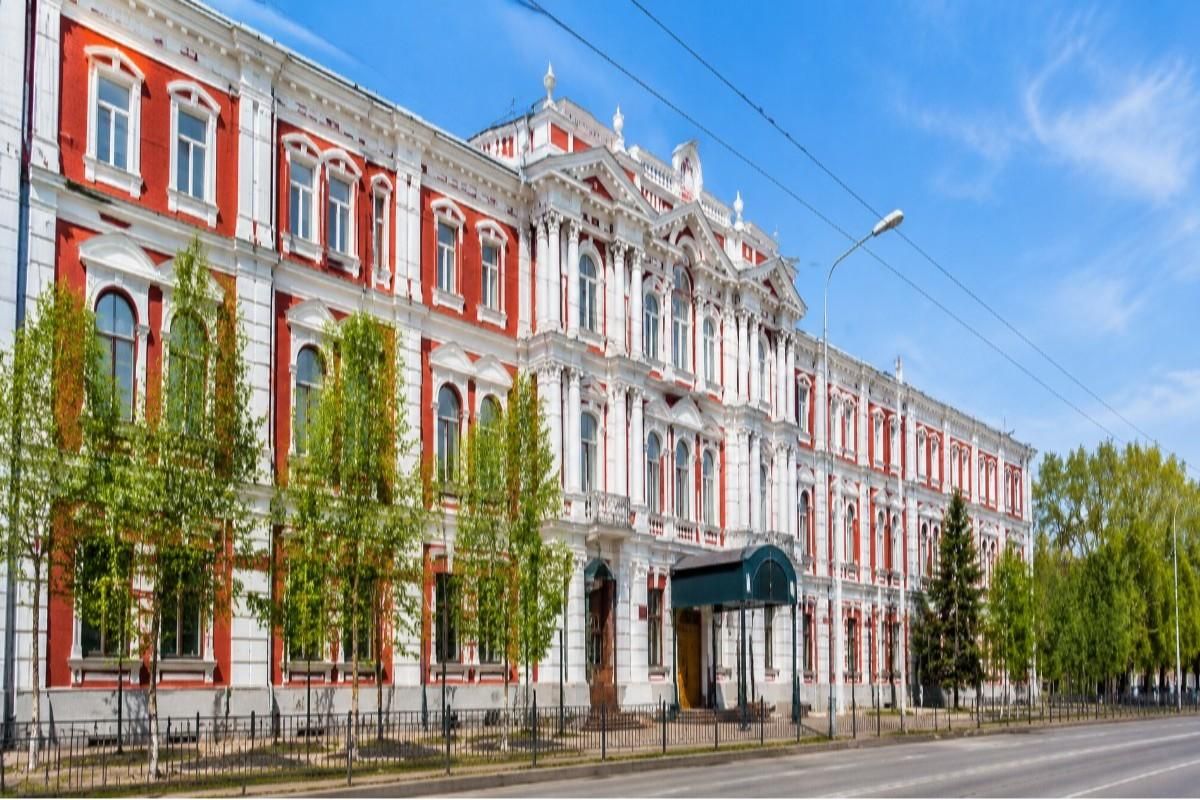
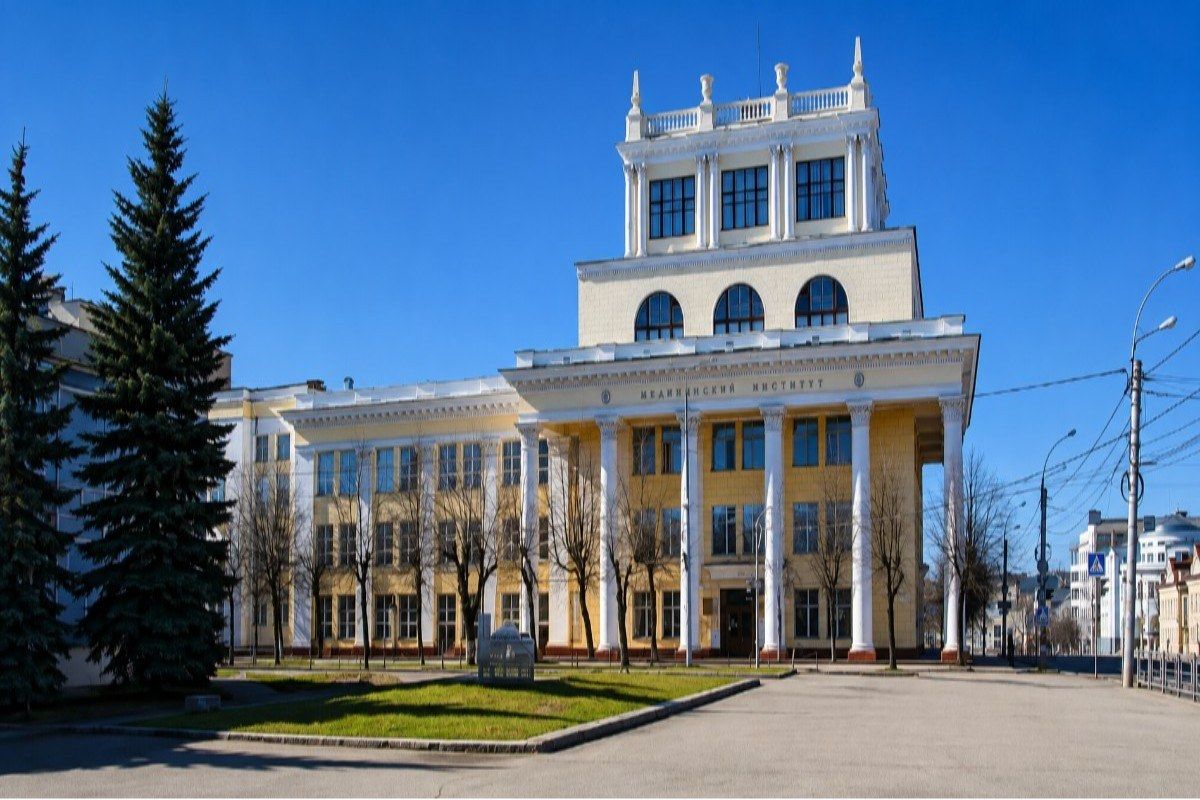
Kuban Medical Institute is a private medical school in Krasnodar, the administrative centre of Krasnodar Krai in southern Russia. The institute opened in 1993, in the first wave of non-state higher education institutions that appeared after the Soviet system ended. It has trained doctors, dentists, pharmacists and nursing specialists since then, and it holds a licence from Rosobrnadzor along with state accreditation for its degree programmes. Students should understand the ownership structure before they apply. Kuban Medical Institute is not a federal state university, and it is a separate institution from Kuban State Medical University, which is the older state school in the same city. The two names look similar and agents confuse them regularly. Check the licence number, the address and the registration details on any offer letter you receive.
The institute sits in central Krasnodar on Zipovskaya Street. Krasnodar has close to a million residents, sits about 150 kilometres from the Black Sea coast and enjoys one of the mildest climates in Russia. Winters rarely fall far below freezing and summers run hot and long. Students who worry about Russian winters usually find the south far easier than Moscow, Saint Petersburg or Siberia. The city has a large student population, a low cost of living, an international airport and direct rail links to Moscow and Sochi.
The main degree is General Medicine, which Russia classifies as the specialist qualification in Lechebnoe delo. The programme runs for six years. Teaching happens in Russian. The institute does not operate a separate English-medium track for the medical degree, and this is the single most important fact for any international applicant to confirm before paying a deposit. Applicants who do not speak Russian must complete a preparatory faculty year first, which covers Russian language along with basic chemistry, biology and physics terminology, and only then enter year one. That preparatory year adds a full year to the total time you spend in Russia.
The academic structure follows the federal state educational standard, which governs every medical programme in Russia regardless of ownership. The first two years cover anatomy, histology, biochemistry, physiology, biology, chemistry, Latin and the humanities subjects that the standard requires. Years three and four move into pathology, pharmacology, microbiology, propaedeutics, internal medicine and surgery. Years five and six run clinical rotations across the main specialties and finish with a subinternship and the state final examination. Because the standard is federal, the subject list at Kuban Medical Institute matches the subject list at any state medical university in Russia. The differences between institutions show up in clinical placement quality, staff experience and laboratory equipment rather than in the syllabus.
Clinical training uses city and regional healthcare facilities in Krasnodar under agreement with the Krasnodar Krai health authority. The institute has contracts with municipal polyclinics, city hospitals and specialist dispensaries. Krasnodar Krai runs a large regional hospital network that serves more than five million people across the krai and the neighbouring republics, so patient volume in the city is high. You should ask the admissions office for the current list of clinical bases and the number of hours you spend at each one. Private institutes negotiate these agreements year by year, and the list changes more often than at federal universities that own their own clinics.
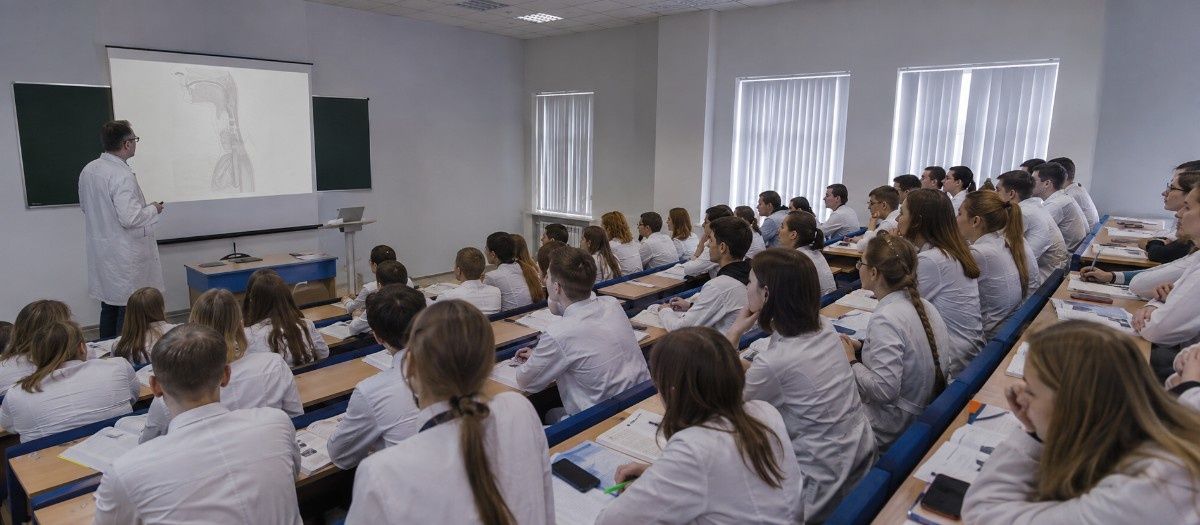
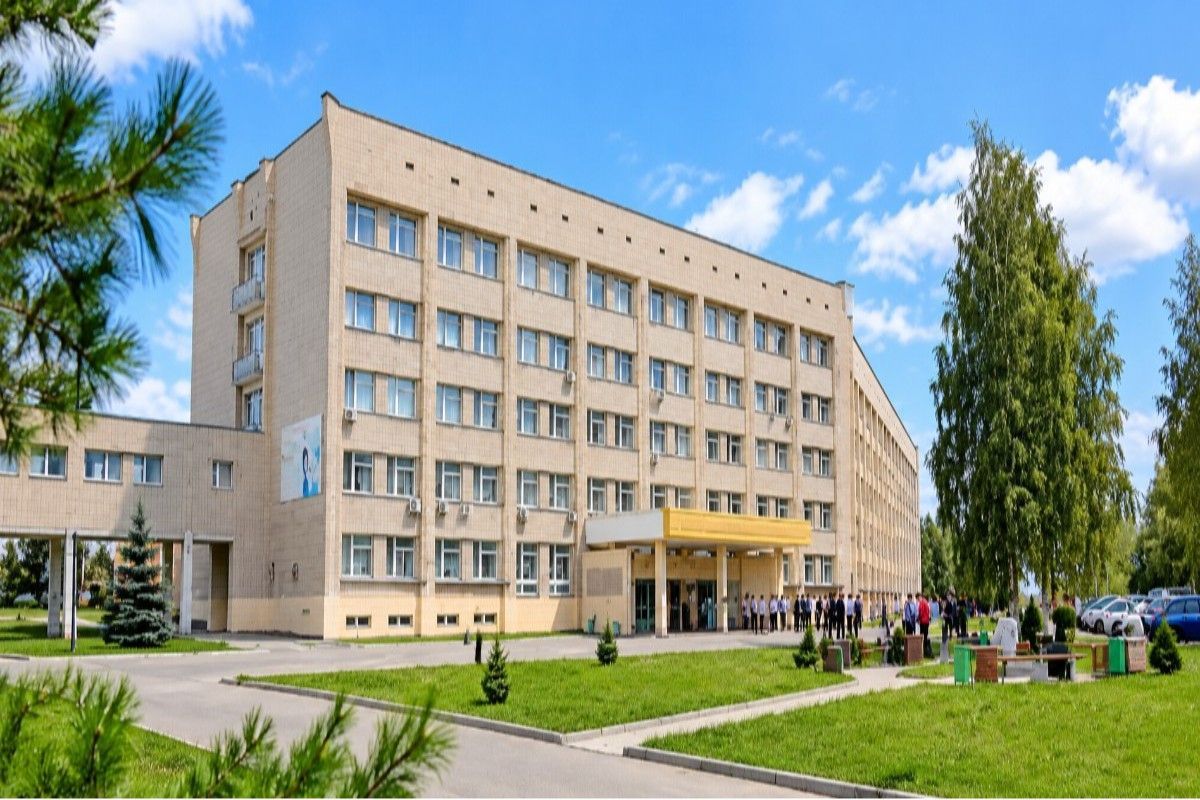
Facilities include anatomy and histology laboratories, a morphology room, a biochemistry laboratory, a simulation room for basic clinical skills and a library with an electronic resource subscription. The institute is compact. It does not carry the research infrastructure, the affiliated university clinic or the doctoral schools that older federal universities operate. Class sizes stay smaller as a result, and students who prefer close contact with teaching staff often see that as an advantage.
The institute does not run its own hostel on the scale of a state university. It arranges places in student accommodation blocks in the city and helps students find private rented flats. Shared flats in Krasnodar cost less than equivalent accommodation in Moscow or Saint Petersburg, and many students split a two-room flat between two or three people. You should confirm in writing what accommodation the institute guarantees before you arrive, because the arrangement differs from the on-campus hostel model that most Russian medical universities use.
Recognition is the area that needs the closest attention. Kuban Medical Institute holds a Russian education licence and state accreditation, which allows it to award a recognised Russian medical degree. Graduates who intend to practise in Russia must pass the primary accreditation examination like every other Russian medical graduate. International recognition depends on the listing status of the institution in the World Directory of Medical Schools and on the rules of your home regulator. Indian applicants face a specific problem here. The National Medical Commission requires that the medical programme be taught in the same language throughout, that the degree be recognised in the country of study for practice there, and that the course run for at least fifty four months followed by a twelve month internship in the same institution. A Russian-medium programme at a private institute makes those conditions harder to satisfy than an English-medium programme at a federal state university. You should obtain written confirmation from the National Medical Commission before you commit money.
Fees are lower than at most federal medical universities. The institute publishes tuition in roubles and revises the figure each academic year. Accommodation, insurance, visa registration and the preparatory year, where required, are billed separately. Payment usually runs in two instalments per academic year. Ask the institute for a fee schedule on official letterhead rather than relying on an agent quotation, because private institutes price differently for different intakes and the figures that circulate online often date from several years back.
Admission requires a completed secondary education certificate with chemistry and biology, a passing result in the institute's own entrance testing or an equivalent recognised result, and proof of Russian language ability for direct entry to year one. Indian applicants also need a valid NEET result and an eligibility certificate from the National Medical Commission. The institute reviews documents through its admissions committee, and the main intake begins in September.
Student life in Krasnodar carries the city rather than the campus. The institute runs a student council, sports teams and cultural events, but its size limits what it can host on its own premises. Students use the city instead. Krasnodar has large parks, a modern stadium complex, cinemas, gyms and a dense cafe culture along Krasnaya Street. The Black Sea resorts at Anapa and Gelendzhik lie within a three hour drive, and Sochi sits five hours away by train. Living costs stay low. A student who cooks at home and shares a flat spends noticeably less each month than a student in Moscow.
Kuban Medical Institute suits a specific profile. It works for a student who already speaks Russian or is willing to spend a full year learning it, who wants a lower fee than the federal universities charge, who plans to practise in Russia or in a country that accepts Russian-medium private degrees, and who has checked the recognition position in writing. It does not suit a student who needs English-medium teaching, who expects a large campus with its own university clinic, or who assumes that the name guarantees the reputation of Kuban State Medical University. Those are different institutions with different histories, different funding and different standing. Verify which one your offer letter names.
No hidden charges, no donation. The full picture of costs at MBBS in Kuban Medical Institute.
Tuition Fee
RUB 4,82,000 to RUB 5,00,000
USD 2,500 per year (approximately INR 2,20,000)
Hostel Fee
USD 800 per year (approximately INR 70,400)
USD 800 per year (approximately INR 70,400)
Food & Meals
USD 1,300 (INR1,14,400)
per month
Insurance
USD: 150 INR 13,200
per year
Donation
No Donation
No hidden fee
Total Estimated Cost
USD 4,850 INR 4,26,800
6 year
25–35%
Average FMGE first-attempt pass rates for students from many overseas medical universities. Students from structured programs consistently score higher.
Students returning to India need to clear the FMGE/NExT exam. MBBS in Kuban Medical Institute integrates exam-oriented coaching into the regular curriculum so students are prepared from day one.
A structured program that takes you from foundational sciences to clinical mastery.
You build the structural base. Anatomy and histology take most of the timetable, and language work continues alongside for students who came through the preparatory faculty
medical biology, general and bioorganic chemistry, histology, Latin, Russian language, philosophy and history
You move from structure to function. Laboratory sessions increase, and you complete supervised nursing practice in a city hospital
biochemistry, microbiology, immunology, hygiene, first nursing practice
Clinical work begins. You learn history taking, physical examination and basic diagnostic reasoning on real patients under supervision
, pathophysiology, pharmacology, propaedeutics of internal medicine, general surgery, radiology
Rotations cover the main specialties across the institute's contracted clinical bases. You present cases and assist in procedures
obstetrics and gynaecology, paediatrics, neurology, dermatology, ophthalmology, ENT
You carry more ward responsibility. Assessment shifts towards clinical reasoning and case defence
oncology, infectious diseases, psychiatry, traumatology, anaesthesiology, forensic medicine
You work as a subintern with defined duties. The year ends with the state final examination, followed by the primary accreditation test for those staying in Russia
surgery and obstetrics, emergency medicine, public health, state final examination
Furnished hostel rooms with Wi-Fi, laundry, 24/7 security, and Indian mess on or near campus.
Indian restaurants and mess facilities serving vegetarian and non-vegetarian home-style food daily.
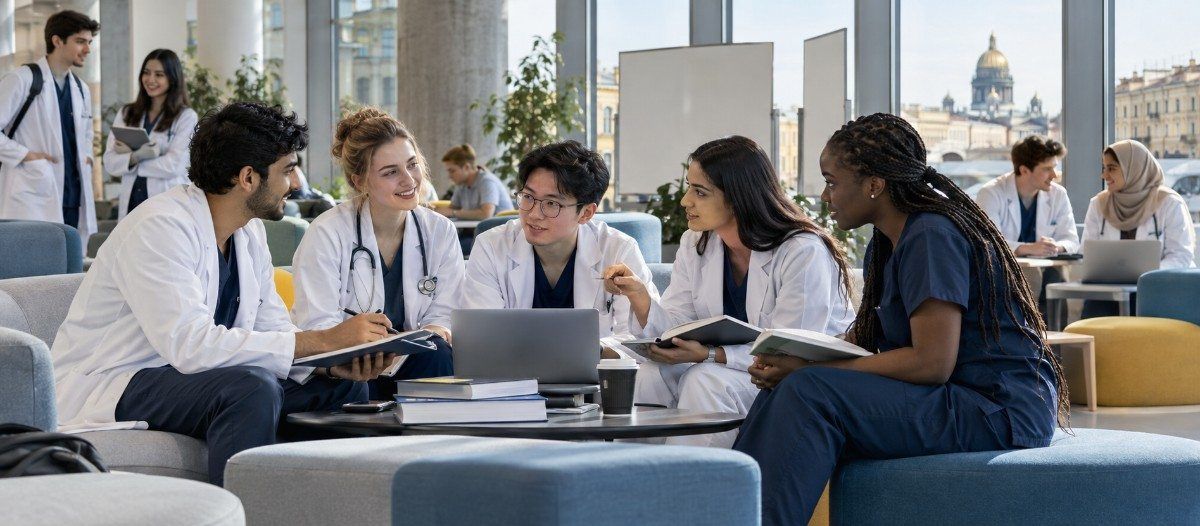
Strong Indian community with cultural events, festival celebrations, and peer support groups.
Students get hands-on clinical training in government and private hospitals affiliated with the university.
Practical information for students planning to study at MBBS in Kuban Medical Institute.
Prepare for all seasons. Thermal wear for winters, light clothing for summers. University provides heating in hostels.
Student visa processed with university invitation letter. Direct and connecting flights from major Indian cities.
Health insurance included in fees. Medical facility on campus plus city hospitals easily accessible.
Local SIM cards available. WhatsApp and video calls keep you connected with family back home.
Average monthly expenses of $150–$250 covering food, transport, and personal needs.
University library, online databases, and study groups. Seniors mentor juniors through academic challenges.
Our team guides you through every step — from application to arriving on campus.
Shortlist 3–5 NMC-approved universities on fees, city, FMGE reputation, and hostel quality.
Submit the application with academic documents and NEET scorecard.
Receive the Admission/Offer Letter from the university.
Pay the initial tuition instalment via the official channel.
Receive the Invitation Letter, issued by Russia's Ministry of Foreign Affairs — your visa depends on this.
Apply for the Student Visa via Embassy/VFS; realistic processing time is 2–4 weeks.
Arrange winter clothing, travel/health insurance, and a 5–8% currency buffer for ruble fluctuation in the final weeks before travel.
Travel, typically late August to early September.
Complete enrollment, a medical check-up, and hostel allotment on arrival.
Attend orientation; classes begin in the first/second week of September.
Admission Helpline — Contact our counsellors for step-by-step assistance.
“The faculty here is incredibly supportive. The clinical training during hospital rotations has given me real confidence in patient care.”
“Affordable fees without compromising on quality. The campus facilities and hostel life made my transition abroad very smooth.”
“English medium instruction and WHO-recognized curriculum were the deciding factors for me. No regrets so far — excellent experience overall.”
“The university helped with everything from visa to accommodation. Hospital exposure from year three has been invaluable for my FMGE prep.”
“Just cleared my licensing exam on the first attempt. The structured coaching and mock exams during final year were a game-changer.”
“Safe campus, good food options, and a strong Indian student community. The teaching methodology is very practical and hands-on.”
No. Teaching runs in Russian for all six years
No. They are two separate institutions in Krasnodar. Kuban Medical Institute is private
Yes, if you do not already speak Russian. It adds one full year
Around USD 2,500 per year, roughly INR 2,20,000. Confirm the current rouble figure in writing
Yes, for Indian applicants, along with an NMC eligibility certificate
Yes. The institute holds state accreditation and graduates take the national accreditation examination
Only if the programme meets NMC conditions. The Russian-medium format creates a real risk here, so get written confirmation first
It arranges city accommodation and private rentals rather than running a large campus hostel
At municipal polyclinics, city hospitals and specialist dispensaries in Krasnodar under annual agreements
A student who speaks Russian or will learn it, wants lower fees, and has verified recognition for their home country in writing
Our expert counsellors will guide you through the complete admission process — from documents to airport pickup.