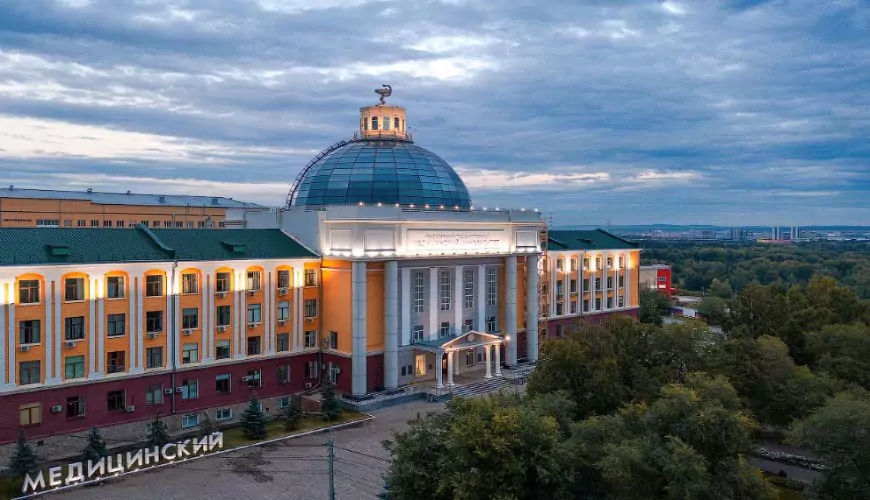
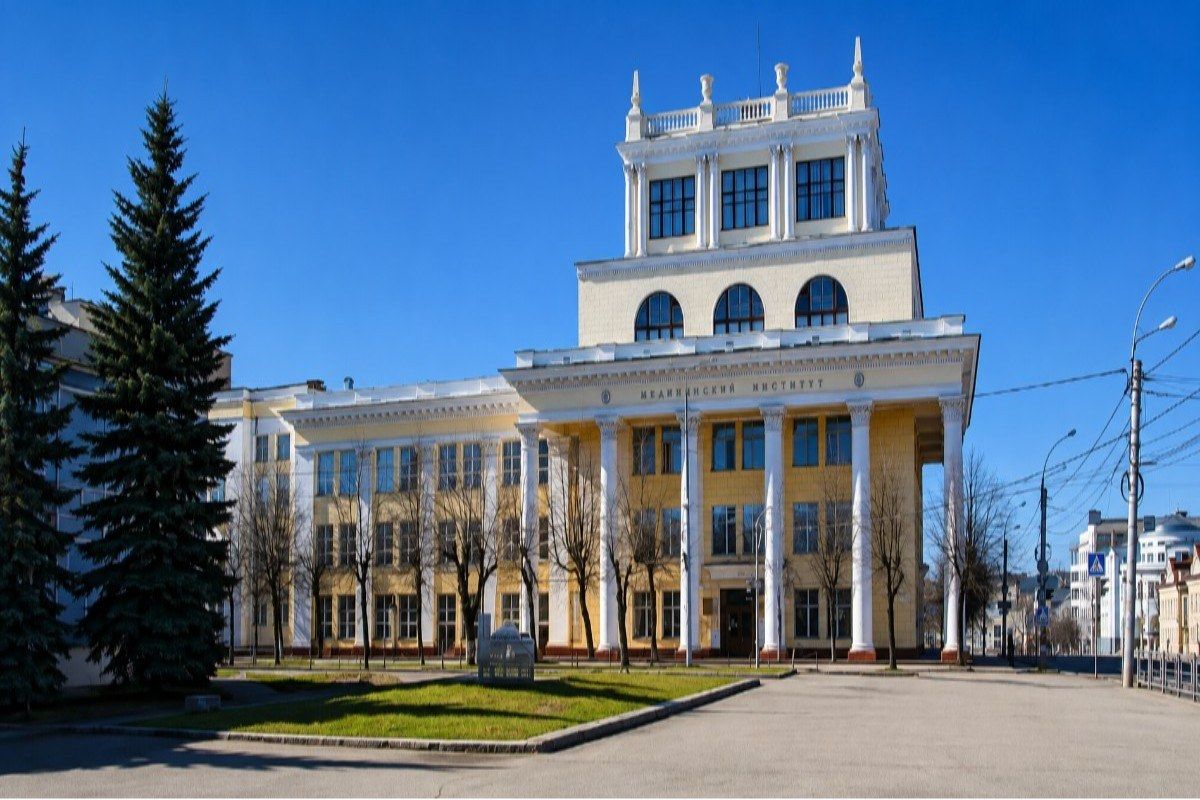
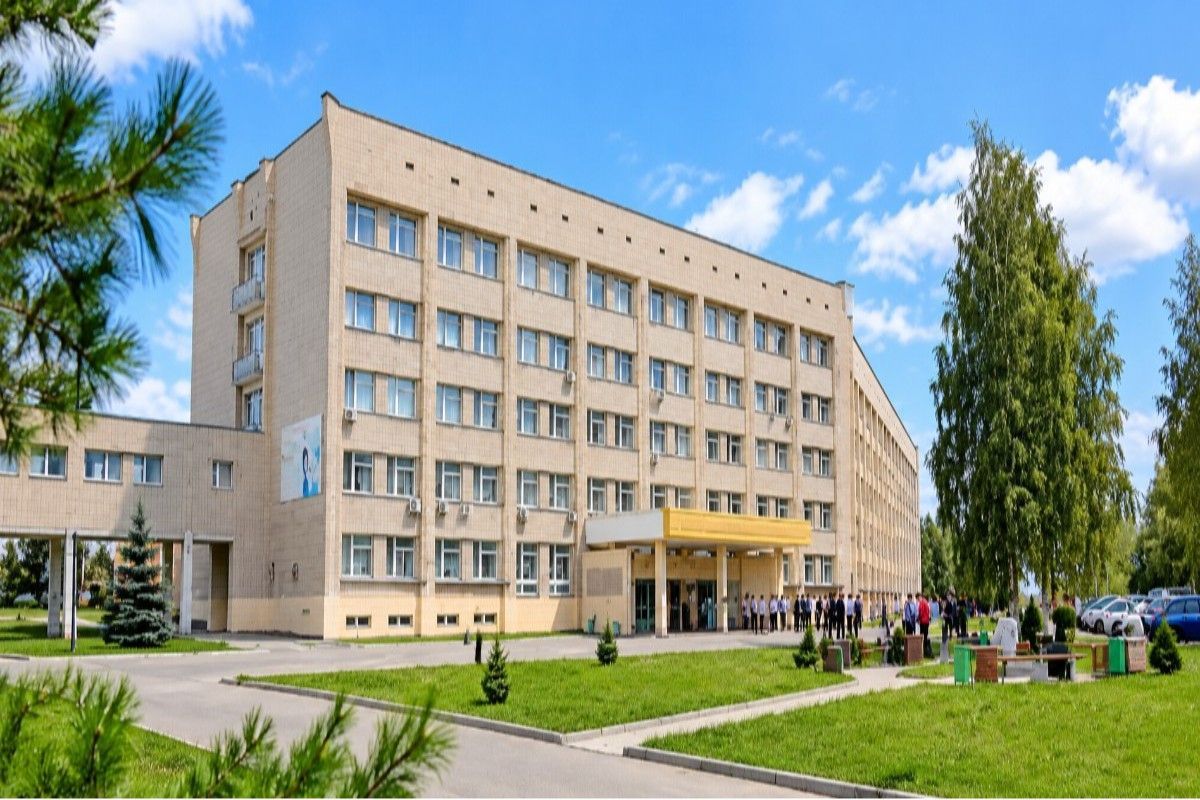
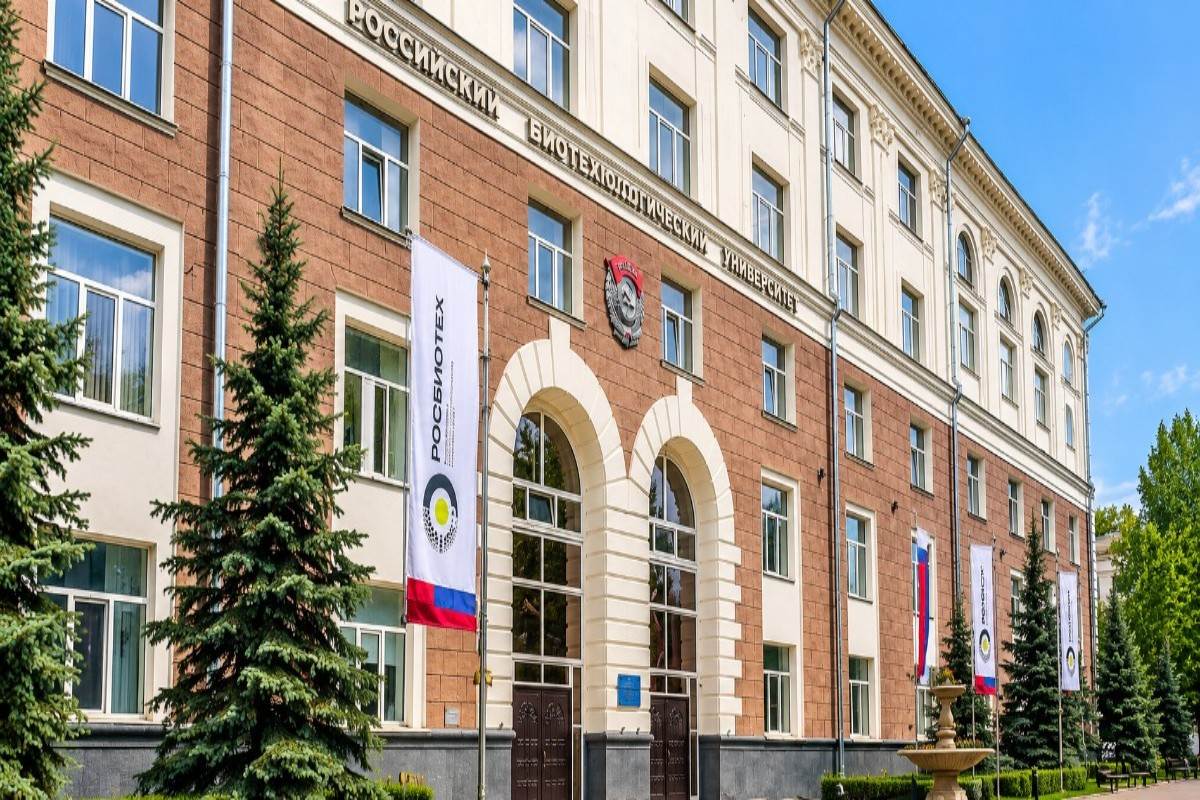
Professor V.F. Voino-Yasenetsky Krasnoyarsk State Medical University (KrasSMU) has one of the most remarkable founding stories of any medical university in Russia. It was established in November 1942 during the height of the Second World War, when the Voronezh Dental Institute, parts of the 1st and 2nd Leningrad Medical Institutes, and the Leningrad Pediatric Dental Institute were collectively merged and evacuated to Krasnoyarsk as part of the Soviet government's wartime relocation of essential educational institutions into Siberia. This extraordinary founding, born of wartime necessity and institutional consolidation, gave KrasSMU an unusually rich academic inheritance: it began with faculty, students, and institutional knowledge from multiple established Leningrad and Voronezh institutions simultaneously. The university is named after Professor Valentin Felixovich Voino-Yasenetsky, a remarkable historical figure who was simultaneously an Archbishop of the Russian Orthodox Church (known as Luke of Crimea, later canonised as a saint) and one of Russia's most distinguished surgeons, awarded the Stalin Prize for his work on purulent surgery. This dual identity physician-saint gives KrasSMU a name that carries profound cultural resonance in Russia and reflects the institution's deep roots in Russian medicine and culture. Located in Krasnoyarsk, the administrative centre of the Krasnoyarsk Region, the second-largest region in the Russian Federation, situated on the banks of the Yenisei River, KrasSMU provides students with a genuinely Siberian academic experience. The university campus is in the city centre, surrounded by the dramatic natural scenery of central Siberia: taiga forests, mountain ridges, and the Yenisei River (one of the world's largest). The city has a population of approximately 1.1 million and all necessary urban amenities. KrasSMU is a member of both the European Association of Medical Schools and the World Federation of Medical Education, international memberships that impose quality standards and peer review above what local accreditation alone requires. It is recognised by NMC (India), WHO, FAIMER, GMC (UK equivalent), and is WDOMS-listed. The university operates 6 university clinics and has access to more than 200 healthcare institutions in the region for student clinical training, as well as an unusually large affiliated hospital network that provides substantial clinical exposure. The total 6-year fees are approximately USD 40,850 (approximately ₹36 lakh), with annual tuition of USD 5,500 and hostel fees of USD 1,200.