
1. Is the medical programme at Halle tuition-free?
+A: Yes. Like all German public universities, MLU Halle-Wittenberg charges no tuition for medicine, only a small semester contribution.
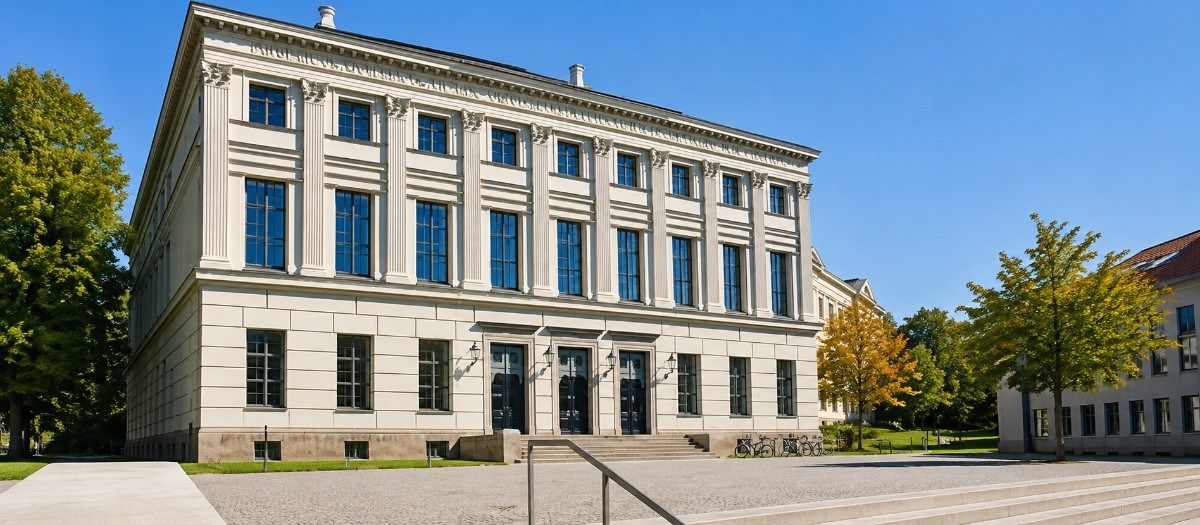
 Germany | Est. 1694
Germany | Governed under Germany's Approbationsordnung für Ärzte (Medical Licensing Regulations); leads to State Examination and Approbation | Primarily German medium
Expert will call you within 2 hours
People mostly just call it MLU for short. Its current name and structure date to 1817, when the University of Wittenberg and the University of Halle merged into one institution. So, this makes MLU a genuinely old university on paper, but the real story runs even deeper once you look at its two predecessor schools separately.
Medicine itself has an especially long history here, and it comes from two different directions. The University of Wittenberg taught medicine from 1502, the same year it was founded, with a documented medical teaching tradition running through to 1817. The University of Halle, founded in 1694 as the Academia Fridericiana Halensis, counted medicine among its own founding faculties too. So, when the two universities merged in 1817, they combined two separate, centuries-old medical teaching traditions into one faculty, rather than adding medicine to a university that never had it before.
The university takes its name from Martin Luther, the Protestant reformer who taught as a professor at Wittenberg during the university's earliest years. So, the name reflects a genuine historical connection to the city and the era the university grew out of, not a later honorary naming.
Here's a fact most guides skip entirely. In 1754, Dorothea Christiane Erxleben earned her doctoral degree at Halle, becoming the first woman in Germany to hold a doctorate in medicine. So, this faculty's history includes a genuinely significant, well-documented milestone in the history of women in medicine, not just in the university's own story.
The Medizinische Fakultät's earliest years in Halle also carried real academic weight. The first two chairs of medicine at the newly founded Academia Fridericiana Halensis went to Friedrich Hoffmann and Georg Ernst Stahl, two physicians whose combined ideas on clinical practice and medical theory drew students from across the German-speaking world almost from the moment the university opened. So, the faculty's pull on students isn't a recent development; it goes back to its very first decades.
Today, the Medizinische Fakultät describes itself as one of MLU's founding faculties, still fully integrated into the wider university rather than existing as a separate institution. It runs five degree programmes: Medicine, leading to a Staatsexamen, Dentistry, Evidence-Based Nursing at bachelor's level, Health and Nursing Sciences at master's level, and Midwifery Science at bachelor's level, the last of these added from the 2021/22 winter semester. Around 2,200 students study across these five programmes combined. So, medicine here sits within a genuinely broader health-sciences faculty, not a single-subject medical school.
One distinctive claim is worth knowing. MLU describes itself as the first public German-speaking university, across Germany, Austria, and Switzerland, where nursing and therapy scientists hold equal standing with physicians within the medical faculty itself, across research, teaching, doctoral study, habilitation, and clinical practice. So, the faculty's structure reflects a genuinely different model from many traditional medical faculties, where nursing and allied health sciences typically sit in separate departments altogether.
MLU's Medizinische Fakultät is based in Halle (Saale), a mid-sized city in Saxony-Anhalt, roughly 40 kilometres northwest of Leipzig. So, students here study in a genuinely historic university city, smaller and more compact than Germany's largest metropolitan centres.
Clinical training runs through the Universitätsklinikum Halle (Saale), which the faculty operates in close partnership as a combined research, teaching, and patient-care institution. The hospital comprises 58 clinics, departments, and institutes, employs around 5,500 staff, and stands as one of the largest employers in the whole of Saxony-Anhalt. It's also described as a Maximalversorger, Germany's designation for hospitals equipped to treat even the most complex, severe, and rare conditions. So, the clinical backbone here is a genuinely large, regional-anchor hospital, not a smaller teaching-only facility.
Beyond the main university hospital, MLU also works with several academic teaching hospitals across southern Saxony-Anhalt and one in neighbouring Brandenburg, including the Krankenhaus St. Elisabeth und St. Barbara in Halle and the SRH Klinikum Burgenlandkreis site in Naumburg. So, students get exposure to a genuinely regional hospital network beyond the main teaching hospital alone.
Saxony-Anhalt has Germany's oldest population of any federal state, and the Medizinische Fakultät has deliberately built research strength around that reality, prioritising geriatric medicine and health services research as strategic focus areas. So, the faculty's research direction responds to a genuinely documented regional demographic need, rather than following a generic national research trend.
MLU runs medicine as a Regelstudiengang, Germany's standard medical curriculum, structured around the classic three stages: Vorklinik, the preclinical phase, Klinik, the clinical phase, and the Praktisches Jahr, a final year spent largely in hospital settings. In October 2003, the programme was modernised to bring the preclinical and clinical stages closer together, with a stronger emphasis on practical, patient-near training throughout.
The programme concludes with a Staatsexamen, Germany's state medical examination, rather than a separate bachelor's or master's degree. Admission for the German-medium Medicine programme runs centrally through the Stiftung für Hochschulzulassung, Germany's national university admissions body, accessed via Hochschulstart.de. So, applicants cannot apply to MLU directly for a place in Medicine; the national portal handles the process instead.
Fee figures here are genuinely simple and consistent. As a public university in Saxony-Anhalt, MLU charges no general tuition fees, and the state applies no separate fee for non-EU students either. The only regular charge is a semester contribution, generally running between roughly EUR 250 and 270, a figure that has risen slightly most recent years and covers administrative costs, student services, and a public transport ticket.
Living costs in Halle are reported at somewhere between EUR 800 and 950 a month, covering rent, food, health insurance, and other expenses, a figure generally described as moderate compared to Germany's larger and more expensive university cities.
Parameter | Details |
Established | 1817, via the merger of the University of Wittenberg (1502) and the University of Halle (1694); medicine among the founding faculties of both predecessor universities |
Institution Type | Public, state-run university |
Location | Halle (Saale), Saxony-Anhalt, Germany |
Programme | Human Medicine (Regelstudiengang), leading to a Staatsexamen |
Duration | Approx. 6 years, 3 months, following the standard Vorklinik, Klinik, and Praktisches Jahr structure |
Medium of Instruction | German |
Foreign Quota Note | No SAARC-style quota; admission for the German-taught programme runs through Germany's national Hochschulstart system |
Teaching Hospital | Universitätsklinikum Halle (Saale), integrated directly into the faculty |
Fee Component | Amount | Notes |
Tuition Fee | None | Saxony-Anhalt charges no general tuition fees |
Non-EU Student Fee | None | Saxony-Anhalt applies no separate fee for non-EU students |
Semester Contribution | Approx. EUR 250 to 270 per semester | Covers student services and a public transport ticket; rises slightly most years |
Living Costs | Approx. EUR 800 to 950 per month | Reported estimate, including rent, food, and insurance |
Approx. Total Programme Cost | Roughly EUR 3,000 to 3,250 over 6 years (semester fees only) | Estimate only; confirm the current rate directly with the university |
Most rival pages describe a single, linear founding story. This faculty is genuinely different: it carries two separate medical teaching traditions, one from Wittenberg dating to 1502, and one from Halle dating to 1694, merged together when the two universities combined in 1817. So, the depth here comes from two independently documented histories, not one straightforward timeline.
Most guides mention a faculty's famous professors and stop there. This one can point to Dorothea Christiane Erxleben, who became the first woman in Germany to earn a medical doctorate here in 1754, a specific, independently documented, and historically significant milestone. So, the faculty's legacy includes a genuinely notable first, not just a list of eminent men.
Be upfront about a few real limits here. The whole programme runs in German, so applicants without strong German language skills will struggle from the outset. Admission for the German-medium programme runs entirely through the centralised Hochschulstart system, so applicants have no direct route to MLU itself for a place in Medicine. Halle is also a smaller city than Germany's major metropolitan university hubs, so students shouldn't expect the scale of student life found in Berlin, Munich, or Hamburg.
So, who fits here best? Students comfortable studying entirely in German, and drawn to a faculty with a genuinely long, well-documented history in both Wittenberg and Halle, fit well. Students interested in a faculty that treats nursing and therapy sciences as equal academic partners to medicine fit well too. However, anyone hoping for an English-taught path should look elsewhere, since none exists here. Still, the zero-tuition structure and the faculty's centuries-old, twice-rooted history are genuine, well-documented strengths.
No hidden charges, no donation. The full picture of costs at MBBS at Martin Luther University Halle-Wittenberg Faculty of Medicine.
Tuition Fee
€600 to €670 annually
(EUR)~250–300 per year INR Rs. 0.24–0.29 lakh per year
Hostel Fee
~3,600–5,400 per year
(EUR)~3,600–5,400 per year INR Rs. 3.46–5.18 lakh per
Food & Meals
(EUR)~3,000–4,200 per year INR Rs. 2.88–4.03 lakh per year
PER MONTH
Insurance
(EUR)~1,300–1,500 per year INR Rs. 1.25–1.44 lakh per year
PER YEAR
Donation
No Donation
No Hideen fees
Total Estimated Cost
(EUR)~48,000–62,000 INR Rs. 46–59.5 lakh
6-YEAR
25–35%
Average FMGE first-attempt pass rates for students from many overseas medical universities. Students from structured programs consistently score higher.
Students returning to India need to clear the FMGE/NExT exam. MBBS at Martin Luther University Halle-Wittenberg Faculty of Medicine integrates exam-oriented coaching into the regular curriculum so students are prepared from day one.
A structured program that takes you from foundational sciences to clinical mastery.
Early practical training at the Dorothea Erxleben Education Center
Core basic sciences including anatomy, physiology, and biochemistry
Structured exam preparation ahead of the second State Examination in semester ten
Clinical rotations based at Universitätsklinikum Halle (Saale)
Concludes with the final State Examination
Full-time hospital-based training, including simulation training alongside real clinical rotations


Furnished hostel rooms with Wi-Fi, laundry, 24/7 security, and Indian mess on or near campus.
Indian restaurants and mess facilities serving vegetarian and non-vegetarian home-style food daily.
Strong Indian community with cultural events, festival celebrations, and peer support groups.
Students get hands-on clinical training in government and private hospitals affiliated with the university.
Practical information for students planning to study at MBBS at Martin Luther University Halle-Wittenberg Faculty of Medicine.
Prepare for all seasons. Thermal wear for winters, light clothing for summers. University provides heating in hostels.
Student visa processed with university invitation letter. Direct and connecting flights from major Indian cities.
Health insurance included in fees. Medical facility on campus plus city hospitals easily accessible.
Local SIM cards available. WhatsApp and video calls keep you connected with family back home.
Average monthly expenses of $150–$250 covering food, transport, and personal needs.
University library, online databases, and study groups. Seniors mentor juniors through academic challenges.
Our team guides you through every step — from application to arriving on campus.
Begin German lessons as early as possible, ideally alongside Class 11–12, targeting B1 within 12 months and progressing toward the required B2–C1 level.
Submit Class 10, 12, and any higher-education transcripts for verification. Processing typically takes 3–5 weeks; apply early, since this gates every subsequent step.
portal and apply to the correct track, the M-Kurs for medical aspirants, at your shortlisted Studienkolleg institutions.
Complete the roughly 10–12 month M-Kurs program covering Biology, Chemistry, Physics, and German, then pass the Feststellungsprüfung (FSP), the qualifying exam for university entry.
Submit applications to your shortlisted universities. Uni-assist fees run €75 for the first program and €30 for each additional program in the same semester.
University decisions follow Uni-assist’s document evaluation and forwarding; final admission is always the university’s own decision.
Deposit €11,904 into a blocked account (via Fintiba, Expatrio, or a similar provider) and arrange either public (€140–€160/month) or private health insurance; both are mandatory prerequisites for the visa stage.
Submit your visa application at the German consulate in India (Delhi, Mumbai, Bengaluru, or Chennai), with your admission letter, APS certificate, language proficiency proof, blocked account confirmation, and insurance proof. Realistic processing time is 6–12 weeks.
Bring originals of every document submitted digitally. Be prepared to discuss your study plans, financial arrangements, and reasons for choosing Germany.
Book travel around your intake date (October for Winter, April for Summer), and complete formal university enrollment on arrival. Medical study then begins with the Pre-Clinical phase.
Admission Helpline — Contact our counsellors for step-by-step assistance.
“The faculty here is incredibly supportive. The clinical training during hospital rotations has given me real confidence in patient care.”
“Affordable fees without compromising on quality. The campus facilities and hostel life made my transition abroad very smooth.”
“English medium instruction and WHO-recognized curriculum were the deciding factors for me. No regrets so far — excellent experience overall.”
“The university helped with everything from visa to accommodation. Hospital exposure from year three has been invaluable for my FMGE prep.”
“Just cleared my licensing exam on the first attempt. The structured coaching and mock exams during final year were a game-changer.”
“Safe campus, good food options, and a strong Indian student community. The teaching methodology is very practical and hands-on.”
A: Yes. Like all German public universities, MLU Halle-Wittenberg charges no tuition for medicine, only a small semester contribution.
A: No. Humanmedizin at Halle is taught almost entirely in German, so C1-level proficiency is generally required.
A: Admission is based mainly on Abitur-equivalent grades under the Numerus Clausus system; many applicants also take the TMS aptitude test.
A: Not usually. Most need at least one year of a recognised bachelor's degree, or a Studienkolleg year plus the Feststellungsprüfung.
A: NEET isn't part of Halle's own admissions process, but it may still matter for future NMC registration in India.
A: Possibly. Exemption rules depend on current NMC regulations, so students should verify this before enrolling.
A: Roughly EUR 48,000–62,000 over the full six years, almost entirely from living costs rather than tuition.
A: No. Graduates complete the Staatsexamen (State Examination) and receive the Approbation, Germany's medical licence, rather than an MBBS.
A: Clinical years and the practical year take place at Universitätsklinikum Halle (Saale), a maximum-care regional teaching hospital.
A: It trained Dorothea Christiane Erxleben, the first woman in Germany to earn a medical doctorate, back in 1754.


Our expert counsellors will guide you through the complete admission process — from documents to airport pickup.