
1. Is the medicine programme taught in English?
+Yes. The full six years run in English, and Bulgarian is taught as a compulsory subject for ward communication.
 Bulgaria | Est. 1945
Bulgaria | National Evaluation and Accreditation Agency of Bulgaria; Ministry of Education and Science; listed in the World Directory of Medical Schools, school ID F0000373 | English (parallel Bulgarian stream available) medium
Expert will call you within 2 hours
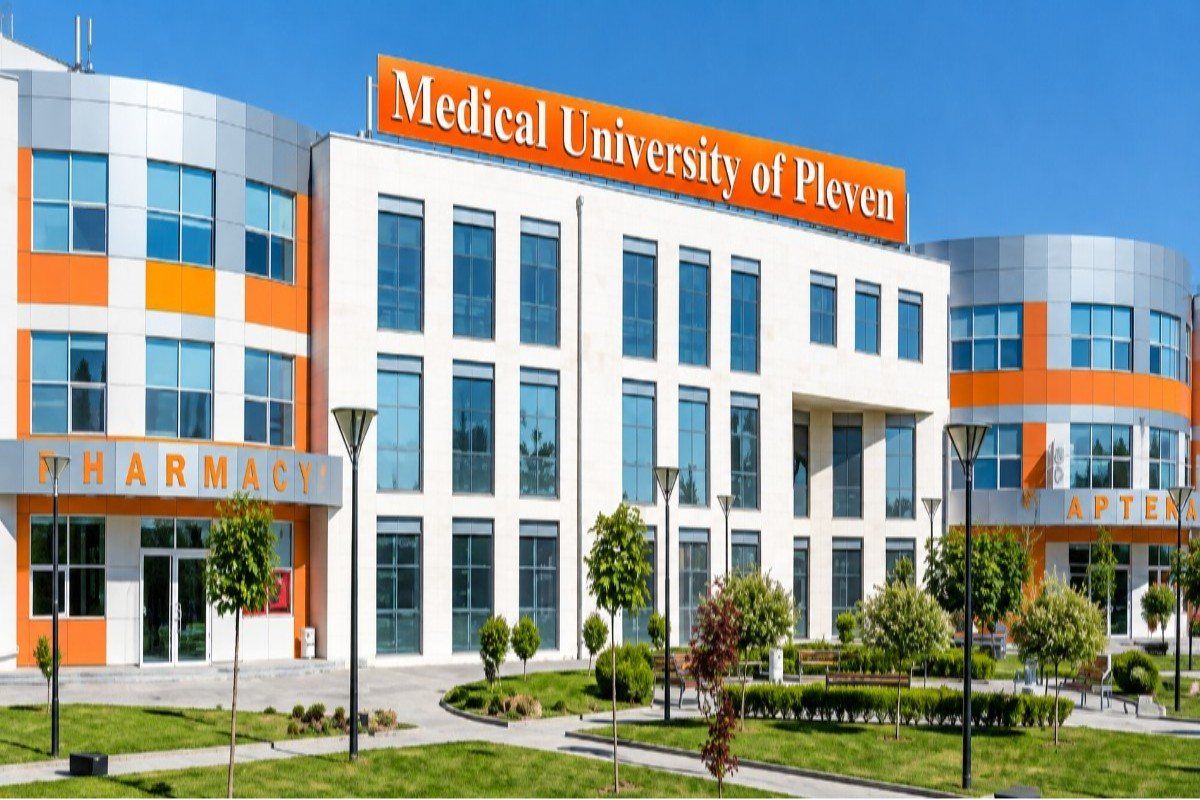
There is an old town in Plovdiv that is one of the oldest in Europe. The school opened in 1945 as the medical college of Sofia University in Plovdiv. Soon after, it became its own higher medical institute. From then until 2002, it was called the I.P. Pavlov Higher Medical Institute, but that name was changed to what it is now. The National Evaluation and Accreditation Agency has given it its stamp of approval. It is a state university run by the Bulgarian Ministry of Education and Science.
You learn medicine and get a Master's degree in Medicine over the course of six years. At the university, the course is taught in both English and Bulgarian. People from other countries have been able to join the English-medium stream since the early 1990s. The clinical rounds and all six years of school are taught in English. In the first year, you have to take Bulgarian so that you can talk to patients about their health in the third year and later. At the college, that rule is required, and students who don't follow it have a tough time with their ward work.
The course is based on the state curriculum for medicine in Bulgaria, so it is set up the same way as other schools in Bulgaria and taught the same way as departments in Plovdiv. Biochemistry, physics, physiology, biochemistry, and anatomy are some of the subjects that students learn in their first two years. Anatomy is taught during both quarters of the first year, and students have to cut up dead bodies as part of their lessons. Still, the subject that makes students work hard stand out from those who don't. You learn about pathology, pharmacology, microbiology, and practical topics that teach you how to do a clinical examination in the third and fourth years. During this time, you also stay in a hospital room for the first time. You will switch between the subspecialties in the fifth year. After six years, the last year is an internship that lasts all year. The state tests that give the degree are the last part.
The biggest and best-known hospital in southern Bulgaria is St. George University Hospital. It is also one of the biggest hospitals in the whole country. It's also where practical training takes place. There are cardiology, cardiac surgery, neurosurgery, oncology, hematology, nephrology, transplantation, and urgent care units at the hospital. It helps a lot of people in the area. These classes are also held at the specialized obstetrics and gynecology hospital, the cancer center, the mental clinic, the Kaspela hospital, and the Pulmed hospital. After the third year, you work real hours in these buildings. There are so many patients that you don't have to wait in line with other students for a single case.
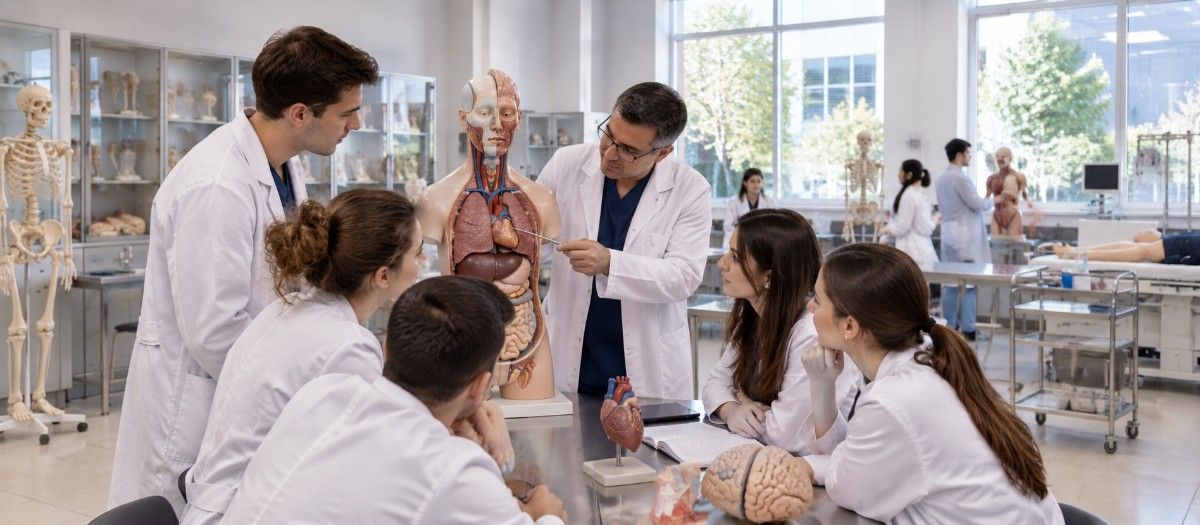
An awful lot of money is spent in Plovdiv on computer games and technology. A Medical Simulation Training Center was built by the university. It has realistic manikins, trainers for surgery and laparoscopic treatments, birthing models, and normal patient rooms. The school also is in charge of a telemedicine center and a virtual anatomy platform. You practice steps while being graded by a recording before you talk to a real patient. Through objective, structured clinical exams, the departments grade you on how well you do, not just what you remember.
The main types of research done at Plovdiv are oncology, cardiovascular disease, medical genetics, molecular medicine, and translational research. The school has a Research Institute and an office for sharing technology. It also runs projects that are paid for by the EU and the Bulgarian government. Students can join the student scientific society, work with staff in the labs, and give talks at the scientific session that happens once a year. If you want to get good medical training abroad, that experience will help you.
When you make your choice, you should think about Plovdiv. The city is on the Maritsa River, below the Rhodope Mountains, and is home to about 340,000 people. It was chosen as the European Capital of Culture for 2019. Because of its small size, Sofia can hide some of its unique qualities. However, the old town, the Roman theater, and the Kapana creative area bring them to life. It's less expensive than the capital, you can walk to the city center, and there are lots of law, medicine, and professional school students to meet new people. Sofia Airport is about two hours away by car, while Plovdiv Airport only gets some tourists during certain times of the year.
The group from around the world is big. Kids go to school in Greece, Germany, the UK, Turkey, India, Israel, Cyprus, and the Gulf states. The department of foreign affairs is in charge of admissions paperwork, letters of support for visas, residence permits, and insurance. Also, you'll be oriented for the first few weeks. This is more important than it sounds when you move to a new country where roads are written in Cyrillic.
People from other countries who want to apply must show proof that they have finished school, such as biology and chemistry grades, and pass an entrance exam in those areas. The syllabus for the exam is put out by the university. It is mostly made up of high school material instead of university material. Because the university makes new rules every year, people who apply and get good grades on their certificates might not have to pay for the training. They also need to get a certain number on the NEET if they are Indian. The National Medical Commission won't let you register after the fact if you don't have it.
It is just as well known as it is in Europe. From 1953 to 2002, the school was known as the I.P. Pavlov Higher Medical Institute. It has the school ID F0000373 in the World Directory of Medical Schools. That list helps with both the ECFMG certification and the USMLE way. The degree is in line with EU Directive 2005/36/EC. This means that as soon as you pass the state exams and register with the Bulgarian Medical Association, all EU and EEA member states will accept it as a professional degree. For graduates going back to India, the licensing test is given by the NMC. For graduates going to the UK, the test is given by the GMC.
Prepare your money well. The English school costs around EUR 8,000 a year, and there are more cheap things to do in Plovdiv than in Sofia or Varna. Private rooms cost a lot more than dorm rooms, but there aren't many dorm rooms because most older students share flats. If you cook at home and take the bus, you'll spend about 350 to 450 euros a month on things other than school.
Before you sign up, find out how the tests are given. Plovdiv does what most Bulgarian schools do and tests students verbally. You are asked a question, given a short amount of time to prepare, and then asked to explain your answer in front of your boss, who will push you. There is an oral part, as well as written and practical tests. The pass mark is not very high. A lot of students fail anatomy, biochemistry, and pathophysiology because they don't study until the end of the semester.
If you want to get a European medical degree taught in English over six years, the Medical University of Plovdiv is a good choice.
No hidden charges, no donation. The full picture of costs at MBBS in Medical University of Plovdiv.
Tuition Fee
EUR 8,000 per year (approx. USD 8,640 / INR 7,60,320)
EUR 8,000 per year (approx. USD 8,640 / INR 7,60,320) per year
Hostel Fee
EUR 1,000 per year (approx. USD 1,080 / INR 95,040)
EUR 1,000 per year (approx. USD 1,080 / INR 95,040) per year
Food & Meals
2,484 USD
per year
Insurance
325
per year
Donation
no donation
no hidden fee
Total Estimated Cost
77,766 approx.
6 YEAR
25–35%
Average FMGE first-attempt pass rates for students from many overseas medical universities. Students from structured programs consistently score higher.
Students returning to India need to clear the FMGE/NExT exam. MBBS in Medical University of Plovdiv integrates exam-oriented coaching into the regular curriculum so students are prepared from day one.
A structured program that takes you from foundational sciences to clinical mastery.
You build the anatomical foundation through dissection and microscopy. The workload is heavy from the first week, and Bulgarian language classes start immediately so you can function in the hospital later.
Human anatomy, histology and embryology, medical biology, medical chemistry, biophysics, Latin medical terminology, Bulgarian language, first aid
You learn how the healthy body works and how organisms attack it. Physiology and biochemistry carry the heaviest examination weight, and both are examined orally.
Physiology, biochemistry, microbiology and virology, hygiene, medical ethics, medical Bulgarian, social medicine
Hospital work begins. Propaedeutics teaches history taking, physical examination and case presentation, and you practise them on patients at St. George University Hospital.
General and clinical pathology, pathophysiology, pharmacology, propaedeutics of internal medicine, general surgery, medical imaging, epidemiology
You rotate through the major clinical departments and follow patients from admission to discharge. Assessment shifts towards bedside performance and case defence.
Internal medicine, surgery, paediatrics, obstetrics and gynaecology, neurology, infectious diseases, dermatology and venereology, clinical pharmacology
Subspecialty rotations widen your exposure and sharpen your differential reasoning. You attend clinical meetings, present cases and prepare for the state examinations.
Cardiology, pulmonology, gastroenterology, nephrology, endocrinology, psychiatry, ophthalmology, ENT, orthopaedics and traumatology, urology, anaesthesiology and intensive care, oncology, forensic medicine
You work as part of the clinical team through the year, on rotation across the core disciplines. The state examinations at the end grant the Master's degree in Medicine.
Pre-graduation internship in internal medicine, surgery, obstetrics and gynaecology, paediatrics, emergency medicine, general practice, social medicine
Furnished hostel rooms with Wi-Fi, laundry, 24/7 security, and Indian mess on or near campus.
Indian restaurants and mess facilities serving vegetarian and non-vegetarian home-style food daily.
Strong Indian community with cultural events, festival celebrations, and peer support groups.
Students get hands-on clinical training in government and private hospitals affiliated with the university.
Practical information for students planning to study at MBBS in Medical University of Plovdiv.
Prepare for all seasons. Thermal wear for winters, light clothing for summers. University provides heating in hostels.
Student visa processed with university invitation letter. Direct and connecting flights from major Indian cities.
Health insurance included in fees. Medical facility on campus plus city hospitals easily accessible.
Local SIM cards available. WhatsApp and video calls keep you connected with family back home.
Average monthly expenses of $150–$250 covering food, transport, and personal needs.
University library, online databases, and study groups. Seniors mentor juniors through academic challenges.
Our team guides you through every step — from application to arriving on campus.
Compare universities based on fees, location, and entrance exam format, using the university-wise fee and profile tables earlier in this guide.
Confirm your qualifying NEET score, PCB percentage, and age meet the eligibility criteria detailed above.
Gather certificates, passport, photographs, and a medical certificate as per the Documents Checklist.
Complete apostille or embassy attestation on academic documents where required.
Submit your application to your chosen university, directly or via a registered representative.
Format depends on the university, typically Biology and Chemistry, occasionally with an interview.
Universities release ranking or selection outcomes after processing entrance-exam results.
This letter is required for both the visa application and your financial planning.
Confirm your seat by paying the first-year tuition fee as invoiced by the university.
Apply at the Bulgarian embassy/consulate in India, with a realistic processing time of 4–8 weeks.
Admission Helpline — Contact our counsellors for step-by-step assistance.
“The faculty here is incredibly supportive. The clinical training during hospital rotations has given me real confidence in patient care.”
“Affordable fees without compromising on quality. The campus facilities and hostel life made my transition abroad very smooth.”
“English medium instruction and WHO-recognized curriculum were the deciding factors for me. No regrets so far — excellent experience overall.”
“The university helped with everything from visa to accommodation. Hospital exposure from year three has been invaluable for my FMGE prep.”
“Just cleared my licensing exam on the first attempt. The structured coaching and mock exams during final year were a game-changer.”
“Safe campus, good food options, and a strong Indian student community. The teaching methodology is very practical and hands-on.”
Yes. The full six years run in English, and Bulgarian is taught as a compulsory subject for ward communication.
Six years, with the sixth year spent as a supervised pre-graduation internship.
Yes. You need a qualifying score to leave for study and to register with the NMC afterwards.
Yes, in biology and chemistry, based on secondary school material. Strong certificate grades can earn an exemption.
Tuition is around EUR 8,000, and total annual costs run near EUR 12,000.
Mainly St. George University Hospital, along with several other teaching hospitals in Plovdiv.
Yes. It carried the name I.P. Pavlov Higher Medical Institute from 1953 to 2002.
Yes. The degree meets EU Directive 2005/36/EC and carries automatic recognition across EU and EEA states.
The university offers dormitory rooms, though places are limited and many students rent shared flats nearby.
The oral examinations, particularly anatomy in year one and pathophysiology in year three.
Our expert counsellors will guide you through the complete admission process — from documents to airport pickup.