
1. Is this program taught in English?
+Yes, through a dedicated English-medium Doctor of Medicine program for international students.
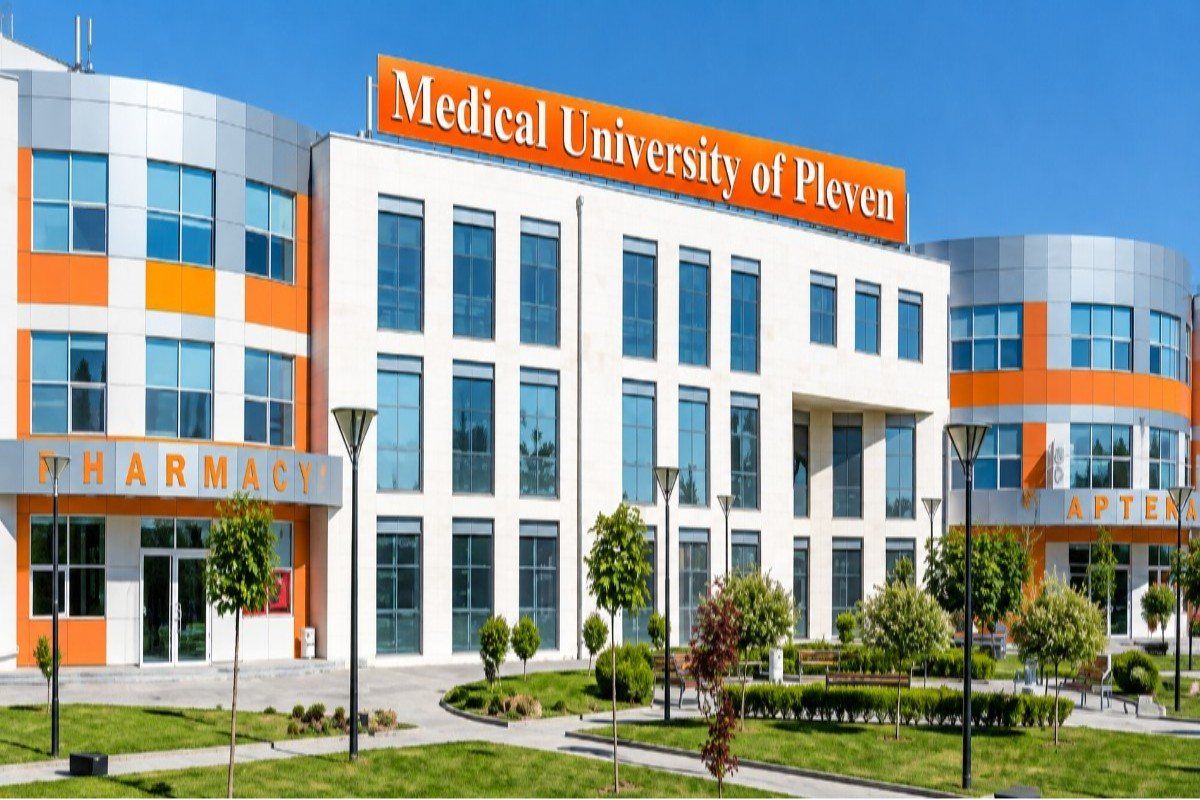
 Bulgaria | Est. 1974
Bulgaria | Listed in the World Directory of Medical Schools (WHO/WFME/FAIMER); recognised by the World Health Organization; degree recognised across the EU under Bologna Process standards. | English medium
Expert will call you within 2 hours
Numerous people believe that the Medical University of Pleven is one of the most cutting edge medical schools in the whole world. In the past, the city of Pleven in the northern part of Bulgaria was famous for being a place where people went to get medical care and go to school. Some people have grown to trust the institution over the last few decades and know that it has been doing great scientific work. The bigger college in Sofia, Bulgaria, is not the same as this student body. Additionally, it gives foreign students a better and more organized way to look for medical schools in the same country that are approved by the European Union (EU). It is also possible for students from other countries to get their Doctor of Medicine degree in English at this school. This six-year program is based on a model of European integrated medical education that is used in Bulgaria and the rest of the EU.
The student can choose how they want to take the general science classes, clinical studies, and pre-clinical training depending on their needs. Each one of them is a part of the same degree. All universities in the EU accept degrees from universities in Bulgaria because Bulgaria is a full member of the EU. That will be very good for people who want to work or go to school in Europe after college.
There are a lot of similarities between the lectures and most of the classes taught in medical schools in Bulgaria. The subjects of biochemistry, histology, microbiology, and anatomy must be well-understood by a doctor before they can work in a hospital setting. This is something that kids learn in their first three years of school. It is very important for students to get work experience between the fourth and sixth years of their clinical study. At the Pleven teaching hospitals, which are connected to universities, doctors work in a variety of specialties, such as internal medicine, surgery, pediatrics, obstetrics and gynecology, and psychology.
Many people think that the University Hospital Pleven, which is also called the Dr. Georgi Stranski University Multiprofile Hospital for Active Treatment, is one of the largest and most comprehensive hospitals in the northern part of Bulgaria. This place is where a lot of the real training takes place. Students can learn about a lot of different medical and surgical procedures when they go to a regional referral hospital that is already open for business. In addition to being a school, this building is used for many other things.
Like other medical schools in Bulgaria, this one needs international students to do well in physics, chemistry, and biology in order to be accepted. The applicants don't have to take a tough entrance test; instead, their transcripts are used to show how well they did overall. You need to teach your child English even if they have never been taught it in school in order for them to reach the level needed to be fluent in English.
In the World Directory of Medical Schools, you can find a list of medical schools from all over the world. FAIMER helped make it happen, along with the World Federation for Medical Education. Many people know this list of well-known medical schools as including the Medical University of Pleven. What the World Health Organization (WHO) says about this method is that it is good. If you have this degree along with degrees from other medical schools in Bulgaria, you might be able to get a license to practice medicine in other countries. Keep in mind that the specifics of this license will change depending on the country where you want to work as a doctor.
Going to Pleven for classes costs about the same amount of money as going to other medical schools in Bulgaria. The price goes up and down by about 7,000 to 9,500 Euros a year. The reason this is a little less than what Sofia charges is because Pleven is a smaller business and prices are already lower there. In Pleven, the cost of living has recently gone down even more, making it even more cheap to live there. For this reason, it is because it is smaller than Sofia. Because of this, people can now afford to buy food, shelter, and other daily needs at lower prices.
The National Medical Commission says that Indian students who want to study medicine in another country must have passed the National Eligibility and Eligibility Test (NEET). Also, graduates must pass either the FMGE or the NExT test before they can return to India. For people who finished medical school in a different country, this is how they can get a license.
It takes longer to get to Pleven from Sofia, and it is in a more rural and quiet part of the country. Even though it costs more and moves more slowly, people still choose to live there because it is a real regional center with great government and medical services. Pleven is a great place to study for medical students who would rather be in a small, busy area than a big city full of people. There is a reason why people all over the country learn how to become doctors in the same way.
At the Medical University of Pleven, you can get a real medical education that is recognized by the EU. It also costs a lot less to live in Pleven than in Sofia. A big teaching hospital is close by to help. The place is easy to get to. This spot is not in Sofia, the busy capital of Bulgaria, but in a smaller, calmer city. Anyone who wants to work as a doctor in Europe and learn English at the same time can find great jobs.
No hidden charges, no donation. The full picture of costs at MBBS in Medical University Pleven.
Tuition Fee
Approx. USD 7,500-10,200 per year (approx. INR 6.28-8.54 lakh)
Approx. USD 7,500-10,200 per year (approx. INR 6.28-8.54 lakh lakh)
Hostel Fee
Approx. USD 1,200-1,800 per year (approx. INR 1.00-1.51 lakh)
Approx. USD 1,200-1,800 per year (approx. INR 1.00-1.51 lakh)
Food & Meals
Approx. USD 2,000-2,600 (approx. INR 1.67-2.18 lakh lakh)
per year
Insurance
Approx. USD 350-550 (approx. INR 0.29-0.46 lakh lakh)
per year
Donation
No donation fee
No hidden fee
Total Estimated Cost
Approx. USD 66,300-90,900 per year (approx. INR 55.50-76.10 lakh)
6 Year
25–35%
Average FMGE first-attempt pass rates for students from many overseas medical universities. Students from structured programs consistently score higher.
Students returning to India need to clear the FMGE/NExT exam. MBBS in Medical University Pleven integrates exam-oriented coaching into the regular curriculum so students are prepared from day one.
A structured program that takes you from foundational sciences to clinical mastery.
Foundation of medical knowledge with lab sessions and introductory clinical exposure.
Medical sciences, including anatomy, physiology, biochemistry, histology, and microbiology.
Clinical training across internal medicine, surgery, paediatrics, obstetrics and gynaecology, and psychiatry, delivered through affiliated teaching hospitals in Pleven.
Paediatrics, Neurology, Ophthalmology, ENT
Final year practical training and structured exam preparation.
University Hospital Pleven (Dr. Georgi Stranski University Multiprofile Hospital for Active Treatment), one of northern Bulgaria's larger multi-specialty hospitals.
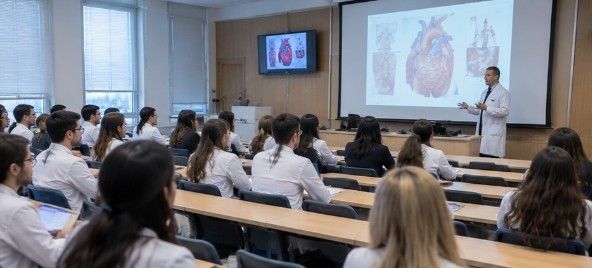
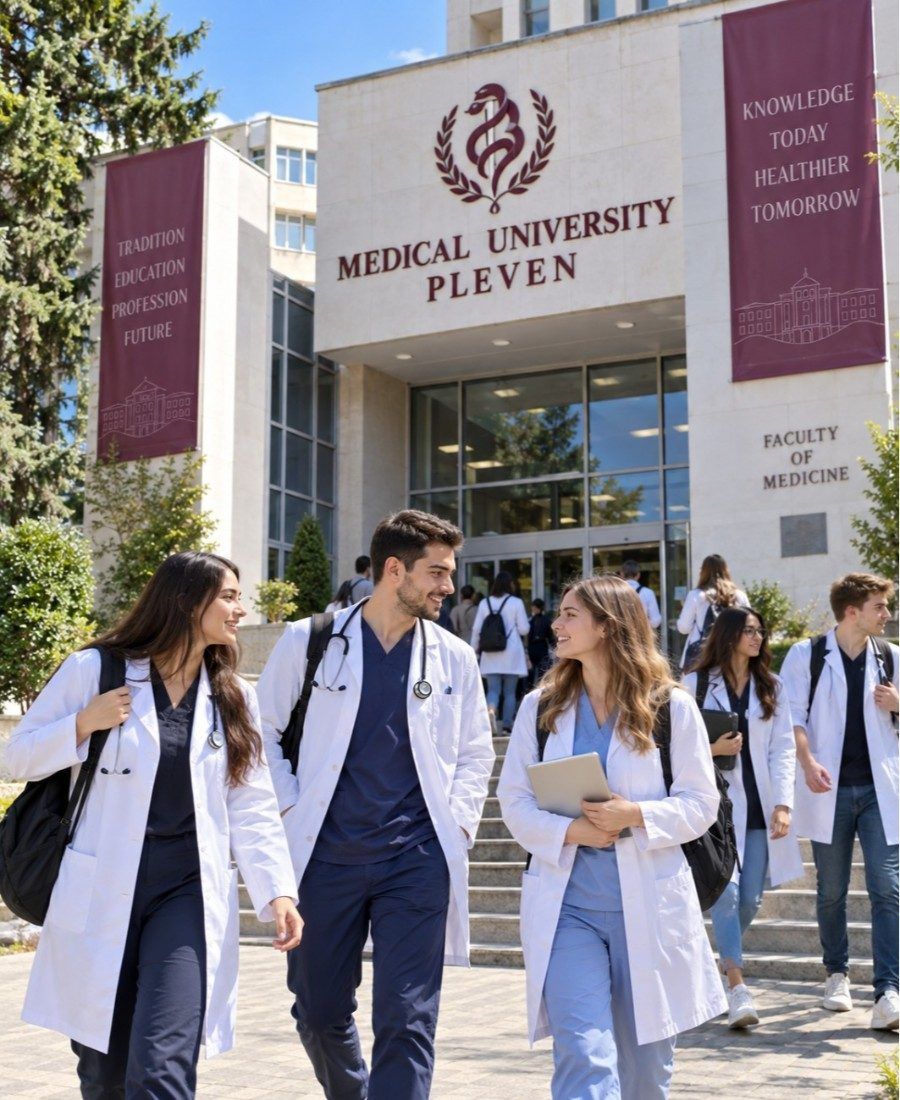
Furnished hostel rooms with Wi-Fi, laundry, 24/7 security, and Indian mess on or near campus.
Indian restaurants and mess facilities serving vegetarian and non-vegetarian home-style food daily.
Strong Indian community with cultural events, festival celebrations, and peer support groups.
Students get hands-on clinical training in government and private hospitals affiliated with the university.
Practical information for students planning to study at MBBS in Medical University Pleven.
Prepare for all seasons. Thermal wear for winters, light clothing for summers. University provides heating in hostels.
Student visa processed with university invitation letter. Direct and connecting flights from major Indian cities.
Health insurance included in fees. Medical facility on campus plus city hospitals easily accessible.
Local SIM cards available. WhatsApp and video calls keep you connected with family back home.
Average monthly expenses of $150–$250 covering food, transport, and personal needs.
University library, online databases, and study groups. Seniors mentor juniors through academic challenges.
Our team guides you through every step — from application to arriving on campus.
Compare universities based on fees, location, and entrance exam format, using the university-wise fee and profile tables earlier in this guide.
Confirm your qualifying NEET score, PCB percentage, and age meet the eligibility criteria detailed above.
Gather certificates, passport, photographs, and a medical certificate as per the Documents Checklist.
Complete apostille or embassy attestation on academic documents where required.
Submit your application to your chosen university, directly or via a registered representative.
Format depends on the university, typically Biology and Chemistry, occasionally with an interview.
Universities release ranking or selection outcomes after processing entrance-exam results.
This letter is required for both the visa application and your financial planning.
Confirm your seat by paying the first-year tuition fee as invoiced by the university.
Apply at the Bulgarian embassy/consulate in India, with a realistic processing time of 4–8 weeks.
Admission Helpline — Contact our counsellors for step-by-step assistance.
“The faculty here is incredibly supportive. The clinical training during hospital rotations has given me real confidence in patient care.”
“Affordable fees without compromising on quality. The campus facilities and hostel life made my transition abroad very smooth.”
“English medium instruction and WHO-recognized curriculum were the deciding factors for me. No regrets so far — excellent experience overall.”
“The university helped with everything from visa to accommodation. Hospital exposure from year three has been invaluable for my FMGE prep.”
“Just cleared my licensing exam on the first attempt. The structured coaching and mock exams during final year were a game-changer.”
“Safe campus, good food options, and a strong Indian student community. The teaching methodology is very practical and hands-on.”
Yes, through a dedicated English-medium Doctor of Medicine program for international students.
Generally no. Admission is based primarily on academic transcripts, without a demanding, separate entrance examination.
Approximately EUR 7,000-9,500 per year (roughly USD 7,500-10,200), often slightly lower than Sofia's fees, though this should be confirmed directly with the university.
Yes, mandatory, consistent with National Medical Commission rules for studying medicine abroad.
Yes. It's lisoted in the WHO's World Directory of Medical Schools, and as an EU medical degree, it carries autmatic recognition across all EU member states.
Primarily at University Hospital Pleven, one of northern Bulgaria's larger multi-specialty regional referral hospitals.
Genuinely lower. Pleven is a smaller city than Sofia, with correspondingly lower accommodation, food, and daily expense costs, even by Bulgaria's already affordable standards.
A quieter, more provincial Bulgarian city than Sofia, with a slower pace of life, while still functioning as a genuine regional centre with proper civic and medical infrastructure.
Standard pathways include practising within the EU, pursuing USMLE for the US or PLAB for the UK, or returning to India to sit the FMGE/NExT exam, subject to each destination's own requirements.
Its combination of genuine EU recognition, a substantial regional teaching hospital, and a smaller, more affordable, tightly-knit study environment compared to Bulgaria's larger, busier capital city university.
Our expert counsellors will guide you through the complete admission process — from documents to airport pickup.