Is the medical program at Trakia University taught in English?
+Yes, the international track runs fully in English, alongside a separate Bulgarian-medium track for domestic students.
 Bulgaria | Est. 1995
Bulgaria | Institutionally accredited by Bulgaria's National Evaluation and Accreditation Agency (NEAA). | English (international track); Bulgarian for domestic students. medium
Expert will call you within 2 hours
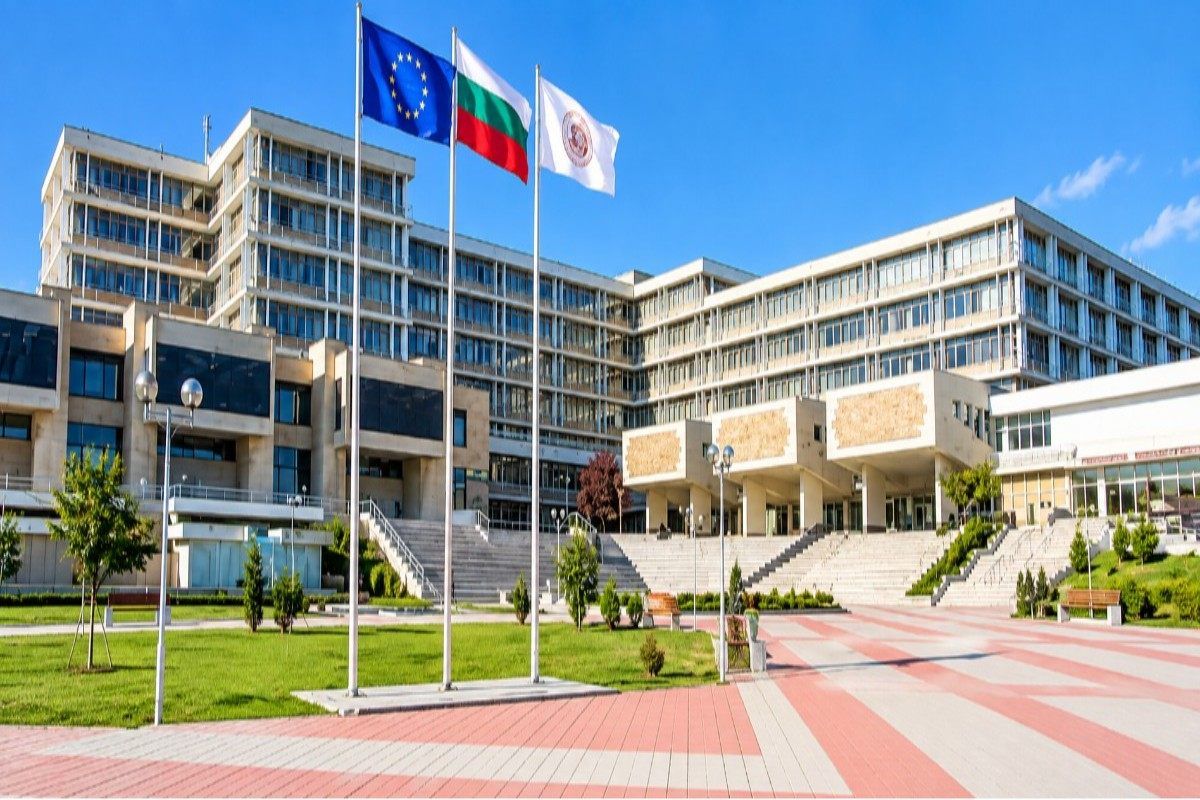
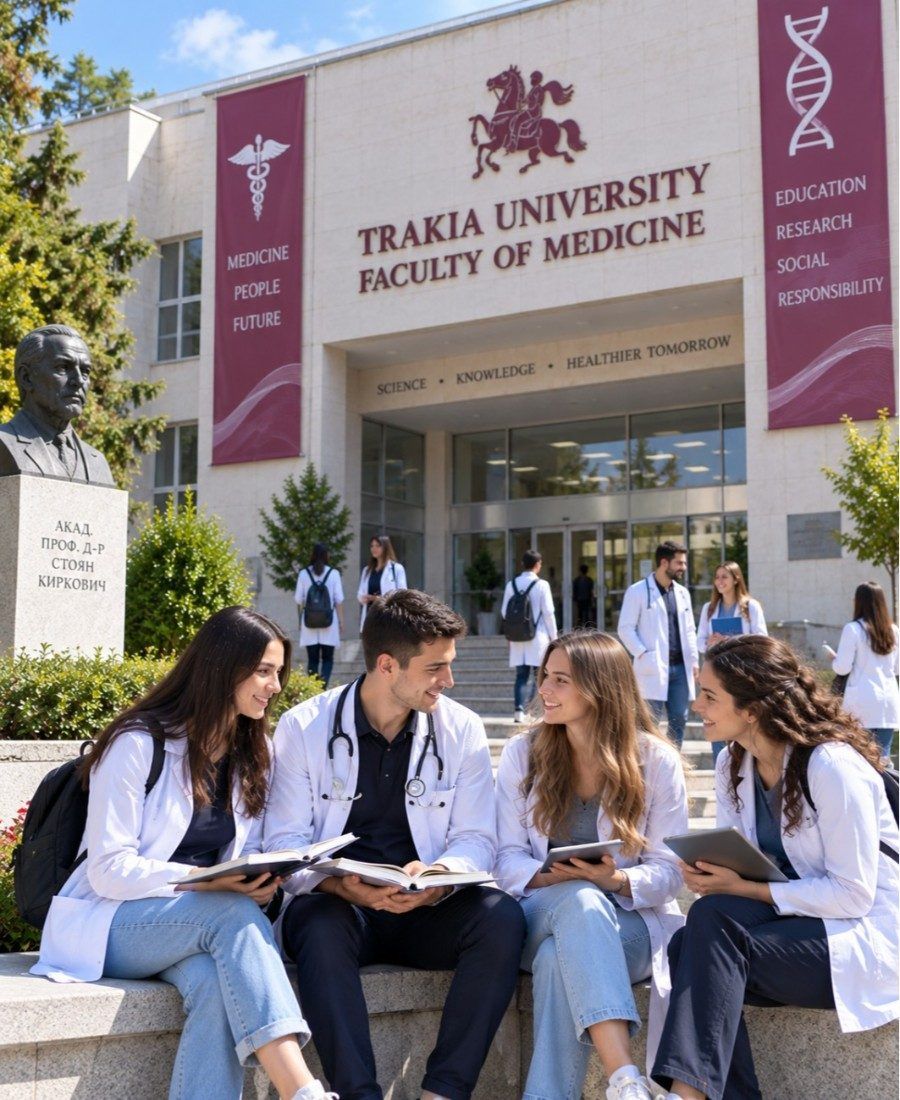
This city is in the middle of Bulgaria. The city is quiet and in the middle of the coun ry. It has long history that goes back to the time of the Thracians and wide streets lined with trees. This is the place where Trakia University's Faculty of Medicine is. It is very different here for students from the busier medical schools on the coast or in Sofia, the capital of the country.
The bigger university was made when several higher education institutions in Stara Zagora merged in 1995 to form a single, unified group. There have always been a lot of different academic programs at Trakia University because of this. These include programs in health sciences, veterinary medicine, agriculture, and technical studies. In this way, the school didn't get a bad reputation for being a medical school that only taught one subject. The university's stronger background in biology and biological studies is used by the Faculty of Medicine as part of this bigger system.
The way Trakia's medical education program is set up is the same as how Bulgarian degrees are usually set up. How this course is set up makes it look like a Master's study. You get the job title of Doctor when you finish, which takes six years. All of Bulgaria's other medical schools use the same model. Students from other countries learn English. There are two parts to the course: the early preclinical years are for general study, and the later years are for hands-on and clinical training.
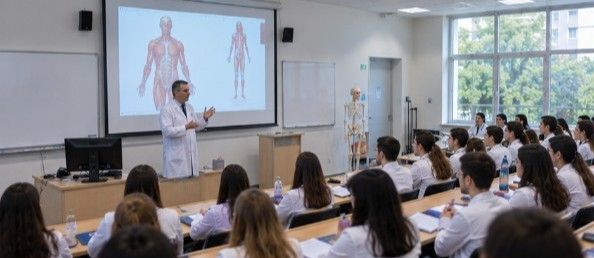
The first part of the class is all about learning simple things. The subjects that are taught in this class are anatomy, physiology, biochemistry, and histology. You learn the basic science that every doctor needs before you move on to topics that are more focused on diseases. They learn about pathology, pharmacology, and microbiology in the middle years of the study. This gets them ready to learn general medicine and get their first experience in the field. It's been all about clinical rotations for the past few years. These include major medical fields like surgery, pediatrics, obstetrics and gynecology, and internal medicine. There are clinical training centers in Stara Zagora that are linked to the university and this is where the shifts happen.
The university is connected to other health care facilities in the area, as well as the Stara Zagora University Hospital, which is used for clinical training. This lets students learn by treating real patients in a moderately sized regional hospital. It also gives students a wider range of cases to work on and lets them learn faster than at a city hospital that is busier and bigger.
There are a lot of facilities at Trakia University. These include modern classrooms, simulation rooms for better clinical skills, and a library with materials that are shared with all of the academic departments. This university also has strong programs in farming and veterinary science that allow students to meet with each other and with other students. Students who are interested in One Health or comparative medicine may find this useful because it lets them learn about several areas at once. This is because the Faculty of Medicine is part of a bigger university that teaches a lot of different things.
Most of the time, Trakia University costs about the same as any public medical school in Bulgaria. This is because the university costs about the same as most medical schools in Bulgaria that offer English-language degrees. Stara Zagora is usually cheaper than Sofia or the coastal towns as a place to live. From these numbers, we can see that the area is less busy and more peaceful, which can make a big difference over six years.
When it comes to people from outside of Bulgaria, the process for getting in is the same as the national process. They also have to show proof that they can speak and write English well if English is not their first language. You must have a high school diploma that is recognized, good grades in basic science classes like biology and chemistry, and proof that you can speak and write English well. People who want to go to Trakia or any other medical school in Bulgaria have to take an entrance exam that covers both biology and chemistry. Those who want to go to the university should check with the admissions office to see what style is being used right now.
In Bulgaria, all of the public medical schools follow the same pattern. This is what makes the degree valid. The medicine degree can be used anywhere in the EU because it was earned at a fully recognized university in Bulgaria. This means that graduates can go to any EU country to work or go to school. So, Indian college students who want to go home after graduation should check the latest rules from the National Medical Commission. This is because people who have graduated from a medical school outside of India must pass either the FMGE or the NExT test before they can work and register in India. This is still true no matter what country they got their degree in.
When compared to the main student cities in Bulgaria, Stara Zagora is a much calmer and cheaper choice. Every day it takes longer to get around in the city, which helps some students stay focused on their tough six-year medical course. The city has a lot of history as well. In the middle of the city, you can find old Roman ruins. It only takes two hours to drive to Sofia, so students who want to see a bigger city but don't want to live there full-time can have no trouble getting there.
Students who want to get a medical degree in Bulgaria but want to do so in a quieter, cheaper regional city instead of a capital or coastal city should consider Trakia University's Faculty of Medicine. It is a standard and reliable choice among Bulgaria's state medical schools. English is used in school. Before applying, students should call the university to find out about current tuition, the format of the admissions test, and the details of how to be recognized.
No hidden charges, no donation. The full picture of costs at MBBS in Trakia University Faculty of Medicine.
Tuition Fee
EUR ~€7,000-9,000 pe year
USD $7,700-$9,900 per year
Hostel Fee
USD 1,650-2,200 per year
USD 1,650-2,200 per year
Food & Meals
USD $3,080-$3,960
per year
Insurance
USD $300- $500
per year
Donation
No donation fee
No Hidden fee
Total Estimated Cost
USD ~74,580-96,360 per year
Approx. 6 years
25–35%
Average FMGE first-attempt pass rates for students from many overseas medical universities. Students from structured programs consistently score higher.
Students returning to India need to clear the FMGE/NExT exam. MBBS in Trakia University Faculty of Medicine integrates exam-oriented coaching into the regular curriculum so students are prepared from day one.
A structured program that takes you from foundational sciences to clinical mastery.
Foundation of medical knowledge with lab sessions and introductory clinical exposure.
Anatomy, Physiology, Biochemistry, and Histology.
Deeper understanding of human body systems and disease mechanisms.
Pathology, Pharmacology, and Microbiology, alongside early clinical skills training.
Internal Medicine, Surgery, Paediatrics, and Obstetrics and Gynaecology, delivered through Stara Zagora University Hospital and affiliated clinical sites.
Paediatrics, Neurology, Ophthalmology, ENT
Furnished hostel rooms with Wi-Fi, laundry, 24/7 security, and Indian mess on or near campus.
Indian restaurants and mess facilities serving vegetarian and non-vegetarian home-style food daily.
Strong Indian community with cultural events, festival celebrations, and peer support groups.
Students get hands-on clinical training in government and private hospitals affiliated with the university.
Practical information for students planning to study at MBBS in Trakia University Faculty of Medicine.
Prepare for all seasons. Thermal wear for winters, light clothing for summers. University provides heating in hostels.
Student visa processed with university invitation letter. Direct and connecting flights from major Indian cities.
Health insurance included in fees. Medical facility on campus plus city hospitals easily accessible.
Local SIM cards available. WhatsApp and video calls keep you connected with family back home.
Average monthly expenses of $150–$250 covering food, transport, and personal needs.
University library, online databases, and study groups. Seniors mentor juniors through academic challenges.
Our team guides you through every step — from application to arriving on campus.
Compare universities based on fees, location, and entrance exam format, using the university-wise fee and profile tables earlier in this guide.
Confirm your qualifying NEET score, PCB percentage, and age meet the eligibility criteria detailed above.
Gather certificates, passport, photographs, and a medical certificate as per the Documents Checklist.
Complete apostille or embassy attestation on academic documents where required.
Submit your application to your chosen university, directly or via a registered representative.
Format depends on the university, typically Biology and Chemistry, occasionally with an interview.
Universities release ranking or selection outcomes after processing entrance-exam results.
This letter is required for both the visa application and your financial planning.
Confirm your seat by paying the first-year tuition fee as invoiced by the university.
Apply at the Bulgarian embassy/consulate in India, with a realistic processing time of 4–8 weeks.
Admission Helpline — Contact our counsellors for step-by-step assistance.
“The faculty here is incredibly supportive. The clinical training during hospital rotations has given me real confidence in patient care.”
“Affordable fees without compromising on quality. The campus facilities and hostel life made my transition abroad very smooth.”
“English medium instruction and WHO-recognized curriculum were the deciding factors for me. No regrets so far — excellent experience overall.”
“The university helped with everything from visa to accommodation. Hospital exposure from year three has been invaluable for my FMGE prep.”
“Just cleared my licensing exam on the first attempt. The structured coaching and mock exams during final year were a game-changer.”
“Safe campus, good food options, and a strong Indian student community. The teaching methodology is very practical and hands-on.”
Yes, the international track runs fully in English, alongside a separate Bulgarian-medium track for domestic students.
6 years, following Bulgaria's standard Master's-level medical degree structure.
Estimates place tuition in the range of €7,000 to €9,000 per year, in line with typical Bulgarian medical school fees. Confirm the exact current rate directly with the university.
Yes, in line with standard National Medical Commission rules for studying medicine abroad.
Yes, generally covering Biology and Chemistry, matching the standard pattern used across most Bulgarian medical schools. Confirm the current exact format directly with admissions.
Yes, recognised across the European Union. Indian graduates must still clear FMGE or NExT under NMC rules to practise in India, and graduates aiming for other countries should confirm that country's own specific requirements.
At Stara Zagora University Hospital and further affiliated regional clinical sites tied to the university.
It sits inside a broader, multi-subject university with strong agricultural and veterinary science programs, offering a genuinely different academic setting alongside core medical training, plus a calmer, more affordable regional city base.
A quieter, more affordable alternative to Sofia or Bulgaria's coastal cities, with real historical depth including ancient Roman ruins in the city centre, and Sofia reachable within a couple of hours by road.
Its position inside a wider university gives medical students some access to cross-disciplinary academic ties, including the university's strong agricultural and veterinary science programs, useful for students interested in fields like One Health or comparative medicine.

Our expert counsellors will guide you through the complete admission process — from documents to airport pickup.