
Q1. Is Saarland's medical faculty located in Saarbrücken?
+No. It's in Homburg, about 30 kilometres from the main Saarbrücken campus, with its own dedicated hospital and teaching buildings.
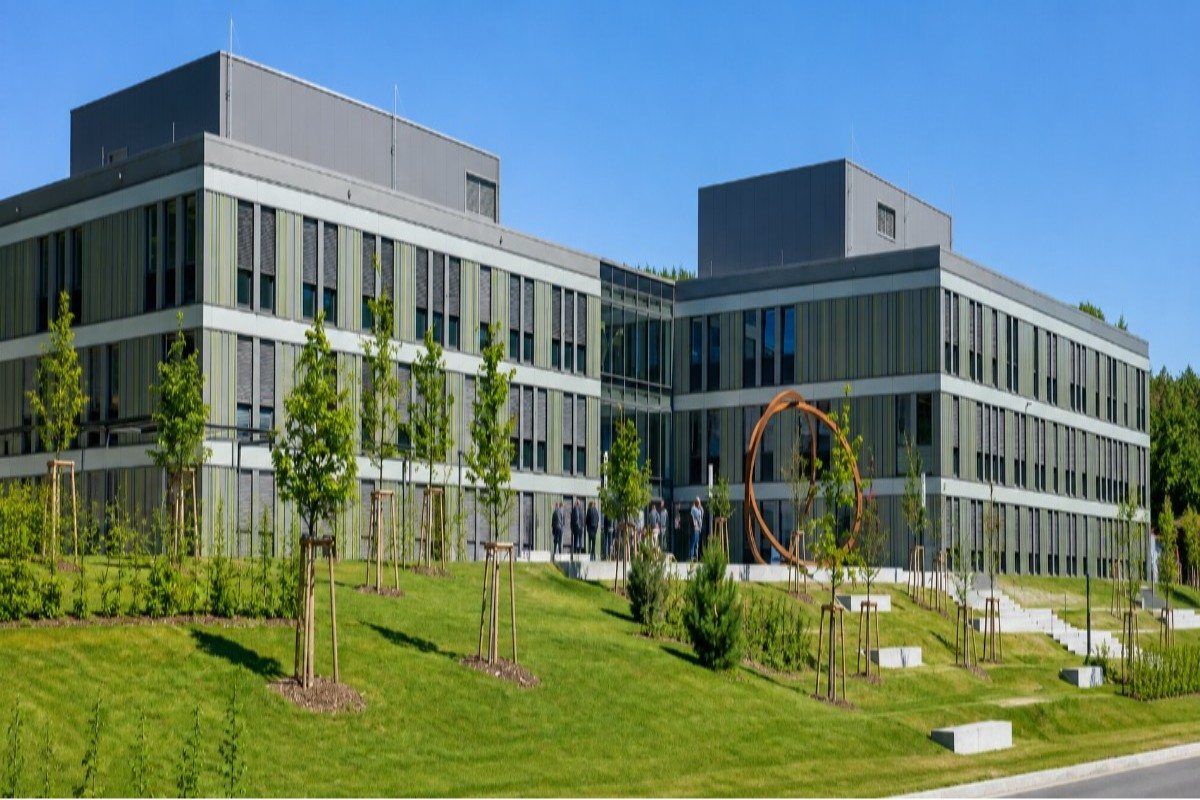
 Germany | Est. 1948
Germany | State-recognized German public medical faculty; degree governed by the national Approbationsordnung für Ärzte | German only; no English-taught medical degree track medium
Expert will call you within 2 hours
Saarland University was founded in November 1948, and its backstory is unlike any other German medical school. At the time, Saarland wasn't part of Germany. It was a semi-autonomous "Saar Protectorate," tied to France by a currency and customs union, still finding its footing after the Second World War. The university built from that in-between status was designed as a bridge between two countries, not a copy of a German model.
Here's a fact most guides skip: the university's first rector, Jean Barriol, was French, and he called the new institution "the instrument of a truly European spirit." Saarland University ran bilingually in German and French, drew support from the French government, and operated under the patronage of the University of Nancy in its earliest years. In 1950 it was formally proclaimed a "European University," one of the first places in Germany to wear that label. So, unlike almost every other German medical faculty, Saarland's origin story is genuinely French-German, not German with some partnerships added later.
That French connection didn't last politically. In January 1957, after a referendum and the Treaty of Luxembourg, Saarland rejoined West Germany as its newest federal state, in what Germans call the "kleine Wiedervereinigung," the small reunification. The full economic changeover took until 1959, when the deutschmark replaced the franc. The university kept its bilingual, Europe-facing character afterward, and it still runs a dedicated Europa-Institut as a legacy of that founding identity.
Here's an unusual fact most guides skip: medical training in Saarland predates the university itself. Clinical courses for advanced medical students started in Homburg's state hospital in January 1946, two years before the university existed on paper. A training center, the Centre Universitaire d'Études Supérieures de Hombourg, was set up on 8 May 1947 under Nancy's academic patronage. So, when people say Saarland's medical school is "as old as the university," that's actually an understatement.
The medical faculty has a precise, documented timeline. It opened formally on 8 March 1947 in the assembly hall of the Homburg state hospital, before French and Saarland officials, using the former state hospital buildings as its first clinical home. Teaching in Homburg began on 9 April 1948. The faculty's formal constitution followed on 1 October 1948, weeks before the wider university's November 1948 launch in Saarbrücken. So, Saarland's medical faculty isn't a department added onto an existing university — it's one of the founding pillars the institution was built around.
Beyond Human Medicine (Humanmedizin), the faculty runs Dentistry (Zahnmedizin), a Bachelor's and Master's track in Human and Molecular Biology with the science faculty, Nutrition Medicine and Dietetics, Advanced Practice Nursing, and Physiotherapy. It's smaller than Germany's biggest medical schools, with roughly 2,000 students across medicine and dentistry, but its allied-health and biomedical-science range gives it more breadth than a pure clinical school.
One teaching feature worth knowing: Saarland runs a longitudinal communication training called HOM-KIT (Homburger Kommunikations- und Interaktionstraining), threading practical doctor-patient skills through preclinical and clinical years rather than one isolated course. The faculty describes its curriculum as the classical German state-examination model, not one of the newer "Modellstudiengang" reform tracks other schools use. So, students get a traditional, exam-driven structure with communication skills woven in as a running thread.
Here's the detail that trips up a lot of applicants: the medical faculty is not in Saarbrücken, where Saarland University's main campus and most other faculties sit. It's about 30 kilometres away in Homburg, a separate town with its own dedicated campus built around the state hospital that hosted those first medical courses in 1946. Medical students live and study in Homburg, largely apart from the rest of the student body.
The teaching hospital is the Universitätsklinikum des Saarlandes (UKS), and it runs at serious scale. UKS reports around 1,400 to 1,500 beds across some 30 clinics and 20 institutes, with over 600 doctors and roughly 2,000 nursing staff treating about 54,000 inpatients and 213,000 outpatients yearly. It functions as Saarland's Maximalversorger, the top tier of maximum care, handling the state's most complex cases with around 200 ICU beds. So, for a state as small as Saarland, this one hospital carries an outsized share of the region's serious medicine.
Research at Homburg centers on a handful of named institutes rather than one giant umbrella center. The José Carreras Center for Immuno- and Gene Therapy, founded in 2005, works on blood cancers and gene therapy. The Preclinical Center for Molecular Signal Processing (PZMS) is a dedicated research building for studying how cells process molecular signals. The newer Klaus Faber Institute for Neuroimmunology focuses on diseases like multiple sclerosis. So, rather than one flagship research brand, Homburg's strength shows up as several focused institutes, each tied to a specific disease area.
One curricular priority worth flagging is the rural-doctor pathway. Since the 2020/21 winter semester, Saarland has run a Landarztquote, a reserved admissions quota for students who commit, after finishing their studies and specialty training, to ten years of family-medicine practice in underserved rural parts of the state. Selection weighs school grades, aptitude test results, work experience, and an interview. So, Saarland uses its admissions process itself as a tool to address a very local problem: too few doctors want to practice outside the cities.
Human Medicine follows the standard German Staatsexamen (state examination) model: a single integrated degree rather than separate bachelor's and master's stages, running 12 semesters of study plus a Praktisches Jahr (practical year), for a total of about six years and three months before the final state exam and licence to practice, the Approbation.
Admission runs entirely through hochschulstart.de, Germany's national clearinghouse for medicine and a few other capped subjects. Places are split across three national quotas: the Abiturbestenquote (best school-leaving grades, 30 percent), the Zusätzliche Eignungsquote (additional aptitude quota using the TMS test, 10 percent), and the Auswahlverfahren der Hochschulen (university-specific selection, 60 percent), plus Saarland's own Landarztquote for rural-medicine commitments. The programme only starts in the winter semester.
On cost, Saarland is one of the more student-friendly German states: no tuition fee applies to Bachelor's, Master's, or state-examination degrees, and this holds for both EU and non-EU students alike, unlike Baden-Württemberg, which charges non-EU students €1,500 per semester. Every enrolled student still pays a semester contribution (Semesterbeitrag), which for 2026/27 totals €412.30, covering the student services fee, student union charges, insurance, and a nationwide public-transport ticket.
Parameter | Details |
Established | Medical faculty founded 1947–48; Saarland University founded November 1948 |
Institution Type | Public state university |
Location | Homburg (Saar), ~30 km from the Saarbrücken main campus |
Programme | Human Medicine (Staatsexamen), plus Dentistry and allied health programmes |
Duration | 12 semesters + Praktisches Jahr (~6 years 3 months) |
Medium of Instruction | German |
Foreign Quota Note | No separate non-EU tuition fee; admission via hochschulstart.de national quotas |
Teaching Hospital | Universitätsklinikum des Saarlandes (UKS), Homburg |
Fee Component | Amount | Notes |
Tuition Fee | €0 | No tuition for Staatsexamen programmes in Saarland |
Non-EU Student Fee | €0 | Saarland does not charge non-EU students separately |
Semester Contribution | €412.30 (2026/27) | Covers student services, AStA, insurance, national transport ticket |
Living Costs | approx. €800–€1,000/month | Not separately confirmed by an official source; general German student-cost estimate |
Approx. Total Programme Cost | Semester fees only, ~€2,600–€5,200 over 6.25 years | Excludes living costs; no tuition component |
Most rival pages describe a German medical school's "international outlook" as a study-abroad office and some English electives. Saarland's international character is written into its founding documents. Its first rector was French, its early funding and academic patronage came through France and the University of Nancy, and it was declared a "European University" in 1950, years before European integration was a common talking point in higher education. So, when Saarland calls itself European, it's citing a 1948 fact, not a 2020s marketing pitch.
Most guides mention Homburg and Saarbrücken in the same breath, as if they were one campus with two names. They aren't. Medical students train in Homburg, a separate town 30 kilometres from the main university, built around a hospital that was teaching medicine before the university itself existed. So, anyone choosing Saarland for its main-campus culture is choosing the wrong faculty; medical students live a genuinely separate student life in Homburg.
Saarland's medical faculty is small by German standards, around 2,000 students across medicine and dentistry combined, and it teaches entirely in German through the classical state-exam curriculum rather than a modern reform track. There's no English-taught medicine programme, so weak German is a real barrier, not just an inconvenience. The physical separation from the main Saarbrücken campus also means medical students miss out on the broader university's size, societies, and facilities.
This faculty fits students who want serious clinical training at a genuine Maximalversorger hospital, in a smaller, close-knit setting, and who are drawn to its rural-medicine quota or its specific research strengths in immunotherapy and molecular signaling. Students who want a big-city campus experience, English-language instruction, or a reform-style curriculum with early clinical exposure should look elsewhere.
No hidden charges, no donation. The full picture of costs at MBBS at the Faculty of Medicine Saarland University Homburg.
Tuition Fee
Roughly €824.60 EUR per Year
None for EU or non-EU students
Hostel Fee
Approx. €3,000 – €4,560 EUR per year
Approx. €3,000 – €4,560 EUR per year
Food & Meals
Approximately USD $ 1,218
per year
Insurance
Approximately €1,200 – €1,440 EUR
per year
Donation
No donation fee
No hidden fee
Total Estimated Cost
Approximately €60,000 - €68,000 EUR
6 Year
25–35%
Average FMGE first-attempt pass rates for students from many overseas medical universities. Students from structured programs consistently score higher.
Students returning to India need to clear the FMGE/NExT exam. MBBS at the Faculty of Medicine Saarland University Homburg integrates exam-oriented coaching into the regular curriculum so students are prepared from day one.
A structured program that takes you from foundational sciences to clinical mastery.
Ends with the Physikum, the first state examination (M1)
Semesters 1–4: basic sciences including anatomy, biochemistry, physiology, and physics for medicine
Longitudinal HOM-KIT communication and interaction training runs alongside coursework
Semesters 5–7: transition into clinical subjects such as pathology, pharmacology, and clinical examination skills
Second state examination (M2) portion assessed progressively through this phase
Semesters 8–10: rotations through major clinical specialties at UKS, including internal medicine, surgery, and specialty clinics
Full-time supervised clinical work at UKS or an approved partner hospital
Three rotations of 16 weeks each: internal medicine, surgery, and an elective specialty
Successful candidates receive the Approbation, the license to practice medicine in Germany
Third state examination (M3), an oral-practical exam, completes the Staatsexamen sequence
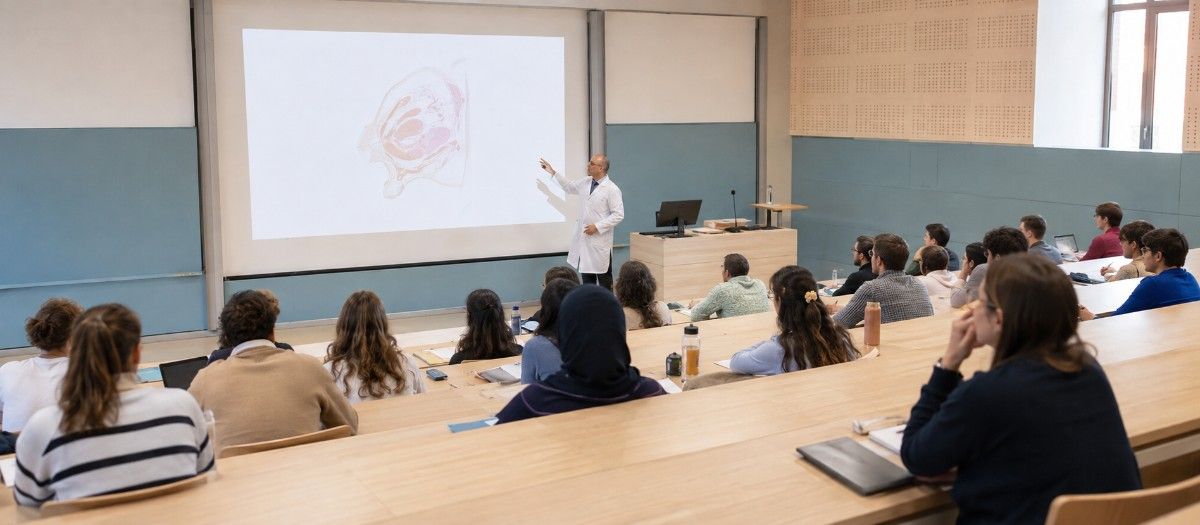
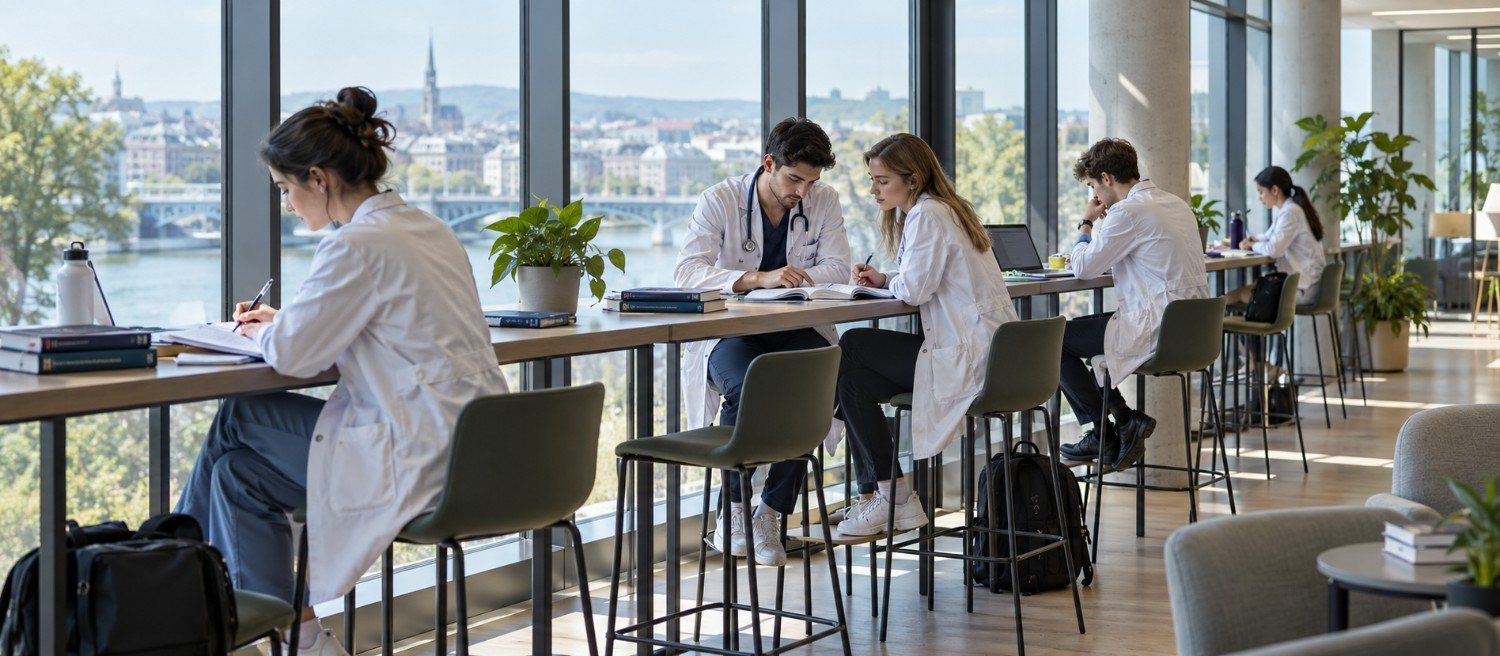
Furnished hostel rooms with Wi-Fi, laundry, 24/7 security, and Indian mess on or near campus.
Indian restaurants and mess facilities serving vegetarian and non-vegetarian home-style food daily.
Strong Indian community with cultural events, festival celebrations, and peer support groups.
Students get hands-on clinical training in government and private hospitals affiliated with the university.
Practical information for students planning to study at MBBS at the Faculty of Medicine Saarland University Homburg.
Prepare for all seasons. Thermal wear for winters, light clothing for summers. University provides heating in hostels.
Student visa processed with university invitation letter. Direct and connecting flights from major Indian cities.
Health insurance included in fees. Medical facility on campus plus city hospitals easily accessible.
Local SIM cards available. WhatsApp and video calls keep you connected with family back home.
Average monthly expenses of $150–$250 covering food, transport, and personal needs.
University library, online databases, and study groups. Seniors mentor juniors through academic challenges.
Our team guides you through every step — from application to arriving on campus.
Begin German lessons as early as possible, ideally alongside Class 11–12, targeting B1 within 12 months and progressing toward the required B2–C1 level.
Submit Class 10, 12, and any higher-education transcripts for verification. Processing typically takes 3–5 weeks; apply early, since this gates every subsequent step.
portal and apply to the correct track, the M-Kurs for medical aspirants, at your shortlisted Studienkolleg institutions.
Complete the roughly 10–12 month M-Kurs program covering Biology, Chemistry, Physics, and German, then pass the Feststellungsprüfung (FSP), the qualifying exam for university entry.
Submit applications to your shortlisted universities. Uni-assist fees run €75 for the first program and €30 for each additional program in the same semester.
University decisions follow Uni-assist’s document evaluation and forwarding; final admission is always the university’s own decision.
Deposit €11,904 into a blocked account (via Fintiba, Expatrio, or a similar provider) and arrange either public (€140–€160/month) or private health insurance; both are mandatory prerequisites for the visa stage.
Submit your visa application at the German consulate in India (Delhi, Mumbai, Bengaluru, or Chennai), with your admission letter, APS certificate, language proficiency proof, blocked account confirmation, and insurance proof. Realistic processing time is 6–12 weeks.
Bring originals of every document submitted digitally. Be prepared to discuss your study plans, financial arrangements, and reasons for choosing Germany.
Book travel around your intake date (October for Winter, April for Summer), and complete formal university enrollment on arrival. Medical study then begins with the Pre-Clinical phase.
Admission Helpline — Contact our counsellors for step-by-step assistance.
“The faculty here is incredibly supportive. The clinical training during hospital rotations has given me real confidence in patient care.”
“Affordable fees without compromising on quality. The campus facilities and hostel life made my transition abroad very smooth.”
“English medium instruction and WHO-recognized curriculum were the deciding factors for me. No regrets so far — excellent experience overall.”
“The university helped with everything from visa to accommodation. Hospital exposure from year three has been invaluable for my FMGE prep.”
“Just cleared my licensing exam on the first attempt. The structured coaching and mock exams during final year were a game-changer.”
“Safe campus, good food options, and a strong Indian student community. The teaching methodology is very practical and hands-on.”
No. It's in Homburg, about 30 kilometres from the main Saarbrücken campus, with its own dedicated hospital and teaching buildings.
Medical teaching began in Homburg in 1946, a formal faculty opened in March 1947, and it was formally constituted on 1 October 1948, just before Saarland University's wider November 1948 founding.
Saarland was a semi-autonomous, French-administered protectorate in 1948. The university was founded with French government support, patronage from the University of Nancy, and a French inaugural rector, Jean Barriol.
No. Saarland charges no tuition fee to EU or non-EU students in Staatsexamen programmes, only the standard semester contribution.
No. Instruction is entirely in German, and a strong command of German is required before starting.
A reserved admissions quota for applicants who commit to ten years of family-medicine practice in rural Saarland after finishing training.
The Universitätsklinikum des Saarlandes (UKS), Saarland's Maximalversorger, with roughly 1,400–1,500 beds.
Twelve semesters plus a Praktisches Jahr, about six years and three months total, ending with the Staatsexamen and Approbation.
Dentistry, Human and Molecular Biology, Nutrition Medicine and Dietetics, Advanced Practice Nursing, and Physiotherapy.
Immunotherapy and gene therapy at the José Carreras Center, and molecular signal processing research at the PZMS institute.


Our expert counsellors will guide you through the complete admission process — from documents to airport pickup.