
Q1. When was UNE's School of Rural Medicine established?
+In 2007, delivering medicine through the Joint Medical Program with the University of Newcastle.
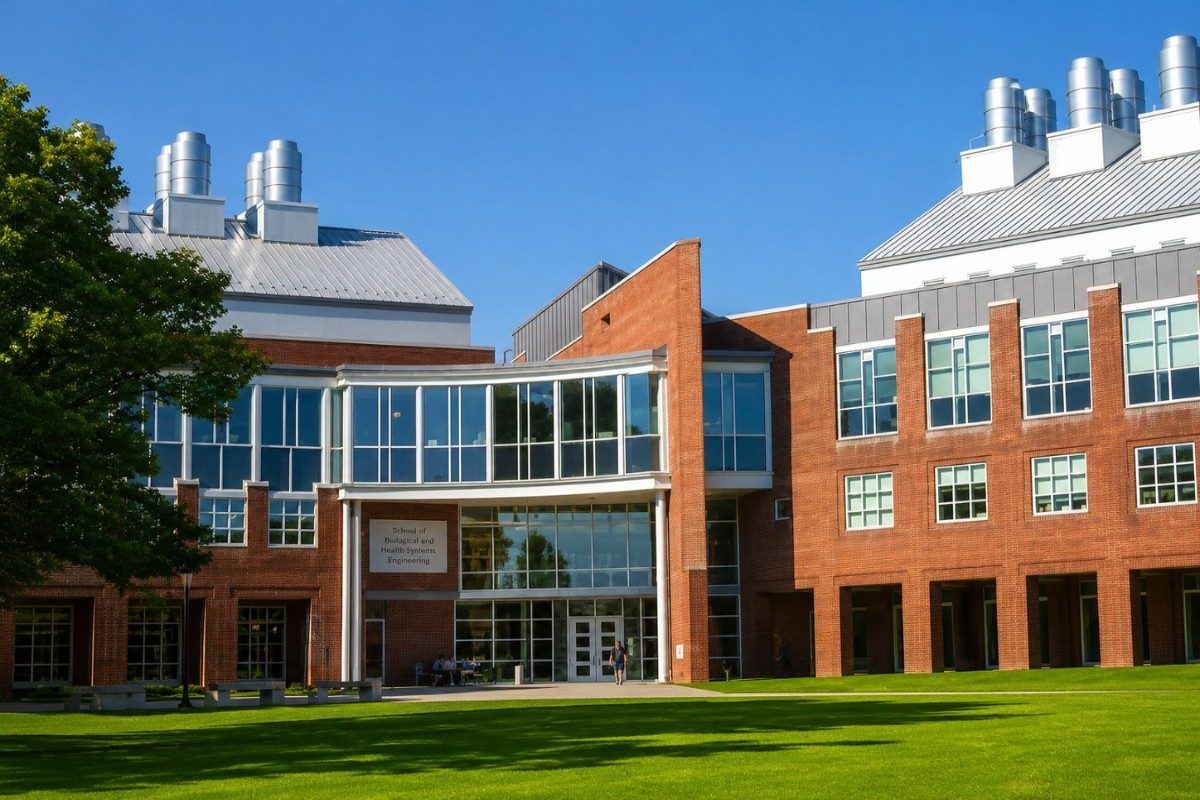
 Australia | Est. 1938
Australia | A public Australian university operating under TEQSA. Graduates of the Joint Medical Program become eligible for registration with the Medical Board of Australia once they've completed the required internship year. | English, throughout the entire Joint Medical Program. medium
Expert will call you within 2 hours
Most people just call it UNE, or the Armidale medical school. Its story is regional from day one, really. Back in 1938 it started life as New England University College, tied to the University of Sydney, and it wasn't until 1954 that it broke away and became fully independent — which, as it turns out, made it the first Australian university ever set up outside a state capital.
Here's something a lot of guides never mention. UNE doesn't actually run a medical degree of its own. What it has is the School of Rural Medicine, set up in 2007, and medicine gets delivered through the Joint Medical Program (JMP), run together with the University of Newcastle and backed by the Hunter New England and Central Coast Local Health Districts. This was Australia's first jointly run medical programme, full stop, and it grew out of a curriculum Newcastle had already been using since the late 1970s — problem-based learning, early clinical exposure, ideas that were genuinely new for Australian medical schools at the time.
There's a bigger reason behind all this too. Training doctors partly out of a regional city like Armidale, rather than a capital, is meant to push more doctors into rural and remote parts of Australia. Students rotate through one of six JMP clinical schools, and a good number end up spending a full year at a rural site — Armidale, Taree, or Tamworth. So this isn't just something the marketing team likes to mention; it's woven into how the degree actually works.
It's a public university, running on Commonwealth Supported Places and government funding. Clinical training in Armidale happens through the Tablelands Clinical School, which opened in 2009 right on the grounds of Armidale Rural Referral Hospital, alongside UNE's own anatomy lab and simulation facilities on campus.
Armidale sits in the New England Tablelands of northern New South Wales, roughly halfway between Sydney and Brisbane. It's this rural setting that gave UNE its whole identity as Australia's first regional university. The main campus covers 74 hectares built around the old Booloominbah homestead, and over more than eight decades it's grown into a genuine university town.
What really sets the Tablelands Clinical School apart is proximity — it sits right on the hospital grounds. Years 4 and 5 students get direct guidance from local specialist clinicians there, plus working simulation labs and their own dedicated study space. It's not a token week or two of rural exposure bolted onto an otherwise city-based degree. It's a real, sustained part of the training.
Let's be straight about this. Medicine through UNE isn't a standalone degree from UNE itself. It's the combined Bachelor of Medical Science and Doctor of Medicine, delivered jointly with the University of Newcastle as the JMP — five years total, with both degrees handed over together on a single testamur once you finish.
Everything runs in English, following Australia's usual medical education model, and the curriculum is exactly the same whether you're at the Newcastle site or Armidale.
Getting a place takes more than a good ATAR. You'll sit the UCAT ANZ, go through a Personal Qualities Assessment, and do a Multiple Skills Assessment interview. The usual minimum ATAR is 94.3, though it drops to 85 if you're from a rural or remote background. Around 170 Commonwealth Supported Places open up each year between the two universities, and roughly 48 of those are typically Bonded Medical Places.
Cost-wise, the domestic route is genuinely subsidised — Commonwealth Supported Places mean you only pay the government-set contribution, currently around AUD 13,200 a year, rather than the degree's full cost. International applicants can't just apply to the JMP directly, though. Those places only exist through specific agreements with overseas institutions or governments, or a small number tied to Newcastle's Foundation Certificate pathway.
Parameter | Details |
Founded | UNE founded 1938 as New England University College, independent from 1954; School of Rural Medicine established 2007 |
Institution Type | Public university, funded through Commonwealth Supported Places and Australian government contributions |
Location | Armidale, New South Wales, Australia, with clinical training also based in Newcastle and regional New South Wales |
Programme | Bachelor of Medical Science and Doctor of Medicine, Joint Medical Program (JMP) |
Duration | 5 years, awarded on a single testamur across both degree stages |
Medium of Instruction | English |
Admission Route | UCAT ANZ, Personal Qualities Assessment, and Multiple Skills Assessment interview via UAC; ATAR 94.3, or 85 for rural background |
Teaching Hospital | Tablelands Clinical School at Armidale Rural Referral Hospital, one of six JMP clinical schools |
Fee Component | Amount | Notes |
Domestic Tuition (Commonwealth Supported Place) | Approx. AUD 13,200 per year | Subsidised by the Australian government; most domestic students pay this rate |
International Tuition | Not directly applicable | International places only come via overseas institutional agreements or the Foundation pathway |
Bonded Medical Places | Included within CSP places | Around 48 of the 170 annual places, tied to a rural service commitment after graduation |
Living Costs (rent) | Approx. AUD 200 to 400 per week | Armidale is considerably cheaper than Sydney or Newcastle |
Food and Other Costs | Approx. AUD 150 to 250 per week | Groceries, transport, and leisure |
Scholarships | Available, e.g. Thomas Brewer Scholarship, Equity and Rural Medicine Scholarships | Roughly AUD 2,000 to 25,000 depending on the award |
Most competing pages skip right past this. The JMP was Australia's first medical programme delivered jointly by two universities, and it's built on a curriculum Newcastle pioneered back in the 1970s under founding dean David Maddison — problem-based learning, personal-qualities assessment, ideas that felt genuinely radical for Australian medical training at the time.
Plenty of guides just assume rural training means a short placement stapled onto a city-based degree. Not here. UNE's Tablelands Clinical School sits directly on the grounds of Armidale Rural Referral Hospital, giving senior students sustained, real exposure to rural specialist practice rather than a quick visit.
Let's be fair about a few things. This isn't something international applicants can just apply to directly — JMP places for overseas students depend on specific institutional or government agreements. And domestic admission is genuinely competitive, resting on a strong ATAR, solid UCAT ANZ results, and a structured interview process, not open enrolment. So who does this actually suit? Australian and New Zealand domestic students with strong grades who want a genuinely rural-focused medical education and don't mind Armidale's regional setting — or international students who already have a place through one of the specific overseas partnerships. If you want a big capital-city medical school with open international enrolment, this probably isn't it. But for those who fit the JMP pathway, UNE offers subsidised domestic fees, hospital-based training that's genuinely close, and a real commitment to rural and regional healthcare.
No hidden charges, no donation. The full picture of costs at MBBS in University of New England Faculty of Medicine & Health School of Rural Medicine.
Tuition Fee
AUD 96,000–129,500 ≈ ₹66.0 lakh–₹89.1 lakh per year
AUD 70,000–85,000 / ₹48.0 lakh–₹58.3 lakh per year
Hostel Fee
AUD 15,000–25,000 ≈ ₹10.3 lakh–₹17.2 lakh per year
AUD 15,000–25,000 ≈ ₹10.3 lakh–₹17.2 lakh per year
Food & Meals
AUD 10,000–18,000 ≈ ₹6.88 lakh–₹12.38 lakh
Per Year
Insurance
AUD 700–1,500 ≈ ₹48,000–₹1.03 lakh
Per Year
Donation
No Donation
No Hidden Fee
Total Estimated Cost
AUD 480,000–647,500 ≈ ₹3.29 crore–₹4.45 crore
5 Year
25–35%
Average FMGE first-attempt pass rates for students from many overseas medical universities. Students from structured programs consistently score higher.
Students returning to India need to clear the FMGE/NExT exam. MBBS in University of New England Faculty of Medicine & Health School of Rural Medicine integrates exam-oriented coaching into the regular curriculum so students are prepared from day one.
A structured program that takes you from foundational sciences to clinical mastery.
Problem-based learning, biomedical and foundational medical sciences, anatomy and an early introduction to clinical medicine. Clinical skills and attitudes begin from Year 1, with community-based learning and rural-health exposure.
Anatomy, Histology, Biochemistry, Medical Biology
Continued integrated study of human health, disease processes, diagnosis and clinical reasoning through the JMP's problem-based curriculum. Clinical skills continue through structured tutorials and community-based teaching, with a strong rural and regional health focus.
Physiology, Microbiology, Pathology, Pharmacology
Students undertake the major transition from predominantly campus-based learning to clinical attachments. Training includes geographically distributed general-practice placements and hospital-based clinical experience.
Internal Medicine, Surgery, Obstetrics & Gynaecology
Prolonged, predominantly full-time clinical attachments are undertaken within one of the JMP's clinical-school regions. Students develop patient assessment, communication, investigation, diagnosis and management skills across major clinical disciplines.
Paediatrics, Neurology, Ophthalmology, ENT
The final year is structured around intensive clinical experience and a full-year pre-internship style of clinical placements. Students consolidate clinical competence, patient-centred care, procedural skills, safety, teamwork and readiness for supervised medical practice.
Psychiatry, Dermatology, Radiology, Emergency Medicine
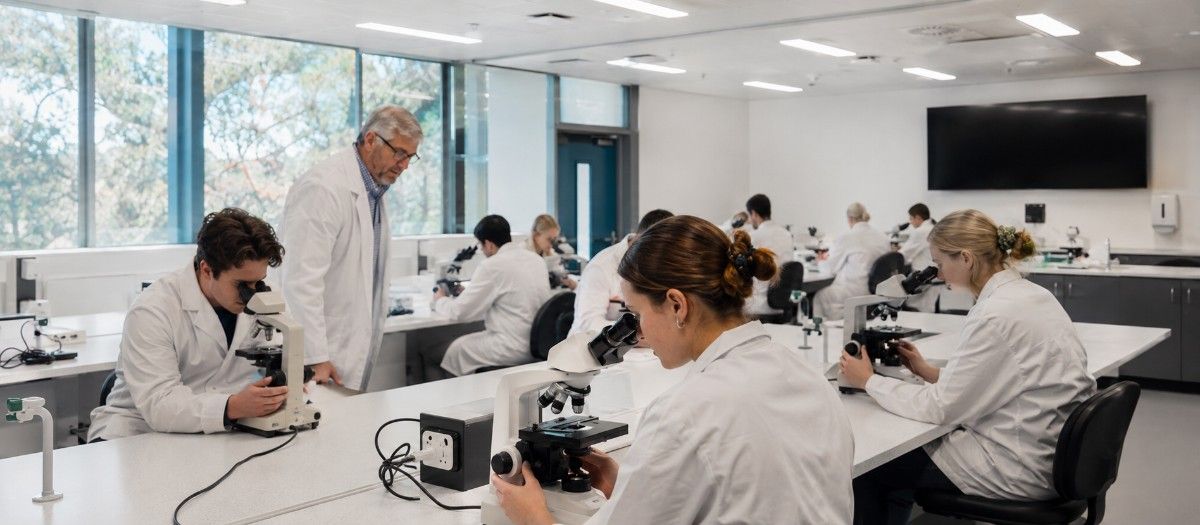

Furnished hostel rooms with Wi-Fi, laundry, 24/7 security, and Indian mess on or near campus.
Indian restaurants and mess facilities serving vegetarian and non-vegetarian home-style food daily.
Strong Indian community with cultural events, festival celebrations, and peer support groups.
Students get hands-on clinical training in government and private hospitals affiliated with the university.
Practical information for students planning to study at MBBS in University of New England Faculty of Medicine & Health School of Rural Medicine.
Prepare for all seasons. Thermal wear for winters, light clothing for summers. University provides heating in hostels.
Student visa processed with university invitation letter. Direct and connecting flights from major Indian cities.
Health insurance included in fees. Medical facility on campus plus city hospitals easily accessible.
Local SIM cards available. WhatsApp and video calls keep you connected with family back home.
Average monthly expenses of $150–$250 covering food, transport, and personal needs.
University library, online databases, and study groups. Seniors mentor juniors through academic challenges.
Our team guides you through every step — from application to arriving on campus.
Discuss your academic profile, budget, and target universities before shortlisting anything.
Compare universities based on eligibility, fees, city, and pathway (UG vs graduate entry), not just brand recognition.
Verify your academic record and entrance exam plan against each shortlisted university’s specific requirements.
Gather transcripts, SOP, LORs, and test scores in the format each university requires.
Submit applications to your shortlisted universities.
Receive a conditional or unconditional offer letter.
Pay the initial deposit to confirm your place and receive your Confirmation of Enrolment.
Apply for the Subclass 500 visa with your CoE, Genuine Student statement, financial evidence, and OSHC proof.
Book flights, confirm accommodation, and complete pre-departure orientation requirements.
Complete on-arrival formalities at your university and begin your course.
Admission Helpline — Contact our counsellors for step-by-step assistance.
“The faculty here is incredibly supportive. The clinical training during hospital rotations has given me real confidence in patient care.”
“Affordable fees without compromising on quality. The campus facilities and hostel life made my transition abroad very smooth.”
“English medium instruction and WHO-recognized curriculum were the deciding factors for me. No regrets so far — excellent experience overall.”
“The university helped with everything from visa to accommodation. Hospital exposure from year three has been invaluable for my FMGE prep.”
“Just cleared my licensing exam on the first attempt. The structured coaching and mock exams during final year were a game-changer.”
“Safe campus, good food options, and a strong Indian student community. The teaching methodology is very practical and hands-on.”
In 2007, delivering medicine through the Joint Medical Program with the University of Newcastle.
Five years, combining the Bachelor of Medical Science and Doctor of Medicine into one programme.
Yes, entirely, following Australia's standard medical education model.
No. International places only come through specific agreements with overseas institutions or governments, or the Foundation pathway.
Domestic students pay the Commonwealth Supported Place contribution, currently around AUD 13,200 a year, rather than full tuition.
The Bachelor of Medical Science and Doctor of Medicine, awarded together on a single testamur.
The Tablelands Clinical School, based at Armidale Rural Referral Hospital.
Not automatically — Indian graduates would still need to clear a route like NExT.
Public, regulated by TEQSA and funded through Commonwealth Supported Places.
It was built specifically to tackle doctor shortages in rural and regional Australia, tying students to rural placements right through the degree.

Our expert counsellors will guide you through the complete admission process — from documents to airport pickup.