
Q1. When was the University of Perugia founded?
+It was formally founded in 1308, though an institution teaching medicine and law already existed in the city from the early 1200s.
 Italy | Est. 1328
Italy | Recognised by Italy's Ministry of University and Research as an authorised Single-Cycle Degree in Medicine and Surgery. | Italian runs through the standard programme medium
Expert will call you within 2 hours
People mostly just call it UniPG, or simply Perugia. It's a genuinely old Italian state university, formally founded in 1308, making it one of the oldest universities in Italy and the world. Even before that formal founding, an institution teaching medicine and law already existed in Perugia from the early 1200s, funded chiefly by the city's own comune. So, medicine and Perugia's academic life have been connected for well over 700 years, long before the university took its formal, chartered shape.
The founding milestones themselves are specific and well documented. On 1 August 1318, Pope John XXII granted the university the right to confer degrees in civil and canon law. On 18 February 1328, that right was extended to medicine and the arts. In 1355, Emperor Charles IV issued an edict reinforcing these papal grants and elevating the university to imperial rank, explicitly intended to help Perugia recover after the devastating plague waves of 1348 to 1349. So, medicine at Perugia carries a genuinely ancient, multiply-confirmed legal foundation, rather than a single vague origin story.
Here's a fact most guides skip entirely. During the turbulent revolutionary period of the late 1700s, two university figures, Annibale Mariotti, a professor of theoretical medicine and anatomy, and Antonio Brizi, led early reform efforts at the university. When papal government returned afterward, it reopened the university and, from that same era, the Accademia Anatomico-Chirurgica was founded, complete with its own anatomical theatre. So, this faculty's engagement with the scientific medicine of its time runs through some of the most turbulent political moments in modern Italian history.
The twentieth century reshaped the wider university considerably. Under Rector Paolo Orano in the 1930s, the university added faculties of Political Science, Veterinary Medicine, Chemistry, and Agriculture alongside its original Law and Medicine and Surgery faculties. Under Rector Giuseppe Ermini, from 1945 to 1976, the university expanded further still, adding Sciences in 1957, Letters and Philosophy in 1958, Teacher Training in 1965, Engineering in 1968, and Economics in 1969. So, the Faculty of Medicine and Surgery has watched the wider university grow up around it across nearly two centuries of continuous change.
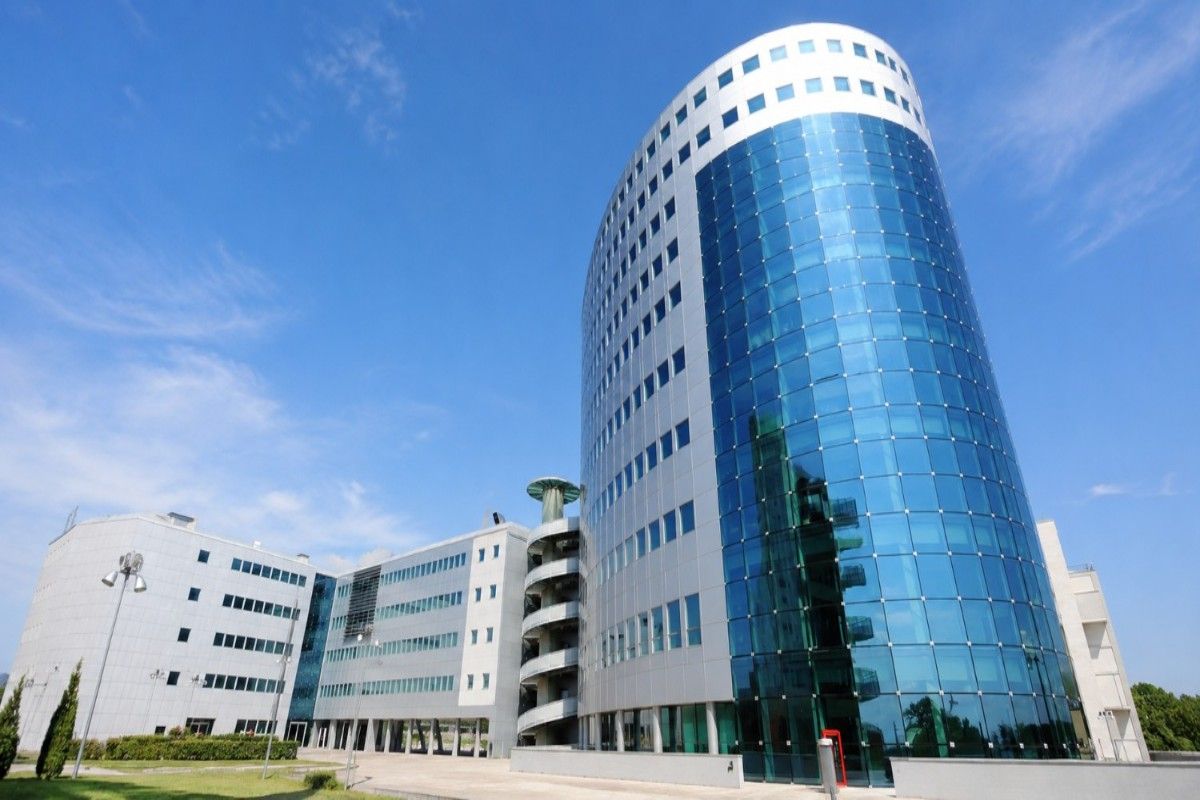
Today, the Medicine and Surgery degree runs across two teaching poles: Perugia itself, and Terni, where a second pole has operated since 1974. The university's Nursing degree runs across three sites simultaneously: Perugia, Foligno, and Terni. The Faculty's newer home sits at the Polo Unico Ospedaliero, a single hospital hub described as one of the most significant Italian building projects of recent decades, part of a much wider programme of urban renewal across Perugia, including the restoration of the former Officine Gelsomini, Palazzo Stocchi, and an ongoing project at Palazzo San Bernardo. So, the faculty's physical growth has been tied directly to a genuinely large-scale civic redevelopment effort, not just a single new building.
Perugia today counts more than 26,000 enrolled students, a genuinely significant figure given the city's modest size, and the wider university now offers around 100 degree programmes, with 7 delivered entirely in English and more than 20 offered wholly or partly in English, plus 48 joint or double-degree pathways with foreign institutions. Medicine and Surgery specifically maintains one such international pathway: a double-degree agreement with Pirogov Russian National Research Medical University in Russia, a distinctive but limited international route rather than a full, separate English-taught IMAT track of the kind offered at some other Italian medical schools.
Perugia is the capital of Umbria, a region in central Italy known for its hill towns and historic centre, and the university has become a genuine fixture of the city's identity and daily life. Medical teaching is delivered fully in person, with online access via Microsoft Teams available only in specific, approved circumstances.
Clinical training runs through the Ospedale Santa Maria della Misericordia in Perugia and the Azienda Ospedaliera Santa Maria in Terni, giving students exposure to two separate hospital networks across the two teaching poles. So, students choosing the Terni pole specifically train within a distinct regional hospital system from those based in Perugia itself.
Medicina e Chirurgia at Perugia runs as a Laurea Magistrale a Ciclo Unico, a six-year Single-Cycle Degree taught in Italian, combining preclinical and clinical training within one continuous programme rather than separate stages. As with all Italian medical degrees, no separate rotating internship year follows graduation, since clinical placements run throughout the six years themselves; graduates must still pass Italy's Esame di Stato and register with the country's medical professional body before practising independently.
Admission runs under Italy's national framework for programmes with a fixed, legally mandated quota, covering Medicine and Surgery, Dentistry, and Veterinary Medicine specifically. The exact admission procedure was most recently reformed under Legge 14 marzo 2025, n. 26, published in Italy's Gazzetta Ufficiale on 18 March 2025, replacing the country's older single-test entrance system. Place numbers, test structure, and deadlines are set annually by ministerial decree and published through Italy's national accessoprogrammato portal.
Tuition fees at Perugia follow Italy's standard public-university, income-scaled model, and the figures here are genuinely precise. Students whose ISEE Università, Italy's specific equivalent income indicator for university financial aid, sits at or below EUR 22,000 fall within the university's No Tax Area and are completely exempt from the annual student contribution, paying only a first-installment charge covering the regional right-to-study tax and a small stamp duty, together running to roughly EUR 140 to 160. Students above that threshold are placed into one of 17 graduated contribution brackets, rising with income up to a ceiling ISEE value of EUR 100,000, with the maximum annual fee for students within their normal course duration plus one extra year running to approximately EUR 2,000. Fees are typically paid across 4 or 5 installments, with a small discount available for students who choose to pay in two instalments instead.
Real, documented merit-based support also exists. Students who pass every exam in the previous academic year with an average of at least 27 out of 30 receive a 50 percent reduction on their tuition from the second year onward. Students who enrol in a laurea magistrale after completing their bachelor's degree within four years, with a final mark of 105 out of 110 or higher, receive a 50 percent discount on enrolment. The university also distributes several hundred smaller merit-based grants each year to particularly high-achieving students. So, the real cost for a strong, lower-income Perugia medical student can end up considerably below the maximum bracket figures.
Living costs in Perugia are relatively modest for an Italian university city, generally reported at somewhere between EUR 600 and 800 a month. NEET remains a genuine requirement for Indian applicants here, exactly as it does for most MBBS-abroad destinations, and Indian graduates would still need to clear the FMGE or NExT exam to practise medicine back in India.
Parameter | Details |
Established | University founded 1308; Faculty of Medicine and Surgery dates to the university's earliest years (right to confer medical degrees granted 1328) |
Institution Type | Public Italian university (Università degli Studi di Perugia) |
Location | Perugia, Umbria, Italy, with a second teaching pole in Terni (active since 1974) |
Programme | Medicina e Chirurgia, a Single-Cycle Degree (Laurea Magistrale a Ciclo Unico), taught in Italian |
Duration | 6 years; no separate internship year, though the state licensing exam follows graduation |
Medium of Instruction | Italian (a specific international double-degree pathway exists with a Russian medical university, alongside the standard programme) |
Foreign Quota Note | Admission via Italy's national medical entrance framework; a fixed number of places are set annually by ministerial decree |
Teaching Hospitals | Ospedale Santa Maria della Misericordia (Perugia) and Azienda Ospedaliera Santa Maria (Terni) |
Fee Component | Amount | Notes |
Tuition (No Tax Area, ISEE Università up to EUR 22,000) | EUR 0 | Complete exemption from the annual student contribution; only the first-installment regional tax applies |
First Installment (regional tax + related charges) | Approx. EUR 140 to 160 | Standard Italian regional tax for the right to study, plus stamp duty; applies even to No Tax Area students |
Tuition (ISEE Università above EUR 22,000, graduated by bracket) | Rising through 17 brackets up to a ceiling ISEE of EUR 100,000 | Fee increases progressively with income; paid in 4 or 5 installments |
Maximum Annual Tuition (highest bracket, in-course students) | Approx. EUR 2,000 | Applies to students within normal course duration plus one extra year |
Merit-Based Reductions | 50% reduction from year 2 for students averaging 27/30 or above | Additional discounts exist for meritorious continuing students and new master's entrants |
Most rival pages cite one founding date and move on. Here, medicine's own right to confer degrees was granted by a specific papal decree in 1328, then reinforced by imperial edict in 1355 explicitly to help the city recover after the Black Death. So, this faculty's founding is documented through multiple, independently dated legal acts, not one vague medieval reference.
Most guides quote a single tuition figure. At Perugia, students with an ISEE Università at or below EUR 22,000 pay effectively nothing beyond a small regional tax, while the true annual maximum, even at the very top income bracket, tops out at roughly EUR 2,000. So, the realistic cost range here is genuinely wide and genuinely documented, not a single flat international rate.
Be upfront about a few real considerations here. This programme runs in Italian, so it isn't a direct option for applicants without strong Italian language ability, unlike Italy's separate English-taught IMAT programmes elsewhere. The one international pathway available, the double-degree link with a Russian medical university, is a specific, limited arrangement rather than a broad international admissions track. Admission itself runs under a strict national quota system, with places set annually by the Ministry.
So, who fits here best? Strong Italian-speaking candidates drawn to a genuinely ancient medical faculty with real, documented income-based tuition relief, fit well here. Students comfortable with Perugia's two-pole structure across Perugia and Terni fit well too. However, applicants who specifically need an English-taught programme should look toward Italy's dedicated IMAT-based medical schools instead. Still, the faculty's deep historical roots and its genuinely generous no-tax threshold are real, well-documented strengths.
No hidden charges, no donation. The full picture of costs at MBBS in University of Perugia Faculty of Medicine and Surgery.
Tuition Fee
€150 to €2,200 per year
EUR 0 per year (No Tax Area) — only regional tax/stamp duty (approx. EUR 140-160
Hostel Fee
Approx. EUR 600 to 800 per month — approx. EUR 43,200 to 57,600 over 6 years (Perugia is relatively affordable)
Approx. EUR 600 to 800 per month — approx. EUR 43,200 to 57,600 over 6 years (Pe
Food & Meals
€150 and €300
per month
Insurance
€700.00 per year
per year
Donation
No Donation
No hidden fee
Total Estimated Cost
Approx. EUR 55,200 to 69,600 over 6 years — maximum tuition plus living costs
6 year
25–35%
Average FMGE first-attempt pass rates for students from many overseas medical universities. Students from structured programs consistently score higher.
Students returning to India need to clear the FMGE/NExT exam. MBBS in University of Perugia Faculty of Medicine and Surgery integrates exam-oriented coaching into the regular curriculum so students are prepared from day one.
A structured program that takes you from foundational sciences to clinical mastery.
● Delivered primarily through in-person frontal lectures and individual study, plus optional interactive elective courses.
● Covers Anatomy, Physiology, and Biochemistry, forming the scientific foundation for everything that follows.
● Introduces interdisciplinary lessons with clinical projections alongside the core science curriculum.
● Covers Pathology, Microbiology, Pharmacology, and Community Medicine.
● Runs through the Ospedale Santa Maria della Misericordia in Perugia or the Azienda Ospedaliera Santa Maria in Terni, depending on the student's pole.
● Covers Medicine, Surgery, and allied clinical subjects, with professionalising placements guided by tutor faculty.
● Includes the evaluative, licence-enabling clinical placement required under Legislative Decree No. 58 of 9 May 2018.
● Clinical placement teaching increases progressively each year, reaching its most intensive point by the sixth year.
● Graduates must pass Italy's Esame di Stato and register with the relevant professional body before practising independently.
● No separate internship year is appended; clinical training runs throughout the six-year single-cycle degree itself.
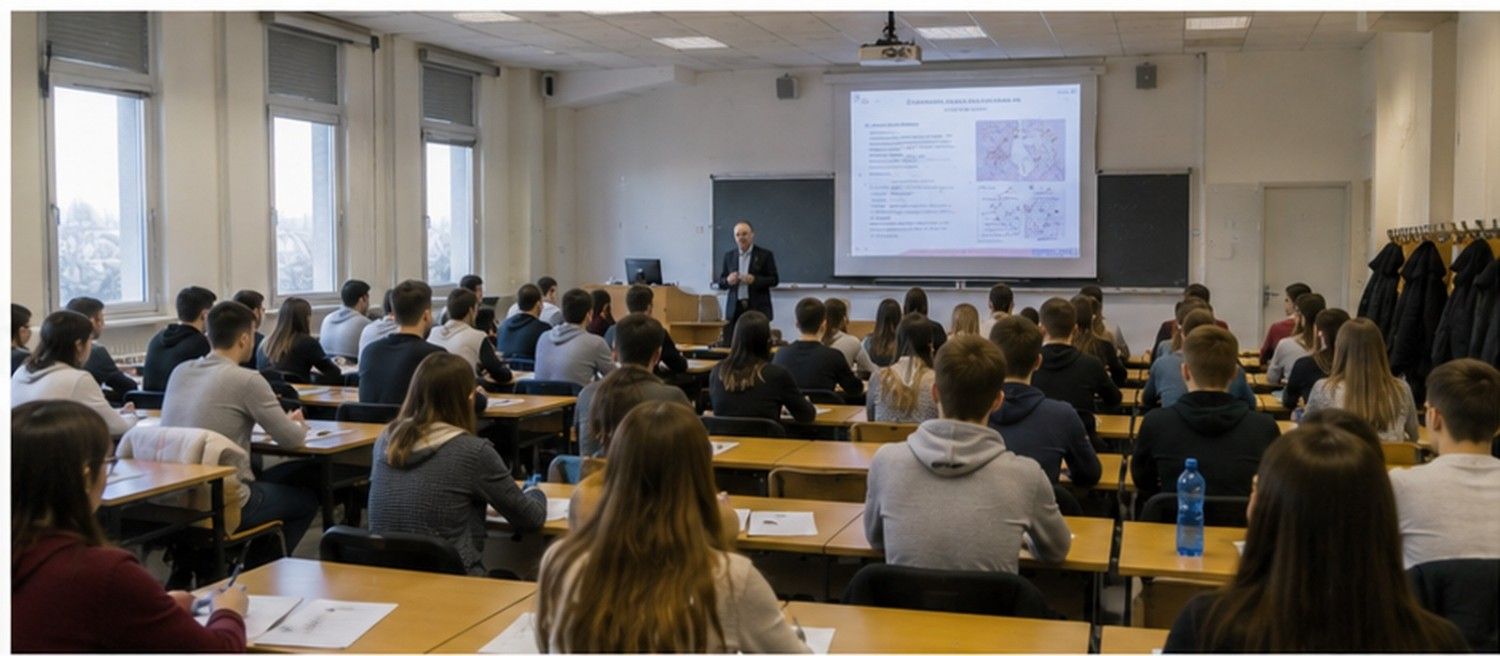

Furnished hostel rooms with Wi-Fi, laundry, 24/7 security, and Indian mess on or near campus.
Indian restaurants and mess facilities serving vegetarian and non-vegetarian home-style food daily.
Strong Indian community with cultural events, festival celebrations, and peer support groups.
Students get hands-on clinical training in government and private hospitals affiliated with the university.
Practical information for students planning to study at MBBS in University of Perugia Faculty of Medicine and Surgery.
Prepare for all seasons. Thermal wear for winters, light clothing for summers. University provides heating in hostels.
Student visa processed with university invitation letter. Direct and connecting flights from major Indian cities.
Health insurance included in fees. Medical facility on campus plus city hospitals easily accessible.
Local SIM cards available. WhatsApp and video calls keep you connected with family back home.
Average monthly expenses of $150–$250 covering food, transport, and personal needs.
University library, online databases, and study groups. Seniors mentor juniors through academic challenges.
Our team guides you through every step — from application to arriving on campus.
Our Italy specialist explains the IMAT process, the income-based fee system, Bologna vs Rome vs other universities, and a total cost comparison with Hungary and Poland.
Our team registers you for IMAT (September test) and begins structured coaching. Biology, Chemistry, Physics, Maths, Critical Thinking. Begin preparation at least 6 months before the test.
Full Italian visa and IMAT application document set academic certificates, income documentation if applicable.
IMAT taken at designated test centres. We provide post-test analysis and guidance on university rankings.
Following IMAT ranking, the Italian university issues an admission confirmation. Our team can help with this process.
Full documentation submitted to the Italian Embassy or Consulate. Begin immediately after receiving the admission letter.
Our team advises qualifying families on the income-based fee reduction process.
Bologna /Rome orientation, accommodation, portico culture, Italian transport, Trenitalia app, banking, SIM card.
Our local team in Bologna (BLQ) or Rome (FCO) meets you and manages the first-week settlement.
We manage the Permesso application at the local Post Office within 8 days of arrival with our support, which is renewed annually.
Admission Helpline — Contact our counsellors for step-by-step assistance.
“The faculty here is incredibly supportive. The clinical training during hospital rotations has given me real confidence in patient care.”
“Affordable fees without compromising on quality. The campus facilities and hostel life made my transition abroad very smooth.”
“English medium instruction and WHO-recognized curriculum were the deciding factors for me. No regrets so far — excellent experience overall.”
“The university helped with everything from visa to accommodation. Hospital exposure from year three has been invaluable for my FMGE prep.”
“Just cleared my licensing exam on the first attempt. The structured coaching and mock exams during final year were a game-changer.”
“Safe campus, good food options, and a strong Indian student community. The teaching methodology is very practical and hands-on.”
It was formally founded in 1308, though an institution teaching medicine and law already existed in the city from the early 1200s.
Pope John XXII granted this right on 18 February 1328, reinforced by an imperial edict from Emperor Charles IV in 1355.
No, the standard Medicine and Surgery programme runs in Italian; a specific double-degree pathway exists with a Russian partner university.
It runs six years as a Single-Cycle Degree, with no separate internship year appended, though the Esame di Stato follows graduation.
Yes, a valid, qualifying NEET score is required for Indian applicants, alongside meeting Italy's national medical admission requirements.
Students with an ISEE Università at or below EUR 22,000 pay effectively nothing beyond a small regional tax; the maximum annual fee at the top income bracket is roughly EUR 2,000.
For a No Tax Area student, roughly EUR 43,800 to 58,600 including living costs; for a maximum-bracket student, roughly EUR 55,200 to 69,600 including living costs and tuition.
Training runs through the Ospedale Santa Maria della Misericordia in Perugia and the Azienda Ospedaliera Santa Maria in Terni.
Yes, Medicine and Surgery runs across two teaching poles: Perugia and Terni, the latter active since 1974.
Students averaging 27/30 or above receive a 50% tuition reduction from year two, and several hundred additional merit grants are awarded each year.

Our expert counsellors will guide you through the complete admission process — from documents to airport pickup.