
Q1. Is Marburg's medical degree taught in English?
+No. Human Medicine is taught entirely in German, so strong German proficiency is required before applying.
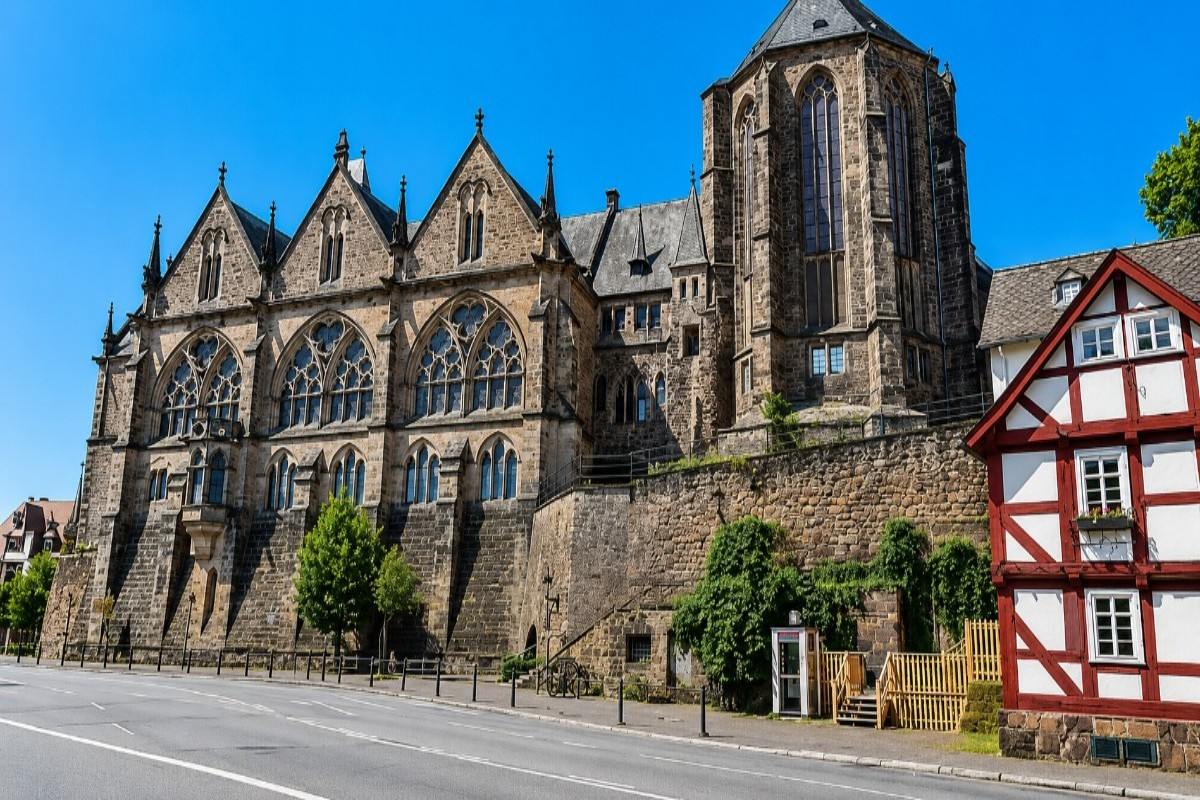
 Germany | Est. 1527
Germany | Governed by Germany's Ärztliche Approbationsordnung (medical licensing law), not a Bachelor/Master accreditation body, standard for all German Staatsexamen medicine. | German only; no English-taught medical degree track. medium
Expert will call you within 2 hours
Philipps-Universität Marburg was founded on May 30, 1527, by Landgrave Philipp der Großmütige (Philip the Magnanimous) of Hesse. He had just brought the Reformation to his territory, and he wanted a university that trained clergy and officials in the new Protestant faith, not the old Catholic one. That decision makes Marburg the oldest university in the world founded explicitly as Protestant that is still operating today. Other German universities are older overall, but they started Catholic and converted later. Marburg started Protestant from day one, opening with 11 professors and around 90 students.
Here's a fact most guides skip: Marburg opened with four faculties, not one. Theology, law, medicine, and philosophy all began teaching together in 1527, so the medical faculty (Fachbereich Medizin) isn't a later addition, it's present since the university's first semester. Few German medical schools can claim an unbroken presence stretching back that far. So, when Marburg's medical faculty talks about its history, it isn't borrowing prestige from a separate, older institution.
That five-century run wasn't glamorous throughout. For centuries Marburg's medical faculty stayed small, teaching inside a modest Hessian town. Its reputation shifted in 1895, when Emil von Behring became professor of hygiene here. Behring developed a diphtheria serum using Marburg's labs, and in 1901 he won the first-ever Nobel Prize in Physiology or Medicine. He later founded a vaccine company, Behringwerke, right in the city. That one appointment put Marburg medicine on the world map.
Here's the fact most rival guides bury or skip entirely: Marburg's teaching hospital isn't owned by the state. In 2006, Hesse sold 95 percent of the merged Gießen-Marburg university hospital to Rhön-Klinikum AG, a private, for-profit hospital company, keeping just 5 percent itself. Every other university hospital in Germany is run by a state government or public foundation. This one isn't, it remains the country's only fully privatized university hospital, and the arrangement has stayed controversial for two decades. So, the building where Marburg students learn clinical medicine answers to shareholders, not only to the state.
The formal timeline: on July 1, 2005, Hesse merged the Marburg and Gießen university hospitals into one entity, UKGM. On January 2, 2006, it became a private limited company. Weeks later, Rhön-Klinikum AG won the bidding process, paying roughly 112 million euros for a 95 percent stake, and both the Federal Cartel Office and Germany's Science Council approved the sale on January 27, 2006. Rhön-Klinikum has since become part of the Asklepios hospital group. So, ownership has shifted since privatization, even though Hesse's 5 percent stake hasn't moved.
Human Medicine isn't the only degree here. The faculty also runs Zahnmedizin (dentistry), admitting around 60 students a year via the national Stiftung für Hochschulzulassung. There's also Humanbiologie, a smaller research degree with about 285 students, with no medical license attached. Roughly 2,350 students study Human Medicine alone.
Marburg teaches a Regelstudiengang, the standard state-exam curriculum, not an experimental Modellstudiengang. But it has one genuine twist. Since the 2023/24 winter semester, ninety students per year-group leave Marburg after their first clinical year and finish their second and third clinical years at Campus Fulda, a partnership with Hochschule Fulda that began as a smaller pilot in 2014. Everyone starts and finishes in Marburg; only the middle stretch moves. So, part of every Marburg class trains in a different city for two years, without changing university.
Marburg is a small city on the Lahn river in Hesse, with roughly 76,000 residents. Around a quarter are students, which shapes the whole town, half-timbered streets climb toward a medieval castle, and university buildings sit scattered through it. The medical faculty's teaching and research institutes cluster on the Lahnberge, a hilltop site just outside the old town.
The teaching hospital is UKGM's Standort Marburg, with roughly 920 beds, a large regional hospital by any measure. Combined with Gießen, UKGM had about 2,230 beds when Rhön-Klinikum took over in 2006. It functions as the main tertiary referral center for central Hesse, treating cases smaller hospitals can't handle. Because it's privately run, investment and staffing decisions pass through a corporate structure most German university hospitals don't have. So, students train inside a hospital that is both a full academic medical center and a shareholder-owned company.
Research clusters around institutes in virology, neuroscience, and cardiopulmonary medicine, plus the Von-Behring-Röntgen-Stiftung, a foundation still carrying Behring's name. Marburg is also part of the Universities of Giessen and Marburg Lung Center, a recognized hub for respiratory research. So, the faculty's research identity leans hard into infectious disease and lung medicine, a direct echo of Behring's own work.
One curricular priority stands out: the Landärztin- und Landarztquote, Hesse's rural-doctor quota, launched in winter 2022/23. Up to 6.5 percent of medical places across Frankfurt, Gießen, and Marburg go to applicants who commit to ten years as rural GPs in underserved Hesse, chosen with little weight on Abitur grades. So, Marburg actively recruits students who want rural practice, not just top graders.
Human Medicine follows Germany's Staatsexamen model, not a Bachelor's/Master's structure. Standard study time is six years and three months: four preclinical semesters, six clinical semesters, and a final Praktisches Jahr. Passing the Staatsexamen brings the Approbation — the license to practice medicine anywhere in Germany.
Admission runs through hochschulstart.de. Thirty percent of places go by Abitur grade (Abiturbestenquote), ten percent through a non-grade Zusätzliche Eignungsquote (vocational training, aptitude tests), and sixty percent through Marburg's own Auswahlverfahren der Hochschulen, which weighs medical-related experience alongside grades. A small separate share runs through the Landarztquote above.
Hesse abolished general tuition fees back in the 2008/09 winter semester, and it still doesn't charge non-EU students separately, unlike Baden-Württemberg's 1,500-euro-per-semester non-EU fee. Everyone pays only a Semesterbeitrag, roughly 370-400 euros depending on the term, bundling administrative costs with a nationwide Deutschlandticket.
Quick Overview
Parameter | Details |
Established | 1527 (university); medicine was one of the four original founding faculties |
Institution Type | Public state university (Hesse); teaching hospital majority privately owned |
Location | Marburg, Hesse, Germany |
Programme | Human Medicine (Humanmedizin), plus Dentistry and Human Biology |
Duration | 6 years, 3 months (Human Medicine, Staatsexamen) |
Medium of Instruction | German |
Foreign Quota Note | No separate non-EU tuition fee in Hesse; admission via hochschulstart.de quotas |
Teaching Hospital | UKGM, Standort Marburg — ~920 beds, 95% owned by Rhön-Klinikum AG |
Fee Component | Amount | Notes |
Tuition Fee | €0 | Abolished statewide since winter semester 2008/09 |
Non-EU Student Fee | €0 | Hesse charges no separate non-EU fee, unlike some other states |
Semester Contribution | ~€370-400 | Includes the Deutschlandticket; figure varies by semester |
Living Costs | ~€850-1,100/month | Estimate for Marburg, a relatively affordable student city |
Approx. Total Programme Cost | ~€75,000-95,000 over 6+ years | Mostly living costs, not tuition |
Most rival guides mention that Marburg has a university hospital and stop there, as if every German medical school's teaching hospital works the same way. They don't. Marburg's is majority-owned by a publicly traded, for-profit company, Rhön-Klinikum AG, following a 2006 privatization Germany has never repeated. That changes incentives, investment and staffing run through a corporate structure, not a state ministry. Critics say sale-time promises went unfulfilled; supporters point to capital the state hospital lacked. So, this is a structural fact worth weighing, not a footnote.
Most guides just say "founded in 1527" and move on. What they skip is that Marburg was built specifically as a Protestant university, not a Catholic one that converted later, making it the oldest institution of its kind still running. That's a sharper claim than "old university," and it shaped who taught and studied there, including the medical faculty, present since that first semester. So, Marburg's medical school isn't borrowing prestige from an unrelated, older institution; its history reaches back exactly as far as the university's own.
Marburg has real limits worth naming plainly. Its teaching hospital runs under a for-profit private owner, and that has drawn two decades of criticism over staffing and investment, a genuinely different situation from the state-run hospitals most German medical students train in. Teaching is entirely in German, so non-native speakers need strong language skills before arriving, not after. And ninety students per cohort spend two clinical years away from Marburg, in Fulda.
Marburg suits students who want a small, historic university town, don't mind training partly outside the main city, and aren't put off by a privatized hospital system. It's a poor fit for anyone wanting English-taught medicine, a big-city campus, or one fixed location for all six clinical years. Students drawn to infectious disease or lung research, echoing Behring's legacy, will find a natural home here.
No hidden charges, no donation. The full picture of costs at MBBS in Philipps University of Marburg Faculty of Medicine.
Tuition Fee
Approx. €850 EUR or (INR ~₹78,000 annually)
None — abolished in Hesse since winter semester 2008/09
Hostel Fee
Approximately €2,160 - €3,840 EUR per year
Approximately €2,160 - €3,840 EUR per year
Food & Meals
Aprox. €3,600 EUR
per year
Insurance
Aprox. €1,320 - €1,560 EUR
per year
Donation
No donation fee
No hidden fee
Total Estimated Cost
Roughly €75,000 - €95,000 EUR
6 Year
25–35%
Average FMGE first-attempt pass rates for students from many overseas medical universities. Students from structured programs consistently score higher.
Students returning to India need to clear the FMGE/NExT exam. MBBS in Philipps University of Marburg Faculty of Medicine integrates exam-oriented coaching into the regular curriculum so students are prepared from day one.
A structured program that takes you from foundational sciences to clinical mastery.
Ends with the Physikum, the First Section of the Medical Examination.
Four semesters covering anatomy, physiology, biochemistry, and medical psychology/sociology.
All students complete this year in Marburg before any Fulda placement.
First clinical year taught at Marburg University Hospital, covering core organ systems and pathology.
Rotations through internal medicine, surgery, and other core specialties with direct patient contact.
Ninety students per cohort move to Campus Fulda for these two years; the rest stay in Marburg.
Students rotate through affiliated teaching hospitals, including UKGM Marburg.
Final year split into three 16-week blocks: internal medicine, surgery, and an elective or general practice.
Passing grants the Approbation, the license to practice medicine anywhere in Germany.
The Second and Third Sections of the Medical Examination follow the clinical years and the Praktisches Jahr.
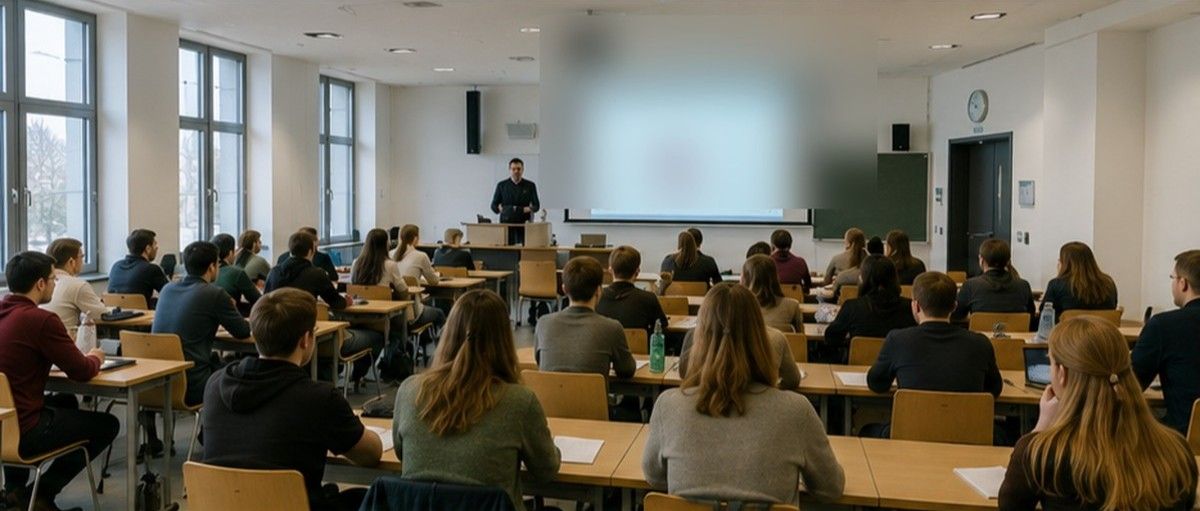

Furnished hostel rooms with Wi-Fi, laundry, 24/7 security, and Indian mess on or near campus.
Indian restaurants and mess facilities serving vegetarian and non-vegetarian home-style food daily.
Strong Indian community with cultural events, festival celebrations, and peer support groups.
Students get hands-on clinical training in government and private hospitals affiliated with the university.
Practical information for students planning to study at MBBS in Philipps University of Marburg Faculty of Medicine.
Prepare for all seasons. Thermal wear for winters, light clothing for summers. University provides heating in hostels.
Student visa processed with university invitation letter. Direct and connecting flights from major Indian cities.
Health insurance included in fees. Medical facility on campus plus city hospitals easily accessible.
Local SIM cards available. WhatsApp and video calls keep you connected with family back home.
Average monthly expenses of $150–$250 covering food, transport, and personal needs.
University library, online databases, and study groups. Seniors mentor juniors through academic challenges.
Our team guides you through every step — from application to arriving on campus.
Begin German lessons as early as possible, ideally alongside Class 11–12, targeting B1 within 12 months and progressing toward the required B2–C1 level.
Submit Class 10, 12, and any higher-education transcripts for verification. Processing typically takes 3–5 weeks; apply early, since this gates every subsequent step.
portal and apply to the correct track, the M-Kurs for medical aspirants, at your shortlisted Studienkolleg institutions.
Complete the roughly 10–12 month M-Kurs program covering Biology, Chemistry, Physics, and German, then pass the Feststellungsprüfung (FSP), the qualifying exam for university entry.
Submit applications to your shortlisted universities. Uni-assist fees run €75 for the first program and €30 for each additional program in the same semester.
University decisions follow Uni-assist’s document evaluation and forwarding; final admission is always the university’s own decision.
Deposit €11,904 into a blocked account (via Fintiba, Expatrio, or a similar provider) and arrange either public (€140–€160/month) or private health insurance; both are mandatory prerequisites for the visa stage.
Submit your visa application at the German consulate in India (Delhi, Mumbai, Bengaluru, or Chennai), with your admission letter, APS certificate, language proficiency proof, blocked account confirmation, and insurance proof. Realistic processing time is 6–12 weeks.
Bring originals of every document submitted digitally. Be prepared to discuss your study plans, financial arrangements, and reasons for choosing Germany.
Book travel around your intake date (October for Winter, April for Summer), and complete formal university enrollment on arrival. Medical study then begins with the Pre-Clinical phase.
Admission Helpline — Contact our counsellors for step-by-step assistance.
“The faculty here is incredibly supportive. The clinical training during hospital rotations has given me real confidence in patient care.”
“Affordable fees without compromising on quality. The campus facilities and hostel life made my transition abroad very smooth.”
“English medium instruction and WHO-recognized curriculum were the deciding factors for me. No regrets so far — excellent experience overall.”
“The university helped with everything from visa to accommodation. Hospital exposure from year three has been invaluable for my FMGE prep.”
“Just cleared my licensing exam on the first attempt. The structured coaching and mock exams during final year were a game-changer.”
“Safe campus, good food options, and a strong Indian student community. The teaching methodology is very practical and hands-on.”
No. Human Medicine is taught entirely in German, so strong German proficiency is required before applying.
Six years and three months, including the Praktisches Jahr and all state examinations.
No. Hesse levies no separate non-EU tuition fee; all students pay only the general semester contribution.
UKGM is 95 percent owned by Rhön-Klinikum AG, a private company; Hesse holds the remaining 5 percent.
A partnership site where 90 students per cohort complete their second and third clinical years, away from Marburg.
Yes. Zahnmedizin admits about 60 students yearly, split between winter and summer, via the Stiftung für Hochschulzulassung.
A Hesse-wide quota reserving some medical places for students who commit to ten years as a rural GP.
No, it's exactly as old. Medicine was one of four founding faculties when the university opened in 1527.
Emil von Behring, who won the first-ever Nobel Prize in Physiology or Medicine in 1901 as a Marburg professor.
Roughly 920; combined with Gießen, UKGM totals about 2,230 beds.


Our expert counsellors will guide you through the complete admission process — from documents to airport pickup.