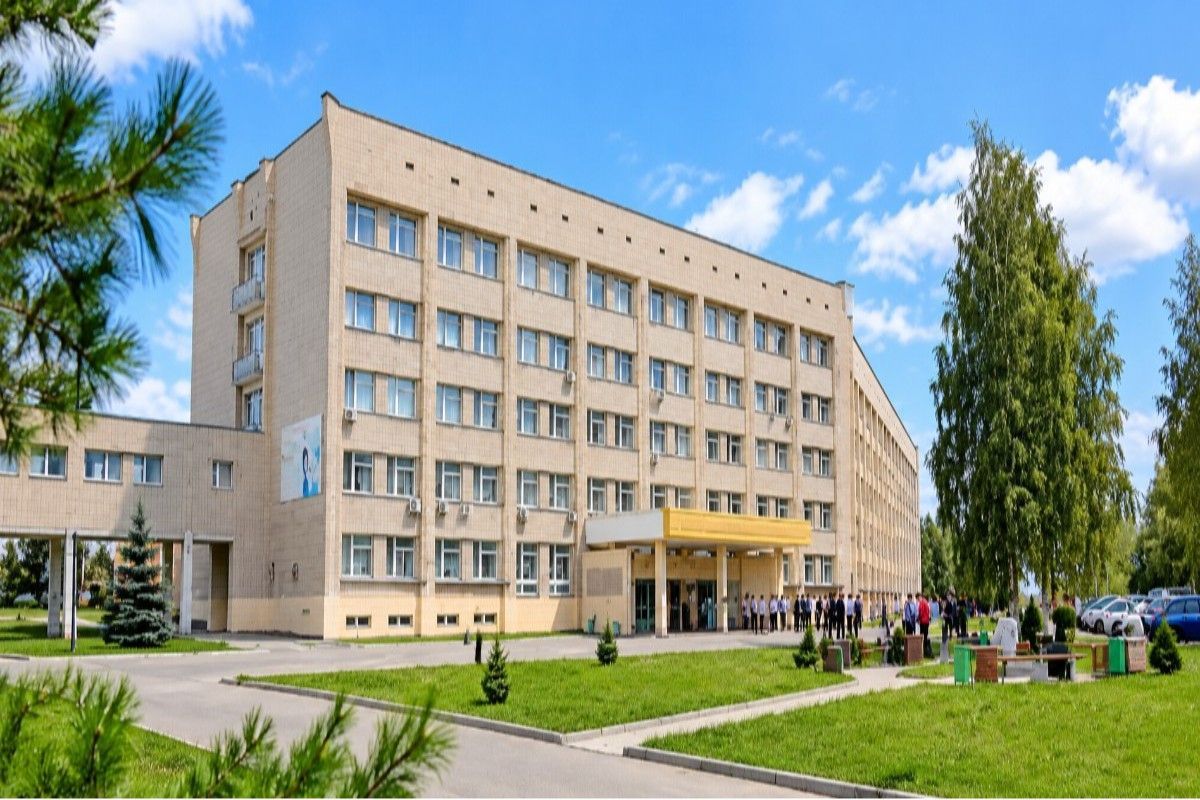
People mostly just call it SPbMSI for short. It was genuinely founded on 7 July 2004, considerably more recently than the 1897 date sometimes wrongly attached to it elsewhere, by Boris Ilyich Shulutko, who served as its founder, organiser, and first rector. Shulutko holds a Doctor of Medical Sciences degree, the title of Professor, and the distinction of Honoured Scientist of the Russian Federation, and sits on the board of the St. Petersburg Society of Therapists, Cardiologists, and Nephrologists. So, this institute's founding traces to a specific, individually documented, credentialed medical academic, not an anonymous or inherited institutional history.
Here is a fact most guides skip entirely, and it is genuinely important to understand before applying. SPbMSI's regulatory history includes a real, documented period of serious difficulty. In October 2015, Russia's federal education oversight body, Rosobrnadzor, suspended the institute's state accreditation, and by July 2016, that accreditation was fully withdrawn for its higher education programmes. Following a further inspection at the end of December 2016, Rosobrnadzor also banned the institute from admitting new students, specifically citing its failure to comply with an official order within the required timeframe. So, this institute genuinely lost its right to award state-recognised degrees and to enrol new students for a real, documented period.
The more recent, and genuinely important, part of this story is that SPbMSI appears to have resolved these issues. According to sources dated as recently as 2025, the institute has continued its educational activities under fresh state accreditation obtained in 2022, described as valid indefinitely. So, while this institute's regulatory history includes a real, serious interruption, the most current available information indicates it has since restored its accredited status. Given how significant this history is, any applicant considering SPbMSI should independently verify its current accreditation status directly with Russian regulatory authorities, and directly with the institute itself, before making any commitment.
SPbMSI was included in the World Health Organisation's list of international educational institutions in 2016, notably the same year it faced its admissions ban domestically, a genuinely notable juxtaposition worth being aware of. The institute reports training around 1,000 students annually from 28 countries, and is a full member of the Russian Society for Simulation Training in Medicine. A genuinely distinctive, specific claim is that SPbMSI is the only university in Russia where students can obtain professional education in occupational therapy, or ergotherapy, a speciality it has offered since 2011, with the institute also holding membership in ENOTHE, the European Network of Occupational Therapy in Higher Education.
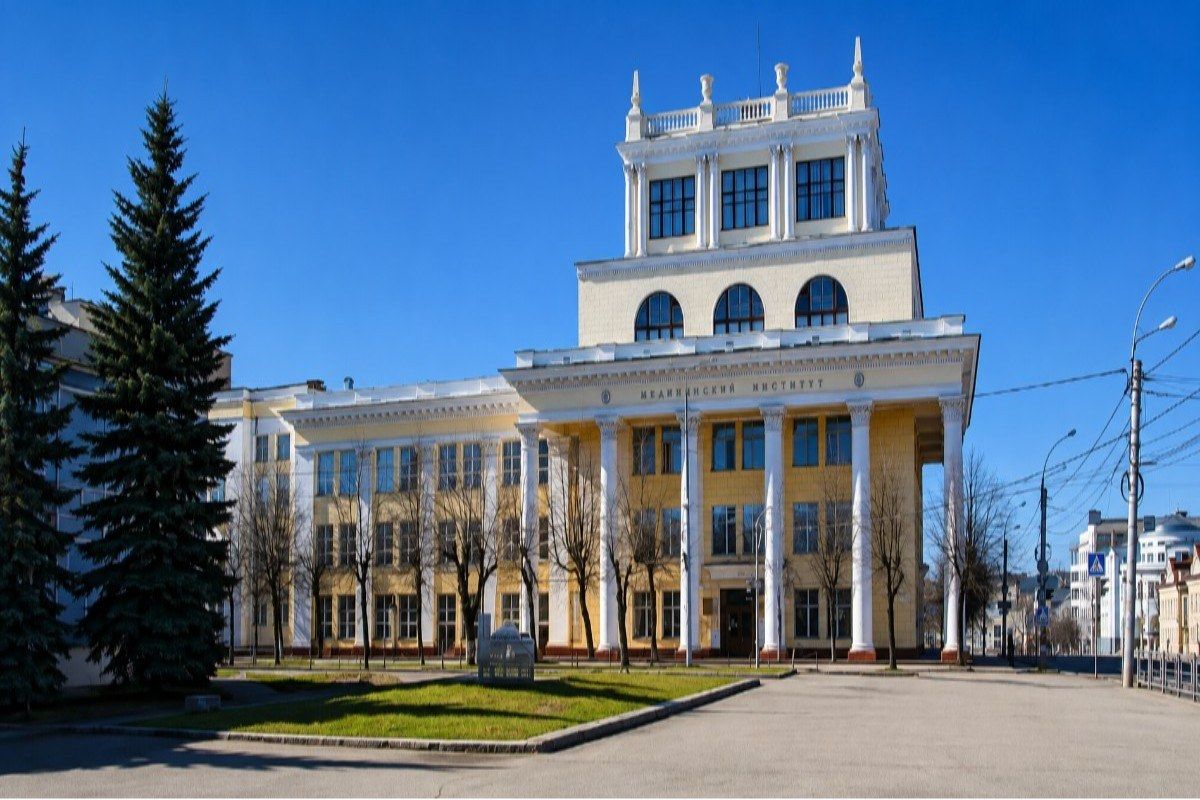
SPbMSI is based at Kondratyevsky Prospekt 72, litera A, in St. Petersburg, one of Russia's most historically and culturally significant cities. The institute maintains a Simulation Training Centre equipped with medical equipment, specialised simulators, robot-simulators, mannequins, electronic phantoms, and anatomical models. Clinical training and practical placements for students run through established clinics across St. Petersburg and the wider Leningrad Region, giving students exposure to the city's broader healthcare network. The institute also publishes its own peer-reviewed scientific-practical journal, Medicine and Education.
SPbMSI's Doctor of Medicine programme runs six years, structured as the standard five years of academic study followed by a compulsory one-year clinical internship, taught entirely in English. Admission to the MBBS programme is based on candidates' NEET performance, with a valid, qualifying NEET scorecard required for Indian applicants. Teaching follows federal state educational standards for higher education set by the Russian Federation, and 48 percent of the institute's teaching staff hold Doctor of Sciences degrees, with a further 50 percent holding candidate degrees, Russia's equivalent of a PhD.
Given the institute's documented accreditation history, NEET remains a genuine requirement for Indian applicants regardless, and Indian graduates would still need to clear the FMGE or NExT exam to practise medicine back in India, an outcome that depends directly on the institute holding valid, current, internationally recognised accreditation at the time of graduation.
St. Petersburg itself offers students a genuinely rich cultural setting, home to world-renowned museums, historic architecture, and a real, well-established international student community across the city's many universities, not just SPbMSI specifically. This gives students at the institute access to a genuinely vibrant city life alongside their medical studies, quite different from studying at a smaller institution in a less internationally connected Russian city. Living costs in St. Petersburg do run somewhat higher than in some smaller Russian cities, though generally lower than in Moscow itself, a real, practical consideration worth weighing alongside the institute's own reported programme costs.
Given the genuinely significant regulatory history documented above, applicants considering SPbMSI specifically should treat direct, independent verification as a genuinely essential first step, not an optional afterthought. This means contacting Rosobrnadzor directly, or checking its own official public registry, to confirm the institute's current accreditation status, rather than relying solely on any single third-party source, including this profile. Given how consequential this specific history is, taking this extra step before committing any real time or money to an application is a genuinely sensible, worthwhile precaution.
Cost Breakdown
Fee figures here are reported as a single, bundled total rather than broken down clearly by component. Request an itemised breakdown directly from the institute before relying on this single estimate.
Cost Item | Amount | Notes |
Total Programme Cost (6 years, reported) | Approx. USD 28,500 | Reported to include tuition, accommodation, and associated fees combined across the full programme |
Annual Average (based on total, estimated) | Approx. USD 4,750/year | A rough per-year estimate derived from the total 6-year figure; actual annual breakdown not separately confirmed |
Application/Registration Fees | Not consistently published | Confirm directly with the institute |
Additional Fees | Labs, books, instruments | Not consistently published; budget separately |
Scholarship/Dual Diploma Opportunities | Reported as available | Specific eligibility, amounts, and partner institutions not detailed in available sources |
Total 6-Year Estimate | — | Approx. USD 28,500, as an all-inclusive reported estimate; request an itemised breakdown directly |
Note: this is one of the less itemised fee structures covered in guides like this one. Request an itemised breakdown, and independently verify current accreditation status, before making any financial commitment.
Why This Institute Deserves a Harder Look, and a More Careful One
Most lists mention SPbMSI only briefly, sometimes with an incorrect founding history attached. However, they do not explain what genuinely makes it distinctive, or the real regulatory history that deserves direct verification. The reason is simple. It is about a real, unique specialisation, and a real history that needs checking, not skipping.
SPbMSI is not like most other Russian medical institutes when it comes to its own specialisation. In fact, it is the only university in the whole of Russia offering professional education in occupational therapy, a speciality it has run since 2011, backed by real memberships in ENOTHE and WFOT. Furthermore, this represents a real, documented institutional niche, not a generic marketing claim. As a result, applicants specifically interested in occupational therapy alongside medicine will find genuine, real depth here.
The regulatory history also matters more than most guides let on, or even mention at all. For example, most guides describing smaller private medical institutes do not address accreditation risk directly. SPbMSI's own documented history includes a genuine state accreditation withdrawal in 2016 and an admissions ban, followed by reportedly restored accreditation in 2022. Moreover, this is exactly the kind of specific, serious history that deserves direct confirmation from official sources, not a page that either ignores it or treats it as settled without saying so.
One thing most other blogs miss entirely is the source confusion around this institute's own founding. In addition to the regulatory history, several sources wrongly attribute a completely different university's 1897 founding to SPbMSI. Since this genuinely conflates two separate institutions, applicants relying on