
Q1. When was Sapienza University founded?
+It was founded on 20 April 1303 through a papal bull issued by Pope Boniface VIII.
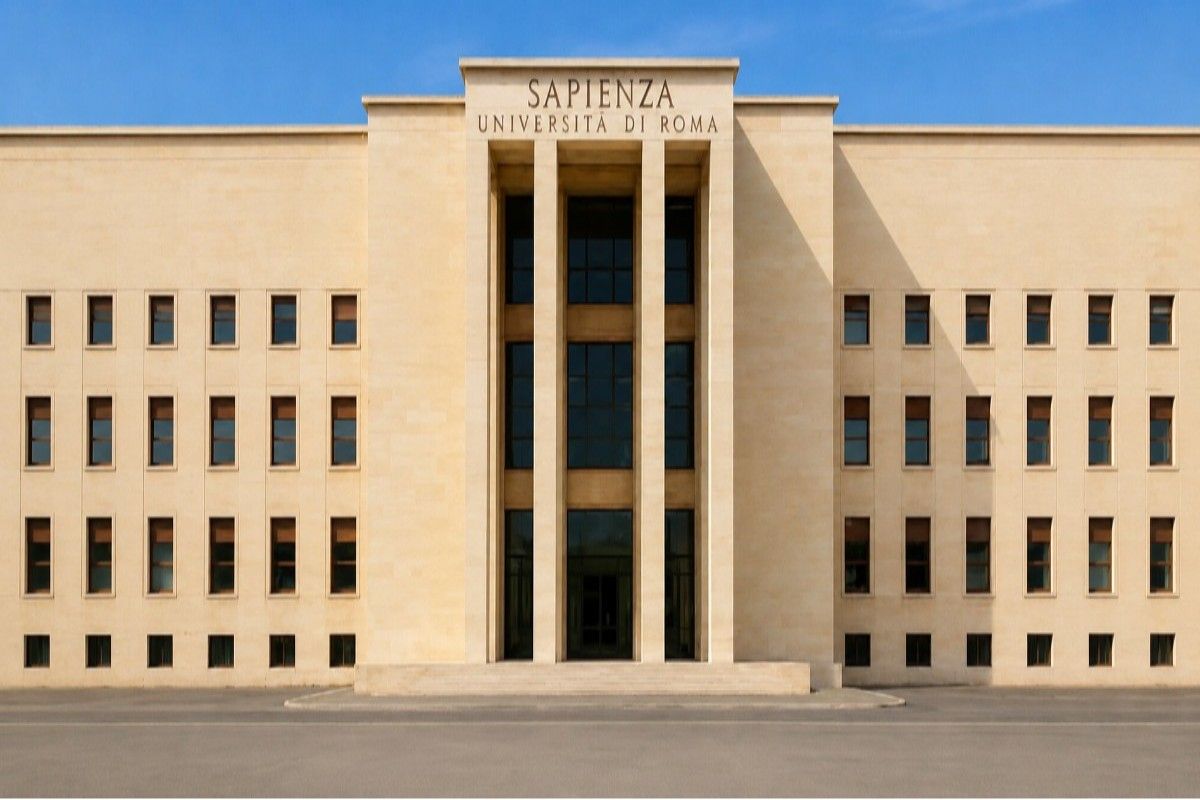
 Italy | Est. 2016
Italy | Recognised by Italy's Ministry of University and Research as an authorised Single-Cycle Degree in Medicine and Surgery (Class LM-41), in both Italian and English tracks. | Italian for Courses A through D; English for Course F, part of Sapienza's International Medical School. medium
Expert will call you within 2 hours
People mostly just call it Sapienza, or La Sapienza. It's one of the world's oldest universities, founded on 20 April 1303 through a papal bull, "In Supremae praeeminentia dignitatis", issued by Pope Boniface VIII. So, this university's founding rests on a specific, dated papal document over seven centuries old, not a vague claim of medieval origin.
Today's Faculty of Pharmacy and Medicine is genuinely large by any standard. Admission to Sapienza's Medicine and Surgery programmes runs on a fixed national quota, and one detailed official faculty guide recorded several hundred places across the Rome-based Italian-language courses alone, plus dozens more reserved specifically for non-EU applicants, alongside a separate quota for the English-taught programme. So, this isn't a small, boutique medical faculty; it's one of Europe's largest single medical training operations, organised into several parallel, simultaneously running course tracks.
Here's a fact most guides skip entirely. Sapienza's Italian-language Medicine and Surgery students are split into courses labelled A, B, C, and D, based on the students' surnames, all based at the Policlinico Umberto I. Since the 2020/21 academic year, an additional HT channel has run alongside these, letting students follow standard medical teaching while simultaneously attending engineering lectures, a genuinely distinctive medicine-plus-engineering track. Separately, Course F is Sapienza's English-taught "Medicine and Surgery" programme, part of its International Medical School, also based at Policlinico Umberto I, with its own dedicated, smaller admission quota, including seats reserved specifically for non-EU applicants residing abroad.
The Faculty of Pharmacy and Medicine has been engaged in a sustained internationalisation effort for years, and the English-taught Medicine and Surgery programme sits at the centre of that push, alongside more recently launched English-taught degrees in Bioinformatics and Nursing. So, when Sapienza describes itself as pursuing genuine international reach in medical education, that claim rests on a specific, growing catalogue of English-medium programmes, not just one isolated course.
Sapienza's overall academic standing has been climbing in recent years too. In the QS World University Rankings 2024, Sapienza placed 134th globally, its best-ever result in that ranking, and second in Italy behind only the Politecnico di Milano. So, students choosing Sapienza's medical faculty study within a university whose overall international standing has been genuinely improving, not simply resting on historical reputation.
Sapienza's main campus, the Città Universitaria, or University City, was purpose-built in the 1930s in a distinctive rationalist architectural style, and remains the university's central hub today. The English-taught Course F is based specifically at the Polo Policlinico, within this same university city, while a decentralised Polo Pontino site in Latina, covered separately since it runs as its own distinct campus, hosts a further Italian-language medicine course.
Clinical training for both the Italian-language courses (A through D) and the English-taught Course F runs through the Azienda Ospedaliero-Universitaria Policlinico Umberto I, one of Italy's largest university hospitals, sitting directly within Sapienza's main campus. So, students here don't need to travel across the city for clinical placements; the teaching hospital and the university campus are effectively one integrated site.
Both the Italian-language and English-taught Medicine programmes at Sapienza run as six-year Single-Cycle Degrees under Class LM-41, Italy's standard classification for medical degrees. As with all Italian medical degrees, no separate rotating internship year follows graduation, since clinical training runs throughout the six years themselves; graduates must still pass Italy's Esame di Stato and register with the country's medical professional body before practising independently.
For the English-taught Course F, admission runs through the International Medical Admissions Test, IMAT, taken in English, sat at Sapienza itself and at numerous other Italian and international IMAT test centres. Applicants register through Italy's Universitaly portal, and non-EU applicants residing abroad compete for a specific, smaller reserved quota within the course's total places. Reported figures for recent years place total Course F seats somewhere in the range of 45 to 60, split between EU and Italy-resident non-EU candidates on one side and non-EU applicants residing abroad on the other, though the exact split shifts from year to year by ministerial decree, so applicants should confirm the current year's precise figures directly.
Tuition fees at Sapienza follow Italy's standard public-university, income-scaled model, and the actual figures here are genuinely precise and well documented. Students whose ISEE Università sits at or below EUR 24,000 fall within Sapienza's No Tax Area and are fully exempt from the Contributo Onnicomprensivo Annuale, the university's comprehensive annual student contribution, paying only a fixed regional tax of EUR 140 and a stamp duty of EUR 16, a combined total of roughly EUR 156 a year. Students above that threshold pay a graduated fee tied to their specific ISEE bracket; for students who don't submit a valid ISEE Università by the annual deadline, Sapienza applies the maximum contribution by default, which recent official figures place at approximately EUR 2,821 a year for one group of degree courses and EUR 2,924 a year for another, figures that include a genuine reconciliation calculation once an ISEE is eventually submitted.
International applicants whose family income is earned entirely outside Italy, and who therefore cannot produce a standard Italian ISEE Università declaration, pay a separate fixed contribution instead, with the exact amount set by country of origin under a Board of Directors resolution dated 30 May 2023. This structure is broadly similar in spirit to the citizenship-based flat-rate systems used at some other Italian medical schools, though Sapienza sets its own specific country-by-country figures, which applicants should confirm directly for their own nationality.
Living costs in Rome run considerably higher than in many other Italian university cities, generally reported at somewhere between EUR 900 and 1,300 a month depending on accommodation and lifestyle choices. NEET remains a genuine requirement for Indian applicants here, exactly as it does for most MBBS-abroad destinations, and Indian graduates would still need to clear the FMGE or NExT exam to practise medicine back in India.
Parameter | Details |
Established | University founded 1303 by papal bull of Boniface VIII; the English-taught "Medicine and Surgery" Course F launched in 2016 |
Institution Type | Public Italian university (Sapienza Università di Roma) |
Location | Policlinico Umberto I, Città Universitaria, Rome, Italy |
Programme | Medicina e Chirurgia (Italian, Courses A–D) and Medicine and Surgery (English, Course F), both Single-Cycle Degrees (LM-41) |
Duration | 6 years; no separate internship year, though the state licensing exam follows graduation |
Medium of Instruction | Italian (Courses A–D) or English (Course F, the International Medical School track) |
Foreign Quota Note | Course F (English) reserves a fixed number of seats specifically for non-EU applicants residing abroad, set annually |
Teaching Hospital | Azienda Ospedaliero-Universitaria Policlinico Umberto I, on Sapienza's main campus |
Fee Component | Amount | Notes |
Tuition (No Tax Area, ISEE Università up to EUR 24,000) | EUR 0 (Contributo Onnicomprensivo Annuale waived) | Only regional tax (EUR 140) and stamp duty (EUR 16) apply, approx. EUR 156 total |
Tuition (ordinary bracket example) | First instalment approx. EUR 613 + EUR 156 (tax/duty); second instalment approx. EUR 655 | Example rate for a mid-range ISEE bracket; exact bracket depends on declared ISEE Università |
Tuition (maximum, no ISEE submitted or highest bracket) | Approx. EUR 2,821 (Group I courses) or EUR 2,924 (Group II courses) per year | Applied by default if no valid ISEE Università is submitted by the deadline |
Foreign-Income Students (cannot submit Italian ISEE) | Fixed contribution set by country of origin | Set by Board resolution of 30 May 2023; amount varies by home country, not by a standard ISEE calculation |
Late ISEE Submission Penalty | EUR 50 to EUR 100 | Escalates by EUR 2.50 per day of delay after the annual deadline |
Most rival pages describe Italian medical faculties as small, single-track programmes. Sapienza runs several parallel Medicine and Surgery courses simultaneously, labelled A through D in Italian, plus a dedicated English-taught Course F, all training doctors at genuinely large scale within one integrated campus and teaching hospital. So, the scale and structural complexity here is a real, distinguishing feature, not a marketing simplification.
Most guides quote a single approximate tuition number. Sapienza's own fee regulations specify exact euro figures at every stage: EUR 0 tuition below EUR 24,000 ISEE, a specific graduated bracket system above that, and a precisely stated maximum of roughly EUR 2,821 to 2,924 a year for students who don't submit ISEE documentation. So, applicants get a genuinely transparent, checkable fee structure rather than a vague estimate.
Be upfront about a few real considerations here. Rome's living costs run meaningfully higher than in smaller Italian university cities, and this should factor heavily into any total budget calculation. The English-taught Course F has a considerably smaller quota than the Italian-language courses, making it genuinely competitive for the limited non-EU seats reserved each year. Sapienza's own scale, while a strength for course variety and clinical volume, also means a less intimate campus experience than at some smaller Italian universities.
So, who fits here best? Students who want a large, prestigious, centrally located Roman medical faculty with a genuine English-taught option fit well here. Students comfortable navigating Sapienza's multi-course structure and budgeting for Rome's higher living costs fit well too. However, applicants who specifically want a smaller, quieter university city, or the lowest possible living costs, should weigh Rome carefully against other Italian options. Still, Sapienza's scale, its precisely documented income-based fee system, and its dedicated English-taught International Medical School track are genuine, well-documented strengths.
No hidden charges, no donation. The full picture of costs at MBBS in Sapienza University of Rome Faculty of Pharmacy and Medicine.
Tuition Fee
€2,924
Approx. EUR 156 per year (regional tax + stamp duty only) — approx. EUR 936 over
Hostel Fee
€250 to €400 per month
€250 to €400 per month
Food & Meals
€2.50 to €8.40 per meal
per meal
Insurance
€150 per year
per year
Donation
No Donation
No Hidden fee
Total Estimated Cost
Approx. EUR 65,700 to 94,500 over 6 years — minimal tuition plus Rome living costs
6 year
25–35%
Average FMGE first-attempt pass rates for students from many overseas medical universities. Students from structured programs consistently score higher.
Students returning to India need to clear the FMGE/NExT exam. MBBS in Sapienza University of Rome Faculty of Pharmacy and Medicine integrates exam-oriented coaching into the regular curriculum so students are prepared from day one.
A structured program that takes you from foundational sciences to clinical mastery.
● Combines strong ethical and communication-skills training alongside the core science curriculum from the outset.
● Covers Anatomy, Physiology, and Biochemistry, forming the scientific foundation for everything that follows.
● Runs through Policlinico Umberto I's departments, shared across both the Italian and English course tracks.
● Covers Pathology, Microbiology, Pharmacology, and Community Medicine.
● Draws on one of Italy's largest university hospitals for genuinely high clinical patient volume.
● Covers Medicine, Surgery, and allied clinical subjects, with mandatory course attendance throughout.
● Elective and interdisciplinary study options draw on Sapienza's genuinely broad faculty resources.
● Students on the HT channel combine standard medical teaching with parallel engineering coursework.
● Graduates must pass Italy's Esame di Stato and register with the relevant professional body before practising independently.
● No separate internship year is appended; clinical training runs throughout the six-year single-cycle degree itself.
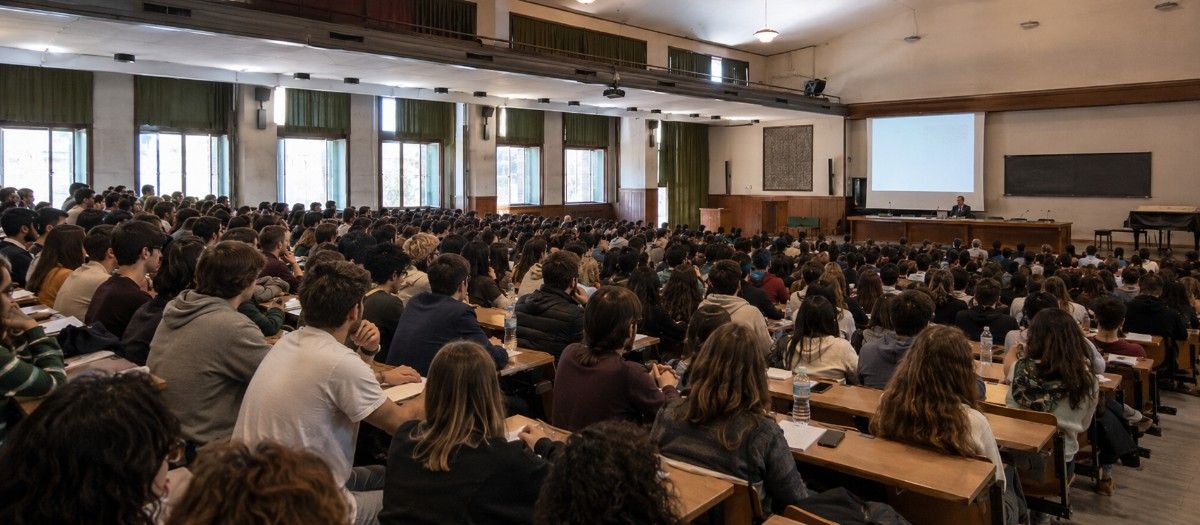

Furnished hostel rooms with Wi-Fi, laundry, 24/7 security, and Indian mess on or near campus.
Indian restaurants and mess facilities serving vegetarian and non-vegetarian home-style food daily.
Strong Indian community with cultural events, festival celebrations, and peer support groups.
Students get hands-on clinical training in government and private hospitals affiliated with the university.
Practical information for students planning to study at MBBS in Sapienza University of Rome Faculty of Pharmacy and Medicine.
Prepare for all seasons. Thermal wear for winters, light clothing for summers. University provides heating in hostels.
Student visa processed with university invitation letter. Direct and connecting flights from major Indian cities.
Health insurance included in fees. Medical facility on campus plus city hospitals easily accessible.
Local SIM cards available. WhatsApp and video calls keep you connected with family back home.
Average monthly expenses of $150–$250 covering food, transport, and personal needs.
University library, online databases, and study groups. Seniors mentor juniors through academic challenges.
Our team guides you through every step — from application to arriving on campus.
Our Italy specialist explains the IMAT process, the income-based fee system, Bologna vs Rome vs other universities, and a total cost comparison with Hungary and Poland.
Our team registers you for IMAT (September test) and begins structured coaching. Biology, Chemistry, Physics, Maths, Critical Thinking. Begin preparation at least 6 months before the test.
Full Italian visa and IMAT application document set academic certificates, income documentation if applicable.
IMAT taken at designated test centres. We provide post-test analysis and guidance on university rankings.
Following IMAT ranking, the Italian university issues an admission confirmation. Our team can help with this process.
Full documentation submitted to the Italian Embassy or Consulate. Begin immediately after receiving the admission letter.
Our team advises qualifying families on the income-based fee reduction process.
Bologna /Rome orientation, accommodation, portico culture, Italian transport, Trenitalia app, banking, SIM card.
Our local team in Bologna (BLQ) or Rome (FCO) meets you and manages the first-week settlement.
We manage the Permesso application at the local Post Office within 8 days of arrival with our support, which is renewed annually.
Admission Helpline — Contact our counsellors for step-by-step assistance.
“The faculty here is incredibly supportive. The clinical training during hospital rotations has given me real confidence in patient care.”
“Affordable fees without compromising on quality. The campus facilities and hostel life made my transition abroad very smooth.”
“English medium instruction and WHO-recognized curriculum were the deciding factors for me. No regrets so far — excellent experience overall.”
“The university helped with everything from visa to accommodation. Hospital exposure from year three has been invaluable for my FMGE prep.”
“Just cleared my licensing exam on the first attempt. The structured coaching and mock exams during final year were a game-changer.”
“Safe campus, good food options, and a strong Indian student community. The teaching methodology is very practical and hands-on.”
It was founded on 20 April 1303 through a papal bull issued by Pope Boniface VIII.
Yes, Course F, part of the International Medical School, is taught entirely in English, alongside four Italian-language courses (A through D).
Through the IMAT (International Medical Admissions Test), registered via the Universitaly portal, with a specific quota reserved for non-EU applicants residing abroad.
It runs six years as a Single-Cycle Degree, with no separate internship year appended, though the Esame di Stato follows graduation.
Yes, a valid, qualifying NEET score is required for Indian applicants, alongside meeting Italy's national medical admission requirements.
Students with an ISEE Università at or below EUR 24,000 pay only about EUR 156 a year; students who don't submit an ISEE pay a maximum of roughly EUR 2,821 to 2,924 a year.
For a No Tax Area student, roughly EUR 65,700 to 94,500 including Rome living costs; for a maximum-bracket student, roughly EUR 81,700 to 111,100.
The Azienda Ospedaliero-Universitaria Policlinico Umberto I, located directly within Sapienza's main campus.
It placed 134th in the QS World University Rankings 2024, its best-ever result, and 2nd in Italy behind the Politecnico di Milano.
No. This page covers the main Rome campus; Sapienza also runs a separate Medicine and Surgery course (Course E) at its Polo Pontino campus in Latina.

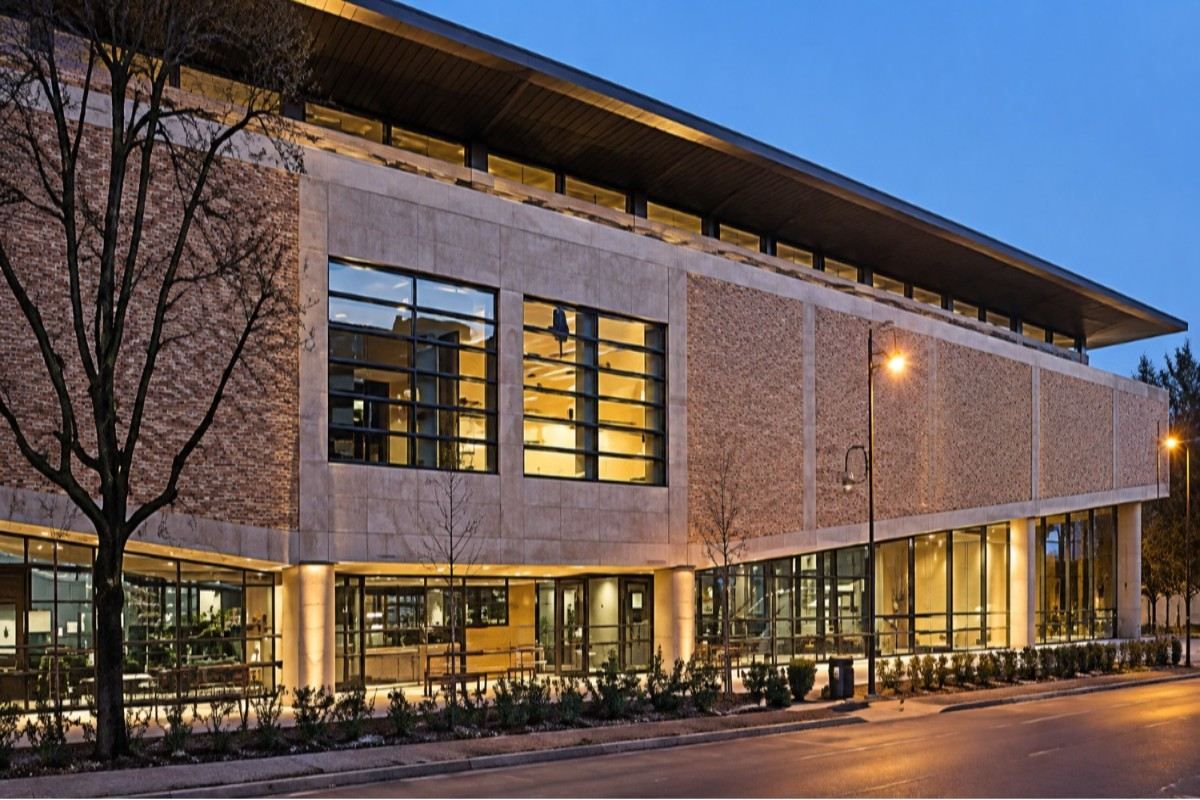
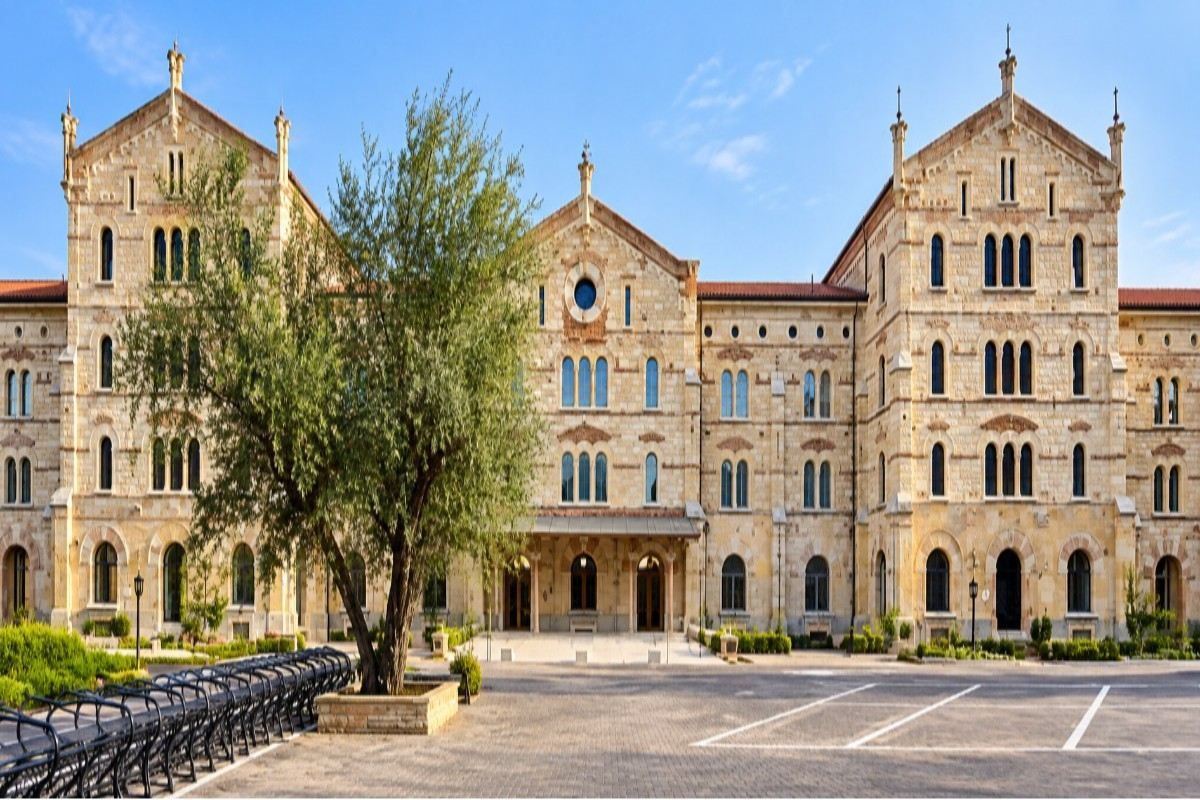
Our expert counsellors will guide you through the complete admission process — from documents to airport pickup.