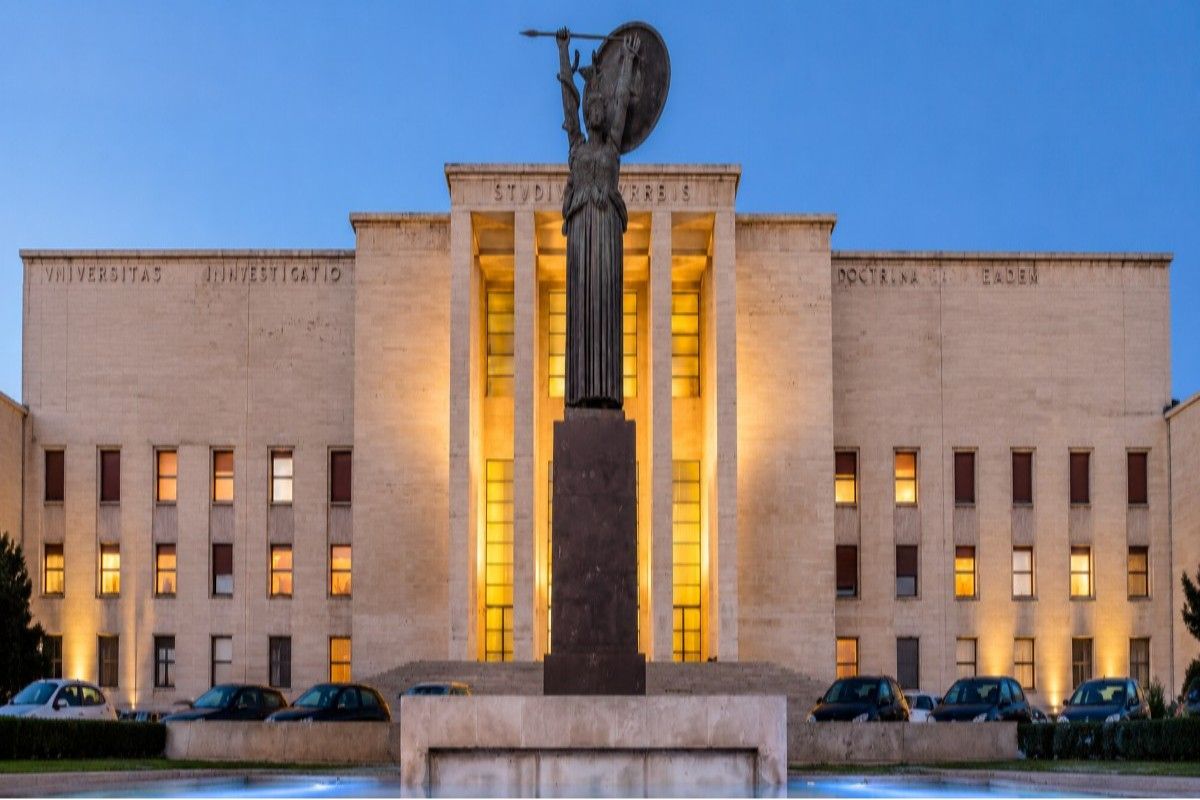
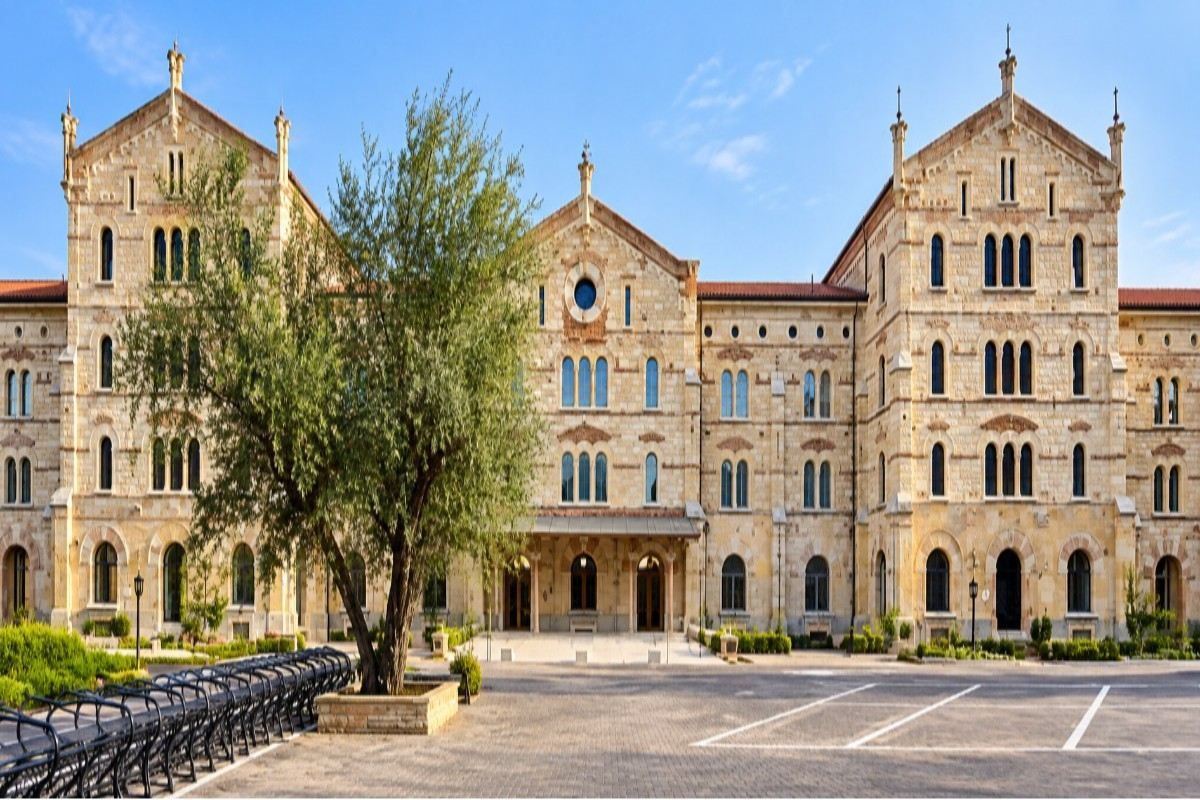
Mention Sapienza Medicine, and people think of one place, and they picture the famous campus near Policlinico Umberto I. It is old, central, and packed with students. The buildings look historic. The halls are always full. But Sapienza has a second medical school. It is called the Faculty of Medicine and Psychology. It is in a different part of Rome. It uses its own hospital. This school rarely gets press. Most people do not even know it exists. But if you want to study medicine in Italy, you must look at it. Do not ignore it. It might be the perfect fit for you.
The school is built around Sant'Andrea Hospital. Sapienza built it to fix a big problem. The main campus was simply too full. They had too many students and not enough space. This second school is not a small branch or a weak copy. It is a full medical school. It has its own six-year medical degree. It also has psychology classes. Sapienza is a huge school. It has over 120,000 students in total. It has a lot of money and deep resources. This second faculty gets to use all of that. The students just learn at a different site. They get the same Sapienza degree. But they learn in a more modern, less crowded space.
How do you get in? You take the IMAT test. Every public medical school in Italy uses this test. There are no back doors. You cannot pay for a seat. There are no secret exams. Your rank is your IMAT score. The test covers basic science. It has biology, chemistry, physics, and math. It also tests how well you solve logic puzzles. When you apply, you pick this faculty. You pick Sant'Andrea as your base. The government limits the English seats. Your spot depends on your rank. It is a tough race. You have to beat hundreds of other students from all over the world. But if you score high enough, you get in fair and square.
The best part is the cost. This is a public school. So, your fee is based on your family income. It is not a flat, huge fee. Private schools in Europe charge the same high price to everyone. Sapienza does not do that. Students from India show their family income papers. The school looks at the numbers. Then, the school puts you in a group. Most foreign students pay EUR 1,000 to EUR 3,000 a year. Some pay just a few hundred. Add a small tax, and the cost is still tiny. It is much less than private schools.
You can also apply for the DSU grant. This is a regional grant for students who need money. It helps pay for your food and rent. If you get the DSU grant, you might get free meals at the school canteen. You might get a cheap room in a student dorm. The best part is how it works with your tuition. You can get this grant and still pay a low fee. This combination makes Rome much cheaper to live in. Your family saves a lot of money over six years.
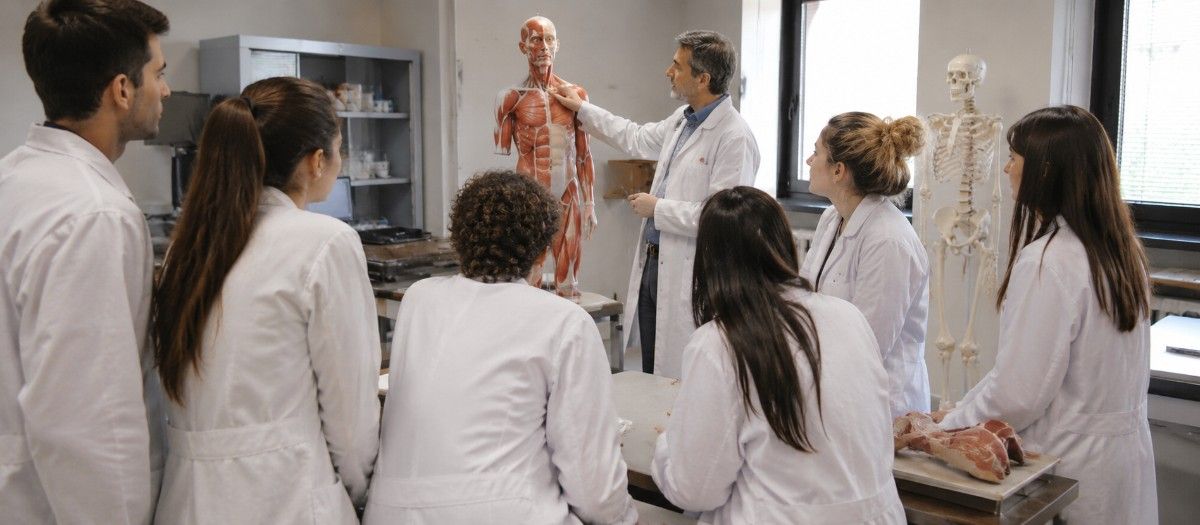
You will not go to the main Policlinico for clinical work. You will go to Sant'Andrea. This is not a tiny clinic. It is a big, busy public hospital. After your basic science classes, you see real patients. You leave the lecture halls. You put on a white coat. You will see common health issues like diabetes or high blood pressure. You will see emergencies in the trauma room. You see real life. You watch real doctors do their jobs. And you do this in Rome. Rome is loud and full of different people. It is full of young students and tourists from everywhere. You cannot get this mix of people in a small town. You learn how to treat all kinds of patients.
But we must talk about language. The classes are in English. You need good English to get in. You read English books. You take English exams. But the hospital runs in Italian. The patients speak Italian. The nurses speak Italian. The staff speaks Italian. Sapienza gives free Italian classes. But do not treat this as a fun club. Treat it like a main subject. If you want to help patients, you must learn Italian. You need it to ask where it hurts. You need it to understand a nurse's instructions. You need it to do your job well. Start learning Italian before you even move to Rome.
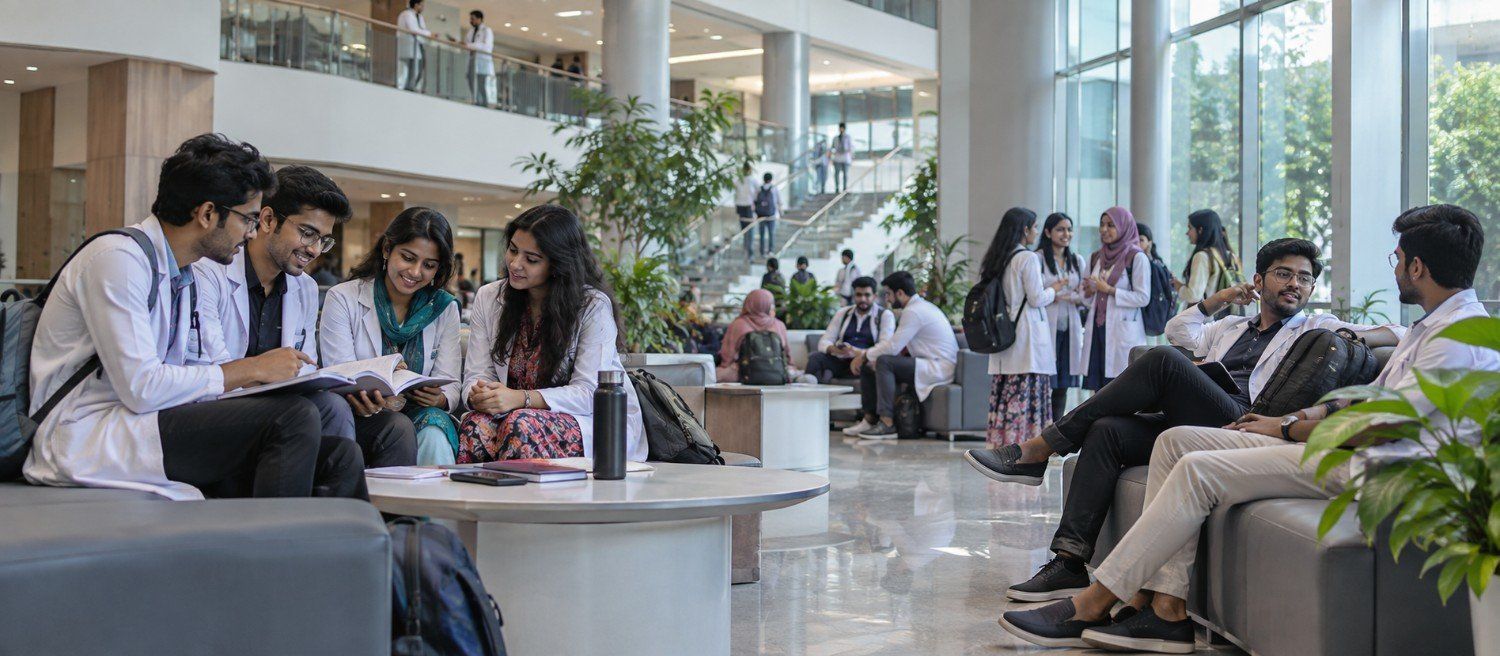
Why do Indian families like this school? There are three main reasons. First, it is a public school. The government runs it. This makes parents feel safe. Second, the fee is tied to your income. This makes it easier to afford. You do not need to take out huge bank loans. Third, you get a top European degree. You just get it at Sant'Andrea, not the main campus. You still need to check NMC rules before you leave. You still need your NEET score. You have to meet the applicable FMGE or NExT requirements when you return to India. But once you know the facts, this school makes perfect sense. It can be an attractive option for students looking for an English-taught medical programme in Italy.
Cost Breakdown
Cost Component | Annual Cost (EUR) | Annual Cost (INR) | 6-Year Cost (INR) |
Tuition Fee | EUR 1,000–3,000 | ₹90,000–₹2.7 lakh | ₹5.4–₹16.2 lakh |
Regional Tax & Stamp Duty | EUR 140–160 | ₹12,600–₹14,400 | ₹75,600–₹86,400 |
Accommodation | EUR 4,800–8,400 | ₹4.3–₹7.6 lakh | ₹25.9–₹45.4 lakh |
Food & Living | EUR 3,000–4,800 | ₹2.7–₹4.3 lakh | ₹16.2–₹25.9 lakh |
Health Insurance | EUR 150–200 | ₹13,500–₹18,000 | ₹81,000–₹1.08 lakh |
Scholarship (DSU, if eligible) | EUR 0–variable | ₹0–variable | ₹0–variable |
Donation / Capitation | EUR 0 | ₹0 | ₹0 |
Total Estimated* | EUR 9,090–12,560 | ₹8.16–₹14.92 lakh | ₹48.97–₹89.54 lakh |
Note: The individual cost figures above are taken from the supplied document. The annual and six-year totals in the table are calculated by adding the listed tuition, regional charges, accommodation, food/living and health-insurance ranges. The source document separately states an overall estimate of ₹45–₹58 lakh, which does not mathematically match the individual ranges provided. Therefore, the calculated total should be treated as a planning range, while the source's ₹45–₹58 lakh figure should not be presented as a guaranteed six-year cost. DSU scholarship support is subject to eligibility and may reduce the student's actual expenses.
Why the Faculty of Medicine and Psychology Deserves a Harder Look Than You've Given It
Most families searching for Sapienza medicine land on the older Faculty of Medicine and Dentistry and stop there. However, they rarely realise that a second full medical faculty exists inside the same university. The reason this gets missed is simple: Sapienza has structured its medical training across separate hospital-linked faculties rather than one single medical site.
This faculty is not presented in the source as a smaller or watered-down version of Sapienza medicine. It runs a full six-year Medicine and Surgery programme and admits students through the IMAT exam. It also operates under the same broader university and national higher-education framework.
The cost structure is another important point. Indian students who fall into lower income brackets may pay considerably less in tuition because fees are linked to income. The source also states that there is no donation or capitation fee. Over six years, this can make the public-university model considerably more predictable than a high fixed-fee private medical programme.
Training through Sant'Andrea Hospital also gives students access to a large public hospital environment. This provides exposure to patients and clinical cases as students move into the clinical stages of the programme.
One point comparison pages can miss is the distinction between Sapienza's two medical faculties. Students should understand the hospital base and faculty structure before applying, rather than assuming that all Sapienza medical students study at Policlinico Umberto I.