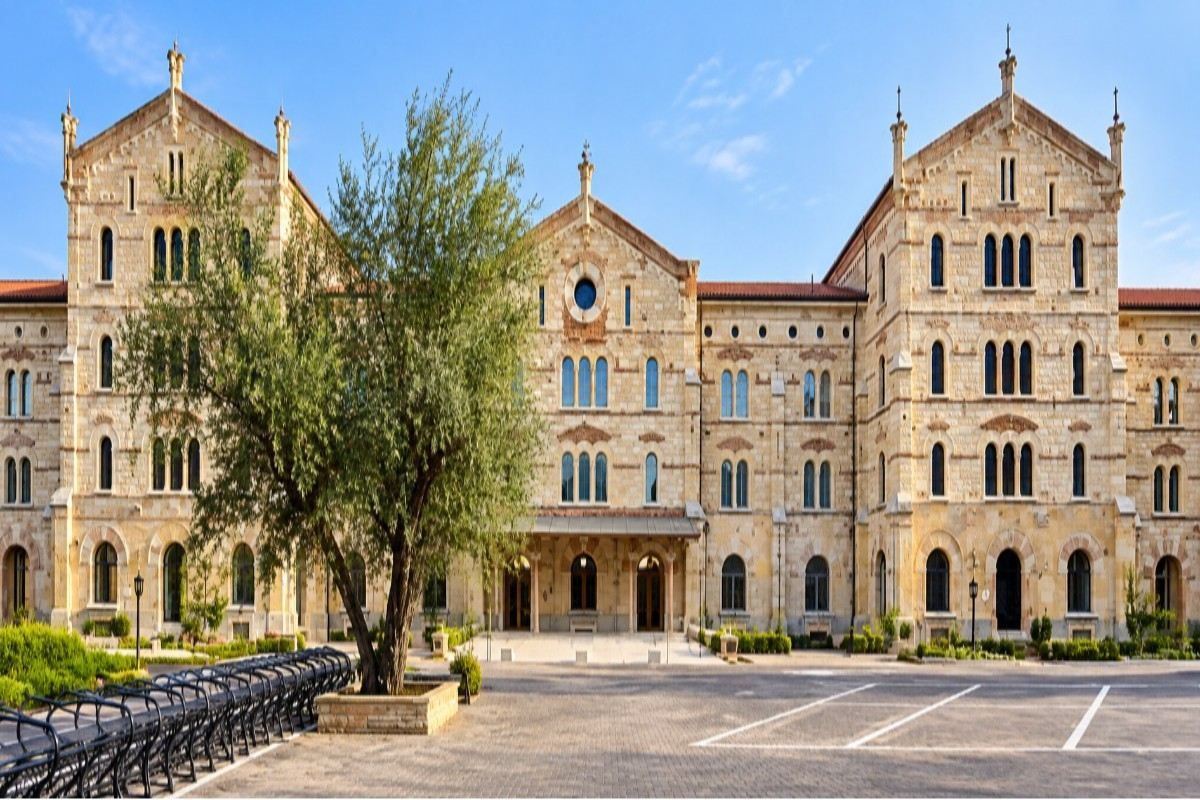
People mostly just call it UniSS for short. Its origins trace to a genuinely specific, individually documented act of philanthropy. In 1558, Alessio Fontana, an official of the imperial chancellery of Charles V, left his own estate in his will to the municipality of Sassari, specifically to establish a college of studies. So, unlike universities founded by royal or papal decree alone, Sassari's own beginnings trace to one named man's personal bequest.
The Jesuit-run Studio Generale that resulted from Fontana's bequest began its first lessons in either 1562 or 1563, depending on the source, with the support of Pope Pius IV. It took until 9 February 1617 for King Philip III to formally grant the college the statute of a royal university, making Sassari the first royal university anywhere in Sardinia, predating Cagliari's own university, whose courses only began in 1626. So, in the specific race between Sardinia's two historic cities to establish the island's first university, Sassari genuinely won.
Here is a fact most guides skip entirely. The university's own right to confer degrees specifically in Law and Medicine traces to a royal charter granted in 1632, a full 15 years after the 1617 royal statute itself. So, medicine's own formal degree-granting status at Sassari is independently, specifically dated, not simply inherited from the university's broader royal recognition. In 1765, a further reform formally recognised four traditional faculties, Philosophy and Arts, Theology, Law, and Medicine, alongside a deliberate decision to bring in Piedmontese professors specifically to modernise the university's scientific content and open it to European Enlightenment thinking.
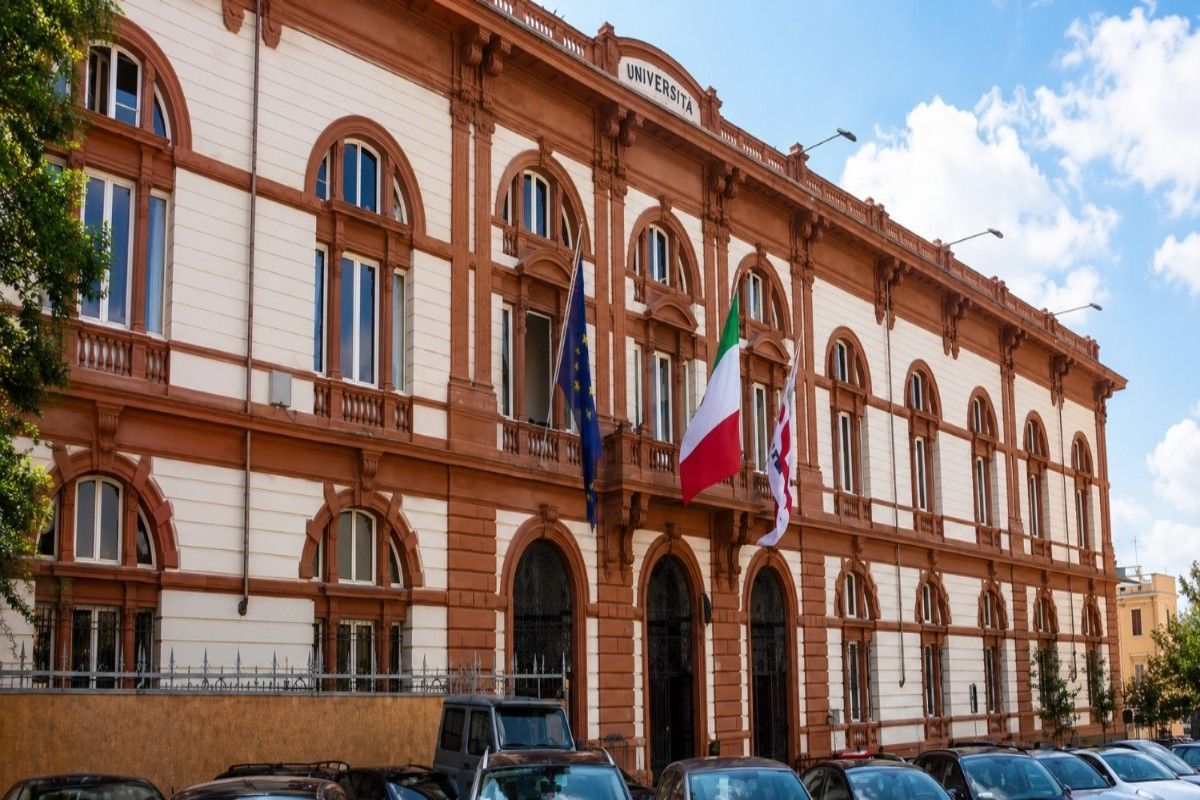
The twentieth century brought genuine further expansion. The Faculties of Pharmacy and Veterinary Medicine were established in 1934, and in 1950, the Faculty of Agriculture was founded, laying the groundwork for the agrarian reform guidelines later implemented by the autonomous Sardinian Regional government. UniSS has been continuously ranked among Italy's top universities in the Censis rankings since 2001. The university's historic central building, the Palazzo dell'Università, dates to 1611 and houses the most renowned of the university's twelve libraries, its historic library, beneath a ceiling painting depicting an allegory of the four faculties present at the time: Law, Veterinary Medicine, Medicine, and Pharmacy.
Sassari sits in northern Sardinia, and the university's main campus occupies restored historic buildings integrated with modern teaching and research facilities in the city's historic centre, alongside further teaching sites in Alghero, Olbia, and other Sardinian towns. Sassari's own coastal proximity means students genuinely have access to some of Italy's most celebrated beaches within easy reach, a real, distinctive lifestyle feature of studying medicine here.
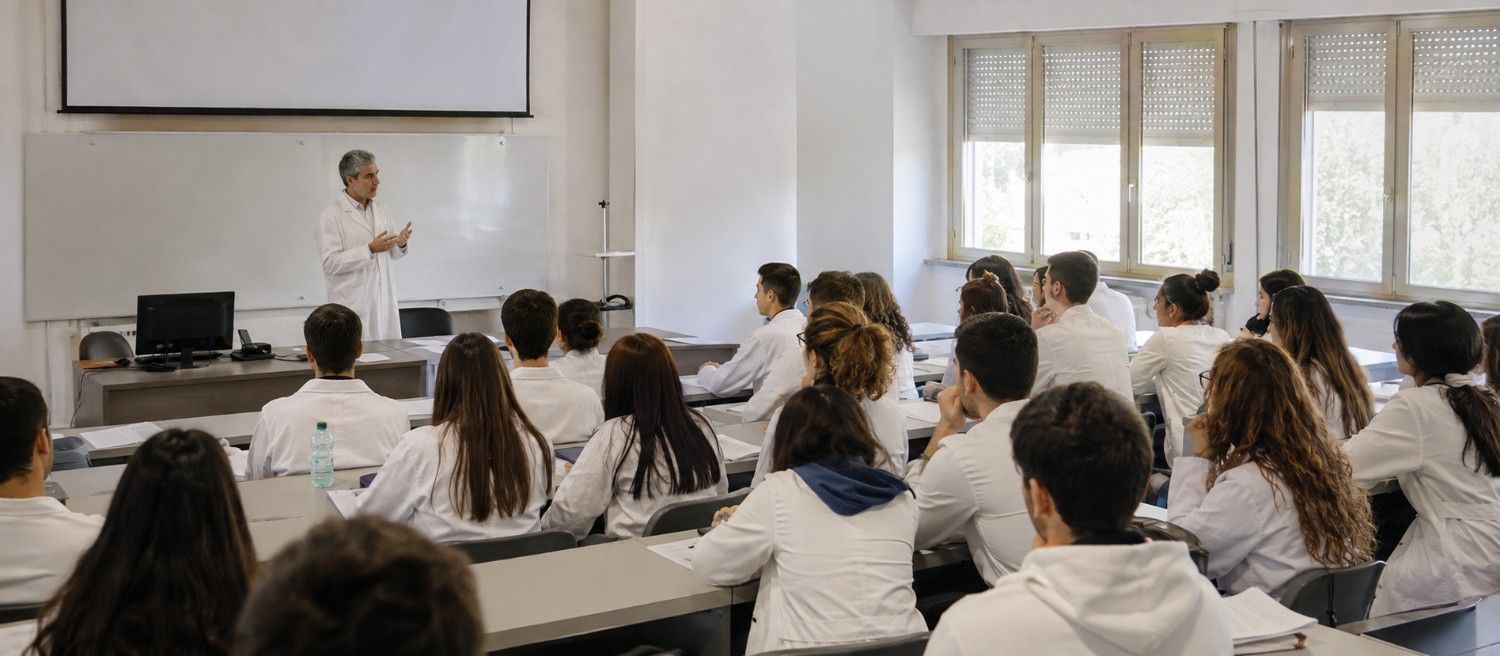
The Facoltà di Medicina e Chirurgia is based at Viale San Pietro 12, close to the Cliniche San Pietro, and runs in close collaboration with the Azienda Ospedaliero-Universitaria di Sassari, AOU Sassari, which provides clinical departments and advanced laboratories directly for student training. Practical clinical placements also extend to non-university hospital facilities, including the emergency department of Sassari's own hospital hub, and students can choose exactly where to complete their placement activities.
Medicina e Chirurgia at Sassari runs as a six-year Laurea Magistrale a Ciclo Unico, a Single-Cycle Degree combining preclinical and clinical training in one continuous programme, taught entirely in Italian, with admission running through Italy's national restricted-access system for medicine, governed by Law 264/1999. The specific admission test covers biology, chemistry, physics, and mathematics.
NEET remains a genuine requirement for Indian applicants here, exactly as it does for MBBS study in most other countries, and Indian graduates would still need to clear the FMGE or NExT exam to practise medicine back in India.
Sardinia's own distinctive island character gives students at Sassari a genuinely different experience from studying medicine on the Italian mainland, since the island maintains its own specific dialect, culinary traditions, and cultural identity, quite separate from the rest of Italy despite being fully integrated into the country's national university and healthcare systems. This gives international students genuine exposure to a real, distinctive regional culture within Italy, alongside the more commonly recognised Italian traditions found in cities like Rome or Milan.
The university's own veterinary medicine programme, recognised as a genuine national centre of excellence with its own dedicated university veterinary hospital, reflects Sassari's broader institutional strength across health-related sciences generally, not medicine alone. This wider strength across multiple health disciplines gives medical students at Sassari access to a genuinely broader academic community of health-focused peers and researchers, potentially opening up interdisciplinary collaboration opportunities not available at institutions with a narrower academic focus.
Cost Breakdown
Tuition fees follow the standard Italian public-university model, genuinely income-linked to each student's own ISEE Università declaration and paid across three separate instalments of varying amounts.
Cost Item | Amount | Notes |
Tuition (No Tax Area, low-ISEE students) | Approx. EUR 156/year (regional tax + stamp duty only) | Standard Italian public-university income-linked model; full exemption for lower-income students |
Tuition (ordinary ISEE brackets) | Calculated per Sassari's own three-instalment structure | Genuinely difficult to calculate precisely in advance, since it varies considerably person to person |
Regional Tax + Stamp Duty (included in first instalment) | EUR 140 (regional tax) + EUR 16 (stamp duty) | Standard charges applied across nearly all Italian public universities |
Second and Third Instalments | ISEE-based (second) and merit-based (third) | Consistent with the standard Italian public-university contribution model |
Sassari's Specific ISEE Thresholds (above No Tax Area) | Not confirmed in sources reviewed | A genuine information gap; confirm directly via Sassari's own official tasse webpage |
Total 6-Year Estimate | — | Genuinely dependent on individual ISEE and merit status; confirm current, exact bracket figures directly |
Note: Sassari's own specific ISEE income thresholds beyond the No Tax Area weren't confirmed in the sources reviewed. Request the university's own official tasse webpage directly for exact current bracket figures.
Why Sassari Deserves a Harder Look Than You've Given It
Most lists mention Sassari as just another Italian medical faculty. However, they do not explain its genuinely personal founding story, or that it was really Sardinia's first university. The reason is simple. It is about a named individual's own bequest, and a real, dated regional first.
Sassari is not like most other Italian universities when it comes to its own founding. In fact, its origins trace specifically to Alessio Fontana's 1558 bequest, a named individual whose personal will directly funded the college that eventually became this university. Furthermore, this institution's founding carries a genuinely personal, documented origin story, not an anonymous royal or papal act alone.
Sassari's own claim to being Sardinia's first university also matters more than most guides let on. For example, most guides describing Sardinian universities don't establish which one genuinely came first. Sassari received its royal university statute on 9 February 1617, while Cagliari's own courses only began in 1626, a genuine nine-year gap. Moreover, Sassari's claim to being Sardinia's first university rests on a real, specific, dated comparison, not a vague regional claim.
One thing most other blogs miss is how specifically dated medicine's own degree-granting rights actually are here. In addition to the university's own 1617 royal statute, the specific right to confer degrees in Medicine and Law traces to a separate royal charter granted in 1632. Since this is independently, specifically dated, applicants get a genuinely more precise picture of medicine's own formal status at Sassari, not an assumption inherited from the university's broader founding.