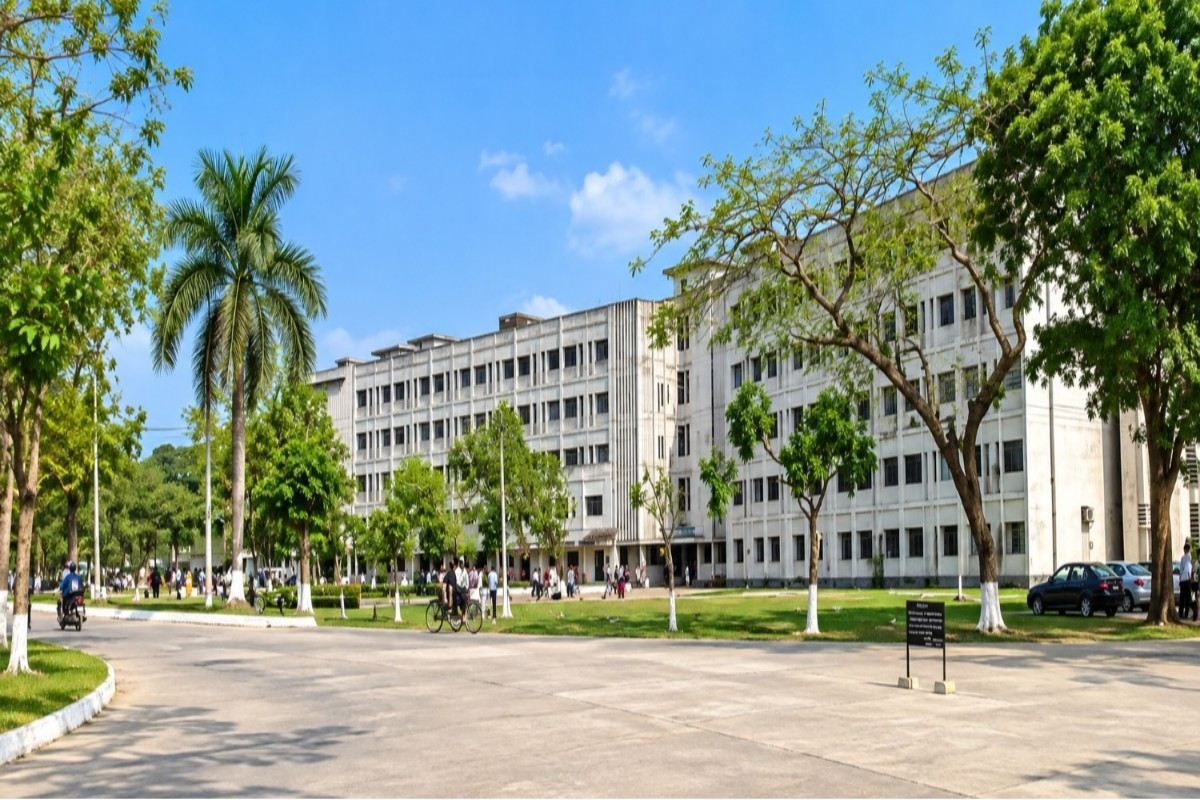
People mostly just call it SMCH for short. It is a private medical college, established in 2003 by Alhaj Mohammed Shahabuddin, an eminent businessman and social reformer, located in Gulshan-2, described as one of the most prestigious and secure, diplomatic areas of Dhaka. The college is affiliated with the University of Dhaka.
Here is a genuinely specific, unique institutional detail worth knowing directly. SMCH's own academic classes officially began on 18 April 2003, a date the college itself specifically celebrates annually as "SMC Day" in Bangladesh. The college's own very first cohort, its founding batch, was formally named SM-01, a real, specific naming tradition continued for subsequent intakes.
SMCH's own leadership succession is genuinely well documented with specific dates. A.K.M. Salahuddin served as the college's own first chairman, from 1 September 2002 to 30 November 2005, followed by Md. Abdul Kadir Khan, from 1 December 2005 to 15 August 2011, and then Sk Akbar Hossain, from 16 August 2011 to 30 June 2013, with further chairmen following. The college is currently led by Chairman Mohammad Sahab Uddin, with Professor Dr. Khademul Azad serving as Principal.
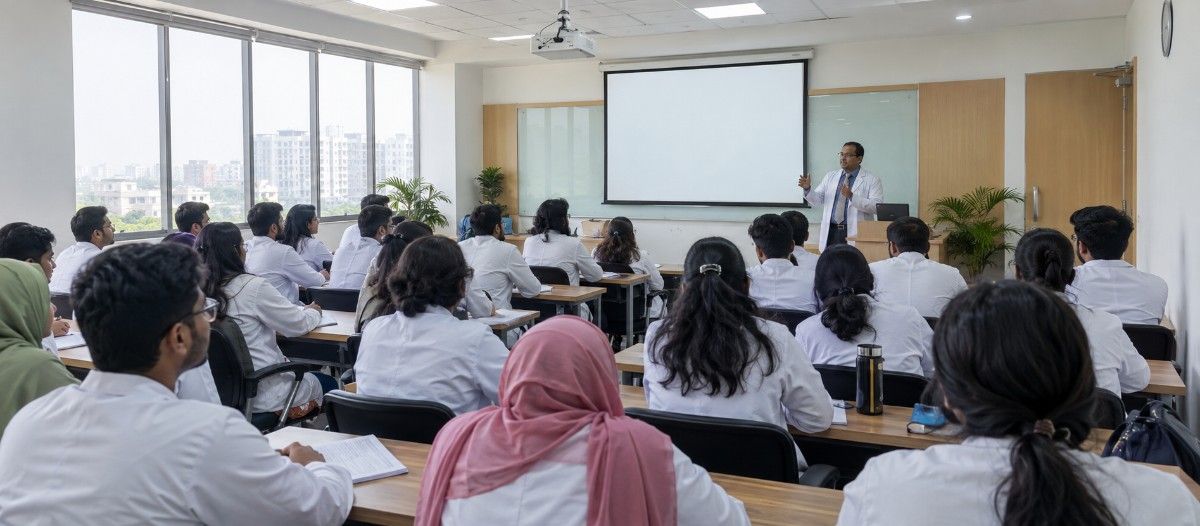
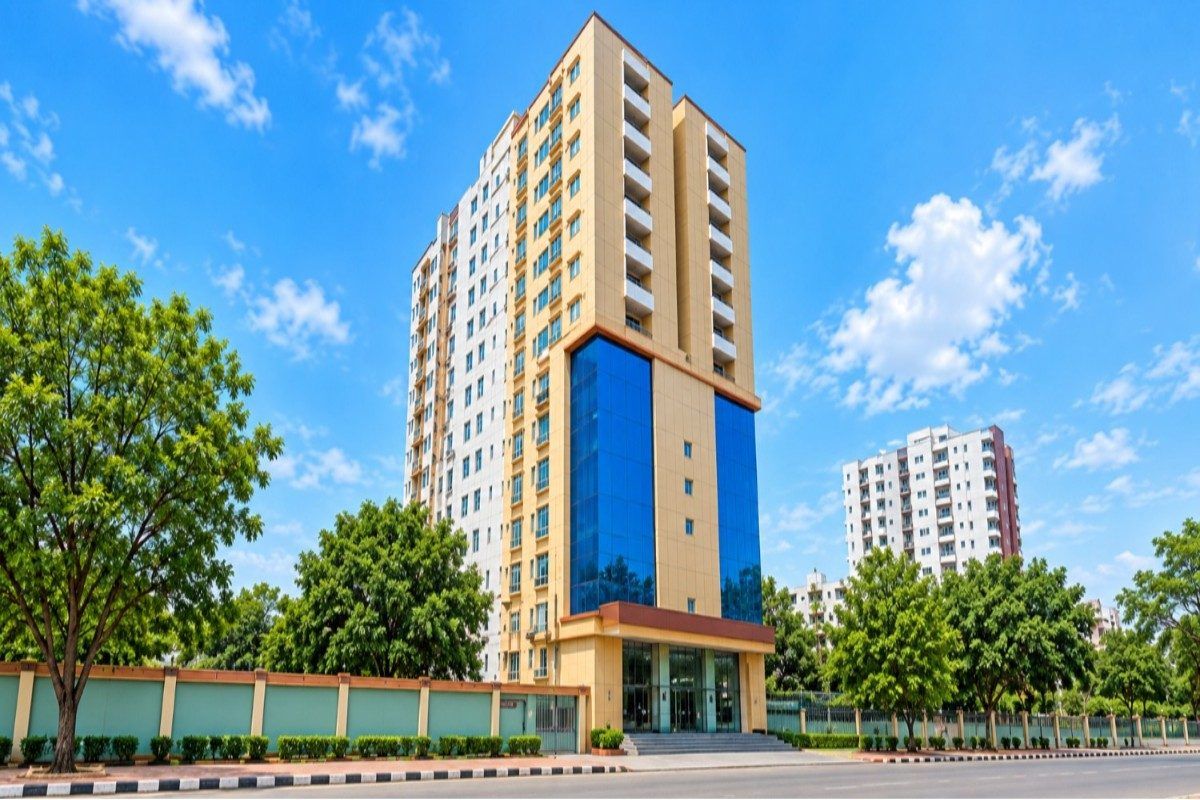
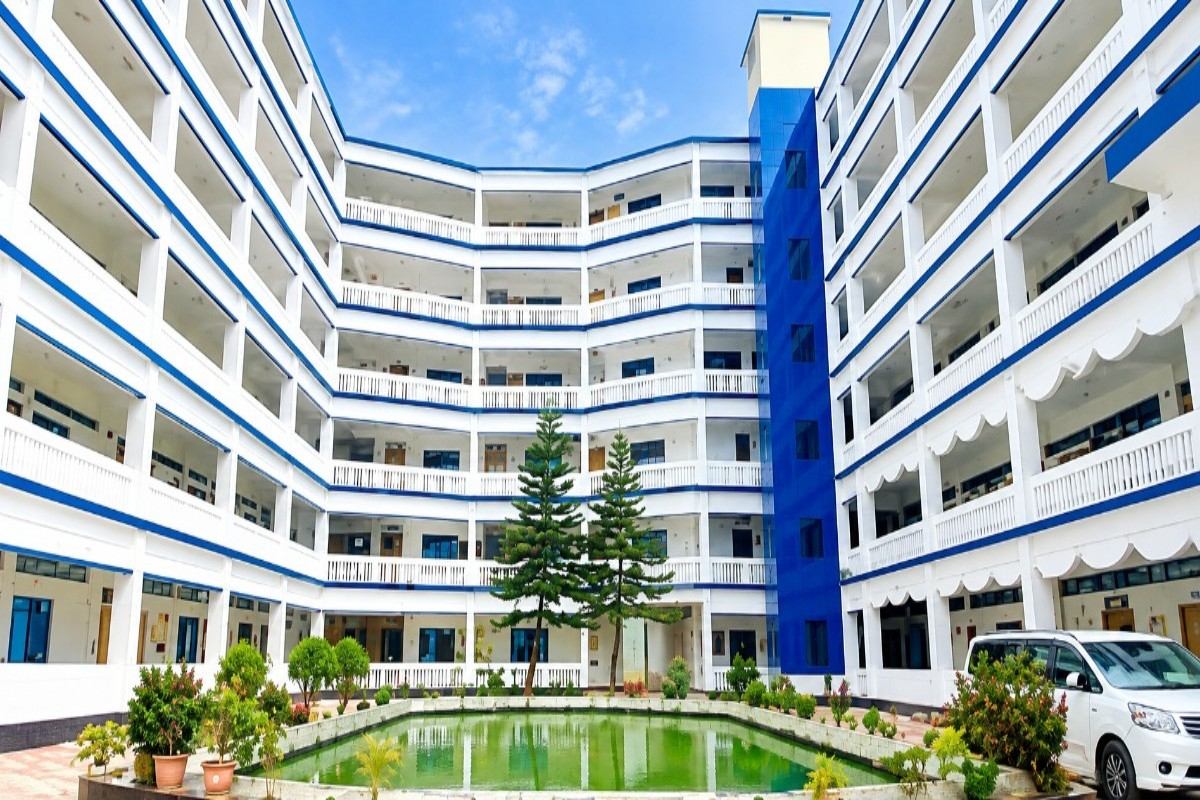
SMCH's own campus features a considerable 12-storey academic building, spanning 240,000 square feet, with fully air-conditioned classrooms. The college admits up to 90 students annually, currently supporting 500 total students with 100 academic staff. A genuinely specific, notable admission detail is that 45 percent of SMCH's own seats are specifically allotted for foreign students, a real, considerable proportion reflecting the college's own genuine international orientation.
SMCH's own attached teaching hospital reports 500 beds, offering a genuinely comprehensive range of clinical services, including outdoor and indoor patient care, emergency services, ICU, CCU, and NICU, operation theatres, dialysis, physiotherapy, a pharmacy, and laboratory and imaging facilities. The programme runs for 5 years, entirely in English, followed by a compulsory 1-year internship, with clinical training covering Anatomy, Physiology, Biochemistry, Medicine, Surgery, Gynaecology and Obstetrics, Paediatrics, Cardiology, Orthopaedics, Ophthalmology, ENT, and Radiology.
SMCH is recognised by Bangladesh's own Ministry of Health and Family Welfare, the Bangladesh Medical and Dental Council, BMDC, India's National Medical Commission, NMC, the World Health Organisation, WHO, WDOMS, and IMED, a genuinely broad set of recognitions. The college's own materials specifically highlight highly qualified, reputable professors dedicated to offering international students a world-class education, alongside a well-equipped library.
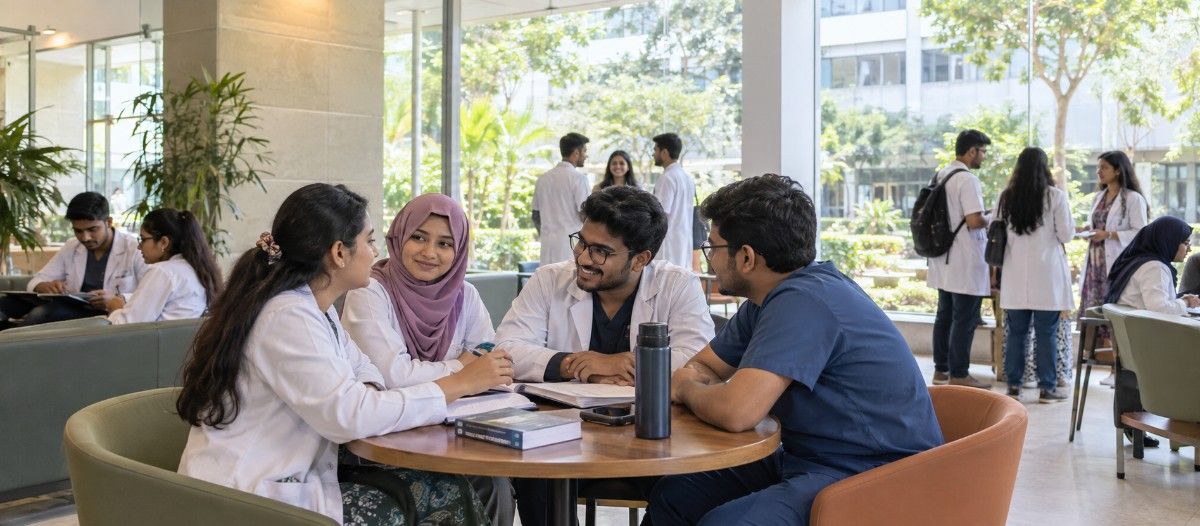
SMCH's own hostel accommodation offers separate blocks for boys and girls, with fully furnished, twin-sharing rooms, alongside internet access, cultural activities, games, sports facilities, and a cafeteria. Students specifically have a range of accommodation options available, at genuinely different monthly rental rates, giving applicants real, practical flexibility in choosing their own preferred standard of housing.
NEET remains a genuine requirement for Indian applicants pursuing MBBS study at SMCH, and Indian graduates would still need to clear the FMGE or NExT exam to practise medicine back in India after completing their degree. Given how genuinely specific SMCH's own founding history, leadership succession, and dedicated "SMC Day" tradition actually are, applicants get a considerably more concrete, well-documented picture here than the generic "established in [year]" framing many comparable Dhaka private medical colleges rely on.
Gulshan itself is genuinely one of Dhaka's own most affluent, well-regarded neighbourhoods, home to numerous foreign embassies and diplomatic missions, alongside considerable upscale commercial and residential development. This gives SMCH's own students genuine, practical access to a secure, well-developed urban environment, with international restaurants, shopping, and cultural amenities all within easy reach of the college's own campus, quite different from the more provincial settings of some other Bangladeshi medical colleges covered elsewhere in this whole series.
Founder Alhaj Mohammed Shahabuddin's own stated motivation, specifically framed as serving humanity through the provision of quality medical education, reflects a genuinely values-driven institutional origin, similar in spirit to other philanthropically founded Bangladeshi medical colleges covered elsewhere in this series, though with SMCH's own founder specifically described as an eminent businessman and social reformer rather than a healthcare-sector professional.
SMCH's own wider clinical curriculum genuinely spans a broad range of specialities beyond the standard core subjects, specifically including Cardiology, Orthopaedics, Ophthalmology, ENT, and Radiology as named components of its own clinical training programme. This genuinely broader specialty exposure, confirmed directly by the college's own materials, gives applicants a considerably more concrete sense of the range of clinical experience available here, rather than a vague reference to "comprehensive clinical training."
Fee figures here are based on the general Dhaka private-medical-college reference range, since a specific dollar tuition figure was not consistently confirmed across the sources reviewed; the concrete estimates below give applicants real, usable numbers to plan around.
Cost Item | Amount | Notes |
Tuition Fee (total programme, estimated) | Approx. USD 30,000-38,000 | Based on typical total programme costs at comparable Dhaka private medical colleges, described as "affordable" by the college's own materials |
Hostel/Accommodation Fee | Approx. USD 700-1,500/year, depending on room type | Genuinely confirmed as offering a range of accommodation options at different monthly rentals |
Health Insurance | Approx. USD 100-200/year | Standard estimate for international student health coverage in Bangladesh |
Food/Meal Expenses | Approx. USD 150-250/month | Based on typical Dhaka living costs, a considerably larger, more expensive city than Bangladesh's smaller provincial towns |
Books, Uniform, and Miscellaneous | Approx. USD 300-500/year | Standard estimate for textbooks and basic study materials at comparable Bangladeshi medical colleges |
Total 6-Year Estimate (tuition + hostel + insurance) | Approx. USD 35,000-45,000 | Combined estimate across the full 6-year programme, based on the ranges above |
Note: the college's own materials specifically describe fees for the 2025-2026 session as based on an official international student fee structure, subject to change per college notice, currency rate, and admission session. Request SMCH's own current, official, itemised fee schedule directly for the exact current-year rate.
Why SMCH Deserves a Harder Look Than You've Given It
Most lists mention Shahabuddin Medical College only briefly among Dhaka's many private medical colleges. However, they do not explain its own genuinely specific, dated founding tradition, or present its own detailed leadership succession history. The reason is simple. It is about real, specific institutional detail most guides skip entirely.
SMCH is not like most other Dhaka private medical colleges when it comes to how specifically its own founding is commemorated. In fact, the college specifically celebrates 18 April as "SMC Day" each year, marking the exact date its own academic classes began in 2003, with its own founding cohort formally named SM-01. Furthermore, this genuinely specific, named institutional tradition is considerably more concrete than the vague "established in [year]" framing found at most comparable Dhaka private medical colleges.
The college's own detailed chairman succession also matters more than most guides let on. For example, most guides describing a Bangladeshi private medical college's own leadership present only the current chairman's name. SMCH's own history specifically documents at least three previous chairmen, each with precise start and end dates spanning from 2002 through 2013. Moreover, this level of specific, dated leadership history is genuinely rarer than at most comparable Bangladeshi private medical colleges covered in this whole series.
One thing most other blogs miss is SMCH's own genuinely high, specific proportion of seats reserved for foreign students. In addition to standard due diligence, 45 percent of the college's own total seats are specifically allotted for international applicants. Since this is a real, considerable proportion, genuinely higher than the vaguer "welcomes international students" claims found at many comparable colleges, applicants get a genuinely more concrete sense of SMCH's own real international orientation.