
Q1 What makes the Universidad de Salamanca Faculty of Medicine distinctive?
+A: It is one of Europe's oldest continuously taught medical faculties, with chairs in medicine dating to 1254, now paired with a 2025 WFME accreditation.
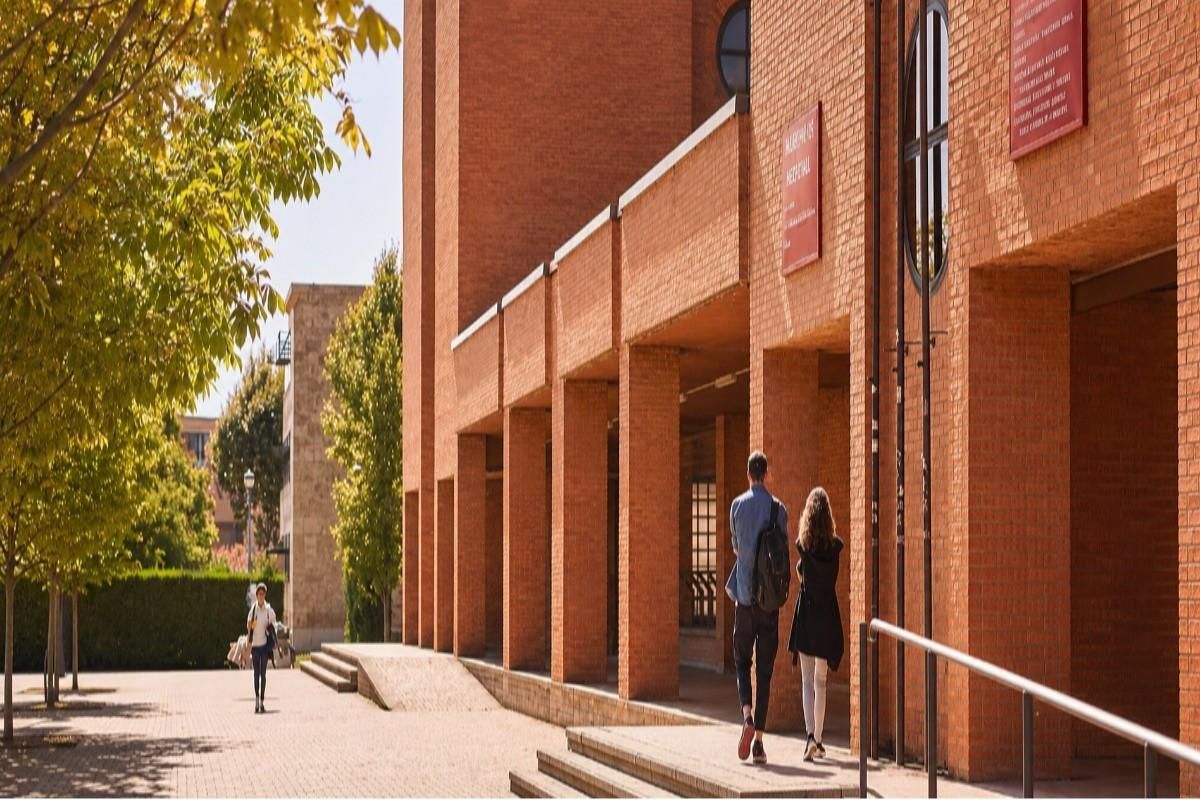
 Spain | Est. 1218
Spain | Spanish Ministry of Education and Vocational Training, ANECA, and World Federation for Medical Education (WFME, since 2025) | Spanish medium
Expert will call you within 2 hours
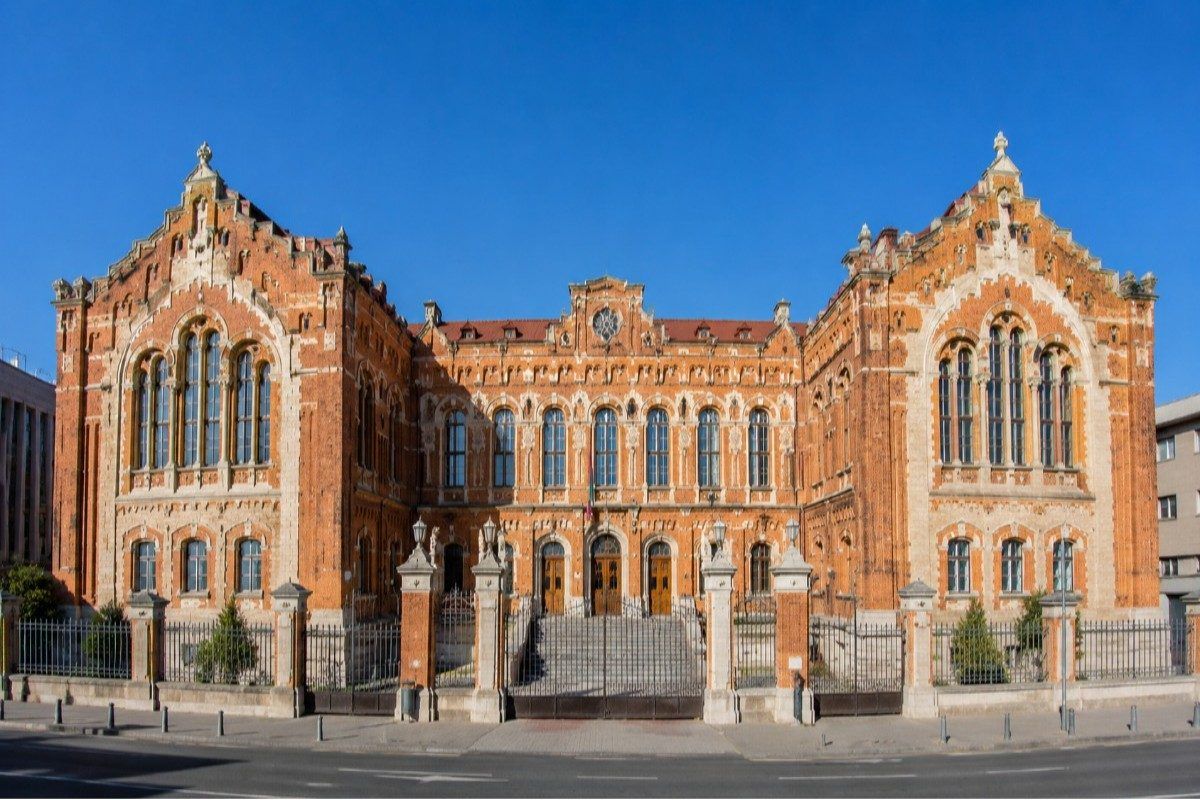
Salamanca is one of the three oldest universities still operating in continuous fashion today, along with the University of Bologna and the University of Oxford. The Estudio General was established by King Alfonso IX of Leon in 1218 and received papal recognition of its academic degrees throughout the Christendom in 1255, thus earning a place among the four leading European medieval universities alongside Paris, Oxford, and Bologna. What is overlooked amid the impressive figures is the fact that medicine has not been a late addition to the university. There were eleven chairs founded at Salamanca back in 1254 and two of them dealt with medicine – a fact that demonstrates a history of teaching it that is more than 800 years long without significant breaks caused by anything other than war and politics.
This long-standing institution is the reason for an unusual lineup of alumni that the medical faculty boasts. International law is associated with Francisco de Vitoria, who studied and taught here. The first grammar of the Spanish language is attributed to Antonio de Nebrija, another former student of the University of Salamanca. Christopher Columbus supposedly consulted the scholars of the University about his future voyage in 1492. While none of this may count as medical history, it provides an explanation of the unique reputation that the university enjoys in Spain.
The history of the contemporary Grado en Medicina is not that distant, but it is certainly a much more tangible story. The current curriculum consists of six years and requires 360 ECTS. It underwent considerable changes in 2022, when the faculty increased the number of admissions by 15% from 180 to 207 to compensate for a countrywide shortage of doctors. Nevertheless, the threshold score of more than 12.7 out of 14 shows that the demand for places in the faculty has not decreased despite the expanded capacity. In 2025, the faculty managed to get the accreditation from the World Federation for Medical Education, thus gaining the ability, uncommon to many Spanish universities, to offer its graduates a clear path towards obtaining a residency and medical license in the USA and Canada outside of the EU framework.
All the clinical training is provided by the Complejo Asistencial Universitario de Salamanca, a Level IV hospital complex. Being the top level of the hospitals in the Spanish public sector, it is the only hospital complex of that class in Castilla y Leon. It includes around one thousand beds and performs 80 admissions and 1,500 surgeries per month. These numbers are sufficient enough for fourth-year students to gain experience in working in a busy tertiary hospital rather than a satellite clinic. Research opportunities lie close-by, as the Cancer Research Center, the Institute of Neurosciences of Castilla y Leon, and the Institute of Functional Biology and Genomics are all located on the same Miguel de Unamuno campus as the medical faculty.
The obvious question to ask is what makes an Indian student prefer an 800-year-old Spanish medical faculty to the more recently established English-speaking medical faculties built especially to attract foreign students. The simple answer is that the University of Salamanca was not built for this particular purpose and does not try to pretend otherwise – non-native speakers are required to have B2-level of Spanish before enrollment, there is no parallel English curriculum, and the domestic entrance procedure presumes the knowledge of the Spanish university-access system rather than an international agency-driven pipeline. What makes up for this is the cost of studying. The tuition fee in the university is set annually by the regional government of Castilla y Leon rather than the institution, which keeps even the differentiated fee applied to the non-EU nationals significantly lower compared to the fees of many private English-speaking medical faculties in Europe and provides the degree holder with WFME accreditation and the EU recognition that many of the alternatives lack.
Living in Salamanca has its advantages too. The old town of Salamanca, built almost completely from a honey-colored sandstone, earning it the nickname La Ciudad Dorada, is a UNESCO World Heritage Site, and nearly a quarter of the total population of under 150,000 consists of students, creating a university-oriented atmosphere that differs from just being located near a university. It is also much cheaper to live in than in Madrid or Barcelona, and it is an important factor to consider during six years of study. For a student willing to spend a year gaining fluency in Spanish prior to enrollment rather than hoping for an English-speaking shortcut, the University of Salamanca offers an eight-century-old institution to study at.
No hidden charges, no donation. The full picture of costs at MBBS In Universidad de Salamanca Facultad de Medicina.
Tuition Fee
Approximately EUR 5,000-9,000 for non-EU students (Approx. Rs. 4.50-8.10 lakh)
EUR 5,000-9,000 Approx. Rs. 4.50-8.10 lakh
Hostel Fee
Approximately EUR 2,800-6,500 per year (Approx. Rs. 2.52-5.85 lakh)
EUR 2,800-6,500 Approx. Rs. 2.52-5.85 lakh
Food & Meals
EUR 1,800-3,000 Approx. Rs. 1.62-2.70 lakh
per year
Insurance
EUR 300-500 Approx. Rs. 27,000-45,000
per year
Donation
No Donation
No Hidden Fees
Total Estimated Cost
Approx. EUR 60,000-105,000 for the complete 6-year programme
total 6 year
25–35%
Average FMGE first-attempt pass rates for students from many overseas medical universities. Students from structured programs consistently score higher.
Students returning to India need to clear the FMGE/NExT exam. MBBS In Universidad de Salamanca Facultad de Medicina integrates exam-oriented coaching into the regular curriculum so students are prepared from day one.
A structured program that takes you from foundational sciences to clinical mastery.
• Cell biology, medical physics, and biostatistics
• Human anatomy, histology, embryology, and medical biochemistry
• General pathology, medical psychology, and introduction to social medicine
• Human physiology, medical genetics, microbiology, and immunology
• Supervised practicum in diagnostic and therapeutic procedures (6 ECTS)
• Pathological anatomy, general pharmacology, and clinical semiology
• Clinical rotations begin at the Complejo Asistencial Universitario de Salamanca
• Internal medicine, general surgery, paediatrics, and obstetrics and gynaecology
• Legal medicine, public health, and continued specialty clinical rotations
• Psychiatry, neurology, dermatology, ophthalmology, and otorhinolaryngology
• Trabajo Fin de Grado (final-year thesis) and an OSCE-style ECOE competency exam
• Supervised rotatory internship (60 ECTS) across primary and specialised care
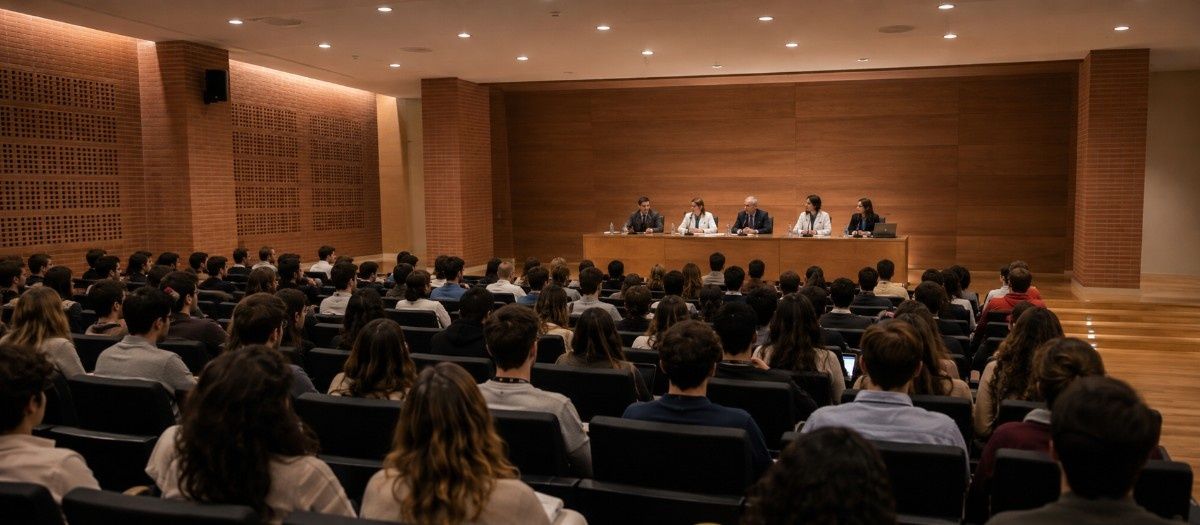
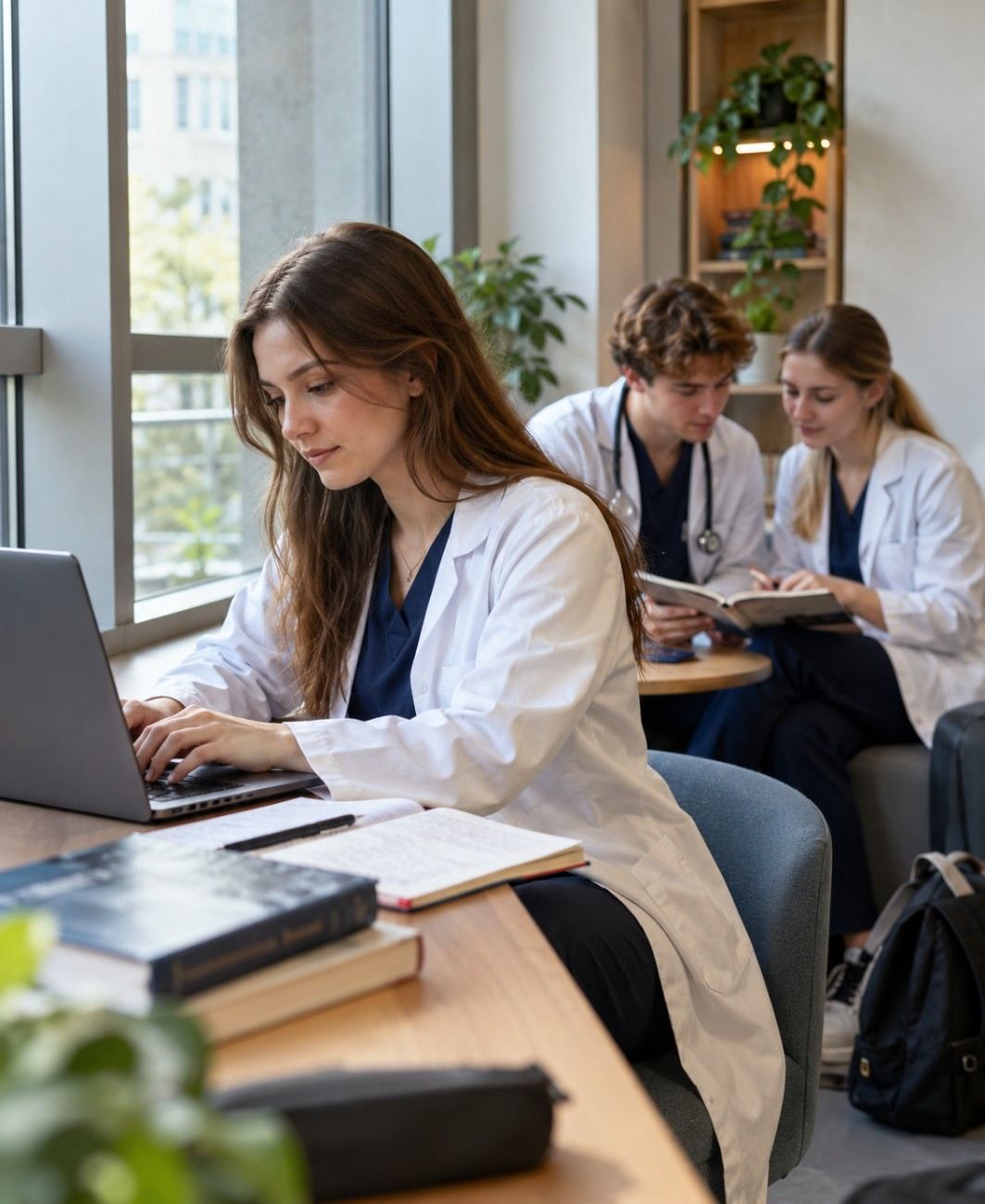
Furnished hostel rooms with Wi-Fi, laundry, 24/7 security, and Indian mess on or near campus.
Indian restaurants and mess facilities serving vegetarian and non-vegetarian home-style food daily.
Strong Indian community with cultural events, festival celebrations, and peer support groups.
Students get hands-on clinical training in government and private hospitals affiliated with the university.
Practical information for students planning to study at MBBS In Universidad de Salamanca Facultad de Medicina.
Prepare for all seasons. Thermal wear for winters, light clothing for summers. University provides heating in hostels.
Student visa processed with university invitation letter. Direct and connecting flights from major Indian cities.
Health insurance included in fees. Medical facility on campus plus city hospitals easily accessible.
Local SIM cards available. WhatsApp and video calls keep you connected with family back home.
Average monthly expenses of $150–$250 covering food, transport, and personal needs.
University library, online databases, and study groups. Seniors mentor juniors through academic challenges.
Our team guides you through every step — from application to arriving on campus.
Shortlist based on public vs private, the MBBS fee in Spain you’re comfortable with, city, and whether a partial-English track matters to you.
Begin DELE/SIELE B2 preparation well ahead of application deadlines.
Submit application; sit BMAT or a university-specific test where required.
Academic transcripts, NEET scorecard, language certificates, passport, and supporting documents.
Formal offer issued upon successful evaluation.
Initial steps toward having your Indian academic credentials recognised in the Spanish system.
Apply at the Spanish consulate with your offer letter, financial proof, and insurance documentation.
After arrival, register at your local town hall (ayuntamiento), a mandatory municipal registration step that most competitor guides skip entirely, but one you’ll need for everything from opening a bank account to enrolling in local healthcare.
Admission Helpline — Contact our counsellors for step-by-step assistance.
“The faculty here is incredibly supportive. The clinical training during hospital rotations has given me real confidence in patient care.”
“Affordable fees without compromising on quality. The campus facilities and hostel life made my transition abroad very smooth.”
“English medium instruction and WHO-recognized curriculum were the deciding factors for me. No regrets so far — excellent experience overall.”
“The university helped with everything from visa to accommodation. Hospital exposure from year three has been invaluable for my FMGE prep.”
“Just cleared my licensing exam on the first attempt. The structured coaching and mock exams during final year were a game-changer.”
“Safe campus, good food options, and a strong Indian student community. The teaching methodology is very practical and hands-on.”
A: It is one of Europe's oldest continuously taught medical faculties, with chairs in medicine dating to 1254, now paired with a 2025 WFME accreditation.
A: No. The Grado en Medicina is taught entirely in Spanish, and a B2-level certificate is a stated requirement for non-native speakers.
A: Yes. The degree is listed with WHO/WDOMS, automatically recognised across the EU/EEA, and WFME-accredited since 2025.
A: WFME accreditation supports eligibility for US and Canadian residency pathways, and Indian students must also clear the applicable NMC screening test for practice in India.
A: Yes, a qualifying NEET score is required to keep future recognition of the foreign medical qualification open in India.
A: CAUSA is the primary teaching hospital, a Level IV facility hosting clinical rotations from Year 4 onward across all major specialties.
A: The faculty and its affiliated institutes are recognised for work in neuroscience, cancer biology, and functional genomics.
A: Salamanca is a compact UNESCO World Heritage city where students make up roughly a quarter of the population, with a lower cost of living than Madrid or Barcelona.
A: Yes. The university and private operators run residence halls and colegios mayores, alongside widely available shared-flat rooms near campus.
A: Applicants typically need homologated academic transcripts, passport copies, NEET documentation, and proof of B2-level Spanish proficiency.
Our expert counsellors will guide you through the complete admission process — from documents to airport pickup.