
Q1. Is this program taught in English?
+A. No. Unlike McGill, UdeM's entire MD program runs in French with no English-taught option at any stage.

 Canada | Est. 1843
Canada | Accredited under Canada's standard Committee on Accreditation of Canadian Medical Schools (CACMS) framework, as with all Canadian MD-granting institutions | French only. There is no English-taught track at any stage of the program medium
Expert will call you within 2 hours
The Université de Montréal's Faculty of Medicine is one of the older medical schools in Canada. It has spent close to two centuries shaping how healthcare works across Quebec. This is not a small claim. More than a third of all doctors now working in Quebec came from this one faculty. That is a big share for one school in one province. McGill built its name as an English-language school with a strong world research name. UdeM built its name the other way. It became the anchor school that trains most of French-speaking Quebec's own doctors. This has held true year after year, for generations.
The medical degree carries an official French name: the Doctorat de 1er cycle en médecine. Most people just call it the MD in daily talk. Still, its formal French name shows something real. This program sits deep inside Quebec's own university system. It is not some separate, international degree brand. The path into this degree depends a lot on where a student starts from. Some students come from Quebec's CEGEP system. This is the province's own pre-university college setup. These students may need a prep year first. This step can be required or optional. It depends on their exact school background. Other students already hold a finished bachelor's degree. These students can skip that prep step. This group covers almost every real international applicant. They go straight into the four-year MD program.
Once inside the four-year program, the first two years follow a set plan. UdeM calls this an APE approach. That stands for apprentissage par équipe, or team-based learning in English. It builds on small-group work, not just big lecture halls. Clinical work starts early and builds up slowly. Students get about two half-days a week with real patients. This holds true even in these early, more classroom-heavy years. They do not wait for one hard cutoff point. A special site called the CAAHC gives students a built-for-purpose space. Its full name is long: Centre d'apprentissage des attitudes et habiletés cliniques. Here, students practise clinical skills and patient talk. This happens before they work with real patients on real wards. The later years shift hard toward full hospital rounds. Students rotate across many hospital specialties. This follows the same basic shape used across Canadian medical schools. Alongside this runs a named thread called Professional Medical Identity. This thread runs through the whole course. It does not sit as one single stand-alone class.
On results, UdeM's grads do well by national marks. Data from the Canadian Federation of Medical Students shows this clearly. UdeM posts a residency match rate close to 95 percent. This places it 12th among 17 Canadian medical schools in that study. That is a strong result nationally. Grads can work across all of Canada. The degree also carries real weight in a few other countries too. This includes a fairly smooth path toward work in the UK, Australia, and New Zealand. Grads who want to work in the United States face one set rule. Any doctor not trained in the US must first do a three-year US residency. This rule holds no matter how strong the original degree is. It comes from general US licence rules. It has nothing to do with UdeM itself.
Now for the single most important fact here. This matters most for anyone reading this from outside Quebec. It matters even more from outside Canada. Seats for international students in this medical degree stay very scarce. In one recent intake year often cited, the faculty took in 291 students. Of these, 281 were Quebec residents. Of the remaining 10 seats, most, 9 of them, went to French-speaking groups in other Canadian provinces. This leaves close to just one or two seats in that whole class. These go to candidates outside both of those groups. UdeM's own material for international students confirms this pattern in plain words. It states plainly that seats for international students stay limited. This holds true for the medical doctorate too. This is not some small note in fine print. It is the central fact here. It shapes whether this degree is truly within reach for most people outside Quebec's own French school system.
Language makes this even harder. This may hold even more true than at McGill. McGill teaches its MDCM in English. It still asks for working French during the clinical years, though. UdeM runs its whole program in French, right from day one. No separate English track exists at any point. Lectures, small-group work, mock training, and hospital rounds all need real fluency. Simple, everyday French is not enough here. A real applicant from outside Quebec's French school system needs strong academic French already. This must go well past a few terms of basic language class.
One more, separate path exists too. This one is built for people who already hold a finished foreign medical degree. It does not suit fresh undergraduates chasing their first MD. UdeM takes part in a shared pick process. This runs jointly across Quebec's three French-language medical schools. These are UdeM, Université Laval, and Université de Sherbrooke. It serves doctors trained abroad. They want their foreign medical degree formally checked through Quebec's Collège des médecins, known as the CMQ. Candidates in this group must lock in CMQ approval for their existing degree. This must happen by mid-February of their intended start year. They must also pass Part I of Canada's national medical licence test, called the MCCQE. They must finish the CASPer test fully in French too. This route exists only for working or fully trained doctors. It suits those looking to requalify in Quebec. It does not suit a first-time medical student picking a school. It carries its own separate, genuinely tough set of steps.
On cost, UdeM sits inside Quebec's wider tier fee system. This applies to students from abroad. It is the same setup used across the province's schools, McGill included. Public guesses for UdeM's general fee for international undergrads sit in a wide range. Sources often quote somewhere between CAD 18,000 and CAD 27,000 a year. These numbers cover general courses across the whole school, though. They do not show the higher rate Quebec sets apart for medical degrees alone. Quebec's medical schools, McGill included, have long charged foreign medical students a much higher rate. This often runs well above CAD 55,000 to 65,000 a year. This is once required fees get added in. Nothing in public records suggests UdeM's medical rate strays far from that wider pattern. Given this real gap in clear public data, it makes sense to check UdeM's own official fee tool instead. A direct written note from the Faculty of Medicine's international office matters more than any generic guess found online.
Living in Montreal itself brings real, genuine upsides. These apply no matter which of the city's medical schools a student ends up at. It is a large, culturally rich city. It has a lower cost of living than Toronto or Vancouver. It runs a strong public transit system. It also holds one of Canada's biggest, most active student groups. Several major schools sit close together in one metro area.
No hidden charges, no donation. The full picture of costs at MBBS In Université de Montréal Faculté de Médecine.
Tuition Fee
Approx. CAD 58,000–78,000/year (₹36–49 lakh/year)
Contact University (International MD tuition is generally CAD 45,000–60,000/year
Hostel Fee
Approx. CAD 8,000–12,000/year
Approx. CAD 8,000–12,000/year
Food & Meals
Approx. CAD 3,600–5,400/year (CAD 300–450/month)
per year
Insurance
Approx. CAD 900–1,200/year (Mandatory for international students)
per year
Donation
No Donation
No Capitation Fee
Total Estimated Cost
Approx. CAD 58,000–78,000/year (₹36–49 lakh/year)
total 4 year
25–35%
Average FMGE first-attempt pass rates for students from many overseas medical universities. Students from structured programs consistently score higher.
Students returning to India need to clear the FMGE/NExT exam. MBBS In Université de Montréal Faculté de Médecine integrates exam-oriented coaching into the regular curriculum so students are prepared from day one.
A structured program that takes you from foundational sciences to clinical mastery.
Medical Interviewing, Physical Examination, Professional Identity, Simulation Training, Early Hospital Exposure.
Human Anatomy, Histology, Physiology, Biochemistry, Molecular Biology, Immunology, Microbiology, Pathology, Pharmacology, Clinical Skills,
Deeper understanding of human body systems and disease mechanisms.
Organ System-Based Medicine, Internal Medicine, Cardiology, Respiratory Medicine, Gastroenterology, Nephrology, Endocrinology, Neurology, Psychiatry, Infectious Diseases, Clinical Reasoning, Diagnostic Imaging, Community Medicine, Ethics, Evidence-Based Medicine
Hospital rotations begin. Students interact with patients under supervision.
Clinical Rotations in Internal Medicine, General Surgery, Pediatrics, Obstetrics & Gynaecology, Psychiatry, Family Medicine, Emergency Medicine, Anesthesiology, Diagnostic Imaging, Clinical Skills, Patient Care and Interprofessional Practice.
Specialized clinical postings across departments with case presentations.
Advanced Clinical Rotations, Elective Rotations, Rural & Community Medicine, Speciality Electives, Research Project, Transition to Residency, Preparation for Medical Licensing and Residency Matching.

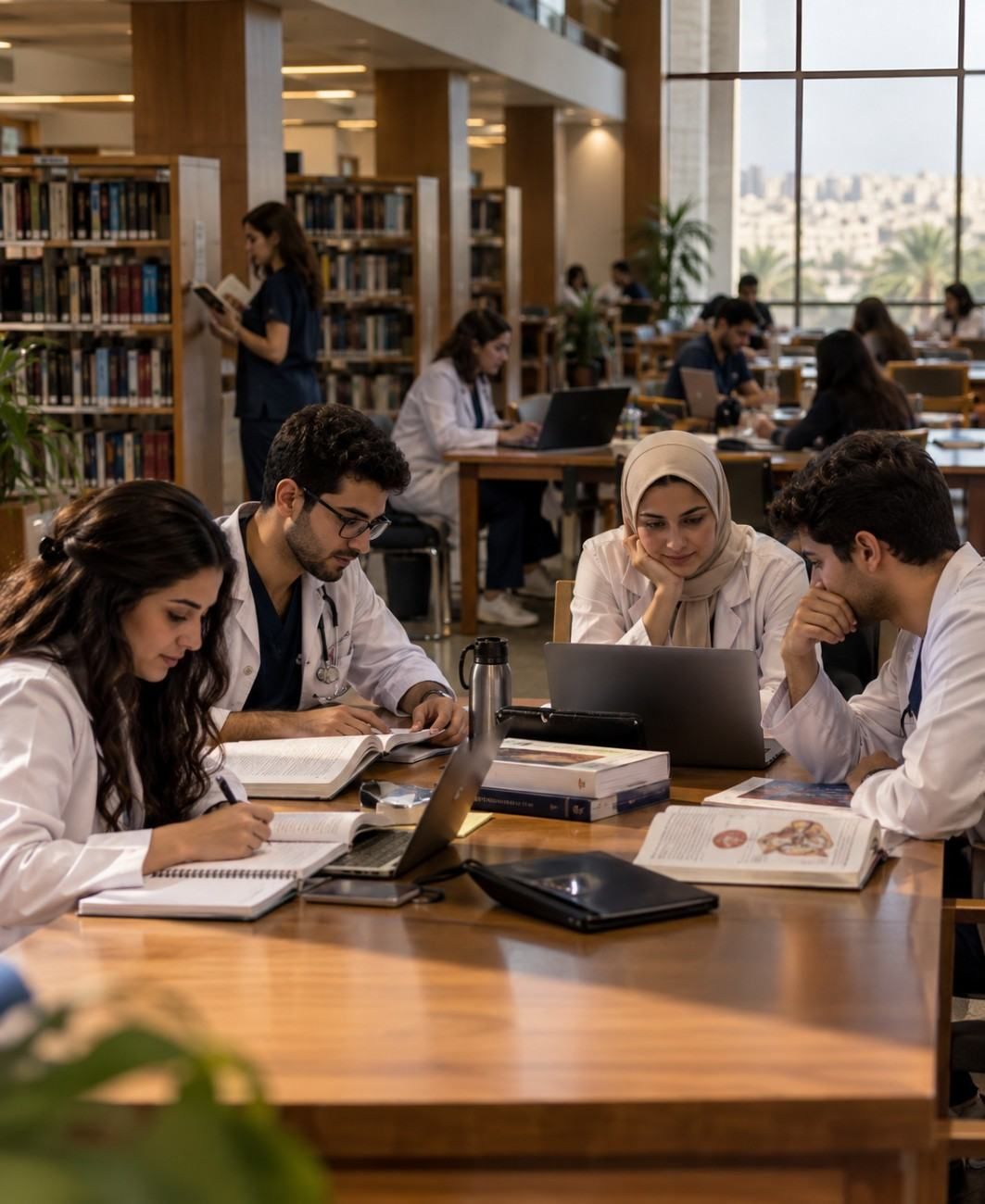
Furnished hostel rooms with Wi-Fi, laundry, 24/7 security, and Indian mess on or near campus.
Indian restaurants and mess facilities serving vegetarian and non-vegetarian home-style food daily.
Strong Indian community with cultural events, festival celebrations, and peer support groups.
Students get hands-on clinical training in government and private hospitals affiliated with the university.
Practical information for students planning to study at MBBS In Université de Montréal Faculté de Médecine.
Prepare for all seasons. Thermal wear for winters, light clothing for summers. University provides heating in hostels.
Student visa processed with university invitation letter. Direct and connecting flights from major Indian cities.
Health insurance included in fees. Medical facility on campus plus city hospitals easily accessible.
Local SIM cards available. WhatsApp and video calls keep you connected with family back home.
Average monthly expenses of $150–$250 covering food, transport, and personal needs.
University library, online databases, and study groups. Seniors mentor juniors through academic challenges.
Our team guides you through every step — from application to arriving on campus.
Our Canada specialist maps your full 7–9-year pathway with the right bachelor's degree, MD application timeline, MCAT preparation, and financial planning.
Our team assists with selecting a pre-med bachelor's programme (in Canada or India) that maximises MD application eligibility at MUN.
Our team manages the IRCC Study Permit for the bachelor's degree stage — biometrics, medical exam, full documentation.
We provide MCAT coaching resources and strategies covering the Biology, Chemistry, Physics, Psychology, and Sociology sections.
We prepare your full MUN MD application package — personal statement, academic references, and transcript management.
Our team submits directly to Memorial University of Newfoundland's Faculty of Medicine admissions office
We receive the MUN offer letter, explain the terms, and manage the initial fee deposit to secure your MD seat.
We manage the second IRCC Study Permit required for the MD programme stage with all updated documentation
Our team coordinate St John's arrival, accommodation check-in, and MUN Faculty of Medicine registration.
Our team maps your 4-year MD academic plan and post-graduation strategy, Canadian residency (CaRMS), USMLE, or India FMGE from the first day onwards.
Admission Helpline — Contact our counsellors for step-by-step assistance.
“The faculty here is incredibly supportive. The clinical training during hospital rotations has given me real confidence in patient care.”
“Affordable fees without compromising on quality. The campus facilities and hostel life made my transition abroad very smooth.”
“English medium instruction and WHO-recognized curriculum were the deciding factors for me. No regrets so far — excellent experience overall.”
“The university helped with everything from visa to accommodation. Hospital exposure from year three has been invaluable for my FMGE prep.”
“Just cleared my licensing exam on the first attempt. The structured coaching and mock exams during final year were a game-changer.”
“Safe campus, good food options, and a strong Indian student community. The teaching methodology is very practical and hands-on.”
A. No. Unlike McGill, UdeM's entire MD program runs in French with no English-taught option at any stage.
A. Very few. In one commonly cited recent cohort of 291 students, only a small handful of seats went to candidates outside Quebec residency or Francophone-Canadian community categories, sometimes as low as 1-2 seats total.
A. The CASPer situational-judgement test is required, completed in French. A separate, distinct pathway with additional requirements exists specifically for already-qualified foreign-trained physicians seeking CMQ equivalence.
A. Not clearly published as a single medicine-specific figure for international students in available sources; likely in the range of comparable Quebec medical program pricing (roughly CAD 55,000-65,000+/year). Confirm directly via UdeM's official tuition calculator.
A. Yes, under standard National Medical Commission rules, regardless of how limited actual admission chances are here.
A. Yes, under Canada's CACMS accreditation framework, with a strong residency match rate and reasonably accessible paths to UK, Australian, and New Zealand licensing.
A. Its deep, nearly two-century-long role training the majority of Quebec's own French-speaking physicians, more than any other single institution in the province.
A. Primarily Quebec residents and Francophone-Canadian community applicants. For international applicants without strong existing French fluency, this is one of the least accessible programs in this entire series, both in seat availability and language requirements.
A. No, Université de Montréal does not guarantee on-campus housing for medical students. Most international students rent private apartments or shared accommodation in Montreal.
A. Yes, International students with a valid Canadian study permit are in general eligible to work off campus for up to 24 hours per week during the academic sessions and full-time during scheduled break times.
Our expert counsellors will guide you through the complete admission process — from documents to airport pickup.