
Q1. Is the medicine programme taught in English?
+A: No. The Grado en Medicina is taught in Spanish, with some coursework in Valencian, so applicants should hold or work toward DELE B2/C1-level Spanish.
 Spain | Est. 1499
Spain | Ministry of Universities of Spain; AVAP (Agència Valenciana d'Avaluació i Prospectiva) | Spanish and Valencian medium
Expert will call you within 2 hours
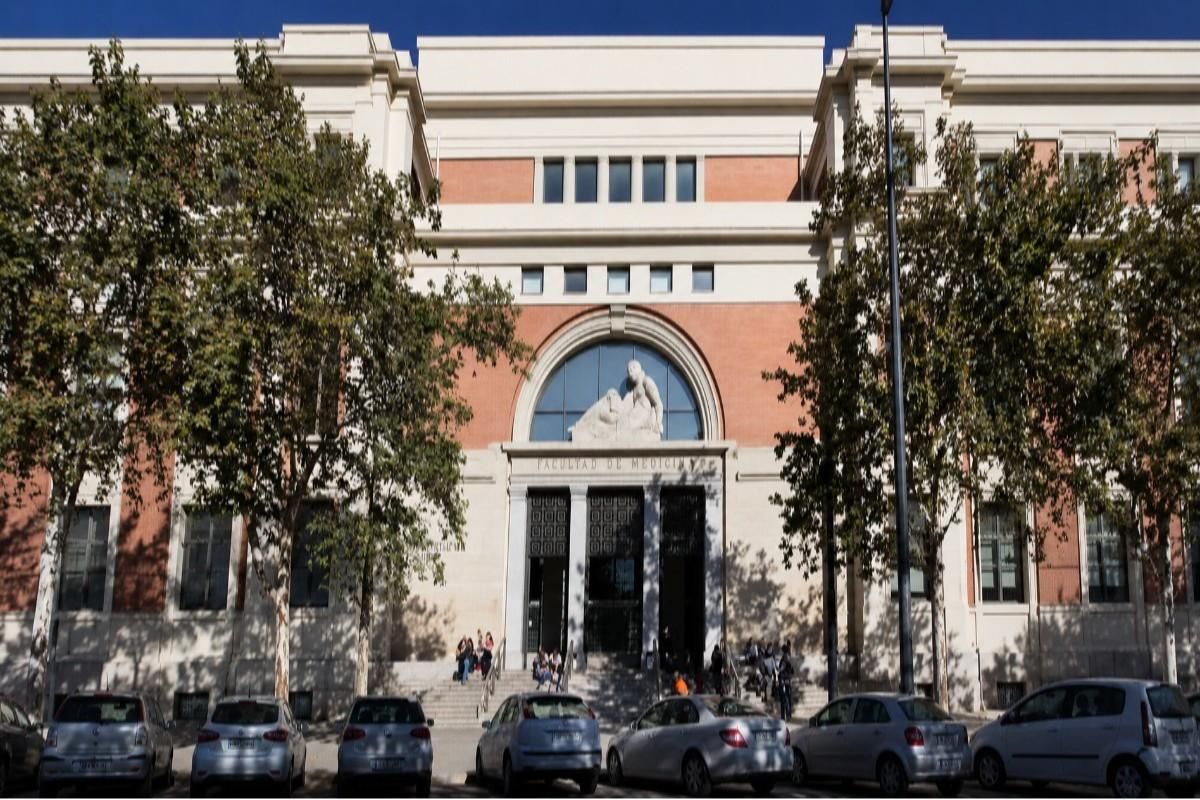
Although medical schools in universities like Salamanca and Complutense de Madrid are usually mentioned when considering Spain's oldest medical schools, it is worth mentioning the Universitat de València, having an equally long history. The Universitat was founded in 1499 as Estudi General, being one of the four initial faculties – theology, law, the arts, and medicine. In the 16th century, there were already eight chairs of medicine at the university, which proves high levels of medical specialisation at that time. For more than five centuries, the Faculty of Medicine maintained uninterrupted educational traditions.
The Faculty of Medicine has played a great part in development of medical education in Spain as the university contributed to spreading of anatomical knowledge of Renaissance era and introduction of Paracelsian medical ideas to Spanish academic medicine. Being unlike newer medical schools associated with historic universities, the Faculty of Medicine of Valencia has been developing continuously since its establishment. Thus, its reputation is based on many centuries of work.
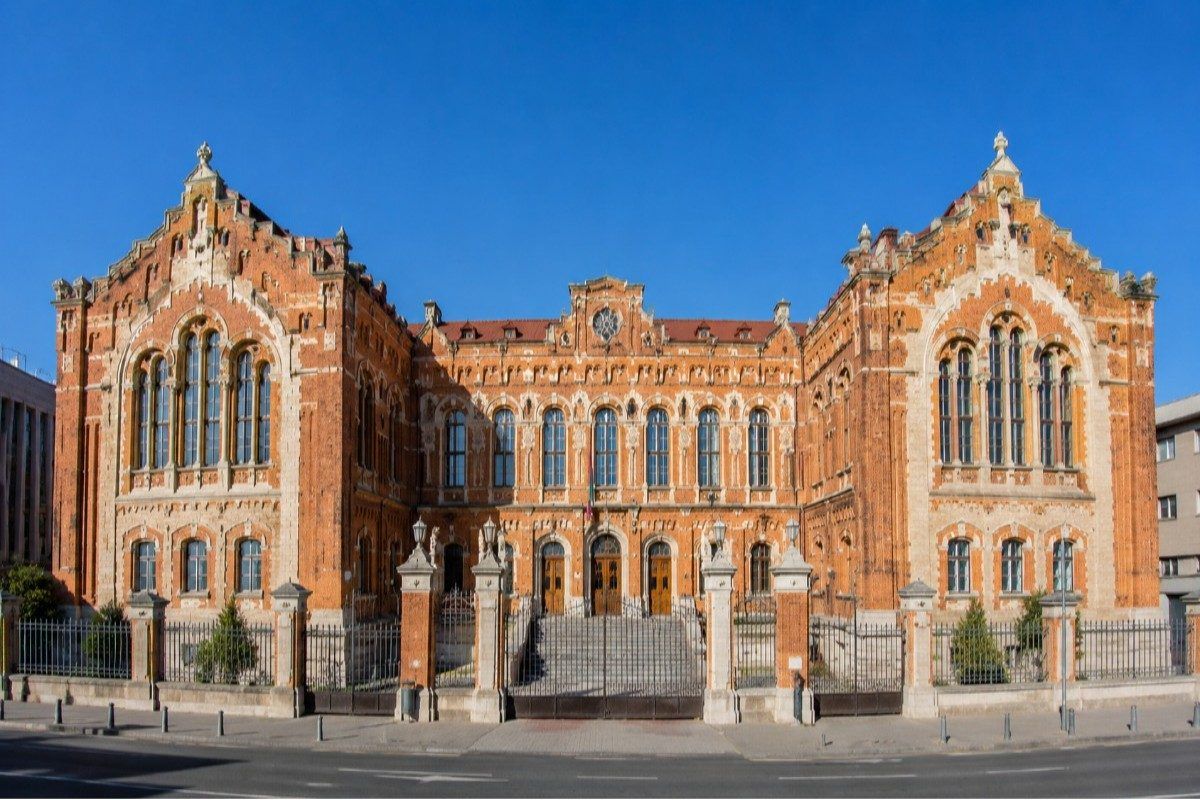
It is worth mentioning that the current Faculty of Medicine building is much younger than the institution itself. The project of creating an independent building for the Faculty was developed already in 1906 within the framework of the university's expansion along the Avenida Blasco Ibáñez street. After decades of construction, it was finished in the 1930s. Nowadays, it is one of the most distinctive buildings of the campus.
Later, the faculty was expanded with Dentistry and became the present Faculty of Medicine and Dentistry. The process of Dentistry formation was gradual, including some isolated teaching in the late 1920s before it became a completely independent academic discipline. Now, it provides comprehensive education in both fields of health sciences. Thus, it remains one of Spain's top medical education centers.
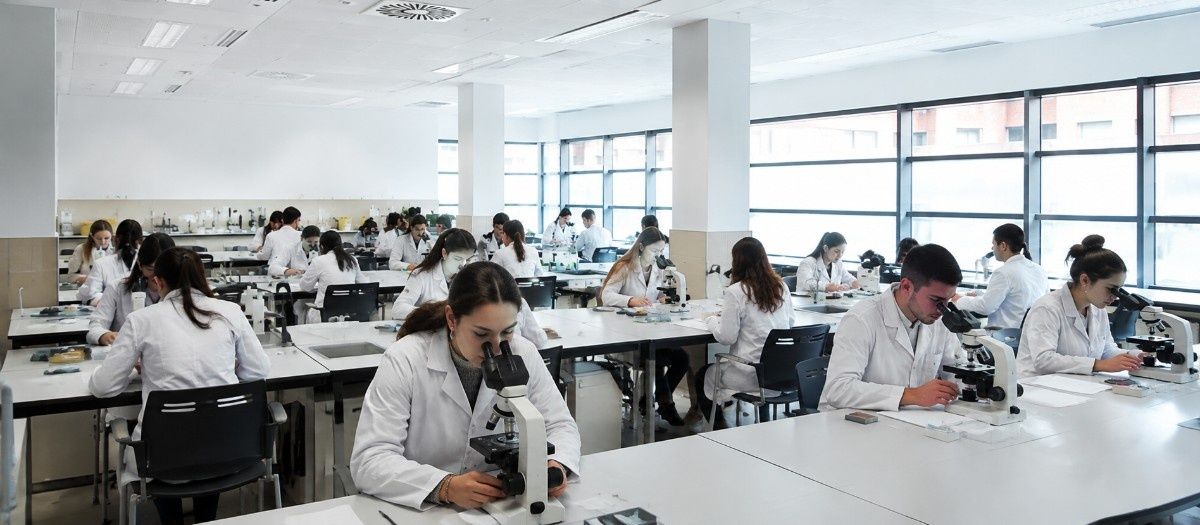
The six-year Grado en Medicina follows the standard Spanish medical curriculum but has a great emphasis on early practical training. About 40% of lectures during the first year of education consist of practical sessions, which is more than at many other Spanish medical schools. Thus, students develop their clinical skills from the very beginning of their studying. It will help them to bridge the gap between theoretical lectures and patients.
Clinical education of students takes place in four major university hospitals together with the Valencian public healthcare system. They include Hospital Clínico Universitario, Hospital Universitario Doctor Peset, Consorcio Hospital General Universitario, and Hospital Universitario y Politécnico La Fe. During the clinical years, students rotate among these hospitals getting experience in different specialisations. Thus, they get more diversity of teaching hospitals.
The sixth year of study is devoted to clinical practice through the programme called Prácticas Tuteladas. Students have eight four-week rotations in one assigned teaching hospital. Mandatory rotations include paediatrics, obstetrics and gynaecology, emergency medicine, psychiatry and other core specialisations. This allows students to have extensive practice before their graduation.
Like at any other public medical university in Spain, the programme is conducted mainly in Spanish, and some courses in Valencian language. There is no English-language pathway for Medicine. International students study in the same groups and following the same curriculum as domestic students. That means that good Spanish-language proficiency is a necessary requirement before enrolment.
Students from abroad enter the programme through the regular public university admission procedure and not through the special international admission procedure. First of all, their academic qualifications should be recognised according to the Spanish educational system, and then compete for the admission. The programme remains very competitive as it is open only to students who prove their academic success. Admission requirements at this university are similar to those at other prestigious Spanish public universities.
The Universitat de València has a great reputation worldwide. It occupies the positions among the best universities of Spain and was ranked around 449th in the QS World University Rankings 2027. It is due to the centuries-old reputation of the institution and continuous research activities. It is comparable with many smaller institutions which actively attract foreign students.
There are regulated each year by the Valencian regional government. Non-EU international students pay more for tuition than domestic and EU students due to regional tuition fees policies which appeared recently. Generally, tuition fees for Medicine vary around €5,000-7,000 a year. Still, it remains much cheaper than many private medical universities of Spain.
Research activities are an important component of the faculty's academic environment. There is close interaction between medical research and INCLIVA, the health research institute of the university related to Hospital Clínico Universitario. Students are able to use university clinics where healthcare trainees conduct supervised clinical practice. Various academic activities like the annual "El Cas de l'Any" clinical case competition enrich educational environment of the faculty.
Valencia is a nice place for student life. This is the third largest city of Spain offering its Mediterranean beaches, rich historical heritage and modern urban infrastructure. It is cheaper than Madrid and Barcelona, being a relatively inexpensive large city. Thus, most students find comfortable conditions for transportations with public transport or bicycle.
The rent near Blasco Ibáñez campus ranges between €300 and €500 per month, depending on housing type. Taking into account relatively cheap life costs, Valencia becomes a cost-effective place for studying six-year medical programme. Moreover, a compact size of the city allows easy commuting. It positively affects student experience.
Summarising the above-mentioned information, it is possible to say that the Universitat de València offers one of the oldest and respected public medical programmes of Spain. Its advantages include centuries-old academic tradition, early practical training, various teaching hospitals, good research opportunities, and relatively low cost of living. However, it is designed for those who are ready to study medicine in Spanish and not English international programmes.
No hidden charges, no donation. The full picture of costs at MBBS In Universitat de València Facultad de Medicina e Odontología.
Tuition Fee
Approximately EUR 5,000-7,000 (Approx. Rs. 5.50 lakh-7.70 lakh)
EUR 5,000-7,000 Approx. Rs. 5.50 lakh-7.70 lakh
Hostel Fee
Approximately EUR 3,000-5,000 per year (Approx. Rs. 3.30 lakh-5.50 lakh)
EUR 3,000-5,000 Approx. Rs. 3.30 lakh-5.50 lakh
Food & Meals
EUR 2,200-3,200 Approx. Rs. 2.42 lakh-3.52 lakh
per year
Insurance
EUR 300-500 Approx. Rs. 33,000-55,000
per year
Donation
No Donation
No Hidden Fees
Total Estimated Cost
Approx. EUR 63,000-94,000
total 6 year
25–35%
Average FMGE first-attempt pass rates for students from many overseas medical universities. Students from structured programs consistently score higher.
Students returning to India need to clear the FMGE/NExT exam. MBBS In Universitat de València Facultad de Medicina e Odontología integrates exam-oriented coaching into the regular curriculum so students are prepared from day one.
A structured program that takes you from foundational sciences to clinical mastery.
• Physiology and introduction to clinical skills, with practical sessions making up around 40% of teaching time
Basic Structure and Function
• Organ-system physiology and anatomy, alongside epidemiology and biostatistics
• General pathology, microbiology, immunology, and pharmacology
• Pathological anatomy, radiology, and clinical pharmacology, with first hospital-based teaching
• Semiology and propaedeutics, introducing history-taking and physical examination
• Legal medicine, psychiatry fundamentals, and diagnostic imaging
• Internal medicine and surgery, with rotations at one of the four concerted teaching hospitals
• Preventive medicine, public health, and research methodology coursework
• Paediatrics, obstetrics and gynaecology, and specialised surgical and medical rotations
• Two additional rotations each in medical and surgical specialties, completing preparation for the MIR licensing examination
• Eight four-week rotations at a single assigned teaching hospital, with mandatory stays in paediatrics, obstetrics and gynaecology, emergency medicine, and psychiatry
Furnished hostel rooms with Wi-Fi, laundry, 24/7 security, and Indian mess on or near campus.
Indian restaurants and mess facilities serving vegetarian and non-vegetarian home-style food daily.
Strong Indian community with cultural events, festival celebrations, and peer support groups.
Students get hands-on clinical training in government and private hospitals affiliated with the university.
Practical information for students planning to study at MBBS In Universitat de València Facultad de Medicina e Odontología.
Prepare for all seasons. Thermal wear for winters, light clothing for summers. University provides heating in hostels.
Student visa processed with university invitation letter. Direct and connecting flights from major Indian cities.
Health insurance included in fees. Medical facility on campus plus city hospitals easily accessible.
Local SIM cards available. WhatsApp and video calls keep you connected with family back home.
Average monthly expenses of $150–$250 covering food, transport, and personal needs.
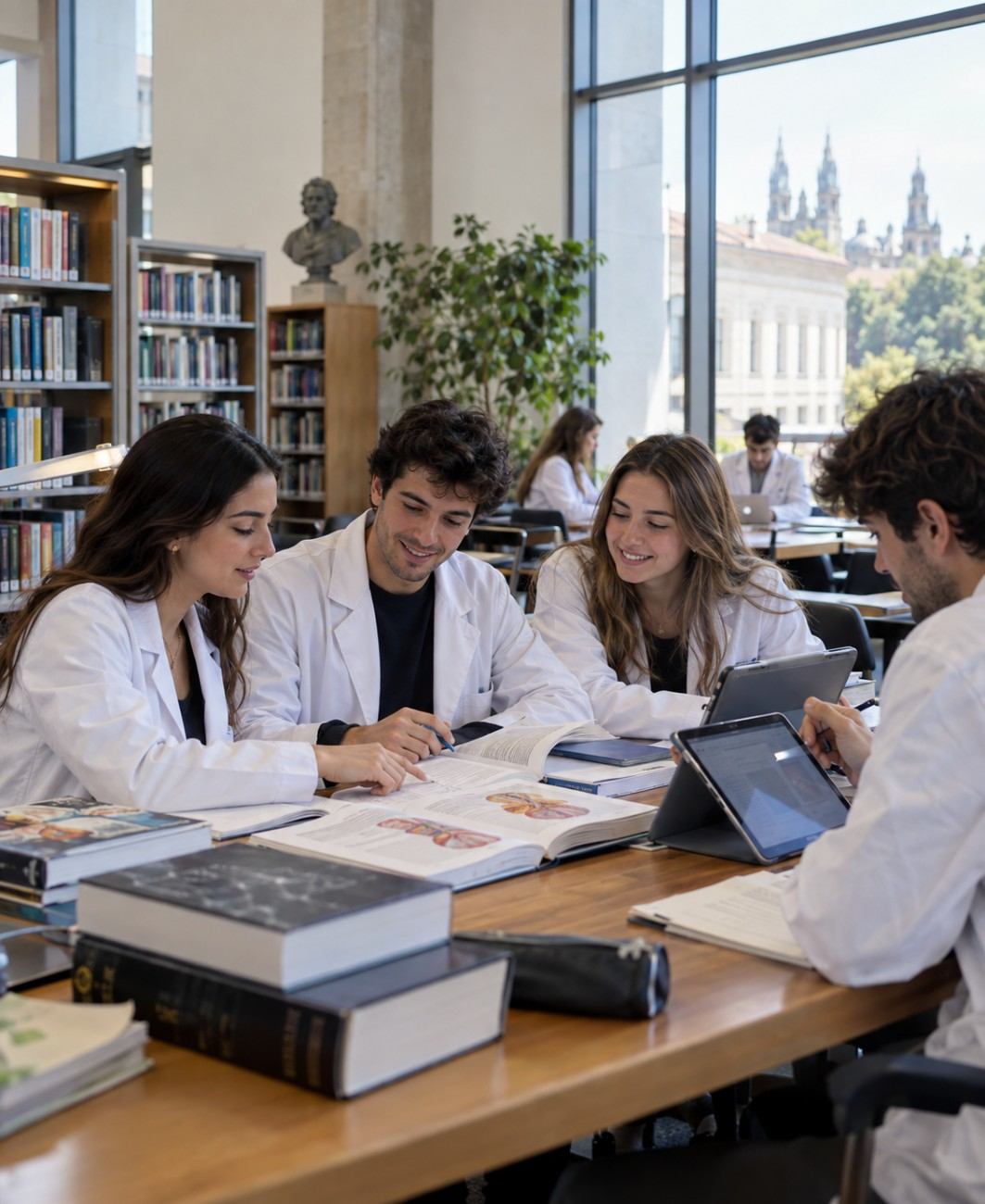
University library, online databases, and study groups. Seniors mentor juniors through academic challenges.
Our team guides you through every step — from application to arriving on campus.
Shortlist based on public vs private, the MBBS fee in Spain you’re comfortable with, city, and whether a partial-English track matters to you.
Begin DELE/SIELE B2 preparation well ahead of application deadlines.
Submit application; sit BMAT or a university-specific test where required.
Academic transcripts, NEET scorecard, language certificates, passport, and supporting documents.
Formal offer issued upon successful evaluation.
Initial steps toward having your Indian academic credentials recognised in the Spanish system.
Apply at the Spanish consulate with your offer letter, financial proof, and insurance documentation.
After arrival, register at your local town hall (ayuntamiento), a mandatory municipal registration step that most competitor guides skip entirely, but one you’ll need for everything from opening a bank account to enrolling in local healthcare.
Admission Helpline — Contact our counsellors for step-by-step assistance.
“The faculty here is incredibly supportive. The clinical training during hospital rotations has given me real confidence in patient care.”
“Affordable fees without compromising on quality. The campus facilities and hostel life made my transition abroad very smooth.”
“English medium instruction and WHO-recognized curriculum were the deciding factors for me. No regrets so far — excellent experience overall.”
“The university helped with everything from visa to accommodation. Hospital exposure from year three has been invaluable for my FMGE prep.”
“Just cleared my licensing exam on the first attempt. The structured coaching and mock exams during final year were a game-changer.”
“Safe campus, good food options, and a strong Indian student community. The teaching methodology is very practical and hands-on.”
A: No. The Grado en Medicina is taught in Spanish, with some coursework in Valencian, so applicants should hold or work toward DELE B2/C1-level Spanish.
A: Yes. Indian students need a qualifying NEET score for future recognition of the degree in India, as required by the NMC.
A: Yes. The degree is publicly accredited in Spain, recognised under EU qualification rules, and listed in WDOMS.
A: Graduates from recognised medical schools may be eligible, subject to each licensing body's own separate requirements.
A: Clinical rotations from Year 3 onward are conducted in Spanish at the university's four concerted teaching hospitals.
A: They host clinical rotations from Year 3 and the full Year 6 Prácticas Tuteladas internship at one assigned hospital.
A: Admission is ranked strictly by academic score against a fixed number of publicly funded seats each year.
A: Valencia is Spain's third-largest city, with a Mediterranean coastline, the Turia riverbed park, and a lower cost of living than Madrid or Barcelona.
A: Yes. Students typically choose shared flats or private residences near the Blasco Ibáñez campus, close to the main teaching hospital.
A: Applicants typically need academic transcripts, NEET scores where applicable, passport copies, and proof of Spanish proficiency.
Our expert counsellors will guide you through the complete admission process — from documents to airport pickup.