
Q1. When was the University of Bonn and its medical faculty founded?
+Both were founded on 18 October 1818 by King Frederick William III of Prussia.
 Germany | Est. 1818
Germany | State-recognized German public university; degree governed by the national Approbationsordnung (medical licensing regulation) | German for Human Medicine and Dentistry; English for select Master's. medium
Expert will call you within 2 hours
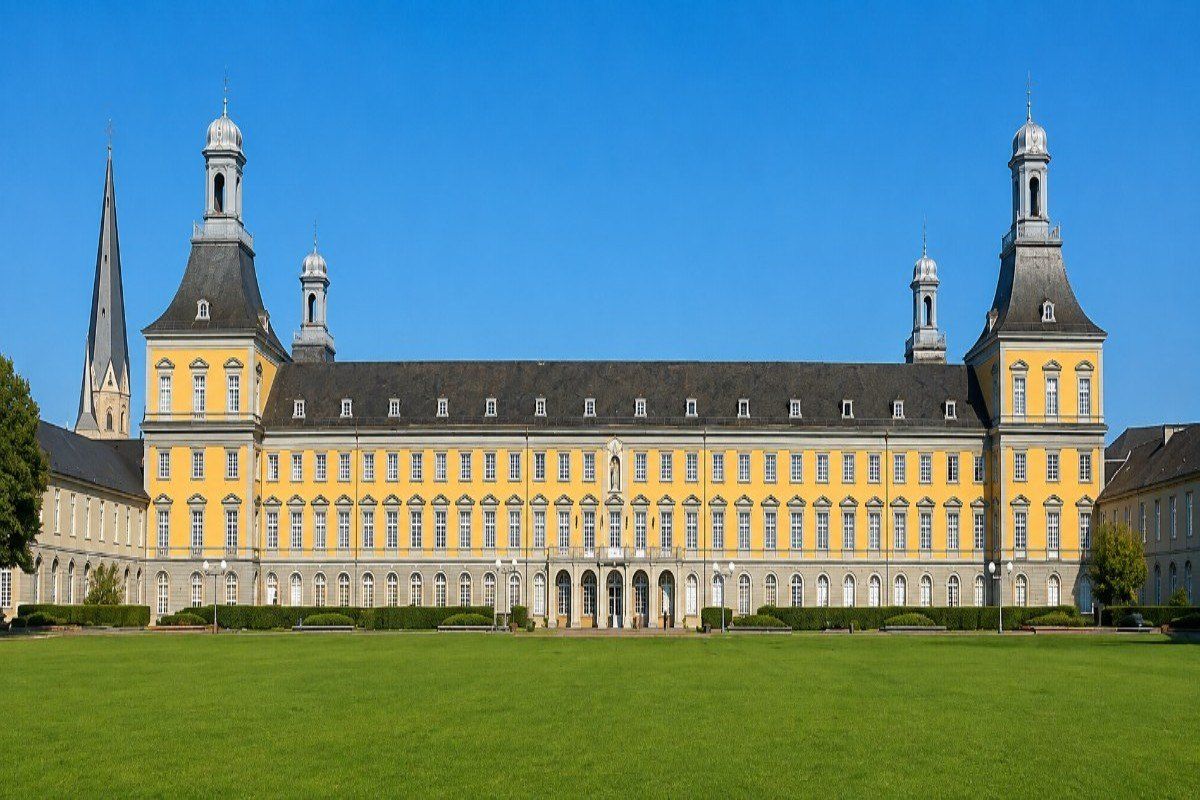
The University of Bonn was founded on 18 October 1818 by King Frederick William III of Prussia, right after Prussia took over the Rhineland. He didn't build a new campus. He handed over the Kurfürstliches Schloss, the former Electoral Palace of the Archbishop-Electors of Cologne, and told the new university to use it as its main building. It still does, over 200 years later. Walk into the university's central administration today and you are walking into a former royal residence.
Here's a fact most guides skip: the palace's first medical use came almost immediately. The anatomical theatre and the first university clinic were installed inside the old palace itself, alongside the philosophy and theology faculties, because there was nowhere else in Bonn ready to hold them. Doctors dissected cadavers and treated patients in rooms once meant for electoral court business. That arrangement lasted more than 50 years. So, the medical faculty's first home was literally a palace, not a hospital.
Bonn's founding fits a bigger pattern. Prussia expanded fast after 1815 and needed to root its new western territory in Prussian institutions, so it founded or refounded universities across the Rhineland. Bonn was built as a deliberate showpiece: a Protestant Prussian state setting up a university with two theological faculties, one Catholic and one Protestant, side by side, to signal that Rhineland Catholics had a real academic home under Prussian rule. That's an unusually political founding compared to older German universities.
So, here's another detail most guides skip: the medical faculty opened with just three founding professors in winter 1818/19, including Johann Friedrich Harless in clinical medicine and Karl Joseph Hieronymus Windischmann, who somehow held chairs in both philosophy and medicine at once. A faculty that today trains thousands started with staff you could fit around one table.
The formal timeline runs like this. The medical faculty was established in 1818 alongside the university. Space pressure in the palace pushed the university to buy new clinical grounds in 1865. World War II then destroyed much of what had been built since, and the postwar hospital was rebuilt from scratch on the Venusberg, a wooded hill south of the city, on the site of a former anti-aircraft barracks. The first clinics there resumed operation in 1949. So, the faculty has lived through three homes: a royal palace, a 19th-century clinical quarter, and a postwar hilltop campus.
Beyond Human Medicine, the faculty runs a Staatsexamen program in Dentistry (Zahnmedizin), Bachelor's degrees in Molecular Biomedicine and Midwifery Science (Hebammenwissenschaft), and English-taught Master's programs in Neurosciences, Medical Immunosciences and Infection, and Global Health Risk Management. There's also a cooperative track called Bonn-Siegen, built to send trainee doctors into a nearby rural region.
Bonn's clearest curricular fingerprint is a reform project called "Medizin neu denken," roughly "rethinking medicine." It builds telemedicine, digital tools, and structured communication training (a longitudinal thread called BonnKomm) into the standard course, aimed at fixing doctor shortages in rural areas. The faculty also sits inside ImmunoSensation2, one of six Clusters of Excellence Bonn won nationally, more than any other German university, and works closely with the DZNE, Germany's national center for neurodegenerative disease research, headquartered in Bonn. So, the research muscle here is built into the surrounding infrastructure, not incidental.
The medical faculty doesn't sit at the historic palace campus in central Bonn, where humanities and administration are based. Clinical teaching and the hospital sit on the Venusberg, a green hilltop a short bus ride south of downtown, purpose-built after the war on former military land. It's a self-contained medical quarter: hospital blocks, lecture halls, and research institutes clustered together rather than scattered across the city.
The teaching hospital, Universitätsklinikum Bonn (UKB), runs about 1,341 beds and functions as a Maximalversorger, the top tier of German hospital care that handles the most complex referrals for the whole Bonn/Rhein-Sieg region. It treats over 500,000 patients a year and trains more than 3,500 medical students alongside roughly 550 healthcare apprentices, making it the region's third-largest employer. Interestingly, the first Venusberg clinics reopened in 1949, the same year Bonn became provisional capital of West Germany. That's coincidental timing, not cause and effect: the rebuild followed wartime destruction, nothing more. So, don't read too much into it, but the two events really did land in the same year.
Research-wise, the faculty sits next to the DZNE and inside the ImmunoSensation2 cluster, both housed on or near the same medical campus, so students doing lab rotations can work alongside scientists studying Alzheimer's, Parkinson's, and immune-sensor biology without leaving the neighbourhood. So, a Bonn medical student's research options run deeper than a mid-sized German faculty would typically offer.
The one curricular priority the faculty repeats in its own materials is rural healthcare. Between the Bonn-Siegen cooperation and the "Medizin neu denken" reforms, Bonn trains some students specifically for telemedicine and underserved rural counties, not just big-hospital work. So, if rural or community medicine interests you more than specialist city practice, Bonn has actually built a pathway for that.
Human Medicine at Bonn is a Staatsexamen degree, not a Bachelor's/Master's structure. Standard course length under German medical licensing law is 12 semesters plus three months, roughly six and a quarter years, split into preclinical, clinical, and a final Praktisches Jahr (practical year) of full-time hospital work.
Admission doesn't go through the university directly. Applicants register with Hochschulstart, Germany's national admissions foundation, and are sorted into quotas: a small share by Abitur grades alone, a share for a supplementary aptitude quota based purely on the TMS medical aptitude test, and the largest share, 60 percent, decided by Bonn using grades plus additional criteria like the TMS score.
On fees, North Rhine-Westphalia charges no tuition for medicine, for German, EU, or non-EU students alike, unlike a couple of other German states that have reintroduced non-EU charges recently. Every student still pays a mandatory semester contribution, roughly €363 for winter 2026/27, covering the regional transport ticket, student services, and admin costs, not instruction itself.
Parameter | Details |
Established | 1818 (university and medical faculty both) |
Institution Type | Public state university |
Location | Bonn, North Rhine-Westphalia, Germany |
Programme | Human Medicine (Staatsexamen), plus Dentistry and related science degrees |
Duration | 12 semesters + 3 months (approx. 6.25 years) |
Medium of Instruction | German (Human Medicine); English for select Master's programs |
Foreign Quota Note | No separate non-EU tuition fee in NRW; admission via Hochschulstart quotas |
Teaching Hospital | Universitätsklinikum Bonn (UKB), approx. 1,341 beds |
Fee Component | Amount | Notes |
Tuition Fee | €0 | NRW charges no tuition for medicine, EU or non-EU |
Non-EU Student Fee | €0 | Not currently charged in North Rhine-Westphalia |
Semester Contribution | approx. €363 (Winter 2026/27) | Covers regional transport ticket, student union, admin costs |
Living Costs | approx. €900–€1,100/month | Estimate for Bonn rent, food, and insurance; not separately confirmed by the university |
Approx. Total Programme Cost | approx. €70,000–€85,000 over 6+ years | Living costs only; no tuition component; rough estimate |
Plenty of guides list Bonn's founding year and move straight to admissions statistics. Most skip the fact that the faculty's first anatomical theatre and clinic operated inside a former Electoral Palace, and that the palace still functions as the university's living heart today. So, if you want a medical faculty with an actual architectural story behind its founding, not just a plaque, Bonn has one most competitors don't.
Most guides describe German Staatsexamen medicine as basically identical everywhere, since licensing law standardizes so much of it. That's mostly true, but Bonn has quietly built two structures, the Bonn-Siegen cooperation and the "Medizin neu denken" reform, specifically to push trainee doctors toward rural and telemedicine practice. So, if community medicine interests you more than a big specialist hospital career, Bonn has designed an actual track for that.
Bonn's medical program runs entirely in German, so anyone without strong, medically fluent German will struggle from day one; there's no English-taught Human Medicine track. Admission is also genuinely tough and largely out of the university's hands, since Hochschulstart's national quota system and the TMS test decide most outcomes, not personal statements or interviews with Bonn itself. Student numbers are large too, over 3,500 in medicine alone, so a small-group feel isn't guaranteed everywhere.
Bonn fits students with solid German who want a research-heavy environment tied to immunology and neuroscience institutes, or who want the rural/telemedicine track. Students needing English-medium clinical training, or a guaranteed small cohort, should look elsewhere.
No hidden charges, no donation. The full picture of costs at MBBS in University of Bonn Faculty of Medicine.
Tuition Fee
Roughly €657 EUR per year
None (NRW charges no tuition for medicine)
Hostel Fee
Approx. €900–€1,100 per month
Approx. €900–€1,100/month, not separately confirmed by the university.
Food & Meals
Approx. €1,800 - €3,000 EUR
per year
Insurance
Approx. €1,752 EUR
per year
Donation
No doantion fee
No hidden fee
Total Estimated Cost
Roughly €76,000 to €90,000 (approximately ₹69 lakh to ₹81 lakh)
6 year
25–35%
Average FMGE first-attempt pass rates for students from many overseas medical universities. Students from structured programs consistently score higher.
Students returning to India need to clear the FMGE/NExT exam. MBBS in University of Bonn Faculty of Medicine integrates exam-oriented coaching into the regular curriculum so students are prepared from day one.
A structured program that takes you from foundational sciences to clinical mastery.
Ends with the first state exam (Erster Abschnitt der Ärztlichen Prüfung, the "Physikum")
First four semesters focused on chemistry, physics, biology, and anatomy
Hospital-based teaching begins on the Venusberg campus alongside lectures
Introduction to pathology, pharmacology, and internal medicine
Communication training continues via the longitudinal BonnKomm program
Rotations through surgery, gynecology, pediatrics, and psychiatry
Placements can include Bonn's hospital network and, for some, Bonn-Siegen rural sites
One full year of near full-time clinical work across internal medicine, surgery, and an elective
The Approbation, Germany's official medical license, is granted once all stages are complete
Passing the second and third sections of the state exam (Ärztliche Prüfung) qualifies the graduate for licensure
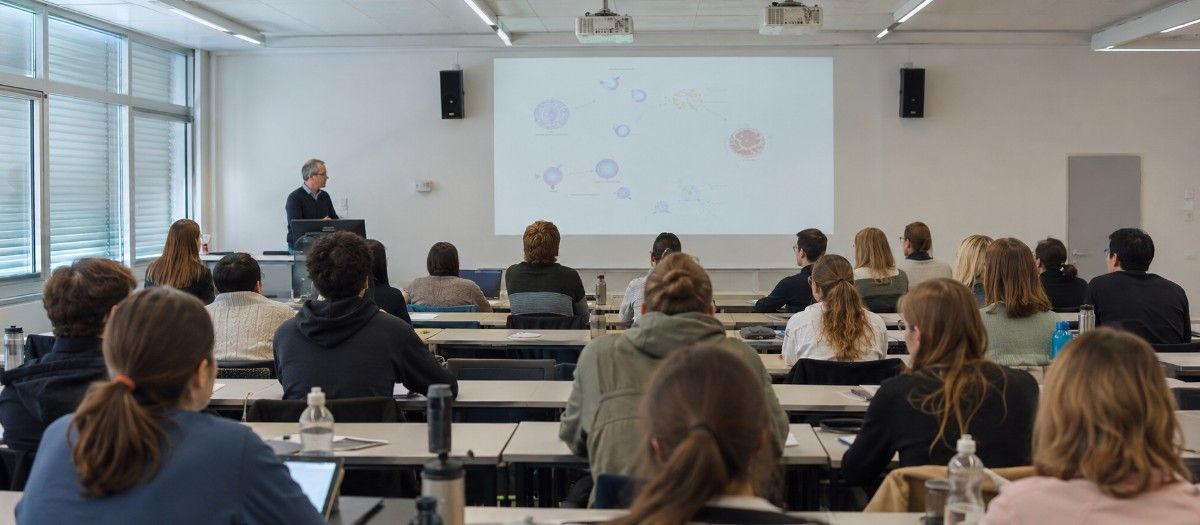

Furnished hostel rooms with Wi-Fi, laundry, 24/7 security, and Indian mess on or near campus.
Indian restaurants and mess facilities serving vegetarian and non-vegetarian home-style food daily.
Strong Indian community with cultural events, festival celebrations, and peer support groups.
Students get hands-on clinical training in government and private hospitals affiliated with the university.
Practical information for students planning to study at MBBS in University of Bonn Faculty of Medicine.
Prepare for all seasons. Thermal wear for winters, light clothing for summers. University provides heating in hostels.
Student visa processed with university invitation letter. Direct and connecting flights from major Indian cities.
Health insurance included in fees. Medical facility on campus plus city hospitals easily accessible.
Local SIM cards available. WhatsApp and video calls keep you connected with family back home.
Average monthly expenses of $150–$250 covering food, transport, and personal needs.
University library, online databases, and study groups. Seniors mentor juniors through academic challenges.
Our team guides you through every step — from application to arriving on campus.
Begin German lessons as early as possible, ideally alongside Class 11–12, targeting B1 within 12 months and progressing toward the required B2–C1 level.
Submit Class 10, 12, and any higher-education transcripts for verification. Processing typically takes 3–5 weeks; apply early, since this gates every subsequent step.
portal and apply to the correct track, the M-Kurs for medical aspirants, at your shortlisted Studienkolleg institutions.
Complete the roughly 10–12 month M-Kurs program covering Biology, Chemistry, Physics, and German, then pass the Feststellungsprüfung (FSP), the qualifying exam for university entry.
Submit applications to your shortlisted universities. Uni-assist fees run €75 for the first program and €30 for each additional program in the same semester.
University decisions follow Uni-assist’s document evaluation and forwarding; final admission is always the university’s own decision.
Deposit €11,904 into a blocked account (via Fintiba, Expatrio, or a similar provider) and arrange either public (€140–€160/month) or private health insurance; both are mandatory prerequisites for the visa stage.
Submit your visa application at the German consulate in India (Delhi, Mumbai, Bengaluru, or Chennai), with your admission letter, APS certificate, language proficiency proof, blocked account confirmation, and insurance proof. Realistic processing time is 6–12 weeks.
Bring originals of every document submitted digitally. Be prepared to discuss your study plans, financial arrangements, and reasons for choosing Germany.
Book travel around your intake date (October for Winter, April for Summer), and complete formal university enrollment on arrival. Medical study then begins with the Pre-Clinical phase.
Admission Helpline — Contact our counsellors for step-by-step assistance.
“The faculty here is incredibly supportive. The clinical training during hospital rotations has given me real confidence in patient care.”
“Affordable fees without compromising on quality. The campus facilities and hostel life made my transition abroad very smooth.”
“English medium instruction and WHO-recognized curriculum were the deciding factors for me. No regrets so far — excellent experience overall.”
“The university helped with everything from visa to accommodation. Hospital exposure from year three has been invaluable for my FMGE prep.”
“Just cleared my licensing exam on the first attempt. The structured coaching and mock exams during final year were a game-changer.”
“Safe campus, good food options, and a strong Indian student community. The teaching methodology is very practical and hands-on.”
Both were founded on 18 October 1818 by King Frederick William III of Prussia.
Yes. The main building is the former Kurfürstliches Schloss (Electoral Palace), donated to the university in 1818 and still used as its administrative and humanities center.
Clinical teaching and the hospital are based on the Venusberg, a hilltop campus south of Bonn's city center, rebuilt after World War II.
UKB has about 1,341 beds and serves as the Maximalversorger, the highest-level care provider, for the Bonn/Rhein-Sieg region.
No, it's taught entirely in German. Some Master's programs, such as Neurosciences, are English-taught.
No. NRW currently charges no tuition for medicine to German, EU, or non-EU students; only a mandatory semester contribution applies.
Twelve semesters plus three months, roughly six and a quarter years, including a final full-time practical year.
Through Hochschulstart, using its quota system based on Abitur grades, the TMS aptitude test, or Bonn's own combined selection.
Its ties to the DZNE (neurodegenerative disease research) and the ImmunoSensation2 Cluster of Excellence in immunology.
Yes, through the Bonn-Siegen cooperation and the "Medizin neu denken" curriculum reform, both aimed at underserved rural regions.


Our expert counsellors will guide you through the complete admission process — from documents to airport pickup.