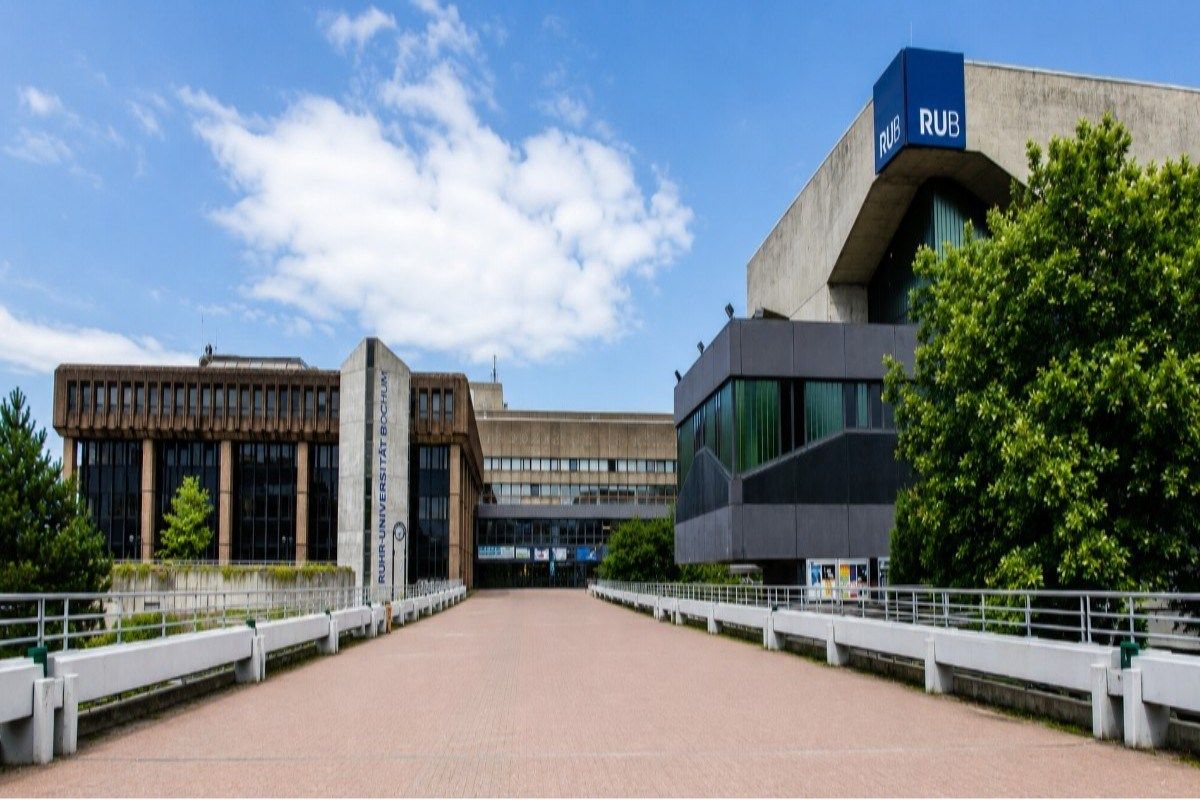
The Ruhr University Bochum, or RUB, is a very new university in Europe. It has only been around since 1962. The place is in Bochum, which is in the Ruhr area of Germany. In North Rhine-Westphalia, the Ruhr used to be known for its coal and steel industries. But in the last few decades, it's been known for its services, research, and education. RUB has more than 42,000 students studying in 184 different areas. More than 7,000 of them are from outside of Russia. It grew very quickly into a big school with lots to offer. In Germany, a lot of older universities have buildings spread out in the old parts of towns. But RUB's campus is right in the middle because it was built as a single, connected site just south of Bochum. It was done on purpose to make it look like the university is still pretty new.
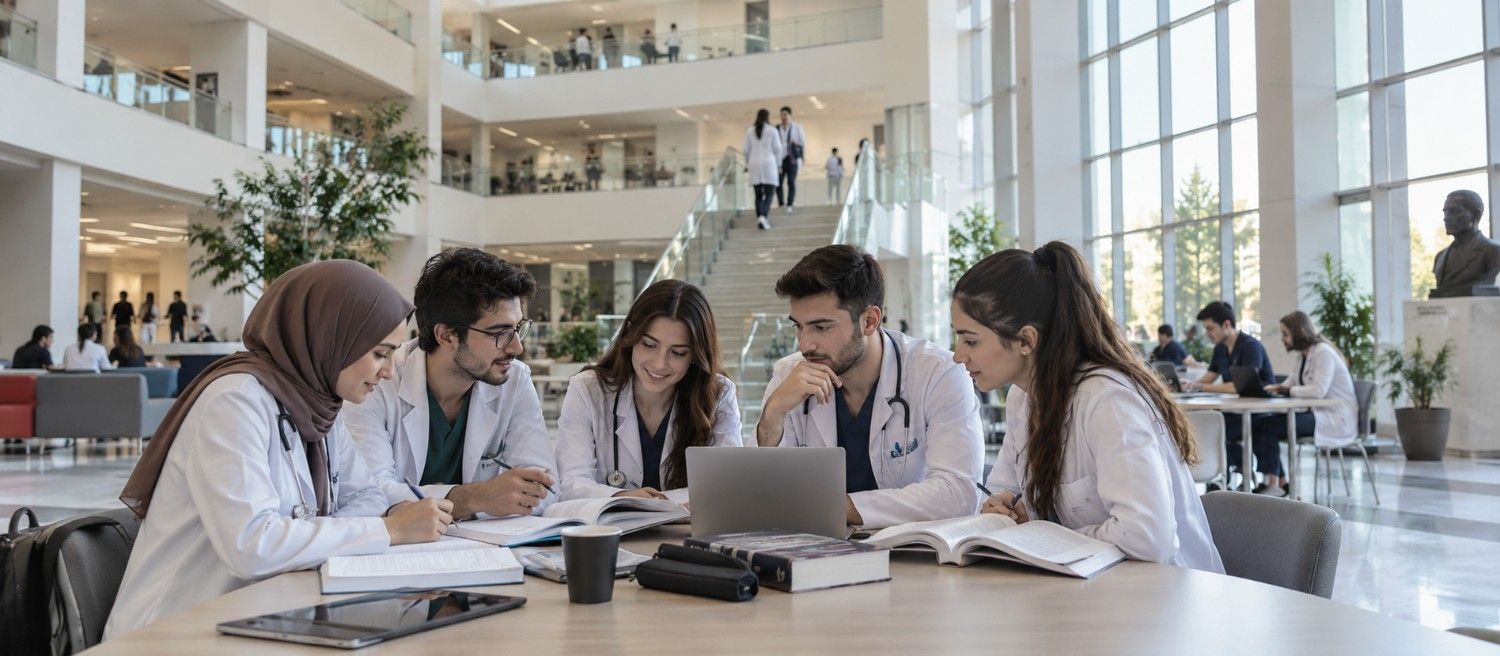
In this bigger picture, the Faculty of Medicine stands out in a special way. Most schools don't handle "special case" degree programs the same way that German universities do. One example of one of these shows is medicine. They are spread out in different parts of Bochum and the wider Ruhr area. These are the universities' hospitals. They're not all in the same building. The University Hospital and the Knappschaftskrankenhaus in Bochum's Langendreer neighborhood are the two most important. The UK-RUB, or University Hospital of the Ruhr-University Bochum, has more than 5,600 beds. It's one of the largest school and hospital health systems in the area, and it's a great place to get real-world experience.
In Germany, the standard way to get a medical degree is through the Staatsexamen, which is short for "state examination system." This order puts the bachelor's degree first, then the master's degree. In most other areas, things don't work like this. The school has 13 semesters, which is the same as studying full-time for six years and six months. Of course, there is no traditional degree at the end. Not at all. There is the Staatsexamen, a set of national tests that all medical students in Germany have to pass, no matter what school they went to. Not just people in Bochum who want to go to medical school in Germany have to take the same core state tests. This really does mean that all German doctors are the same.
Language is the most important thing for people outside of Germany to know about this program. We've already talked about how to deal with schools in France, the Netherlands, and Spain. This should be done the same way. For the Medicine Staatsexamen program, all classes and other types of teaching are given in German. There are no bachelor's degree programs or state tests that are not taught in German. For the most part, master's programs are also offered in German. This is clear in what RUB has written. People who want to study medicine in English don't have a different path to take. Some classes at RUB are taught in English. Two of these are a Master's in Stem Cell Medicine and a Master's in Molecular and Developmental Stem Cell Biology. Both are taught in English and cover a lot of ground. You can get real money from these programs, but you can only use them to do science study after school. They are not a way to become a doctor, and people who want to apply shouldn't think they are a free English-language way to learn medicine.
The start of school.de is the official website for all degree programs in Germany that the government has cut back on. One of these lines is medicine. This test is not needed to get into college. Through a system that works all over the country, people are chosen to go to college. One of the things that are looked at is a student's Abitur grade. Standardized ability tests, other factors that can change from year to year, and the student's Abitur mark are some of these. If someone wants to apply, they should go to Hochschulstart.they are set by the government as a whole, not just RUB, so check back often to see what the selection criteria and dates are right now. In every school year, new students can only join during the winter term. You should also remember this set date.
The way that RUB does clinical training is known as a "integrated reform curriculum." Instead of the usual lectures, this building is meant to provide a modern, hands-on medical education. Students go to University Hospitals in and around Bochum or farther away in the Ostwestfalen-Lippe region for the clinical training part. As they learn, this gives them real, different care experience in more than one place. The unified method comes with a lot of tools that students can use. There are a lot of specialized books, good digital infrastructure, and real choices for digital study parts that can be done from home and are on top of the main curriculum that is taught in person.
There is not a separate way to get a degree from another country through the RUB Faculty of Medicine. Instead, there are exchange programs that bring students from different countries together. Through the Erasmus+ program, students who are at least in their fifth semester can spend one or two semesters at partner universities in other parts of Europe. A number of universities work with the school. These include Lille II and Strasbourg in France, Athens and Thessaloniki in Greece, Galway in Ireland, and Bologna in Italy. This really does let Bochum medical students study abroad for a short time while they are still in school. This is not the same, though, as a foreigner starting in a track where English is the main language.
The price is one of the best things about going to a public German university like RUB to study medicine. It needs to be made very clear. There is no extra charge for the Staatsexamen Medicine program at many German public universities, such as RUB. Medicine school doesn't cost tens of thousands of euros at many of the English-speaking places we've talked about so far. They pay a small fee every term instead, which covers things like administrative costs, student services, and often a pass for public transportation in the area. This costs about a hundred euros per semester. If you can get through the really hard Hochschulstart application process, medical school in Germany is much cheaper than almost everyplace else on this list.
For Indian students, this choice is very different from the English-speaking schools we've talked about in other parts of this series. This is because of how math works. People who want to study medicine abroad still need to be NEET, but that doesn't change how people get into Hochschulstart in Germany, which is based on the Abitur system and its foreign equivalents. Not being able to speak German well enough or having a good enough NEET score is the main thing that keeps people from getting in. This can usually be shown by doing well on a test like TestDaF. Also, there aren't many spots in medical school in Germany, and people compete hard for them