
1. Is the Medicine and Surgery programme taught in English?
+No. Teaching, examinations and clinical placements are in Italian. You need B2 Italian before you enrol.
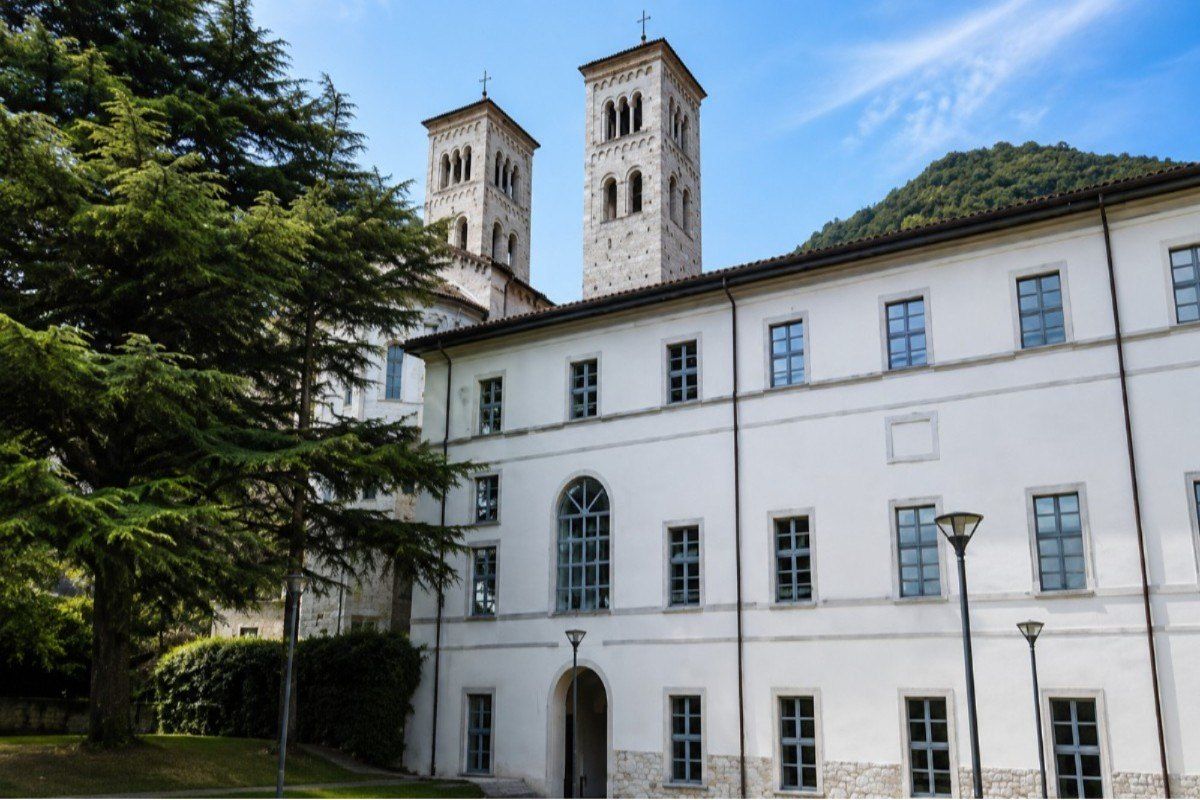
 Italy | Est. 1998
Italy | Italian Ministry of University and Research (MUR), ANVUR quality accreditation, World Directory of Medical Schools listed, EU directive 2005/36/EC recognition | Italian only, B2 certificate required medium
Expert will call you within 2 hours
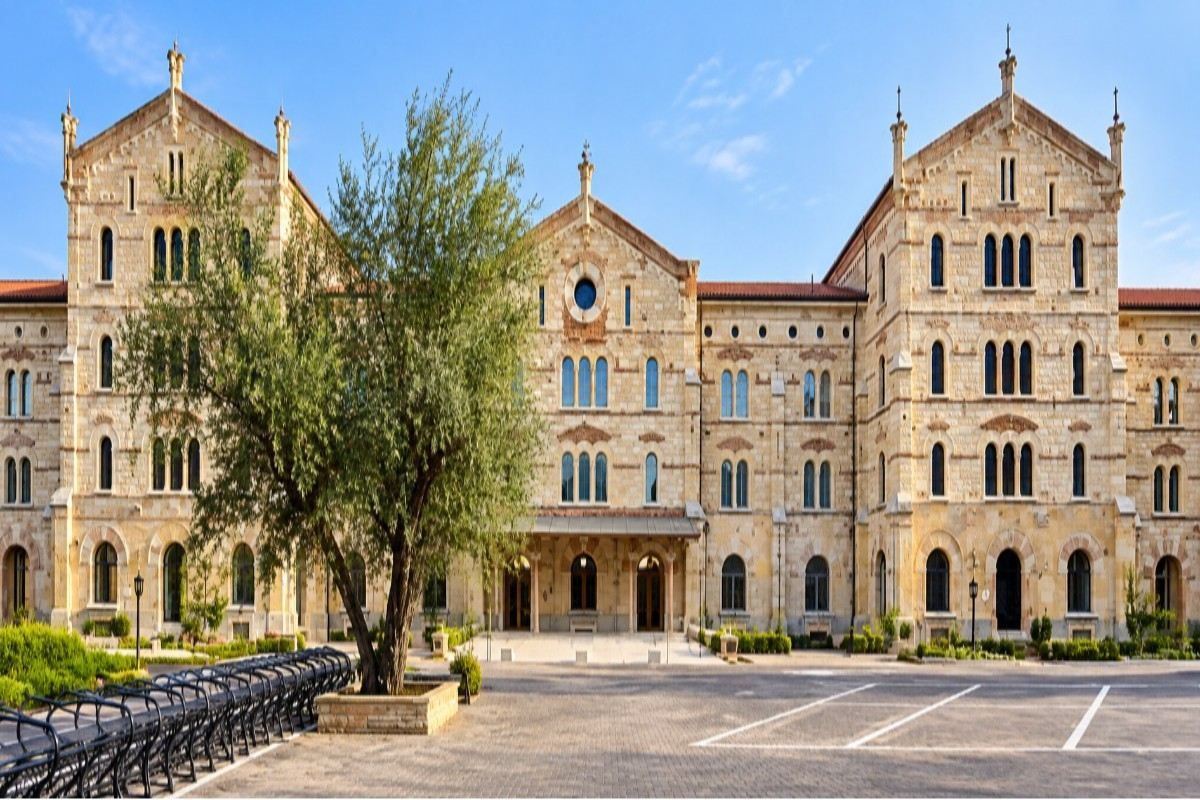
The University of Insubria is a public state university in Lombardy, northern Italy. It was created in 1998 when the Italian government split off the Varese and Como campuses of nearby universities and gave them independent status. The Department of Medicine and Surgery sits on the Varese campus and runs the single-cycle Medicine and Surgery programme, the Italian equivalent of an MBBS. The degree lasts six years, carries 360 ECTS credits and ends with the title Dottore Magistrale in Medicina e Chirurgia.
Varese is a small city of roughly 80,000 people, about 55 kilometres north of Milan and 20 kilometres from the Swiss border. You reach Milan in under an hour by train and Malpensa Airport in about 25 minutes. That location matters for a medical student. Rent, food and transport in Varese cost noticeably less than in Milan, Bologna or Rome, while the clinical network you train in serves a densely populated industrial province with a full range of cases.
The university teaches the programme in Italian. It does not run an English medium medical track, and it does not take part in the IMAT English language admission test. If you come from outside Italy, you must prove Italian language ability, normally at B2 level, before you can enrol. Most international applicants spend a preparatory year on Italian before they sit the entry process. You should treat that year as part of your plan and budget, not as an optional extra.
Admission follows Italian national rules, and those rules changed for the 2025 to 2026 intake. Italy replaced the old single-day entrance exam with an open first semester. Every applicant enrols in a shared semester of anatomy, chemistry and physics, sits three national exams in those subjects, and then receives a place based on the national ranking that comes out of those results. Students who do not place high enough transfer their credits into a related science degree. Non-EU applicants who live outside Italy apply through the Universitaly portal and compete for a separate quota of places, and they still need the Italian language certificate and a validated secondary school qualification. Indian students also need a NEET qualifying score, because the National Medical Commission requires it before it will register any foreign medical degree for licensing in India.
Teaching runs across the Varese campus and the hospitals of ASST Sette Laghi, with Ospedale di Circolo e Fondazione Macchi as the main teaching hospital. That hospital is a large regional referral centre with emergency medicine, cardiology, neurosurgery, oncology, paediatrics and transplant-related services. Students rotate through its wards, theatres and outpatient clinics rather than watching from a distance. Smaller hospitals in the province take students for general practice, community medicine and rehabilitation placements. The department also links to Ospedale Del Ponte, the women and children hospital in Varese, which covers obstetrics, neonatology and paediatric surgery.
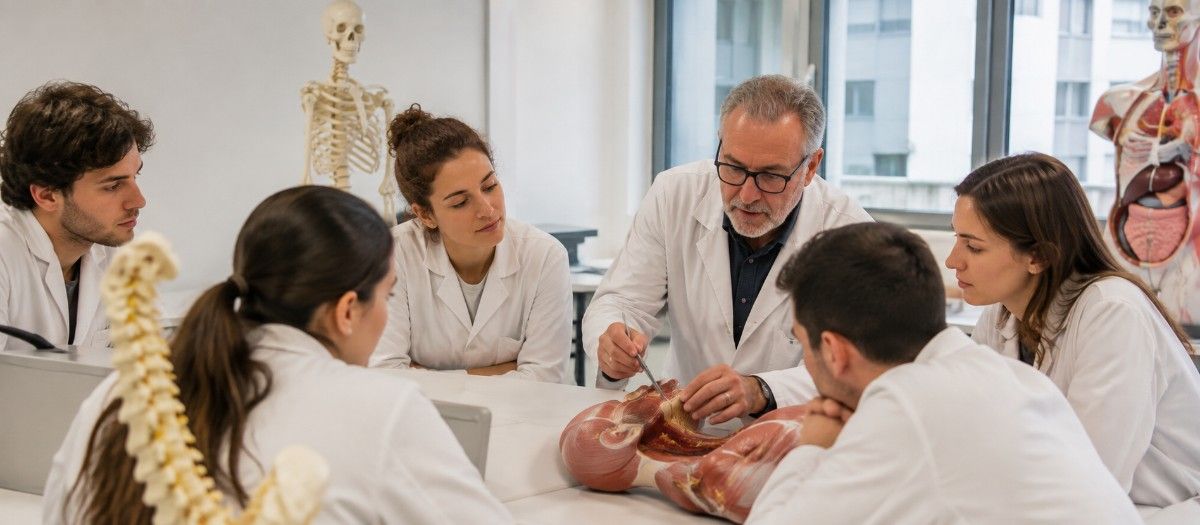
The first two years cover the normal human body. You study anatomy, histology, biochemistry, physiology, medical physics, genetics and cell biology, and you spend time in dissection and microscopy laboratories. Italian medical schools test these subjects hard, and progression depends on clearing oral examinations rather than only written papers. Oral examination is standard practice across the whole degree, so you learn early to explain your reasoning out loud to a professor.
From the third year the focus shifts to disease. Pathology, microbiology, pharmacology, immunology and clinical methodology come first, followed by internal medicine, surgery, paediatrics, obstetrics and gynaecology, psychiatry, neurology, radiology and public health. Clinical clerkships build through the later years, and the sixth year is largely practical. Italian law now folds the old post-degree qualifying internship into the degree itself, so the final year includes three months of supervised practice in medicine, surgery and general practice. When you graduate, you hold both the degree and the licence to practise in Italy, after registration with the provincial medical order.
Research gives the department its character. Insubria runs groups in oncology, immunology, infectious disease, endocrinology, neuroscience and cardiovascular medicine, and it hosts doctoral programmes in experimental and translational medicine. The Varese campus keeps laboratories close to the hospital, so clinical questions and bench work stay connected. Students can join a research group for their final thesis, which is compulsory. The thesis carries real weight in the final mark and in later speciality applications.
Costs stay moderate by Western European standards. Italian public universities charge tuition on a sliding scale linked to family income, measured through the ISEE certificate for residents or an equivalent income declaration for international students. Low-income students often pay only the regional tax and stamp duty, while the highest band pays a few thousand euros a year. Insubria also offers exemptions and reductions for high-performing students and for students with disabilities. Regional scholarships from DSU Lombardia cover fees, a maintenance grant and subsidised meals for students who qualify on income and merit. You apply for those separately and on a strict deadline, so check dates the moment you receive an offer.
Living costs in Varese run lower than in most Italian university cities. Shared rooms, university halls and subsidised canteens keep monthly spending manageable, and the city is compact enough that you can walk or cycle to most places. Public transport connects the campus, the hospital and the town centre. Lake Varese, Lake Maggiore and the Alps sit within easy reach, and the region has a strong outdoor culture.
The degree carries the recognition that matters. The University of Insubria is a recognised state university under the Italian Ministry of University and Research, the programme appears in the World Directory of Medical Schools, and the qualification is a European Union medical degree. That gives graduates automatic professional recognition across EU and EEA member states under the mutual recognition directive. Graduates who want to practise in the United States can apply for ECFMG certification and sit the USMLE, and graduates heading to India sit the licensing examination that the National Medical Commission requires. Graduates aiming for the United Kingdom go through the GMC route.
You should be clear about the trade-offs before you apply. The language requirement is the biggest one. Insubria teaches in Italian, examines in Italian and runs clinical placements in Italian wards with Italian-speaking patients, so weak language skills will hurt you every day. The reformed admission system is also new, and the national ranking makes the outcome competitive rather than guaranteed. Places for non-EU candidates are limited each year, and the number is set nationally.
If you can meet the language demand, the offer is strong. You get a public university degree in a wealthy European region, low tuition compared with private medical schools in Europe or Asia, hospital training in a busy regional centre, and a licence that opens the whole European labour market. Class sizes stay smaller than at the huge Italian universities, which means more contact with teaching staff and more hands-on time during rotations. For students who plan carefully, learn the language properly and treat the open first semester seriously, Varese is a realistic and sensible route into European medicine. Insubria also keeps its student services in one place on the Varese campus, so registration, fee queries and placement paperwork stay simple to handle.
No hidden charges, no donation. The full picture of costs at MBBS in University of Insubria Medicine and Surgery.
Tuition Fee
EUR 600 - 4,000 INR ~67,153 - 4,47,688
EUR 156 - 3,900 INR ~15,000 - 3,74,000
Hostel Fee
EUR 3,000 - 4,800 INR 2,86,000 - 4,58,000
EUR 3,000 - 4,800 INR 2,86,000 - 4,58,000
Food & Meals
EUR 2,200 INR ~2,11,000
per year
Insurance
EUR 150 INR ~ 14,500
per year
Donation
No donation fee
No hidden fee
Total Estimated Cost
EUR 9,806 INR ~9,36,500
6 Year
25–35%
Average FMGE first-attempt pass rates for students from many overseas medical universities. Students from structured programs consistently score higher.
Students returning to India need to clear the FMGE/NExT exam. MBBS in University of Insubria Medicine and Surgery integrates exam-oriented coaching into the regular curriculum so students are prepared from day one.
A structured program that takes you from foundational sciences to clinical mastery.
You learn the structure of the healthy body and the physical and chemical rules behind it. Laboratory work in histology and dissection starts in this year.
Medical physics, general and inorganic chemistry, cell biology, medical statistics, Italian medical terminology.
You move from structure to function. Physiology and biochemistry dominate, and you spend your first supervised hours on a hospital ward.
Biochemistry, physiology, molecular biology, genetics, microbiology, first patient contact
You learn how disease develops and how to read a patient. Semiotics teaches history taking, physical examination and clinical reasoning.
pathophysiology, immunology, clinical microbiology, pharmacology, medical semiotics, laboratory medicine.
Ward rotations become regular. You follow admitted patients, present cases and interpret imaging and laboratory results.
Cardiology, respiratory medicine, gastroenterology, nephrology, radiology, anaesthesia.
You rotate through the specialities, including placements at Ospedale Del Ponte for maternal and child health.
Neurology, psychiatry, dermatology, ophthalmology, otolaryngology, orthopaedics, infectious disease.
The year is mostly clinical. You complete three months of supervised practice in medicine, surgery and general practice, defend your thesis and qualify for the state licence.
Geriatrics, forensic medicine, public health, medical ethics, qualifying internship, thesis.
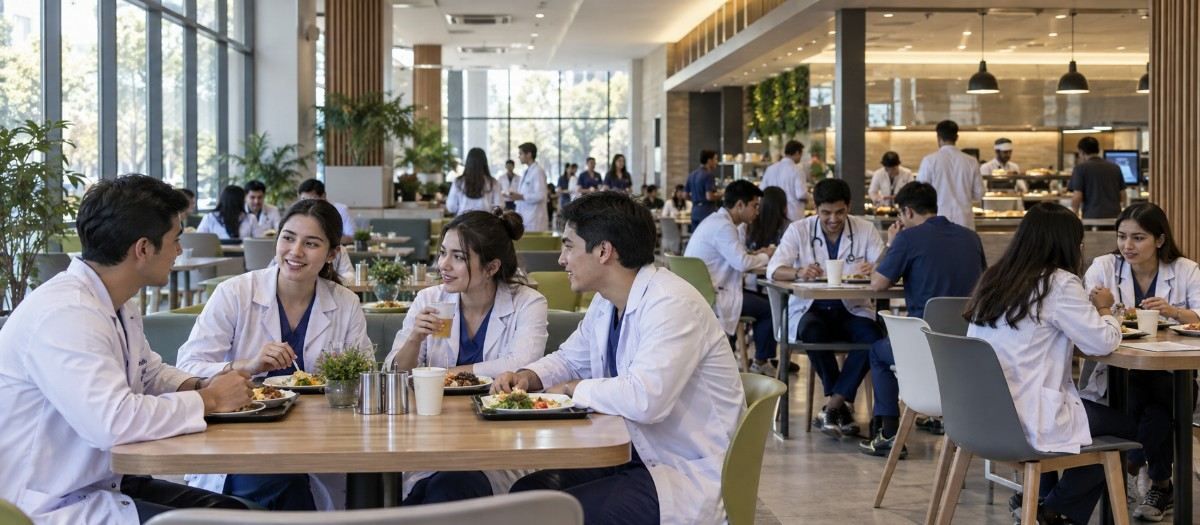
Furnished hostel rooms with Wi-Fi, laundry, 24/7 security, and Indian mess on or near campus.
Indian restaurants and mess facilities serving vegetarian and non-vegetarian home-style food daily.
Strong Indian community with cultural events, festival celebrations, and peer support groups.
Students get hands-on clinical training in government and private hospitals affiliated with the university.
Practical information for students planning to study at MBBS in University of Insubria Medicine and Surgery.
Prepare for all seasons. Thermal wear for winters, light clothing for summers. University provides heating in hostels.
Student visa processed with university invitation letter. Direct and connecting flights from major Indian cities.
Health insurance included in fees. Medical facility on campus plus city hospitals easily accessible.
Local SIM cards available. WhatsApp and video calls keep you connected with family back home.
Average monthly expenses of $150–$250 covering food, transport, and personal needs.
University library, online databases, and study groups. Seniors mentor juniors through academic challenges.
Our team guides you through every step — from application to arriving on campus.
Our Italy specialist explains the IMAT process, the income-based fee system, Bologna vs Rome vs other universities, and a total cost comparison with Hungary and Poland.
Our team registers you for IMAT (September test) and begins structured coaching. Biology, Chemistry, Physics, Maths, Critical Thinking. Begin preparation at least 6 months before the test.
Full Italian visa and IMAT application document set academic certificates, income documentation if applicable.
IMAT taken at designated test centres. We provide post-test analysis and guidance on university rankings.
Following IMAT ranking, the Italian university issues an admission confirmation. Our team can help with this process.
Full documentation submitted to the Italian Embassy or Consulate. Begin immediately after receiving the admission letter.
Our team advises qualifying families on the income-based fee reduction process.
Bologna /Rome orientation, accommodation, portico culture, Italian transport, Trenitalia app, banking, SIM card.
Our local team in Bologna (BLQ) or Rome (FCO) meets you and manages the first-week settlement.
We manage the Permesso application at the local Post Office within 8 days of arrival with our support, which is renewed annually.
Admission Helpline — Contact our counsellors for step-by-step assistance.
“The faculty here is incredibly supportive. The clinical training during hospital rotations has given me real confidence in patient care.”
“Affordable fees without compromising on quality. The campus facilities and hostel life made my transition abroad very smooth.”
“English medium instruction and WHO-recognized curriculum were the deciding factors for me. No regrets so far — excellent experience overall.”
“The university helped with everything from visa to accommodation. Hospital exposure from year three has been invaluable for my FMGE prep.”
“Just cleared my licensing exam on the first attempt. The structured coaching and mock exams during final year were a game-changer.”
“Safe campus, good food options, and a strong Indian student community. The teaching methodology is very practical and hands-on.”
No. Teaching, examinations and clinical placements are in Italian. You need B2 Italian before you enrol.
No. Insubria does not run an English track, so IMAT does not apply. You enter through the Italian language admission process.
You join an open first semester, sit three national exams in anatomy, chemistry and physics, and receive a place based on the national ranking.
Your credits transfer into a related science degree, and you can try the process again the following year.
Yes. The National Medical Commission requires a NEET qualifying score before it will register a foreign degree.
Between about EUR 156 and EUR 3,900 a year, depending on declared family income. Confirm the current band table before you budget.
Yes. DSU Lombardia regional scholarships cover fees, a living grant and meals for students who qualify on income and merit.
Mainly at Ospedale di Circolo e Fondazione Macchi and Ospedale Del Ponte in Varese, plus smaller hospitals in the province.
Yes. The degree is recognised across the EU and EEA under the mutual recognition directive.
Six years. The qualifying internship sits inside the final year, so you register with the Italian medical order soon after graduation.

Our expert counsellors will guide you through the complete admission process — from documents to airport pickup.