
Q1. Is UQ's MD the same as an MBBS?
+A. Not in structure. But it leads to the same outcome. It counts as equal to an MBBS for registration. It runs as a four-year graduate-entry degree.
 Australia | Est. 1936
Australia | Australian Medical Council (AMC); registration pathway recognised by the Medical Board of Australia. | English. medium
Expert will call you within 2 hours
Ask an Australian doctor where they trained. There's a good chance they will say, Brisbane. The University of Queensland's medical program is the largest in the country. It is also one of the oldest on the continent. It runs through the Faculty of Health, Medicine and Behavioural Sciences. Students arrive from well over a hundred countries. They train alongside Queensland's own future doctors. The curriculum mixes deep science with early contact with real patients. For Indian families, UQ is different from many "MBBS abroad" options. UQ offers the Doctor of Medicine (MD). This is Australia's main medical qualification. It is a four-year graduate-entry degree. Most international students finish a separate bachelor's degree first.
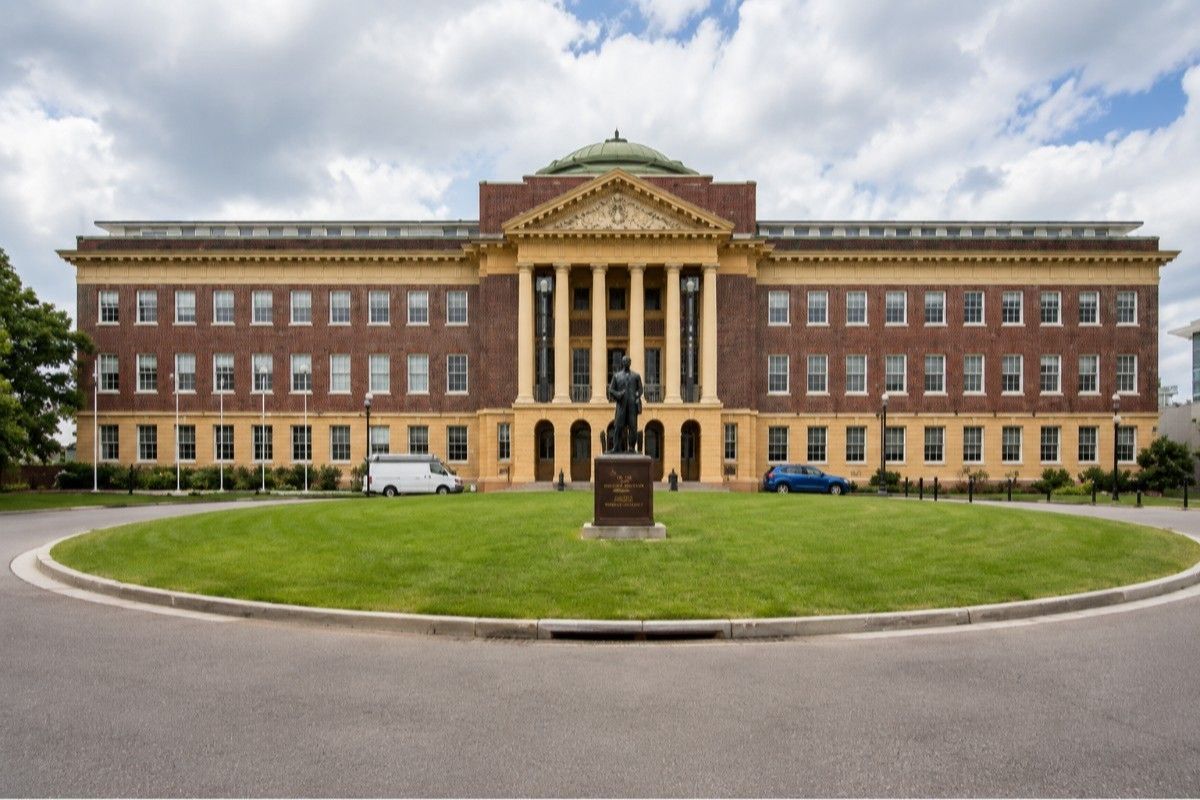
Medical teaching at UQ dates back to 1936. That year, the Queensland government funded a new Faculty of Medicine. Local clinicians had lobbied for decades to make this happen. They wanted the state to train its own doctors. The first class moved into the Mayne Medical School at Herston in 1939. This heritage-listed building still stands today. The school has now graduated more than 18,000 doctors. They practise across Queensland, the rest of Australia, and overseas. The school has grown into a network of nine clinical schools. These span South-East and regional Queensland. One site is even in New Orleans, in the United States.
UQ sits at 42nd in the 2026 QS World University Rankings. It belongs to Australia's Group of Eight research universities. Its medical and health programs hold a strong place in the Asia-Pacific region. UQ immunologist Ian Frazer helped create the HPV vaccine. That work now protects millions of people worldwide from cervical cancer.
The MD program uses what UQ calls a "learning community" model. Each student gets a clinical home base for most of their training. This gives them the same mentors, peers, and patients over time. It replaces large, anonymous lecture halls. Active learning replaces passive note-taking wherever possible. Students must bring clinical judgement to class from year one.
Medicine sits inside UQ's Faculty of Health, Medicine and Behavioural Sciences. This faculty also covers public health, nursing, midwifery, pharmacy, psychology, and human movement science. That mix helps students prepare for teamwork across fields. The Medical School runs nine Mayne Academies. Each one covers a clinical area, like surgery, paediatrics, or general practice.
The duration of the MD is four years. The science that underpins medicine is covered in the first year. The early clinical and procedural skills are also covered in this course. The second year shifts the emphasis to clinical environments. Pupils get knowledge about the most common conditions. In addition to this, they study how medical professionals interpret symptoms. During the third year, students are thoroughly immersed in the community and hospitals. The teaching should be based on actual clinical workloads. The final year enhances the depth of this work. There is a Transition to Practice term that comes at the conclusion. During this time, students participate in a clinical team as pre-interns.
Teaching uses several formats. These include lectures, small-group tutorials, and simulation workshops. Students also join peer-assisted study sessions. Every year, there is an increase in the number of supervised placements. Students have the option to go for overseas study or lab-based research for a deeper exposure.
Clinical exposure starts earlier than most applicants expect. By the end of Year 1, students complete a four-week hospital observership. From Year 3, the program centres on ten core clinical placements. These cover the major specialities. Students also take a self-directed elective in the final year. Some choose to do this overseas. Through internships, students have worked under supervision across many fields. These include internal medicine, surgery, paediatrics, obstetrics and gynaecology, psychiatry, and general practice.
Clinical training runs through a large hospital network. The Greater Brisbane Clinical School covers eight clinical units. These sit at major hospitals, including Royal Brisbane and Women's Hospital, Princess Alexandra Hospital, the Mater Hospital, and Greenslopes Private Hospital. Students in the Rural Clinical School train in regional centres. These include Toowoomba, Rockhampton, Bundaberg, and Hervey Bay. A separate group follows the UQ-Ochsner MD pathway. This is only open to US citizens and permanent residents. They spend their first two years in Brisbane. Their final two years are at Ochsner Health in New Orleans.
Research runs deep at UQ. Key institutes sit near the Herston and St Lucia campuses. These include the Queensland Brain Institute and the Institute for Molecular Bioscience. The UQ Diamantina Institute and Translational Research Institute are also close by. They are active in neuroscience, cancer treatment and regenerative medicine. Research can be used to supplement a student’s degree. They do this through elective and enrichment options. It is part of their medical training, not separate from it.
International students get strong support. This includes academic advisers and an international student office. Students also get counselling and wellbeing support from the Medical School. UQ enrols around 20,000 international students. They come from more than 130 countries. Within the Medical School, international students join the same groups as local students. They share the same clinical placements and assessments. There is no separate or easier track.
Years 1 and 2 happen mainly at the St Lucia and Herston sites. Herston hosts the Faculty of Health, Medicine and Behavioural Sciences. It also holds the heritage Mayne Medical School building. St Lucia sits on 114 hectares beside the Brisbane River. It holds most of UQ's general teaching and student housing. Clinical years move students into the hospital network. So later study happens as much in hospitals as in lecture halls.
Simulation plays a growing role in training. High-fidelity manikins and actor-patients help students practise key skills. These include physical exams and emergency response. Students also practise hard conversations. Mistakes here carry no risk to real patients.
Outside class, the University of Queensland Medical Society runs events and mentoring. It is one of the oldest student medical groups in Australia. It also advocates for students. More than 200 clubs and societies run across the wider university. Brisbane offers a real alternative to Sydney and Melbourne. Rent and daily costs tend to run lower. The warm climate keeps outdoor life easy year-round. The city sits close to the Gold Coast, Sunshine Coast, and Moreton Bay for weekend trips.
Graduates earn a degree accredited by the Australian Medical Council. The Medical Board of Australia recognises it for registration. This opens the door to an internship and residency in Australia. This depends on visa rules and workforce needs at the time. Career paths run wide. They include general practice, surgery, public health, and clinical research. Some graduates join the defence force medicine or international aid work. International students who plan to return home should check their own country's rules first before serious considerations.
In short, undergraduates choose UQ because of its size and its rich history. The network of hospitals, it has is second to none amongst medical schools in Australia. Great for students who already have, or are very close to having, a bachelor's degree. Also, great for those who want a degree from a prestigious research university to boost their career. It is not the quickest way from high school to medicine, but it is indeed a powerful one all round.
No hidden charges, no donation. The full picture of costs at MBBS In University of Queensland School of Medicine.
Tuition Fee
Approx. USD 72,020 per year (approx. INR 67.9 lakh).
USD 72,020 INR 67.89 lakh
Hostel Fee
From approx. USD 13,490 per year (approx. INR 12.7 lakh), for on-campus accommodation
USD 13,490 INR 12.71 lakh
Food & Meals
USD 5,530 INR 5.22 lakh
per year
Insurance
USD 480 INR 0.49 lakh
per year
Donation
No Donation
No Hidden Fees
Total Estimated Cost
Approx. USD 366,100 (INR 3.45 crore)
total 4 year
25–35%
Average FMGE first-attempt pass rates for students from many overseas medical universities. Students from structured programs consistently score higher.
Students returning to India need to clear the FMGE/NExT exam. MBBS In University of Queensland School of Medicine integrates exam-oriented coaching into the regular curriculum so students are prepared from day one.
A structured program that takes you from foundational sciences to clinical mastery.
The professional role of the doctor Early clinical and procedural skills A four-week hospital observership.
Human Structure & Function (Anatomy), Physiology, Biochemistry, Medical Ethics, Communication Skills, Early Clinical Skills
Students develop a strong foundation in biomedical sciences through lectures, anatomy laboratories, clinical simulations, communication training, evidence-based medicine, and early patient interactions.
Pathology, Pharmacology, Microbiology, Immunology, Clinical Examination, Community Medicine
Students complete supervised clinical rotations across major teaching hospitals, participating in ward rounds, outpatient clinics, emergency medicine, surgical theatres, research activities, and elective placements.
Internal Medicine, General Surgery, Emergency Medicine, Women's Health, Pediatrics, Clinical Rotations
A self-directed elective. A final Transition to Practice term as an active pre-intern.
Advanced Clinical Rotations, Electives, Research Project, Rural & Community Medicine, Professional Practice

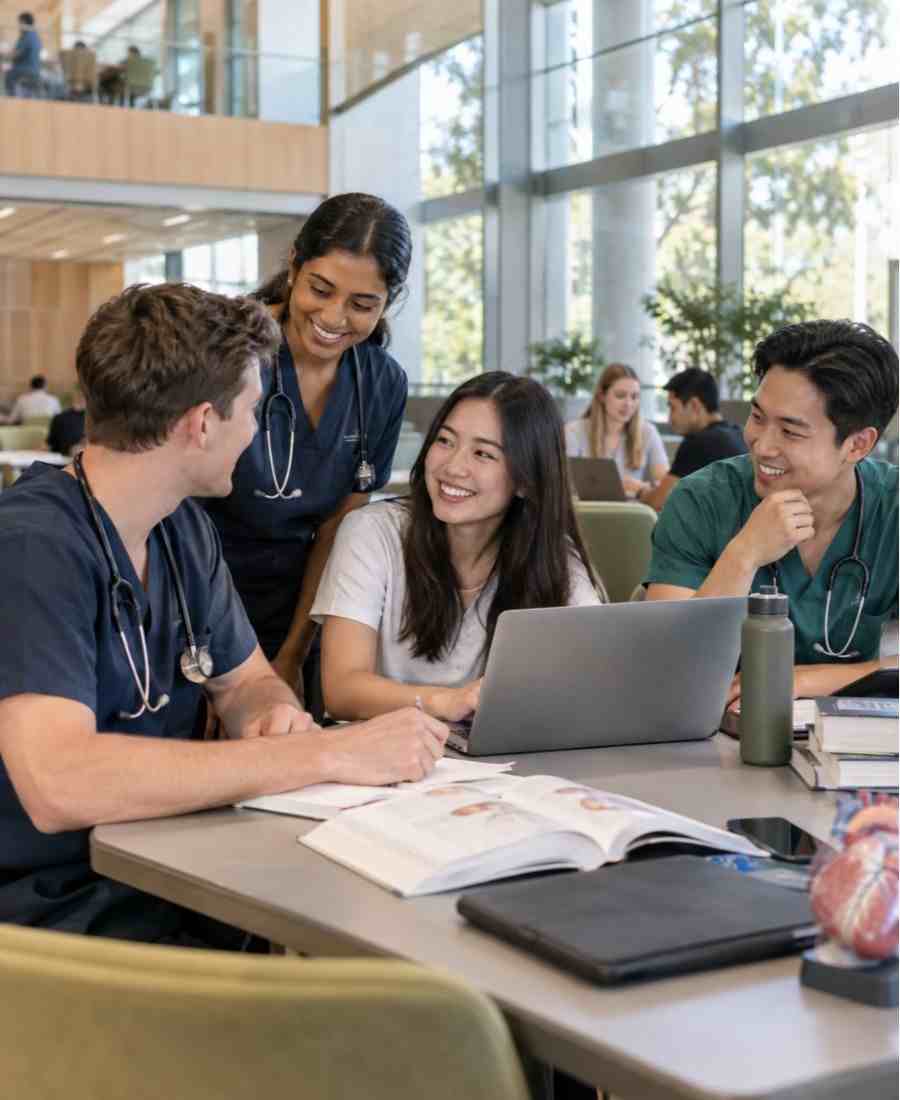
Furnished hostel rooms with Wi-Fi, laundry, 24/7 security, and Indian mess on or near campus.
Indian restaurants and mess facilities serving vegetarian and non-vegetarian home-style food daily.
Strong Indian community with cultural events, festival celebrations, and peer support groups.
Students get hands-on clinical training in government and private hospitals affiliated with the university.
Practical information for students planning to study at MBBS In University of Queensland School of Medicine.
Prepare for all seasons. Thermal wear for winters, light clothing for summers. University provides heating in hostels.
Student visa processed with university invitation letter. Direct and connecting flights from major Indian cities.
Health insurance included in fees. Medical facility on campus plus city hospitals easily accessible.
Local SIM cards available. WhatsApp and video calls keep you connected with family back home.
Average monthly expenses of $150–$250 covering food, transport, and personal needs.
University library, online databases, and study groups. Seniors mentor juniors through academic challenges.
Our team guides you through every step — from application to arriving on campus.
Discuss your academic profile, budget, and target universities before shortlisting anything.
Compare universities based on eligibility, fees, city, and pathway (UG vs graduate entry), not just brand recognition.
Verify your academic record and entrance exam plan against each shortlisted university’s specific requirements.
Gather transcripts, SOP, LORs, and test scores in the format each university requires.
Submit applications to your shortlisted universities.
Receive a conditional or unconditional offer letter.
Pay the initial deposit to confirm your place and receive your Confirmation of Enrolment.
Apply for the Subclass 500 visa with your CoE, Genuine Student statement, financial evidence, and OSHC proof.
Book flights, confirm accommodation, and complete pre-departure orientation requirements.
Complete on-arrival formalities at your university and begin your course.
Admission Helpline — Contact our counsellors for step-by-step assistance.
“The faculty here is incredibly supportive. The clinical training during hospital rotations has given me real confidence in patient care.”
“Affordable fees without compromising on quality. The campus facilities and hostel life made my transition abroad very smooth.”
“English medium instruction and WHO-recognized curriculum were the deciding factors for me. No regrets so far — excellent experience overall.”
“The university helped with everything from visa to accommodation. Hospital exposure from year three has been invaluable for my FMGE prep.”
“Just cleared my licensing exam on the first attempt. The structured coaching and mock exams during final year were a game-changer.”
“Safe campus, good food options, and a strong Indian student community. The teaching methodology is very practical and hands-on.”
A. Not in structure. But it leads to the same outcome. It counts as equal to an MBBS for registration. It runs as a four-year graduate-entry degree.
A. Generally, no. A recognised bachelor's degree comes first.
A. MCAT (504+), GAMSAT (50+ in each section), GPA 5.0, IELTS 7.0, and a Multiple Mini Interview.
A. This depends on NMC rules at the time of graduation. This applies to students who return to India. Please check with the NMC.
A. At the Greater Brisbane Clinical School's hospitals. Or the Rural Clinical School. US citizens can also use the UQ-Ochsner pathway.
A. Yes, the students can join institutes such as the Queensland Brain Institute. This work fits into the degree through elective pathways.
A. UQ supports students to live on-campus in on-campus accommodation or residential colleges, or off-campus in private rentals.
A. UQ lists 100+ scholarships. Most give partial tuition reductions. Check UQ's scholarships portal for details.
Yes, it is AMC accredited. Licensing in other countries is subject to each country’s rules.
A. Graduates move into general practice, surgery, public health, or clinical research. Some join the Defence Force or take up aid roles.

Our expert counsellors will guide you through the complete admission process — from documents to airport pickup.