
1. Is this program taught in English?
+No. The Medizinische Fakultät teaches entirely in German, and there is no English-medium medical degree pathway at this university
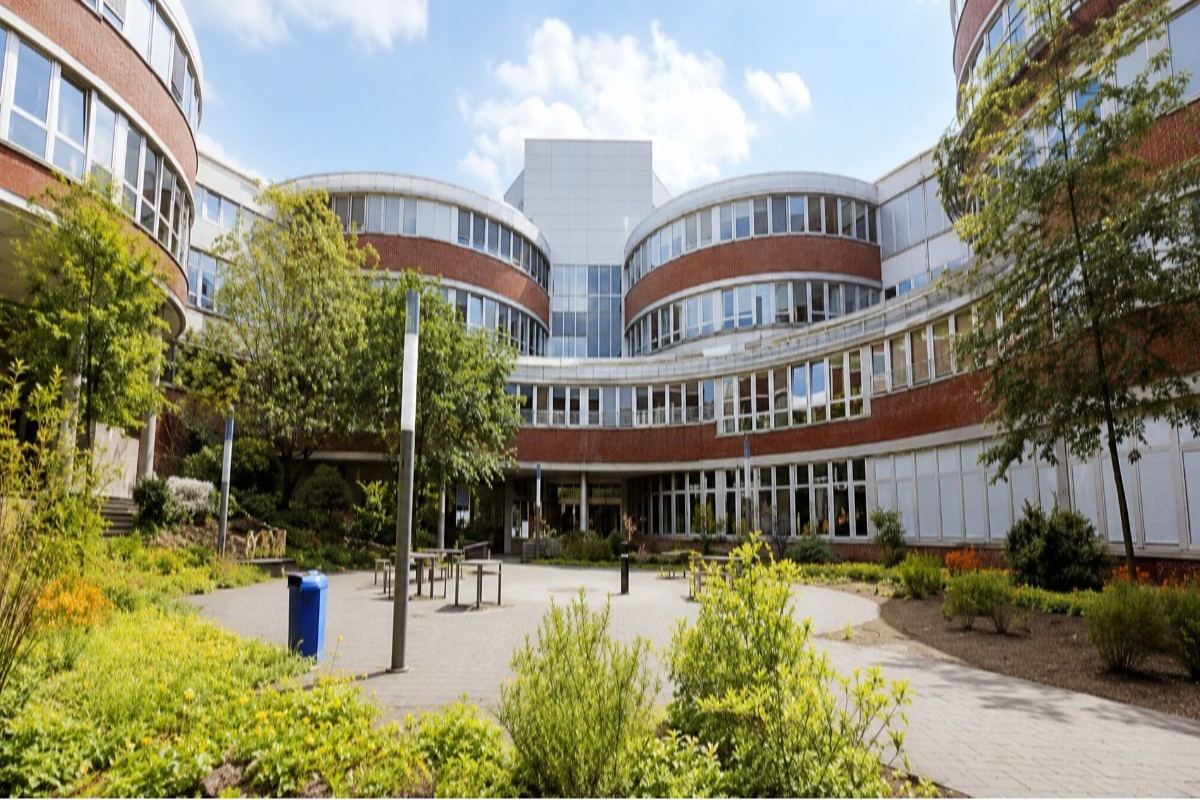
 Germany | Est. 2003
Germany | Recognised by the German state of North Rhine-Westphalia and the national accreditation framework for German medical education; the Staatsexamen in Medizin carries full recognition across the EU and EEA | German medium
Expert will call you within 2 hours
The University of Duisburg and the University of Essen joined together to form the University of Duisburg-Essen in 2003. The university is one of the newest big public ones in Germany. On the other hand, its Faculty of Medicine has been around longer and is more well-known. Before the merger, there were already traditions in medical school in Essen that led to this. The Universitätsklinikum Essen, the university hospital, is very close to the school. In this school, most of the teaching and clinical training takes place. It is also one of the biggest academic medical schools in North Rhine-Westphalia, which has the most people in Germany.
It's very important that you know this before you go any further: the Medizinische Fakultät only offers its medical degree in German. In Germany, this is also true at Duisburg-Essen and at almost all other public medical schools. Like France's, Germany's medical school system is based on a national structure that mostly gives German students the chance to learn. Nationality is used to decide who gets in, and German is the main language of instruction. Germany doesn't have as many English-language medical degrees as some of the other European countries we've talked about in this series. This means that foreign applicants who don't speak German very well will have a real problem that has nothing to do with how smart they are.
The Staatsexamen in Medizin, which is German for "medical degree," is set up in a way that is very different from how Bachelor's and Master's degrees are set up in most other fields. Six years and three months are spent in school, with about two years spent in the basic phase and three years spent in the clinical phase. The last year is called the Praktisches Jahr, and it is spent working in hospitals before graduation. They don't just take one final exam; they take three separate state exams at different points in their degree. Every one of them is a big national challenge in its own way, and they all test both your clinical and general knowledge.
In order to get into German medical schools, such as Duisburg-Essen, the Stiftung für Hochschulzulassung (hochschulstart.de) runs a very organized national system. There are a lot of different factors that go into this method. Some of them are the applicant's Abitur grade point average, how long they have been waiting, and more and more, things like ability test scores and interviews at different universities. There are a lot more qualified people applying to medicine schools in Germany every year than there are seats available. You don't have to be from the United States to have a hard time getting into college right now.
That being said, the real world is really tough for international applicants in particular. People from outside the EU generally have to show that they can speak and write German at a high level, usually DSH-2 or TestDaF level 4 or higher, before they can even be considered for admission. Also, academic qualifications from outside of Germany need to be checked to see if they are the same. Depending on the applicant's home country, this could mean taking extra classes or a Studienkolleg, which is a foundation year designed to get international students up to the level of education and language expected of a German Abitur graduate.
Clinical training for the Faculty of Medicine takes place at Universitätsklinikum Essen and the teaching hospitals that are connected to it all over the Ruhr region, which is one of Germany's most densely populated and industrially important areas. This gives students the chance to work with a huge number of patients who have a wide range of health problems. This shows how big and varied the health care system is in a big city or factory. Oncology, cardiovascular medicine, immunology, and transplant medicine are some of the other fields that the faculty studies. This is possible because the university hospital is a major referral point for the area.
There are low or no fees to get a medical degree at public universities in Germany, like Duisburg-Essen. There is a real difference between this medical school and many of the private or English-language ones we've talked about so far. North Rhine-Westphalia is one of the German states that does not charge tuition fees at public universities for German or foreign students. There is, however, a small semester contribution fee that pays for a pass to use public transportation and management costs. By international standards, this means that it doesn't cost much to study here. This isn't really the case for most international students, though, because they have to pay a lot to live in Germany and learn the language before they can even apply.
No matter where they went to school, all doctors in Germany have to go through the Facharztausbildung after passing the Staatsexamen. This is a time when they specialize under supervision after graduation before they can work on their own in a certain field. The German medical degree is fully accepted throughout the European Union and the European Economic Area. This is because it meets EU standards for medical education. This means that graduates can go anywhere in Europe to get more training or work as a doctor.
Before making this decision, the most important thing for Indian students is to think about the language barrier. Before a foreign medical degree can be used to take the FMGE or NExT test that is needed to work as a doctor in India, the National Medical Commission of India usually wants it to be given in English or meet other exact requirements. This might not be directly met by a degree offered in German from Duisburg-Essen, and the student still needs to take the NEET test no matter what country they are going to. As an Indian person who wants to go down this path, they should check the NMC's requirements and make sure they meet them. Also, they should plan to study German full-time for at least a year or two before they apply.
The rest of the world knows Berlin and Munich better than Essen and the rest of the Ruhr area. People used to work there, but things have changed a lot in the last few decades. It is now known for bringing back its culture, and in 2010 it was named a European Capital of Culture. It also costs a lot less to live there than in Germany's southern bigger cities. It is a great chance for students who meet the academic and language standards to study medicine in one of Europe's largest economies for a low price.
To put it simply, Duisburg-Essen is a good place in Germany to study medicine. It has a lot of university hospitals, and almost everyone can go to school for free. But from the start, you need to be very good at German. It also has one of the most centralized and competitive national admissions systems in Europe, and it wasn't designed with English-speaking foreign applicants in mind. You should only do it if you already speak German very well or are determined to learn it over a long period of time. Before making this choice, they should have also given careful thought to how this would affect their license back home.
No hidden charges, no donation. The full picture of costs at MBBS in University of Duisburg Essen Faculty of Medicine.
Tuition Fee
USD 250 to 350 per semester (approx. INR 0.21 to 0.29 lakh)
Approximately €312.40 per semester
Hostel Fee
USD 4,800 to 6,500 per year (approx. INR 4.02 to 5.44 lakh)
USD 4,800 to 6,500 per year (approx. INR 4.02 to 5.44 lakh),
Food & Meals
USD3,600-4,800 INR 3.01-4.02 lakh
per month
Insurance
USD 1,200-1,400 INR 1.00-1.17 lakh
per year
Donation
No Donation
No hidden fees
Total Estimated Cost
USD 10,100-13,400 INR 8.45-11.22 lakh
6- YEAR
25–35%
Average FMGE first-attempt pass rates for students from many overseas medical universities. Students from structured programs consistently score higher.
Students returning to India need to clear the FMGE/NExT exam. MBBS in University of Duisburg Essen Faculty of Medicine integrates exam-oriented coaching into the regular curriculum so students are prepared from day one.
A structured program that takes you from foundational sciences to clinical mastery.
biochemistry, and physics, culminating in the first state examination
Foundational science subjects including anatomy, physiology
delivered largely through Universitätsklinikum Essen and affiliated hospitals, culminating in the second state examination
Core clinical subjects and hospital-based training across major specialties
surgery, and an elective specialty, culminating in the third and final state examination
A full year of supervised practical hospital work, split across rotations in internal medicine
before independent practice in a specific medical field
a supervised postgraduate specialisation period required
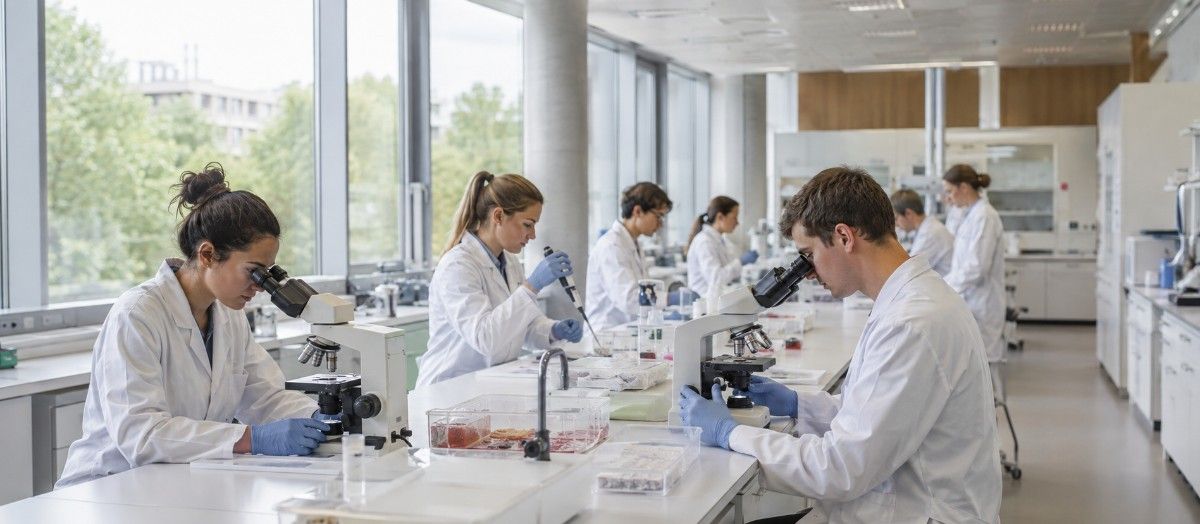
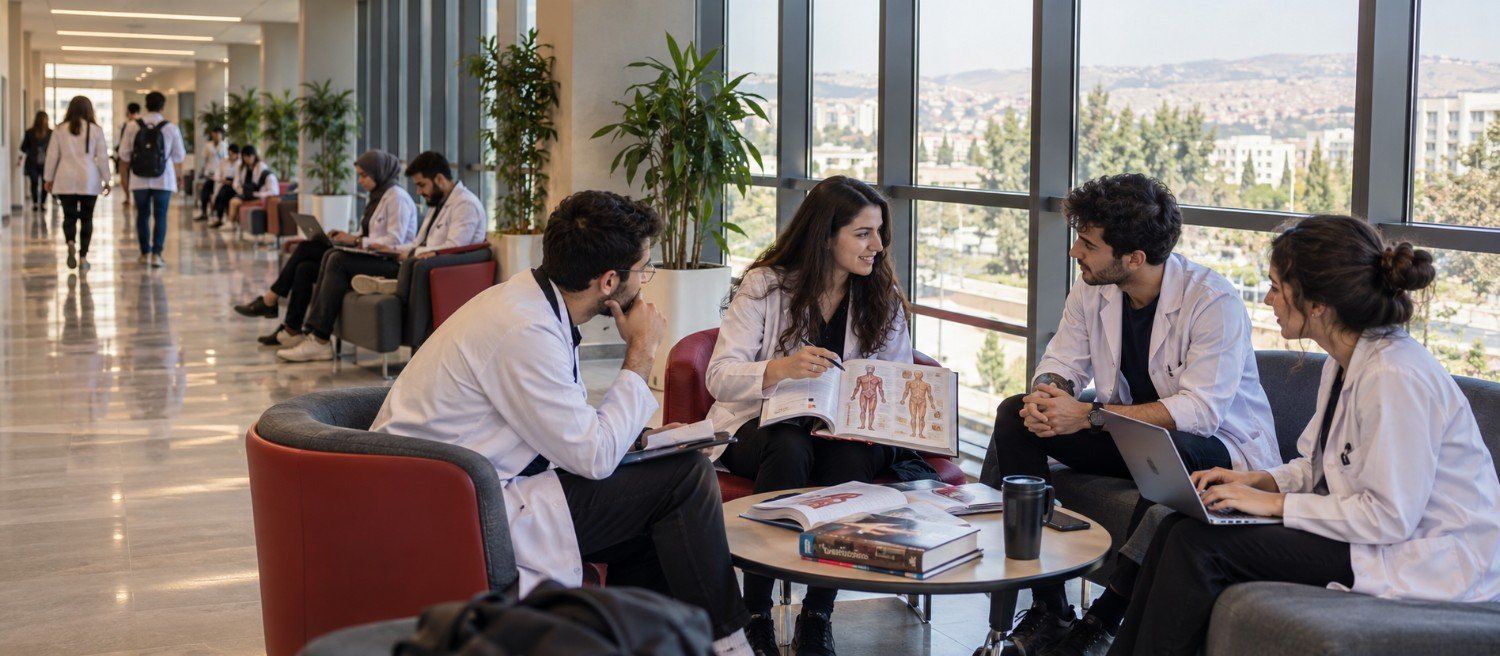
Furnished hostel rooms with Wi-Fi, laundry, 24/7 security, and Indian mess on or near campus.
Indian restaurants and mess facilities serving vegetarian and non-vegetarian home-style food daily.
Strong Indian community with cultural events, festival celebrations, and peer support groups.
Students get hands-on clinical training in government and private hospitals affiliated with the university.
Practical information for students planning to study at MBBS in University of Duisburg Essen Faculty of Medicine.
Prepare for all seasons. Thermal wear for winters, light clothing for summers. University provides heating in hostels.
Student visa processed with university invitation letter. Direct and connecting flights from major Indian cities.
Health insurance included in fees. Medical facility on campus plus city hospitals easily accessible.
Local SIM cards available. WhatsApp and video calls keep you connected with family back home.
Average monthly expenses of $150–$250 covering food, transport, and personal needs.
University library, online databases, and study groups. Seniors mentor juniors through academic challenges.
Our team guides you through every step — from application to arriving on campus.
Begin German lessons as early as possible, ideally alongside Class 11–12, targeting B1 within 12 months and progressing toward the required B2–C1 level.
Submit Class 10, 12, and any higher-education transcripts for verification. Processing typically takes 3–5 weeks; apply early, since this gates every subsequent step.
portal and apply to the correct track, the M-Kurs for medical aspirants, at your shortlisted Studienkolleg institutions.
Complete the roughly 10–12 month M-Kurs program covering Biology, Chemistry, Physics, and German, then pass the Feststellungsprüfung (FSP), the qualifying exam for university entry.
Submit applications to your shortlisted universities. Uni-assist fees run €75 for the first program and €30 for each additional program in the same semester.
University decisions follow Uni-assist’s document evaluation and forwarding; final admission is always the university’s own decision.
Deposit €11,904 into a blocked account (via Fintiba, Expatrio, or a similar provider) and arrange either public (€140–€160/month) or private health insurance; both are mandatory prerequisites for the visa stage.
Submit your visa application at the German consulate in India (Delhi, Mumbai, Bengaluru, or Chennai), with your admission letter, APS certificate, language proficiency proof, blocked account confirmation, and insurance proof. Realistic processing time is 6–12 weeks.
Bring originals of every document submitted digitally. Be prepared to discuss your study plans, financial arrangements, and reasons for choosing Germany.
Book travel around your intake date (October for Winter, April for Summer), and complete formal university enrollment on arrival. Medical study then begins with the Pre-Clinical phase.
Admission Helpline — Contact our counsellors for step-by-step assistance.
“The faculty here is incredibly supportive. The clinical training during hospital rotations has given me real confidence in patient care.”
“Affordable fees without compromising on quality. The campus facilities and hostel life made my transition abroad very smooth.”
“English medium instruction and WHO-recognized curriculum were the deciding factors for me. No regrets so far — excellent experience overall.”
“The university helped with everything from visa to accommodation. Hospital exposure from year three has been invaluable for my FMGE prep.”
“Just cleared my licensing exam on the first attempt. The structured coaching and mock exams during final year were a game-changer.”
“Safe campus, good food options, and a strong Indian student community. The teaching methodology is very practical and hands-on.”
No. The Medizinische Fakultät teaches entirely in German, and there is no English-medium medical degree pathway at this university
There is no tuition fee for the medical degree itself at German public universities. Students pay only a modest semester contribution fee, generally covering administration and a public transport pass.
Generally DSH-2 or TestDaF level 4 or higher, a genuinely advanced level of proficiency, since this is required before admission is even considered.
Through Germany's centralised national system, hochschulstart.de, based on a combination of Abitur grade point average, waiting time, and additional university-specific criteria such as aptitude tests or interviews.
Yes, mandatory, consistent with National Medical Commission requirements for any Indian student pursuing medicine abroad, regardless of destination country.
Potentially, yes. Indian students should independently confirm current NMC rules on medium of instruction before committing to this path.
Six years and three months in total, including a preclinical phase, a clinical phase, and a final practical year, closing with three separate state examinations.
Primarily at Universitätsklinikum Essen and its affiliated teaching hospitals across the Ruhr region, one of Germany's most densely populated areas.
Graduates enter the Facharztausbildung, a mandatory supervised postgraduate specialisation period, before they can practise independently in a specific medical field.
Students who are either already fluent in German or fully committed to reaching an advanced level before applying, and who are comfortable navigating one of Europe's most centralised and competitive national medical admission systems.


Our expert counsellors will guide you through the complete admission process — from documents to airport pickup.