
Q1. Is this the same university as Sapienza's main Rome campus?
+Yes. It's the same Sapienza Università di Roma degree, Course E, but taught on a separate, decentralised campus in Latina rather than in Rome.
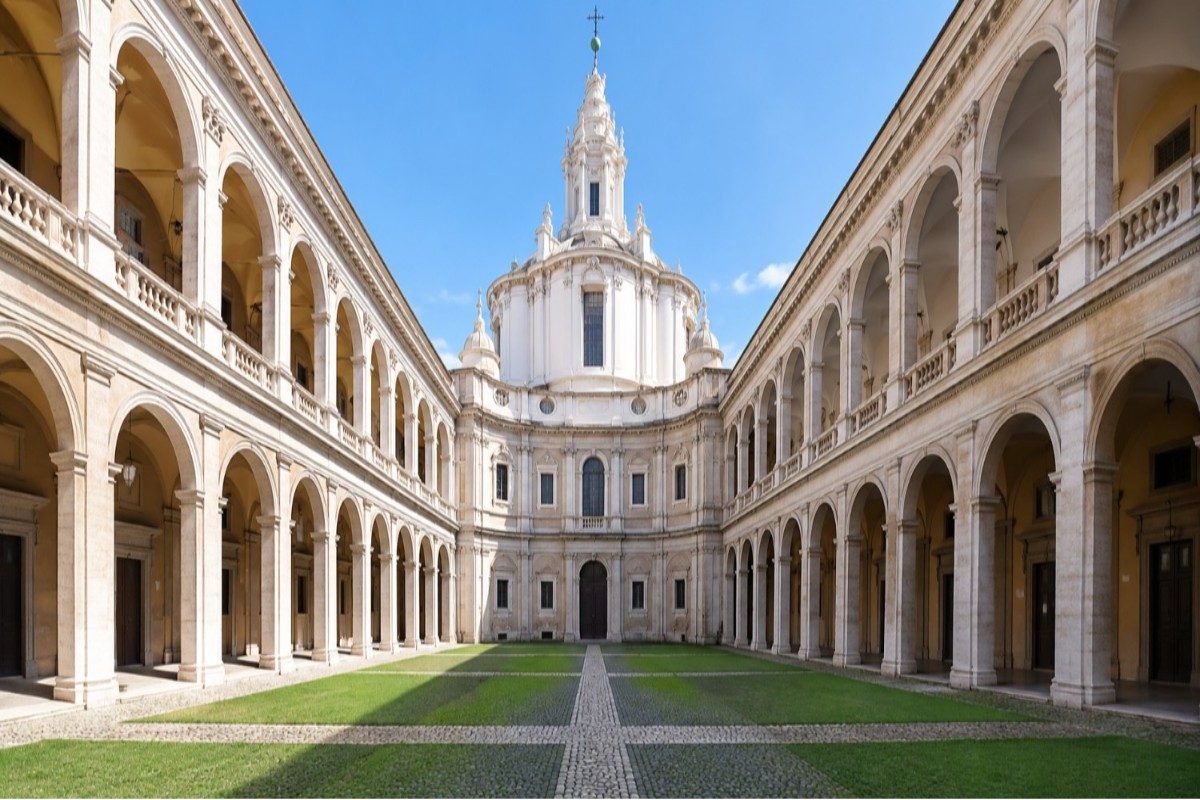
 Italy | Est. 1990
Italy | Recognised by Italy's Ministry of University and Research as an authorised Single-Cycle Degree in Medicine and Surgery (Class LM-41), identical in classification to Sapienza's Rome-based courses. | Italian runs through the entire programme medium
Expert will call you within 2 hours
People mostly just call it Polo Pontino, Sapienza's decentralised teaching hub in Latina. The parent university, Sapienza, was founded in 1303 by papal bull, but the Latina site itself is far younger, and its founding story is genuinely well documented. So, this campus carries Sapienza's centuries-old name and degree, but its own local history in Latina runs to just over three decades.
The Pontino hub's origins trace to political debate over bringing university education to Latina, active from the early 1980s under Mayor Delio Redi, who served from 1980 to 1983 and again from 1985 to 1992. That debate came to fruition under Mayor Ajmone Finestra, in office from 1993 to 2002, and the teaching hub opened for the 1990/91 academic year, with the effort continuing steadily under the city's later mayors, including Vincenzo Zaccheo, Giovanni Di Giorgi, Damiano Coletta, and Matilde Celentano. So, this campus exists because of a specific, sustained, multi-decade civic effort by the city of Latina itself, not a decision made unilaterally by Sapienza.
Here's a fact most guides skip entirely. Across its 35 years of operation, from 1990/91 through the 2025/26 academic year, the Pontino hub has enrolled a documented total of 35,759 students across all its faculties, with almost 14,000 in Economics and more than 15,000 in Pharmacy and Medicine, and has produced 15,838 graduates over that same period. So, this branch campus has a genuine, decades-long, statistically documented track record, not a recent or experimental presence in the city.
Today the Pontino hub covers four disciplinary areas altogether, economics, engineering, medicine, and chemistry-pharmacy, running 19 degree courses with 4,173 students currently enrolled across all years. Enrolment draws heavily from the local area: in the most recent academic year, 83 percent of new Pontino enrolments came from Latina's own province, with a further 15.3 percent from Rome's province, and small percentages from Frosinone and Viterbo. Within Latina province specifically, 41.6 percent of students come from the city of Latina itself, with the remaining 58.4 percent from surrounding municipalities. So, while Sapienza's name carries international weight, this particular campus serves a genuinely local, regional student population above all.
Medicine and Surgery at Latina runs as its own distinct course, officially labelled Course E within Sapienza's wider medical faculty structure, a designation separate from the Italian-language Courses A through D and the English-taught Course F, both based in Rome. Many of the professors teaching at Latina also teach the equivalent Rome-based courses, and examinations are reported as closely comparable across all of Sapienza's medical course tracks, giving Latina students a degree that's genuinely equivalent in content and rigour to its Rome counterpart, despite running on a physically separate, smaller campus.
The Polo Pontino sits at Corso della Repubblica 79, in the centre of Latina, a city in Italy's Lazio region roughly 35 to 40 minutes from Rome Termini by train, with a further short bus ride needed from Latina's own station to reach the university itself. Direct trains from Naples also serve Latina station, giving the campus reasonable connections beyond Rome as well.
The medicine course runs from a facility described as small but genuinely new, shared with Sapienza's Nursing degree course at the same site. Teaching in the earlier years generally takes place at this university facility in the city centre, with instruction shifting progressively into the hospitals themselves from the third or fourth year onward, as clinical placements intensify.
Clinical training runs specifically through two Latina hospitals: the Ospedale Santa Maria Goretti and the ICOT, the Istituto Chirurgico Ortopedico Traumatologico. At ICOT specifically, Sapienza operates its own university-directed clinical units across 74 hospital beds, with dedicated teaching classrooms, an aula magna, a secretary's office, and a professors' room built directly into the hospital, alongside student access to the institute's own canteen, library, and parking facilities. So, the clinical teaching relationship here is genuinely embedded within the hospital itself, not a loosely arranged external placement.
Medicine and Surgery at the Polo Pontino runs as a six-year Single-Cycle Degree under Class LM-41, the same classification used across all of Sapienza's medical course tracks, whether based in Rome or Latina. As with all Italian medical degrees, no separate rotating internship year follows graduation, since clinical training runs throughout the six years themselves; graduates must still pass Italy's Esame di Stato and register with the country's medical professional body before practising independently.
Admission runs under the same national fixed-quota system used for Sapienza's Rome-based courses, with a specific, smaller number of places allocated to the Latina site, alongside its own reserved seats for non-EU applicants, set annually by ministerial decree alongside the Rome quota. Applicants apply through the same national process used for Sapienza's other medical courses, listing Latina as their chosen site.
Tuition fees at the Polo Pontino follow exactly the same Sapienza-wide structure as the Rome campus, since Latina students are enrolled at the same university under the same fee regulations. Students whose ISEE Università sits at or below EUR 24,000 fall within Sapienza's No Tax Area and are fully exempt from the Contributo Onnicomprensivo Annuale, paying only a fixed regional tax of EUR 140 and a stamp duty of EUR 16, a combined total of roughly EUR 156 a year. Students above that threshold pay a graduated fee tied to their specific ISEE bracket, with a stated maximum of approximately EUR 2,821 to 2,924 a year applied by default to students who don't submit a valid ISEE Università by the annual deadline. International applicants whose income is earned entirely outside Italy pay a separate fixed contribution instead, set by country of origin under the same Board resolution that applies Sapienza-wide.
Where Latina genuinely differs from Rome is in living costs, which run meaningfully lower here than in the capital, generally reported at somewhere between EUR 500 and 750 a month, reflecting Latina's smaller size and lower cost of living relative to central Rome. So, for a student whose tuition already sits in the No Tax Area, choosing the Latina site over Rome can represent a real, ongoing monthly saving on daily living expenses, even though the degree itself, the fee structure, and the recognised qualification are otherwise identical.
NEET remains a genuine requirement for Indian applicants here, exactly as it does for most MBBS-abroad destinations, and Indian graduates would still need to clear the FMGE or NExT exam to practise medicine back in India.
Parameter | Details |
Established | Sapienza founded 1303; the Latina teaching pole (Polo Pontino) opened for the 1990/91 academic year |
Institution Type | Public Italian university branch campus (Sapienza Università di Roma, Facoltà di Farmacia e Medicina, Sede di Latina) |
Location | Corso della Repubblica 79, Latina, Italy, roughly 35–40 minutes by train from Rome Termini |
Programme | Medicina e Chirurgia "E", a Single-Cycle Degree (LM-41), taught in Italian, run by Sapienza but based in Latina |
Duration | 6 years; no separate internship year, though the state licensing exam follows graduation |
Medium of Instruction | Italian |
Foreign Quota Note | A specific, smaller number of places is reserved for non-EU applicants, set annually alongside the main Rome quota |
Teaching Hospitals | Ospedale Santa Maria Goretti and ICOT (Istituto Chirurgico Ortopedico Traumatologico), both in Latina |
Fee Component | Amount | Notes |
Tuition (No Tax Area, ISEE Università up to EUR 24,000) | EUR 0 (Contributo Onnicomprensivo Annuale waived) | Same Sapienza-wide rule as the Rome campus; only regional tax (EUR 140) and stamp duty (EUR 16) apply |
Tuition (ordinary bracket example) | First instalment approx. EUR 613 + EUR 156 (tax/duty); second instalment approx. EUR 655 | Example rate for a mid-range ISEE bracket; exact bracket depends on declared ISEE Università |
Tuition (maximum, no ISEE submitted or highest bracket) | Approx. EUR 2,821 to 2,924 per year | Same Sapienza-wide fee structure applies to Latina students as to those in Rome |
Foreign-Income Students (cannot submit Italian ISEE) | Fixed contribution set by country of origin | Set by Board resolution of 30 May 2023; amount varies by home country |
Late ISEE Submission Penalty | EUR 50 to EUR 100 | Escalates by EUR 2.50 per day of delay after the annual deadline |
Most rival pages describing Sapienza focus entirely on the Rome campus, where living costs run high. Latina offers the identical Sapienza degree, the same fee structure, and the same recognised Class LM-41 qualification, while living costs run considerably lower, generally EUR 500 to 750 a month rather than Rome's EUR 900 to 1,300. So, students get genuine access to Sapienza's name and standards at a real, documented cost saving on daily life.
Most guides describe clinical placements as external arrangements between a university and separate hospitals. At ICOT specifically, Sapienza operates its own dedicated teaching classrooms, aula magna, and administrative offices physically inside the hospital, across 74 beds under direct university leadership. So, the clinical training relationship here runs deeper than a typical placement agreement.
Be upfront about a few real considerations here. This is a genuinely smaller, more regionally focused campus than Sapienza's main Rome site, drawing 83 percent of its recent enrolment from Latina's own province, so students shouldn't expect Rome's scale of student life or facilities. The medicine facility itself is described as small, even though newly built, and shared with the Nursing programme. Admission quotas for the Latina site are smaller than Rome's, so places remain genuinely competitive.
So, who fits here best? Students who want a genuine Sapienza medical degree without Rome's higher living costs, and who are comfortable with a smaller, more locally rooted campus, fit well here. Students drawn to hands-on clinical training built directly into a hospital setting fit well too. However, applicants who specifically want Rome's scale, facilities, and city life should choose the main campus instead. Still, Latina's lower living costs and its genuinely embedded hospital teaching relationship are real, well-documented strengths
No hidden charges, no donation. The full picture of costs at MBBS in Sapienza University of Rome Faculty of Pharmacy and Medicine Latina Campus.
Tuition Fee
€2,924
Approx. EUR 156 per year (regional tax + stamp duty only) — approx. EUR 936 over
Hostel Fee
€250 – €450 per month
€250 – €450 per month
Food & Meals
€2,821 per year
per year
Insurance
€120 to €150 per year
per year
Donation
No Donation
No hidden fee
Total Estimated Cost
Approx. EUR 36,900 to 54,900 over 6 years — minimal tuition plus Latina living costs
6 year
25–35%
Average FMGE first-attempt pass rates for students from many overseas medical universities. Students from structured programs consistently score higher.
Students returning to India need to clear the FMGE/NExT exam. MBBS in Sapienza University of Rome Faculty of Pharmacy and Medicine Latina Campus integrates exam-oriented coaching into the regular curriculum so students are prepared from day one.
A structured program that takes you from foundational sciences to clinical mastery.
● Taught at the Polo Pontino's own city-centre facility, shared with the Nursing degree course.
● Covers Anatomy, Physiology, and Biochemistry, forming the scientific foundation for everything that follows.
● Uses teaching content and examinations closely comparable to Sapienza's Rome-based medicine courses.
● Covers Pathology, Microbiology, Pharmacology, and Community Medicine.
● Runs through Ospedale Santa Maria Goretti and the university's own dedicated clinical units at ICOT.
● Covers Medicine, Surgery, and allied clinical subjects, with teaching shifting into hospital settings from year three or four.
● Draws on ICOT's dedicated university-run classrooms, aula magna, and 74-bed clinical unit.
● Clinical placement teaching intensifies progressively through the later years of the programme.
● Graduates must pass Italy's Esame di Stato and register with the relevant professional body before practising independently.
● No separate internship year is appended; clinical training runs throughout the six-year single-cycle degree itself.
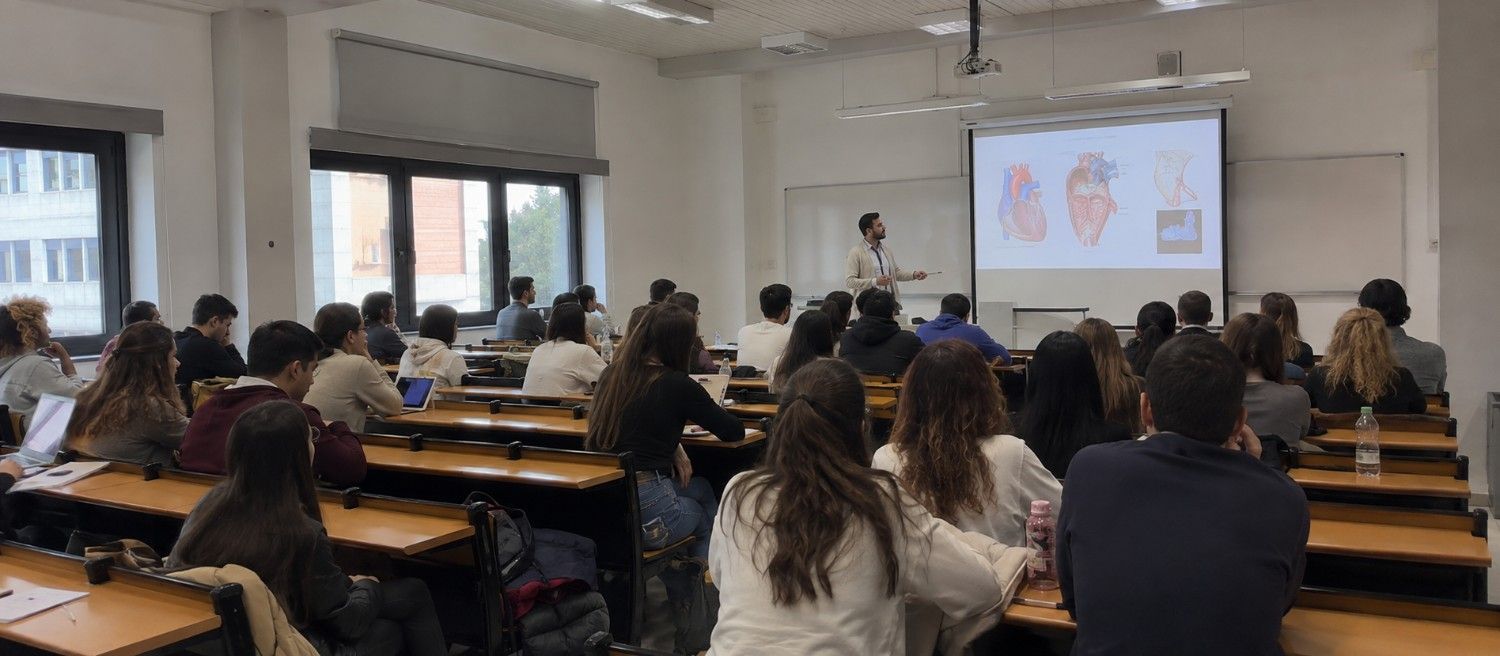

Furnished hostel rooms with Wi-Fi, laundry, 24/7 security, and Indian mess on or near campus.
Indian restaurants and mess facilities serving vegetarian and non-vegetarian home-style food daily.
Strong Indian community with cultural events, festival celebrations, and peer support groups.
Students get hands-on clinical training in government and private hospitals affiliated with the university.
Practical information for students planning to study at MBBS in Sapienza University of Rome Faculty of Pharmacy and Medicine Latina Campus.
Prepare for all seasons. Thermal wear for winters, light clothing for summers. University provides heating in hostels.
Student visa processed with university invitation letter. Direct and connecting flights from major Indian cities.
Health insurance included in fees. Medical facility on campus plus city hospitals easily accessible.
Local SIM cards available. WhatsApp and video calls keep you connected with family back home.
Average monthly expenses of $150–$250 covering food, transport, and personal needs.
University library, online databases, and study groups. Seniors mentor juniors through academic challenges.
Our team guides you through every step — from application to arriving on campus.
Our Italy specialist explains the IMAT process, the income-based fee system, Bologna vs Rome vs other universities, and a total cost comparison with Hungary and Poland.
Our team registers you for IMAT (September test) and begins structured coaching. Biology, Chemistry, Physics, Maths, Critical Thinking. Begin preparation at least 6 months before the test.
Full Italian visa and IMAT application document set academic certificates, income documentation if applicable.
IMAT taken at designated test centres. We provide post-test analysis and guidance on university rankings.
Following IMAT ranking, the Italian university issues an admission confirmation. Our team can help with this process.
Full documentation submitted to the Italian Embassy or Consulate. Begin immediately after receiving the admission letter.
Our team advises qualifying families on the income-based fee reduction process.
Bologna /Rome orientation, accommodation, portico culture, Italian transport, Trenitalia app, banking, SIM card.
Our local team in Bologna (BLQ) or Rome (FCO) meets you and manages the first-week settlement.
We manage the Permesso application at the local Post Office within 8 days of arrival with our support, which is renewed annually.
Admission Helpline — Contact our counsellors for step-by-step assistance.
“The faculty here is incredibly supportive. The clinical training during hospital rotations has given me real confidence in patient care.”
“Affordable fees without compromising on quality. The campus facilities and hostel life made my transition abroad very smooth.”
“English medium instruction and WHO-recognized curriculum were the deciding factors for me. No regrets so far — excellent experience overall.”
“The university helped with everything from visa to accommodation. Hospital exposure from year three has been invaluable for my FMGE prep.”
“Just cleared my licensing exam on the first attempt. The structured coaching and mock exams during final year were a game-changer.”
“Safe campus, good food options, and a strong Indian student community. The teaching methodology is very practical and hands-on.”
Yes. It's the same Sapienza Università di Roma degree, Course E, but taught on a separate, decentralised campus in Latina rather than in Rome.
The Polo Pontino teaching hub opened for the 1990/91 academic year, following civic efforts dating back to the early 1980s.
No, it runs entirely in Italian, with no English-taught track available at the Latina site specifically.
It runs six years as a Single-Cycle Degree, with no separate internship year appended, though the Esame di Stato follows graduation.
Yes, a valid, qualifying NEET score is required for Indian applicants, alongside meeting Italy's national medical admission requirements.
It follows the same Sapienza-wide fee structure as Rome: EUR 0 in tuition below EUR 24,000 ISEE, rising to a maximum of roughly EUR 2,821 to 2,924 a year.
Yes, generally reported at EUR 500 to 750 a month, compared to roughly EUR 900 to 1,300 a month in Rome.
Ospedale Santa Maria Goretti and ICOT, the Istituto Chirurgico Ortopedico Traumatologico, both located in Latina.
Roughly 35 to 40 minutes by train from Rome Termini, plus a short local bus ride to reach the university itself.
Yes, it carries the same Class LM-41 classification and is awarded by the same university, Sapienza Università di Roma.

Our expert counsellors will guide you through the complete admission process — from documents to airport pickup.