
Q1. Is Medicine at UMH taught in English?
+A: No. Instruction is entirely in Spanish, and UMH does not run an English-medium or bilingual track for Medicine.
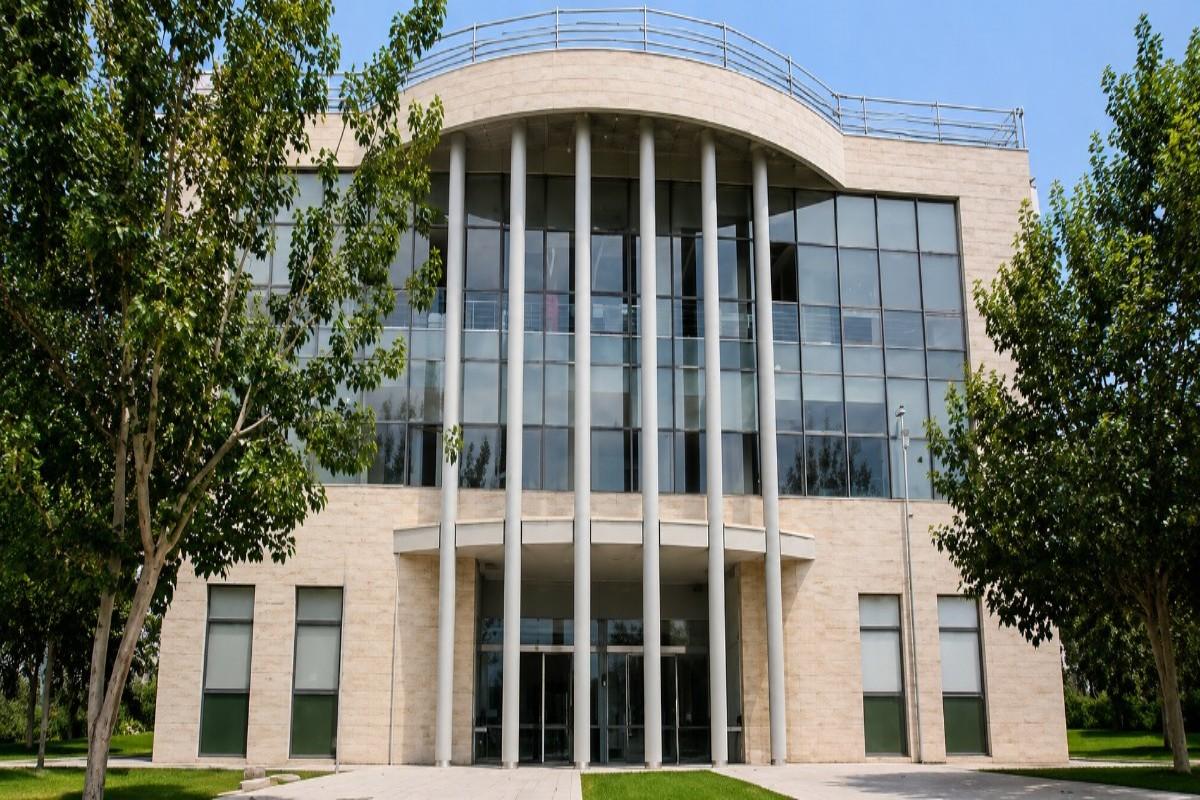
 Spain | Est. 1980
Spain | Officially recognized and accredited by ANECA (National Agency for Quality Assessment and Accreditation of Spain). | Spanish medium
Expert will call you within 2 hours
Faculty of Medicine of Universidad Miguel Hernández is a relatively new faculty in a relatively young university, but the Faculty predates the University as it existed previously in University of Alicante until it was transferred to the new university in 1997. This means that although UMH is a young university, the faculty inherited a number of years of experience of teaching and collaboration with hospitals, which helps to preserve its reputation.
Unlike many private universities in Europe that attract international students aggressively, UMH uses Spain's traditional public university admissions model. Medicine is taught exclusively in Spanish; there is no English-taught or bilingual track. Therefore, lectures, laboratory classes, examination and clinical trainings will require excellent knowledge of Spanish. Thus, applicants should treat Medicine in UMH as an exclusively Spanish-taught medical programme.
The programme has very high admission standards as Medicine of UMH has traditionally had one of the highest admission cut-off scores in Spain based on Spanish EBAU university entrance exam. Recent admission cycles have required scores close to the perfect score on this examination. Thus, this degree belongs to the most competitive medical programmes in Spain.
For Indian and other international students admission procedure differs from the above. The university accepts applications of such candidates through UNEDasiss admission system rather than EBAU. The school certificate should first be officially recognized and converted into its Spanish equivalent; without any further examinations, the converted grade is rarely enough for admission to Medicine.
Thus, most international applicants need to pass the Pruebas de Competencias Específicas (PCE) that are subject-specific examinations conducted via UNEDasiss admission system to increase their chances to get into the programme. Also, candidates whose native language is not Spanish should demonstrate at least B2 level of Spanish language.
After obtaining necessary certificates, the application should be submitted through centralized admissions system of Comunidad Valenciana. In this system candidates are applying not to UMH, but to universities of Valencian community in general, such as University of Alicante and University of Valencia; admission is based on the competition and availability of vacancies.
Many international applicants use special preparation courses for the PCE examination. These preparatory courses are organized by independent agencies rather than by UMH. The quality, course curriculum and price of such courses differ greatly; prospective applicants need to evaluate such organizations carefully.
The greatest strength of UMH is its affordability. At public universities in Valencian Community annual tuition for each programme is set by the community government, not by the university. For domestic and EU students annual tuition for Medicine programme is traditionally in the range of €1,000-€2,000. This makes Medicine in UMH one of the most affordable medical degrees in Western Europe.
As usual, non-EU students pay approximately twice as much as domestic students, yet annual tuition for Medicine for such applicants is usually in the range of €2,000-€4,000, which is significantly less than tuition fee in most private medical universities in Spain or in English-taught medical programmes in Europe. However, these low tuition fees mean nothing for applicants who cannot get admitted to the programme; admission is the main issue rather than tuition.
Practical education of medicine starts right after admission. In the first year of study applicants work with human bodies for anatomy training and have laboratory classes in the latest clinical simulation laboratories that are suitable for procedure and surgical trainings. Thus, practical part of training complements theoretical scientific training of students.
Also, the faculty provides students with opportunities for wider professional development through such activities as bioethics courses, participation in international student congresses, Teddy Bear Hospital project for children of local schools and Green Race charity event. Such activities are incorporated into faculty's educational programme, rather than are optional extracurricular courses. They contribute to development of communication and professional skills of students.
Clinical training happens in Hospital General Universitario de Alicante. Also students have practical training in Hospital Universitario de Sant Joan d'Alacant that is located nearby the university campus. Such collaboration allows students to receive extensive practical training in patient care in various medical specialties. Clinical training thus remains very close to academic programme of the university.
The programme is regulated by Spain's national system of education of medicine and recognized in the European Union and European Economic Area; its graduates can take MIR examination for residency training in Spain. This degree allows practicing medicine in any of EU countries depending on local licensing requirements. This degree thus gives great possibilities for working in Europe.
According to current published data, UMH does not have the WFME International Quality Label that some Spanish medical schools have. This issue mainly concerns graduates interested in some ECFMG pathways to residencies in the USA. However, for graduates willing to work in Spain, Europe or in India, it is of little importance; career plans should be taken into account.
Thus, Universidad Miguel Hernández provides one of the most affordable public medical educations in Western Europe. The advantages of this programme are low tuition fees, strong relations with hospitals and practical training. The disadvantages are very competitive admission and requirement of advanced Spanish language skills. This programme thus fits applicants that are academically successful and ready for Spanish admissions procedure.
No hidden charges, no donation. The full picture of costs at MBBS In Universidad Miguel Hernandez de Elche Facultad de Medicina.
Tuition Fee
EUR 2,000 – 4,000 per year (twice the public rate).
EUR 2,000 – 4,000 (non-EU rate) Approx. Rs. 1.86 – 3.72 lakh
Hostel Fee
€200 to €500 per month
€350 to €600 per month.
Food & Meals
€120 to €180
per month
Insurance
€30–€60
per month
Donation
No Donation
No Hidden Fees
Total Estimated Cost
Approx. Rs. 11.16 – 22.32 lakh
total 6 year
25–35%
Average FMGE first-attempt pass rates for students from many overseas medical universities. Students from structured programs consistently score higher.
Students returning to India need to clear the FMGE/NExT exam. MBBS In Universidad Miguel Hernandez de Elche Facultad de Medicina integrates exam-oriented coaching into the regular curriculum so students are prepared from day one.
A structured program that takes you from foundational sciences to clinical mastery.
Historia de la Medicina, Documentacion y Antropologia Medica
Anatomia Humana I, Biologia Celular, and Bioquimica I • Fisiologia Medica I and Genetica • Bioestadistica
Tecnicas de Comunicacion
Anatomia Humana II and Fisiologia Medica II • Bioquimica II and Biologia Celular (continued) Cultura, Salud y Enfermedad
• Diagnostico Clinico por Tecnicas de Imagen
• Patologia General and Anatomia Patologica I • Farmacologia Basica and Microbiologia y Parasitologia • Inmunologia y Alergologia
• Farmacologia Clinica and Dermatologia • Oftalmologia and Otorrinolaringologia
• Patologia Medico Quirurgica: Aparato Cardiovascular, Respiratorio, and Digestivo • Patologia Medico Quirurgica: Sistema Endocrino y de la Nutricion, Sistema Locomotor, and Sistema Nefrourinario
• Medicina Legal y Deontologia Medica; Medicina Preventiva y Salud Publica
• Ginecologia, Obstetricia, and Pediatria I • Psicologia and Psiquiatria • Oncologia and Hematologia
• Gestion Sanitaria y Calidad Asistencial; Investigacion Traslacional
• Rotatorio Clinico: Medicina I and II, Cirugia I and II • Rotatorio Clinico: Atencion Primaria, Obstetricia y Ginecologia, Pediatria, and Psiquiatria • Rotatorio Clinico: Urgencias y Emergencias
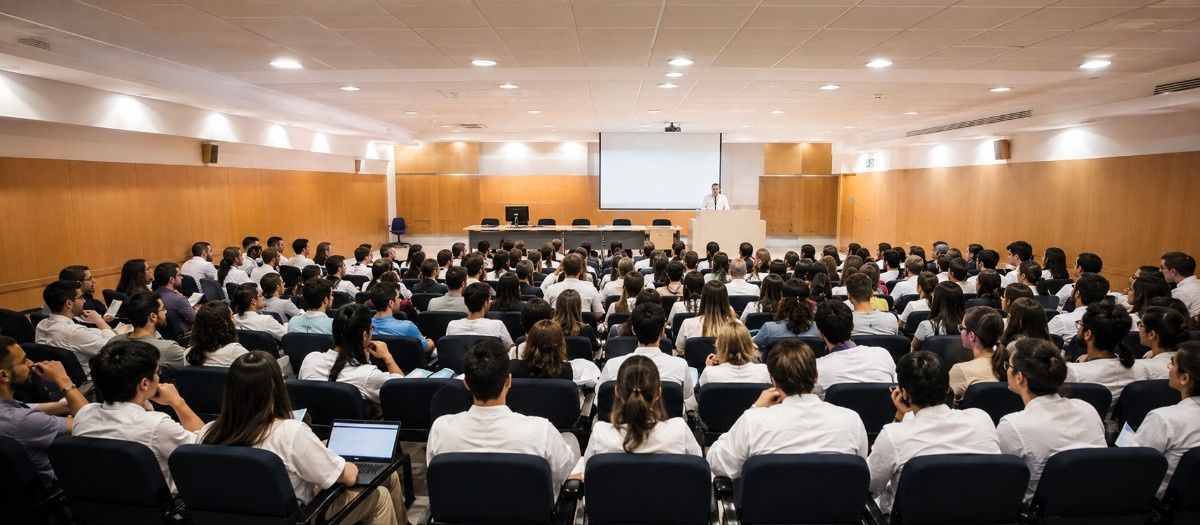
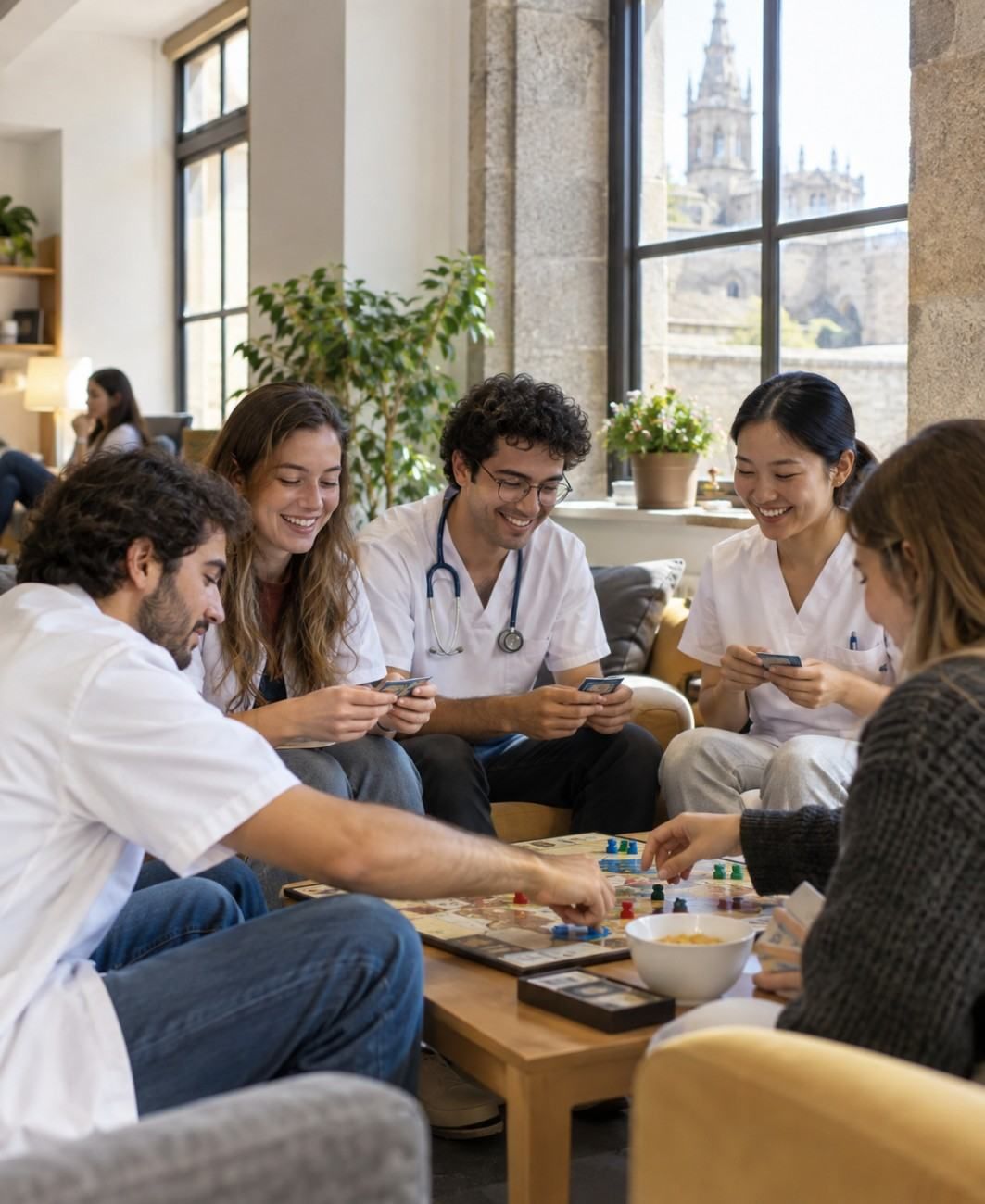
Furnished hostel rooms with Wi-Fi, laundry, 24/7 security, and Indian mess on or near campus.
Indian restaurants and mess facilities serving vegetarian and non-vegetarian home-style food daily.
Strong Indian community with cultural events, festival celebrations, and peer support groups.
Students get hands-on clinical training in government and private hospitals affiliated with the university.
Practical information for students planning to study at MBBS In Universidad Miguel Hernandez de Elche Facultad de Medicina.
Prepare for all seasons. Thermal wear for winters, light clothing for summers. University provides heating in hostels.
Student visa processed with university invitation letter. Direct and connecting flights from major Indian cities.
Health insurance included in fees. Medical facility on campus plus city hospitals easily accessible.
Local SIM cards available. WhatsApp and video calls keep you connected with family back home.
Average monthly expenses of $150–$250 covering food, transport, and personal needs.
University library, online databases, and study groups. Seniors mentor juniors through academic challenges.
Our team guides you through every step — from application to arriving on campus.
Shortlist based on public vs private, the MBBS fee in Spain you’re comfortable with, city, and whether a partial-English track matters to you.
Begin DELE/SIELE B2 preparation well ahead of application deadlines.
Submit application; sit BMAT or a university-specific test where required.
Academic transcripts, NEET scorecard, language certificates, passport, and supporting documents.
Formal offer issued upon successful evaluation.
Initial steps toward having your Indian academic credentials recognised in the Spanish system.
Apply at the Spanish consulate with your offer letter, financial proof, and insurance documentation.
After arrival, register at your local town hall (ayuntamiento), a mandatory municipal registration step that most competitor guides skip entirely, but one you’ll need for everything from opening a bank account to enrolling in local healthcare.
Admission Helpline — Contact our counsellors for step-by-step assistance.
“The faculty here is incredibly supportive. The clinical training during hospital rotations has given me real confidence in patient care.”
“Affordable fees without compromising on quality. The campus facilities and hostel life made my transition abroad very smooth.”
“English medium instruction and WHO-recognized curriculum were the deciding factors for me. No regrets so far — excellent experience overall.”
“The university helped with everything from visa to accommodation. Hospital exposure from year three has been invaluable for my FMGE prep.”
“Just cleared my licensing exam on the first attempt. The structured coaching and mock exams during final year were a game-changer.”
“Safe campus, good food options, and a strong Indian student community. The teaching methodology is very practical and hands-on.”
A: No. Instruction is entirely in Spanish, and UMH does not run an English-medium or bilingual track for Medicine.
A: Through UNEDasiss homologation of your Class 12 certificate, followed by the Pruebas de Competencias Especificas to raise your admission score.
A: No. On its own it caps your admission score at 6 out of 10, which is far below what Medicine typically requires.
A: Yes. A DELE B2-level certificate is mandatory for non-native speakers, with no institutional bridge year offered after enrolment.
A: Extremely. Recent cycles have required an admission score close to 14 out of 14, among the highest in Spain.
A: Roughly EUR 2,000-4,000 for non-EU, non-resident students, twice the public rate set by the Valencian regional government.
A: Yes. It is regulated under Orden ECI/332/2008 and automatically recognised for practice across the EU and EEA.
A: Not as far as published sources indicate; only a small number of Spanish faculties currently hold that label.
A: Primarily at Hospital General Universitario de Alicante, with Hospital Universitario de Sant Joan d'Alacant next to campus.
A: Dissection-room work with donated bodies from year one, simulation-based surgical training, and recurring bioethics activities like the Teddy Bear Hospital.
Our expert counsellors will guide you through the complete admission process — from documents to airport pickup.