
Q1. Is Medicine at USC taught in English?
+A: No. Instruction is in Galician and Castilian, with at least one compulsory subject taught exclusively in Galician.
 Spain | Est. 1648
Spain | ublic university officially recognized by the Government of Spain | Galician and Castilian medium
Expert will call you within 2 hours
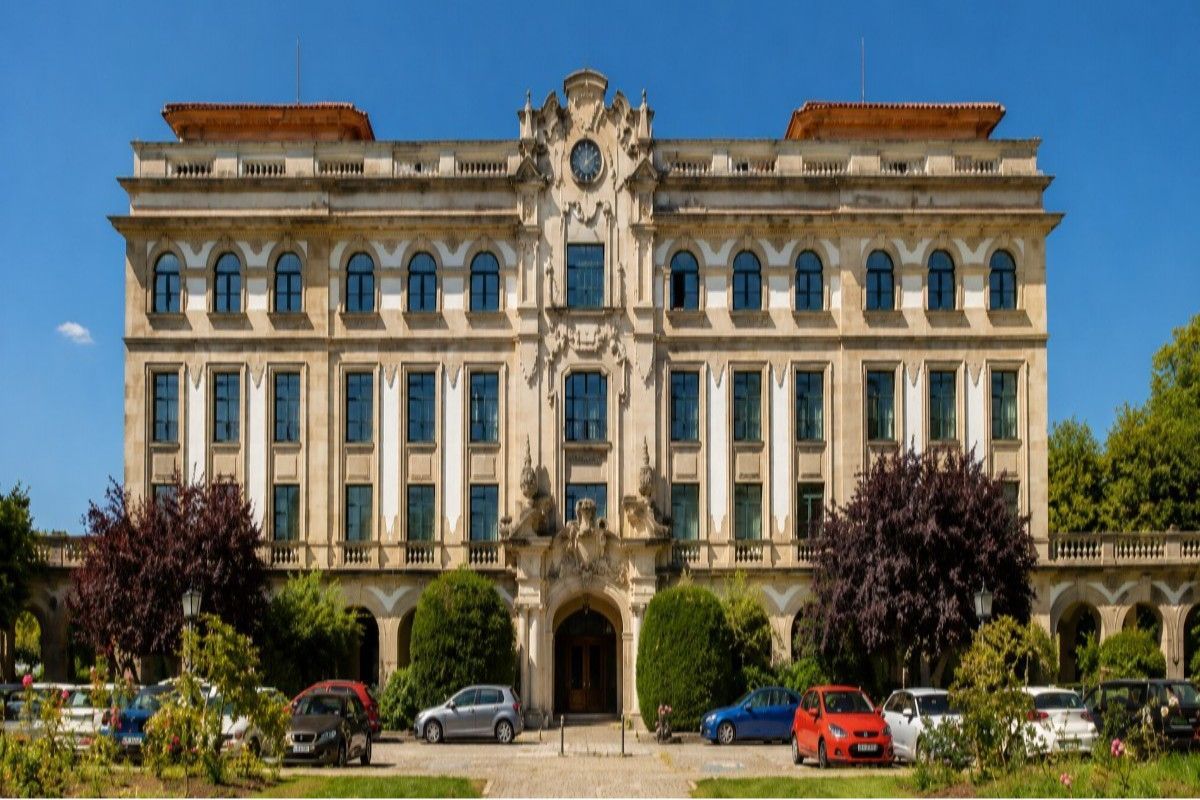
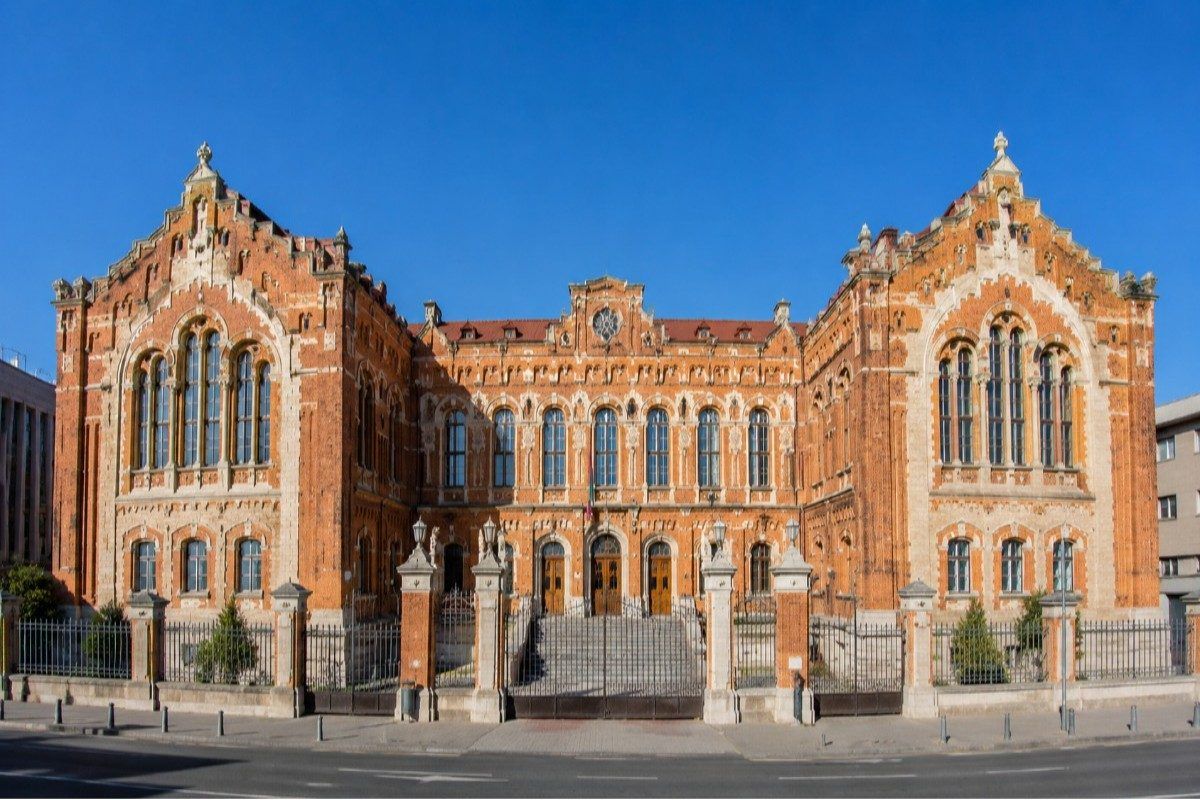
Since 1648, medicine has been studied at the University of Santiago de Compostela (USC) that was founded as the Colexio de Fonseca. The current USC building of the Faculty of Medicine dates back to 1928 and stands next to the historical Hospital Real. Having originated in 1495, USC can be called one of the oldest functioning universities in the world and the most historic medical school of Spain.
While many universities target foreign applicants, the USC caters mainly for the healthcare needs of the Galicia region. It is the only medical institution of the region. The USC did not evolve into an international campus, but became the leading provider of public medical education in Galicia and gained its reputation according to the region's requirements.
Unlike many other Spanish universities, the USC has a bilingual academic setting. Both Galician and Castilian are considered official languages in Galicia. At least one compulsory subject in the Medicine programme is taught in Galician and other courses may be taught either in Galician or Castilian. There is no study program in English at the faculty.
The regional university admission examination (ABAU) is usually conducted in Galician. Nevertheless, the version of the papers in Castilian may be requested by the candidates. As for international students who know Spanish, but do not speak any Galician, it means an additional burden for them. Before applying to the USC, they should prepare themselves for dealing with both languages during studies.
There are no special procedures for international admission at USC. Non-EU citizens should go through the same admission process as all other international applicants of Spain. First of all, the secondary-school certificates have to be homologated in Spain. After this, the candidates will receive the admission credentials through the UNED and have a chance to compete for the place in the Spanish public universities. The academic achievement will play a decisive role in admission.
In Galicia, the admission process will be managed by the Commission for Universities of Galicia (CIUG). This organisation manages applications to the University of Santiago de Compostela and to the University of Vigo as well as to the University of A Coruña. Nevertheless, Medicine is studied in the University of Santiago de Compostela only, so the competition will be fierce without regard of the applicants' background.
One more important advantage of the USC is the relatively low tuition cost. Galicia spends a lot of money for the support of higher education institutions, enabling local and EU students to pay for only a small part of the tuition. Currently, almost all of the first-year tuition fees in Galicia are paid by the regional government and subsidised by the state at 99%. Public university education thus has become the most affordable in Spain because of this policy.
Unfortunately, the subsidy does not apply to the non-EU international applicants. Their annual tuition fees are set by the university each year in the rectoral resolution. In recent years, annual tuition fees of Medicine have usually been between €4,000 and €6,001. The exact amount has to be checked directly at the university.
Students receive clinical training through the Complexo Hospitalario Universitario de Santiago (CHUS), the biggest public hospital network of Galicia. This network includes four hospitals, and Hospital Clínico Universitario de Santiago works as the main clinical teaching centre. A direct covered corridor connects the hospital and the Faculty of Medicine. Thus, the students will study in the hospital during their entire education.
The medical degree at the USC is regulated by the Spanish system of medical education established by Ordinance ECI/332/2008. Thus, the graduates will have the opportunity to pass the MIR examination for postgraduate residency and practice medicine throughout the whole European Union and European Economic Area, following the national licensing requirements. Therefore, this qualification is widely recognised in Europe. It has similar prestige to the degrees of other public Spanish medical schools.
According to current publications, the USC has not received the WFME International Quality Label obtained by some of Spanish faculties. This fact concerns only those graduates who plan some postgraduate specialisations in the USA via ECFMG. For those who want to practice medicine in Spain, or somewhere else in Europe, or in India, it is of minor importance. Nevertheless, it is necessary to consider the individual requirements of licensing.
Santiago de Compostela is a historic town of around 96 thousand people and an international destination point of the Camino de Santiago pilgrimage route. Though much smaller than Madrid or Barcelona, the city has a vivid atmosphere due to students and numerous tourists from all over the world. Besides, living costs are usually lower than in the largest metropolitan cities of Spain. Moreover, the compactness of the city makes life easy for students.
In conclusion, the University of Santiago de Compostela can be considered the right choice for students who know Spanish well enough and are ready to learn Galician in the course of studies.
No hidden charges, no donation. The full picture of costs at MBBS In Universidade de Santiago de Compostela.
Tuition Fee
Approximately €1,100–1,400 per academic year
Approximately €1,100–1,400/year
Hostel Fee
€3,500–6,000 per academic year
Approximately €3,500–6,000/year
Food & Meals
Approximately €3,500–5,000
per year
Insurance
Approximately €200–500
per year
Donation
No Donation
No Hidden Fees
Total Estimated Cost
EUR ≈ 24,000 – 36,000 (non-EU tuition only) Approx. Rs. 22.3 – 33.5 lakh
total 6 year
25–35%
Average FMGE first-attempt pass rates for students from many overseas medical universities. Students from structured programs consistently score higher.
Students returning to India need to clear the FMGE/NExT exam. MBBS In Universidade de Santiago de Compostela integrates exam-oriented coaching into the regular curriculum so students are prepared from day one.
A structured program that takes you from foundational sciences to clinical mastery.
• Psicoloxia Medica and Bioestatistica
• Anatomia Humana and Histologia • Bioquimica e Bioloxia Molecular • Bioloxia Celular and Fisica Aplicada a Medicina
• Historia da Medicina e Documentacion Clinica
Year 2 - Systems and Diagnostic Foundations • Fisioloxia Humana (systemic) • Xenetica and Microbioloxia e Parasitoloxia • Inmunoloxia
• Diagnostico por Imaxe (introductory radiology and imaging)
Year 3 - Para-Clinical Transition • Patoloxia Xeral and Anatomia Patoloxica • Farmacoloxia Xeral • Metodoloxia e Semioloxia Clinica
• Farmacoloxia Clinica and Enfermidades Infecciosas • Dermatoloxia and Oftalmoloxia
• Patoloxia Medica: Aparato Cardiovascular e Respiratorio • Patoloxia Medica: Aparato Dixestivo e Sistema Endocrino
• Medicina Preventiva e Saude Publica
• Pediatria and Xinecoloxia e Obstetricia • Psiquiatria and Sistema Nervioso • Traumatoloxia e Aparato Locomotor
• Traballo de Fin de Grao (final degree project)• Elective clinical placements
• Rotatorio Clinico across core specialties at CHUS hospital sites • Medicina Legal e Deontoloxia
Furnished hostel rooms with Wi-Fi, laundry, 24/7 security, and Indian mess on or near campus.
Indian restaurants and mess facilities serving vegetarian and non-vegetarian home-style food daily.
Strong Indian community with cultural events, festival celebrations, and peer support groups.
Students get hands-on clinical training in government and private hospitals affiliated with the university.
Practical information for students planning to study at MBBS In Universidade de Santiago de Compostela.
Prepare for all seasons. Thermal wear for winters, light clothing for summers. University provides heating in hostels.
Student visa processed with university invitation letter. Direct and connecting flights from major Indian cities.
Health insurance included in fees. Medical facility on campus plus city hospitals easily accessible.
Local SIM cards available. WhatsApp and video calls keep you connected with family back home.
Average monthly expenses of $150–$250 covering food, transport, and personal needs.
University library, online databases, and study groups. Seniors mentor juniors through academic challenges.
Our team guides you through every step — from application to arriving on campus.
Shortlist based on public vs private, the MBBS fee in Spain you’re comfortable with, city, and whether a partial-English track matters to you.
Begin DELE/SIELE B2 preparation well ahead of application deadlines.
Submit application; sit BMAT or a university-specific test where required.
Academic transcripts, NEET scorecard, language certificates, passport, and supporting documents.
Formal offer issued upon successful evaluation.
Initial steps toward having your Indian academic credentials recognised in the Spanish system.
Apply at the Spanish consulate with your offer letter, financial proof, and insurance documentation.
After arrival, register at your local town hall (ayuntamiento), a mandatory municipal registration step that most competitor guides skip entirely, but one you’ll need for everything from opening a bank account to enrolling in local healthcare.
Admission Helpline — Contact our counsellors for step-by-step assistance.
“The faculty here is incredibly supportive. The clinical training during hospital rotations has given me real confidence in patient care.”
“Affordable fees without compromising on quality. The campus facilities and hostel life made my transition abroad very smooth.”
“English medium instruction and WHO-recognized curriculum were the deciding factors for me. No regrets so far — excellent experience overall.”
“The university helped with everything from visa to accommodation. Hospital exposure from year three has been invaluable for my FMGE prep.”
“Just cleared my licensing exam on the first attempt. The structured coaching and mock exams during final year were a game-changer.”
“Safe campus, good food options, and a strong Indian student community. The teaching methodology is very practical and hands-on.”
A: No. Instruction is in Galician and Castilian, with at least one compulsory subject taught exclusively in Galician.
A: Through Ministry homologation of your Class 12 certificate, then UNED's entrance exam for foreign-system students, valid across Spain including Galicia.
A: Strong Castilian Spanish is essential; some Galician is strongly advisable given the mixed-language syllabus and one Galician-only course.
A: No. It applies only to Spanish and EU students; non-EU applicants pay a separate fee set annually by the university itself.
A: Approximately EUR 4,000-6,000 a year as a flat annual charge, though the exact figure should be confirmed via USC's current rectoral resolution.
A: Yes. USC is the sole public or private provider of a Medicine degree anywhere in the Galician university system.
A: Yes. It is regulated under Orden ECI/332/2008 and automatically recognised for practice across the EU and EEA.
A: Not as far as published sources indicate; only a small number of Spanish faculties currently hold that label.
A: Across the Complexo Hospitalario Universitario de Santiago (CHUS), a public network of four hospital sites in the city.
A: Medicine has been taught continuously in Santiago since 1648, making it one of Europe's longest-running medical education traditions.
Our expert counsellors will guide you through the complete admission process — from documents to airport pickup.