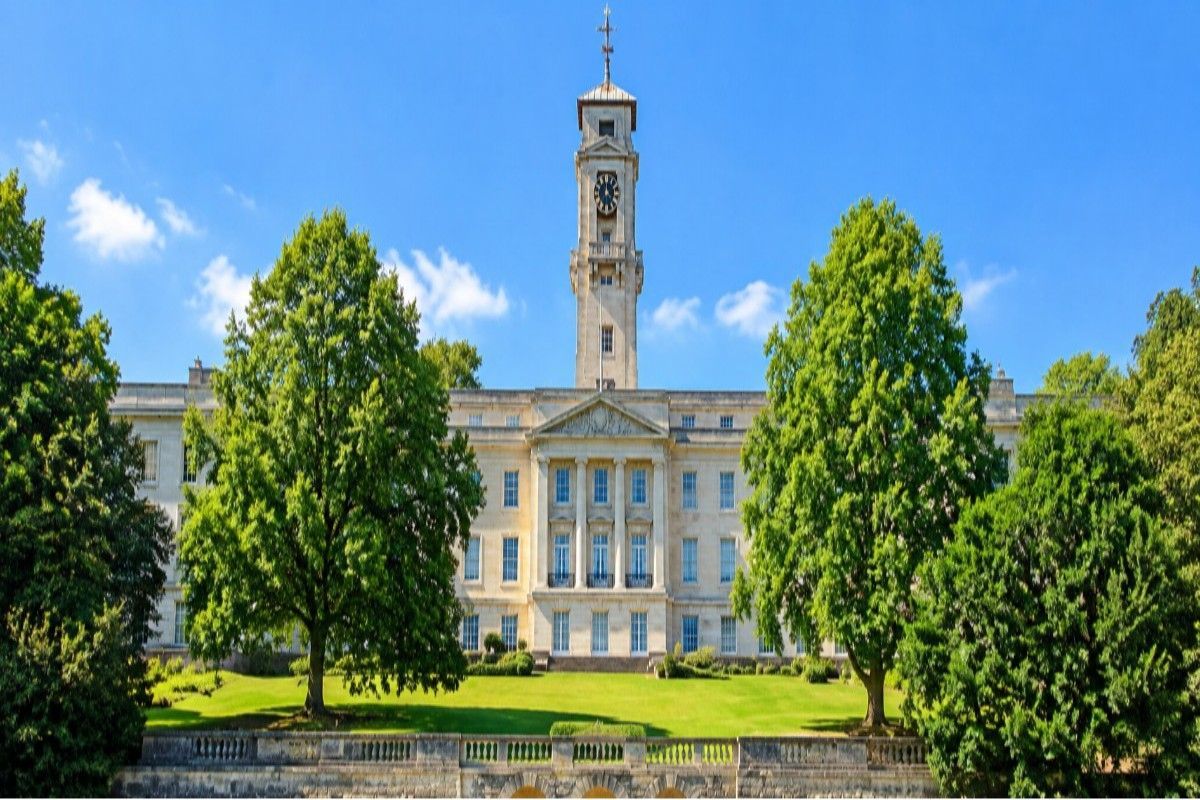
Most people just call it Warwick, or WMS for short. The wider University of Warwick sits on a 290-hectare campus mostly inside Coventry, though it famously borrows its name from Warwick, the county town several miles away. It received its Royal Charter in 1965, one of a wave of new universities built to expand British higher education after the war, and it has since grown into one of the UK's most research-intensive universities, a member of the Russell Group.
Warwick Medical School is considerably younger than the university around it, but considerably older than most of the newer medical schools an Indian applicant is likely to be comparing it against. It opened in 2000, initially as a joint venture with the University of Leicester, and was granted independent degree-awarding status in 2007. Its first cohort of doctors graduated back in 2004. So while schools like Surrey, Worcester and Sunderland are only a few years into their first intakes, Warwick already has more than two decades of Foundation Programme outcomes behind it. That track record is one of the clearest things setting it apart from the newer medical schools covered elsewhere on this site.
Here is the detail that shapes how you should read the rest of this page. Warwick Medical School offers exactly one route into medicine, a four-year Graduate Entry MBChB, UCAS code A101, and it is the largest graduate-entry medicine programme in the UK by intake, admitting somewhere around 200 students a year. There is no five-year, direct-from-school course here, and there never has been. A-Levels and GCSEs are not scored in admissions at all. Every applicant, Home or international, must already hold a 2:1 honours degree, or a 2:2 paired with a Master's or Doctoral degree, in any subject, before they can apply.
This means the same filter applies here as at Surrey and Worcester. An Indian student with a strong NEET score straight out of class 12 cannot apply to Warwick Medicine. The course is aimed squarely at graduates and career changers, people who already hold a first degree and are switching into medicine as a second, more focused course of study.
Where Warwick differs sharply from Surrey and Worcester is its admissions test. It uses the UCAT rather than the GAMSAT, which is unusual among UK graduate-entry schools, most of which lean toward GAMSAT precisely because it suits older, more experienced applicants. Warwick also applies an unusually strict rule around it: whatever your overall UCAT score, you must score at or above the mean Verbal Reasoning score achieved by all test-takers that year, or your application is automatically rejected, regardless of how strong the rest of your score is. For 2026 entry, following the removal of the Abstract Reasoning subtest from the UCAT itself, that Verbal Reasoning threshold sat around 600. On top of the UCAT, every applicant needs a minimum of 70 hours of health or social care work experience, spread across at least two different organisations and two different roles, completed within the three years before applying. This is described as a firm requirement, not a guideline, and there is no way around it.
Competition here is genuinely intense. For 2026 entry, Warwick received 1,326 applications for 203 places, of which up to 13 are set aside specifically for international candidates. Roughly 41 percent of applicants were invited to interview, and interviews themselves take the form of a six-station Multiple Mini Interview lasting around two hours, held in person at the Gibbet Hill campus for Home applicants and online for eligible international candidates.
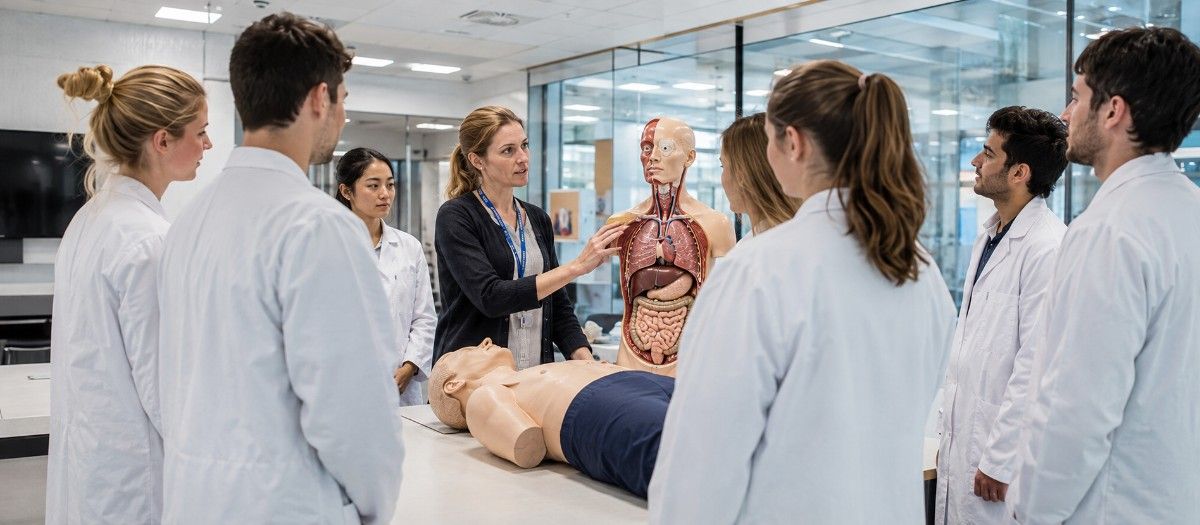
Once admitted, teaching runs on Case-Based Learning woven through all four years, starting with a heavily self-directed first year before clinical placements begin in earnest from Year 2 onward, across hospitals and community settings in Coventry, Nuneaton, Rugby and Warwick, along with primary care sites within roughly a 40-mile radius of the university. Graduates who achieve GMC registration move into the UK Foundation Programme in the same way as graduates of any other British medical school.
Cost Breakdown
Cost Item | Amount | Notes |
Tuition Fee (Home, 2025/26) | GBP 9,535/year | Roughly GBP 3,571 is self-funded in Year 1, with the remainder covered by a Tuition Fee Loan if eligible; fees rise annually |
Tuition Fee (International, Year 1, 2026/27) | GBP 32,510/year | Lower first-year rate; confirm current figures directly with Warwick Medical School admissions |
Tuition Fee (International, Years 2-4, 2026/27) | GBP 56,660/year | A significant step up once clinical placements begin, which many quick fee guides fail to flag |
Living Costs | GBP 12,000-15,000/year | Coventry and the wider West Midlands |
English Language Requirement | IELTS Academic 7.0 overall, with a maximum of two components at 6.0-6.5 | Or an accepted equivalent, for non-native English speakers |
Approximate Total Tuition (International, full 4-year course) | GBP 202,000+ | GBP 32,510 (Year 1) plus three years at GBP 56,660; excludes living costs, visa fees and the Immigration Health Surcharge |
Note: fees are reviewed and republished every year, and the jump between Warwick's Year 1 and later-year international rates is unusually steep, so budget against the Years 2-4 figure, not the lower headline Year 1 number.
Why Warwick Deserves A Closer Look Than Most Guides Give It
Most quick comparison guides lump Warwick in with the wave of brand-new UK medical schools, since it shares the graduate-entry-only structure of Surrey and Worcester. That framing misses something important: Warwick is not new. It has been training doctors since 2000 and has held independent degree-awarding status since 2007, giving it more than two decades of graduates now working across the NHS and beyond. If you are weighing a newer school's uncertain track record against Warwick's established one, that difference is worth real weight in the decision.
Guides also tend to understate the UCAT Verbal Reasoning rule, treating Warwick's admissions test requirement as generic when it is anything but. A candidate with an excellent overall UCAT score can still be rejected outright if their Verbal Reasoning sits even slightly below the year's mean. This single rule eliminates a meaningful share of otherwise strong applicants each cycle, and few guides explain it clearly enough for applicants to prepare for it specifically.
Finally, fee tables that only quote Warwick's Year 1 international rate of GBP 32,510 understate the real cost significantly. The fee more than jumps once clinical placements begin, settling at GBP 56,660 for each of Years 2, 3 and 4. An applicant budgeting off the lower first-year figure alone would underestimate the full four-year cost by tens of thousands of pounds.
Established Year — 1965 (University of Warwick, Royal Charter); Warwick Medical School established in 2000, with independent degree-awarding status since 2007.