
Q1. When did Al-Azhar's medical faculty for women begin?
+The main women's medical faculty started in 1964. This Asyut branch came later, though the exact year is unclear.
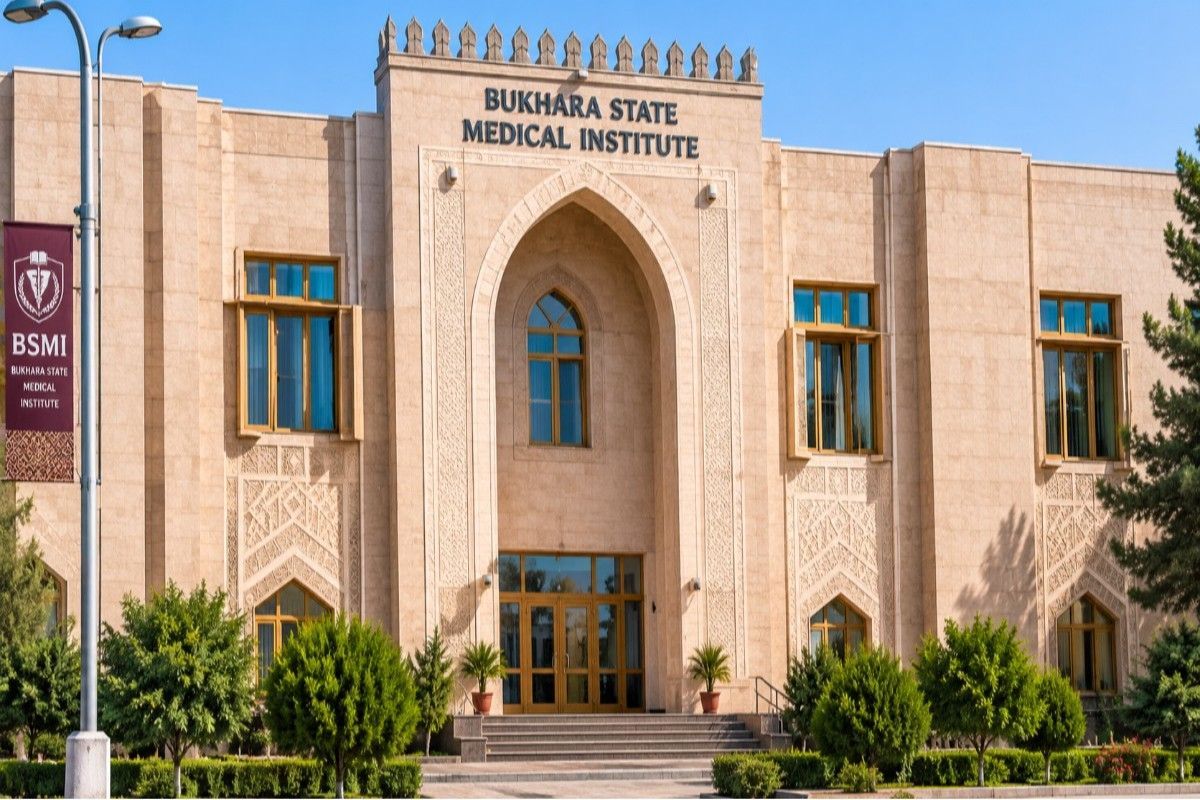
 Egypt | Est. 1964
Egypt | Some sources describe accreditation through Egypt's National Authority for Quality Assurance and Accreditation of Education, alongside WHO recognition; these claims are not independently cross-verified for this exact campus. | English medium
Expert will call you within 2 hours
The College and What Makes It Different
People just call it Al-Azhar. The wider university goes back to 970 CE in Cairo, making it one of the oldest universities anywhere in the world. So, this Asyut campus carries a genuinely old name, even though the medical faculty itself is far younger. The Egyptian state runs Al-Azhar as a public institution, guided by its own religious leadership.
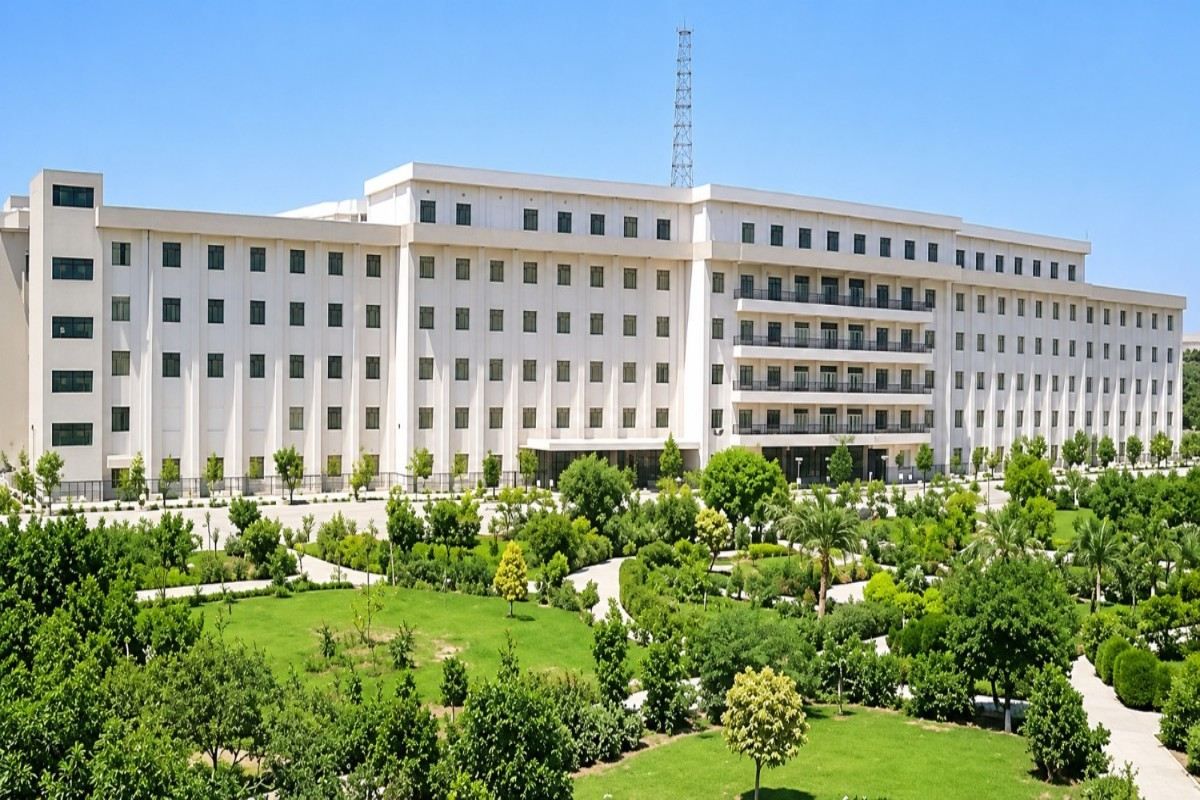
This particular campus sits in Asyut, not Cairo. Al-Azhar actually runs three separate women's medical faculties across Egypt, in Cairo, Damietta, and Asyut. So, this Asyut branch is one satellite campus within a much larger, older women's medical system, not a standalone new college built from scratch.
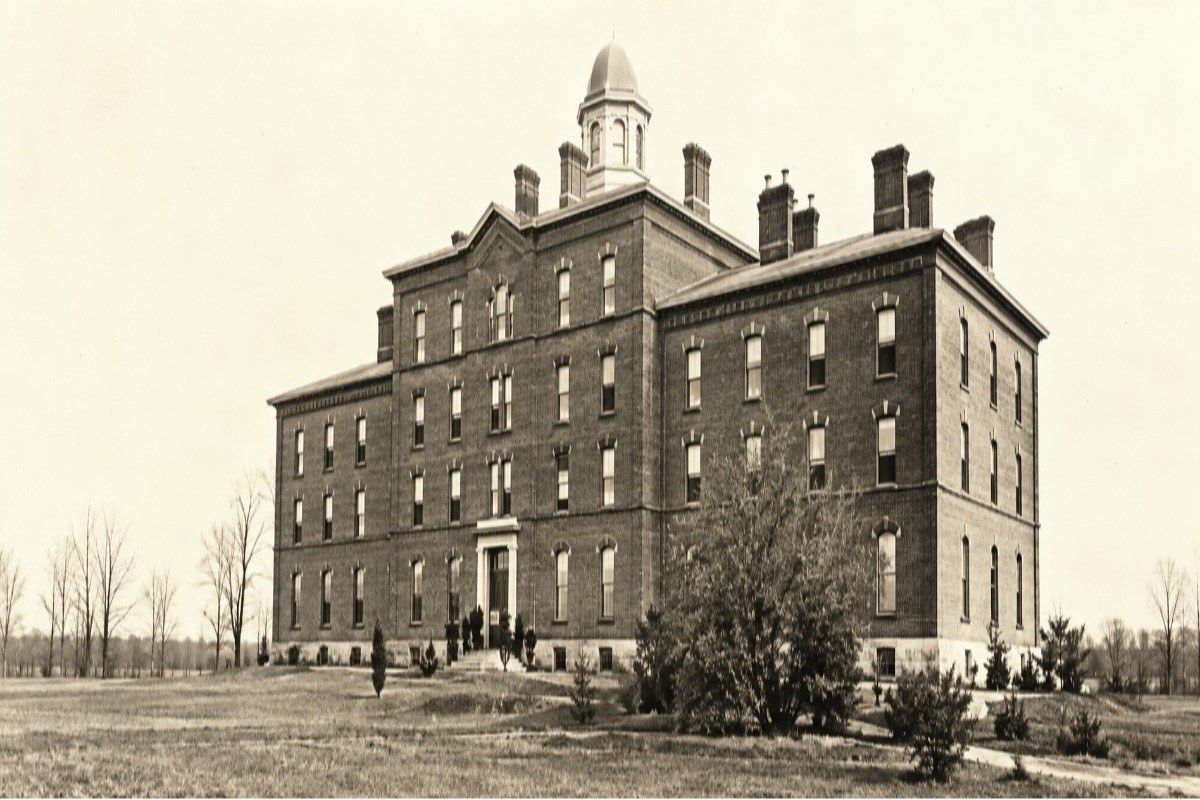
Modern subjects, including medicine, only joined Al-Azhar's curriculum after a 1961 reform law. The original Cairo-based Faculty of Medicine for Girls followed soon after, in 1964. Records for the exact founding year of the separate Asyut branch are far less clear online, with some sources pointing to a later expansion phase. So, confirm the precise establishment year directly with the university if that detail matters to you.
Here is a fact most guides skip entirely. Al-Azhar is a religious university at its heart, and its degree programmes, including medicine, have historically been reserved mainly for Muslim students. So, non-Muslim applicants face a real barrier here that most rival MBBS colleges simply don't have. This point matters even more for the Asyut branch, since it sits further from the more internationally connected Cairo campuses. i
The "Girls" part of the name is not incidental either. Al-Azhar keeps men and women on separate campuses across nearly every faculty. So, this college only takes female students. Male applicants apply instead to Al-Azhar's separate Faculty of Medicine for Boys, based in Cairo.
Academic staffing and research output specific to the Asyut branch are not widely published online, unlike at the older Cairo campus. So, families researching this college should expect fewer independent sources to cross-check against, compared with better-documented options.
The Asyut Campus and Its Setting
Asyut sits deep in Upper Egypt, on the western bank of the Nile River. It ranks as the largest city in Upper Egypt and serves as the capital of Asyut Governorate. So, students here get a real Egyptian city, just a quieter and more traditional one than Cairo.
The city carries genuine ancient history. Greeks once called it Lycopolis, meaning the city of the wolf, after a local jackal-god cult from Pharaonic times. So, students study medicine in a city with a story that stretches back thousands of years, not a newly built university town.
Asyut sits roughly 320 to 370 kilometres south of Cairo, depending on the route taken. It has its own international airport, coded ATZ, with regular domestic flights connecting back to Cairo in a few hours. So, travel here takes real planning, unlike colleges sitting right next to a capital city's main airport.
Clinical training for students runs through Al-Azhar's teaching hospital in Asyut. Reports describe it as a general multi-specialty hospital serving the wider Asyut community, not just the medical faculty. So, students likely see a genuine local caseload, though detailed bed counts for this specific site are not consistently published online.
International student numbers at this Asyut campus appear smaller than at Al-Azhar's original Cairo-based women's faculty. Most Indian guides discussing MBBS in Egypt still point toward Cairo University, Ain Shams University, and Alexandria University instead. So, an Indian student choosing this Asyut campus over those better-known options should expect a smaller peer group of fellow international students.
Housing for female students typically follows a supervised, on-campus dormitory model at Al-Azhar's women's campuses generally. So, expect a more structured, closely supervised living arrangement here than at many private international medical colleges elsewhere.
Course Structure, Cost, and Practical Details
Egyptian medical education runs on its own particular structure, and this Asyut campus follows the same pattern used across Al-Azhar. Students complete five years of academic and clinical study first. A compulsory two-year internship follows right after that. So, the full path to the degree runs seven years in total, a year or two longer than the typical MBBS path many Indian students expect from other countries.
The degree itself carries a different name here too. Egypt calls it MBBCh, short for Bachelor of Medicine and Bachelor of Surgery, rather than MBBS. Indian regulators generally treat the two degrees as equivalent for licensing purposes, so this naming difference alone should not worry applicants.
Fee figures for this specific Asyut branch are genuinely hard to pin down online. General Al-Azhar tuition figures elsewhere range from around USD 2,500 to 5,000 a year, but almost no independent source publishes a confirmed, Asyut-specific number. A few consultancy pages describe scholarship categories and discount tiers for this campus, but these claims are not cross-verified elsewhere. So, treat any fee or scholarship number tied to this Asyut campus with real caution, and always confirm the current figures directly with the university before deciding anything.
NEET remains a genuine requirement for Indian applicants here, just as it does for MBBS study in most other countries. Beyond that, foreign applicants generally need certified academic documents, a medical fitness certificate, and a genuine willingness to adapt to the university's religious and cultural environment. So, this college asks for more from applicants than the paperwork checklist that shorter, purely secular MBBS programmes usually require, and the Muslim-only, women-only admission pattern narrows the pool further still.
Quick Overview
Parameter | Details |
Established | 970 CE (university); women's Faculty of Medicine added from 1964; Asyut branch founding year not clearly documented |
Institution Type | Public, run by Al-Azhar University, a religious institution under the Egyptian state |
Location | Asyut, Upper Egypt (about 320 to 370 km south of Cairo) |
Programme | MBBCh (Bachelor of Medicine, Bachelor of Surgery), equivalent to MBBS |
Duration | 5 years academic study plus a 2-year internship (7 years total) |
Medium of Instruction | |
Foreign Quota Note | Admission historically limited to Muslim applicants; this campus enrols female students only |
Teaching Hospital | Al-Azhar University Teaching Hospital, Asyut |
Fee Structure
Fee Component | Amount | Notes |
Total Tuition (with hostel, reported) | Not consistently published for this specific campus | General Al-Azhar figures elsewhere range from about USD 2,500 to 5,000 per year |
Living Costs (food, transport) | Not consistently reported | Asyut's cost of living is generally lower than Cairo's |
Hostel (standalone, reported) | Supervised on-campus dormitories reported | Exact rates not consistently published; confirm directly |
Scholarships | Some sources mention merit-based and faith-based aid | Not independently verified; confirm current eligibility directly |
Donation | Not reported | - |
Approx. Total Programme Cost | - | Confirm directly with the college. |
Why This College Deserves a Harder Look Than You've Given It
A Genuinely Old University Behind a Newer Campus
Most rival pages never explain how young this particular campus actually is compared to Al-Azhar itself. The university traces back to 970 CE, while the women's medical faculty system only began in 1964, and this Asyut branch is newer still. So, the college borrows real institutional depth from Al-Azhar, even though this specific site has a much shorter, less documented history of its own.
A Genuinely Quieter, More Affordable City
Most guides only cover Cairo-based Egyptian medical colleges. Asyut offers a real alternative: a historic Nile city, generally quieter and more affordable than Cairo, with its own international airport. So, students who want lower daily costs and a slower pace, alongside real clinical exposure, get a genuine option here.
Honest Assessment
Be clear about the real gaps here. Independent, verifiable information specific to this Asyut branch is thin online, especially around exact founding dates, fee figures, and hospital capacity. Admission has historically leaned toward Muslim applicants only, and this campus takes female students only. So, who fits here best? Students who meet the faith and gender requirements, and who are comfortable doing extra verification work directly with the university, may find a genuinely quieter alternative to Cairo. Students who need well-documented fees and a large international peer group should look elsewhere first.
No hidden charges, no donation. The full picture of costs at MBBS in Al-Azhar University Faculty of Medicine for Girls.
Tuition Fee
EGP 50,000 or less depending on exact administrative additions.
EGP 50,000 INR ~94,138
Hostel Fee
USD 500 - 1,000 INR ~48000 - 96000
USD 500 - 1,000 INR ~48000 - 96000
Food & Meals
EGP 1,500 – 3,500 INR ~2,831 - 6,606
per year
Insurance
a few hundred to a couple of thousand Egyptian pounds
per year
Donation
No donation fee
No hidden fee
Total Estimated Cost
EGP 303,900 - 405,200 INR ~5,72,000 - 7,62,667
per Year
25–35%
Average FMGE first-attempt pass rates for students from many overseas medical universities. Students from structured programs consistently score higher.
Students returning to India need to clear the FMGE/NExT exam. MBBS in Al-Azhar University Faculty of Medicine for Girls integrates exam-oriented coaching into the regular curriculum so students are prepared from day one.
A structured program that takes you from foundational sciences to clinical mastery.
Builds the base knowledge that all later clinical learning depends on.
Covers Anatomy, Physiology, and Biochemistry, forming the scientific foundation for everything that follows.
Links basic disease science with population health and the drugs used to treat illness.
Covers Pathology, Microbiology, Pharmacology, and Community Medicine.
Most hands-on training during this phase runs through the Al-Azhar Teaching Hospital in Asyut.
Covers Medicine, Surgery, and Obstetrics and Gynaecology, plus allied clinical subjects.
Interns rotate through major hospital departments before receiving the MBBCh degree and practising licence.
A full two-year internship follows the completion of academic study, longer than the one-year internship common at many other MBBS destinations.
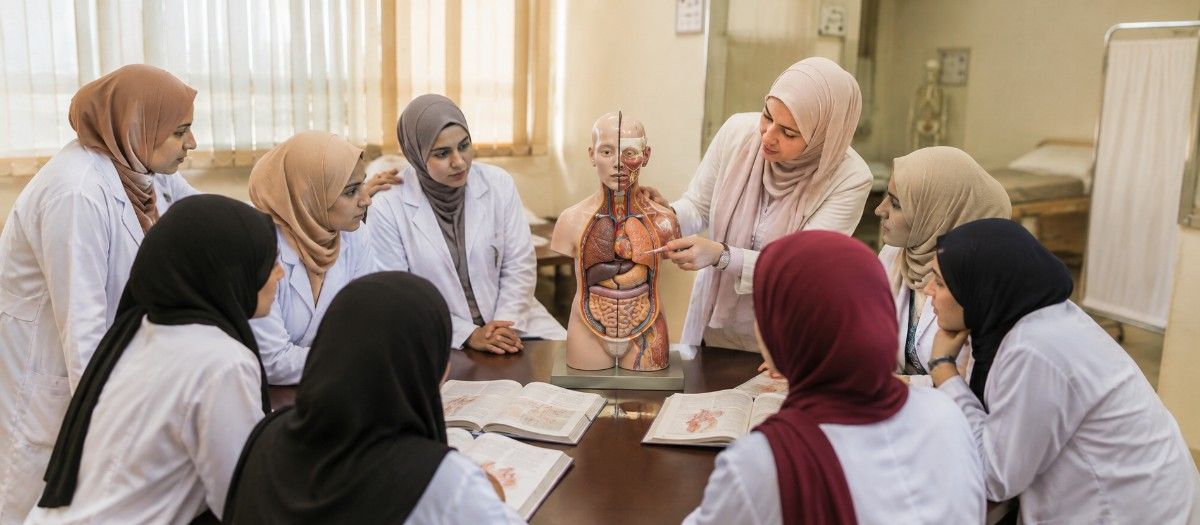
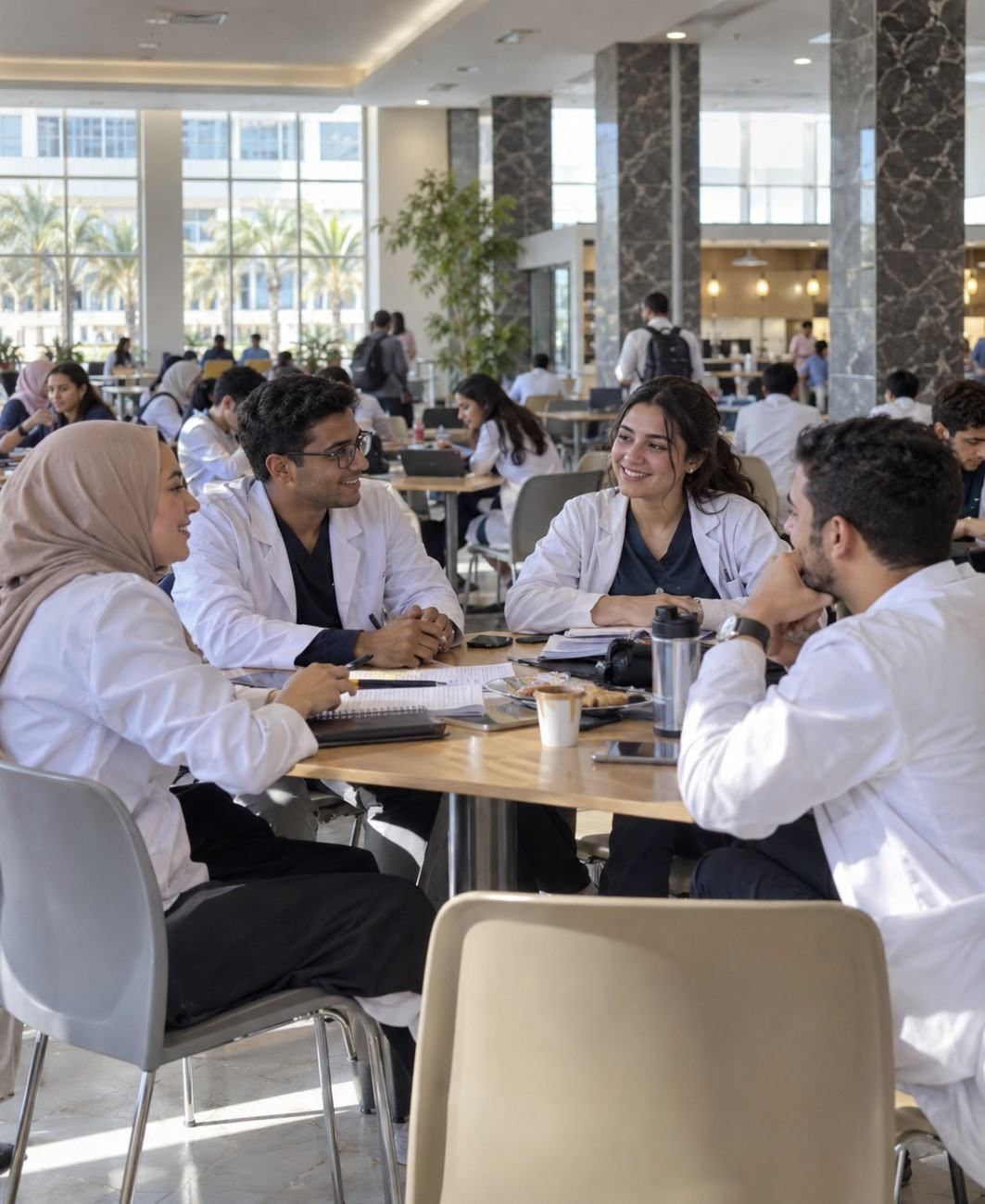
Furnished hostel rooms with Wi-Fi, laundry, 24/7 security, and Indian mess on or near campus.
Indian restaurants and mess facilities serving vegetarian and non-vegetarian home-style food daily.
Strong Indian community with cultural events, festival celebrations, and peer support groups.
Students get hands-on clinical training in government and private hospitals affiliated with the university.
Practical information for students planning to study at MBBS in Al-Azhar University Faculty of Medicine for Girls.
Prepare for all seasons. Thermal wear for winters, light clothing for summers. University provides heating in hostels.
Student visa processed with university invitation letter. Direct and connecting flights from major Indian cities.
Health insurance included in fees. Medical facility on campus plus city hospitals easily accessible.
Local SIM cards available. WhatsApp and video calls keep you connected with family back home.
Average monthly expenses of $150–$250 covering food, transport, and personal needs.
University library, online databases, and study groups. Seniors mentor juniors through academic challenges.
Our team guides you through every step — from application to arriving on campus.
Our Egypt specialist provides an honest overview of Cairo University vs Ain Shams vs ERU, English-medium status, FMGE outcomes, safety assessment, and total cost comparison.
We provide the Egypt-specific checklist. All documents are verified before university submission.
Direct submission to the suggested university. Offer letter typically within 7–14 days.
Either the students or our team receives the offer, walks you through the terms, and manages the initial fee payment.
We manage visa applications to the Egyptian Embassy in New Delhi, a minimum of 6 weeks before departure
Cairo city orientation, accommodation, Egyptian transport, food, currency, safety zones, and first-week logistics.
We advise on routing to Cairo International Airport (CAI). Confirms arrival with the local team.
Our Cairo representative meets you at the airport. No student arrives unsupported.
Hostel check-in and university registration handled by AMW's local Egypt team.
Our team files the student residence permit at the Egyptian Ministry of Interior within your first weeks. Renewed annually.
Admission Helpline — Contact our counsellors for step-by-step assistance.
“The faculty here is incredibly supportive. The clinical training during hospital rotations has given me real confidence in patient care.”
“Affordable fees without compromising on quality. The campus facilities and hostel life made my transition abroad very smooth.”
“English medium instruction and WHO-recognized curriculum were the deciding factors for me. No regrets so far — excellent experience overall.”
“The university helped with everything from visa to accommodation. Hospital exposure from year three has been invaluable for my FMGE prep.”
“Just cleared my licensing exam on the first attempt. The structured coaching and mock exams during final year were a game-changer.”
“Safe campus, good food options, and a strong Indian student community. The teaching methodology is very practical and hands-on.”
The main women's medical faculty started in 1964. This Asyut branch came later, though the exact year is unclear.
Students study for five years, then complete a two-year internship. That makes seven years in total.
Al-Azhar has mostly admitted Muslim students only. Confirm this directly with the university before you apply.
No, this campus takes only female students. Men can apply to the separate Al-Azhar Faculty of Medicine for Boys in Cairo.
Yes, applicants need a valid, qualifying NEET score.
No confirmed fee figure exists for this exact campus online. Always ask the university directly for current numbers.
Asyut sits in Upper Egypt, about 320 to 370 kilometres south of Cairo, on the Nile.
Students train mainly at the Al-Azhar University Teaching Hospital in Asyut.
It is a public university, but a religious body governs it, unlike Egypt's fully secular universities.
No, not usually. Most Indian students studying in Egypt choose Cairo University, Ain Shams University, or Alexandria University instead.
Our expert counsellors will guide you through the complete admission process — from documents to airport pickup.