
1. Is LMU Munich's medical programme really tuition-free?
+A: Yes. Like all German public universities, LMU charges no tuition for medicine, only a small semester contribution of about EUR 140-150 twice a year.
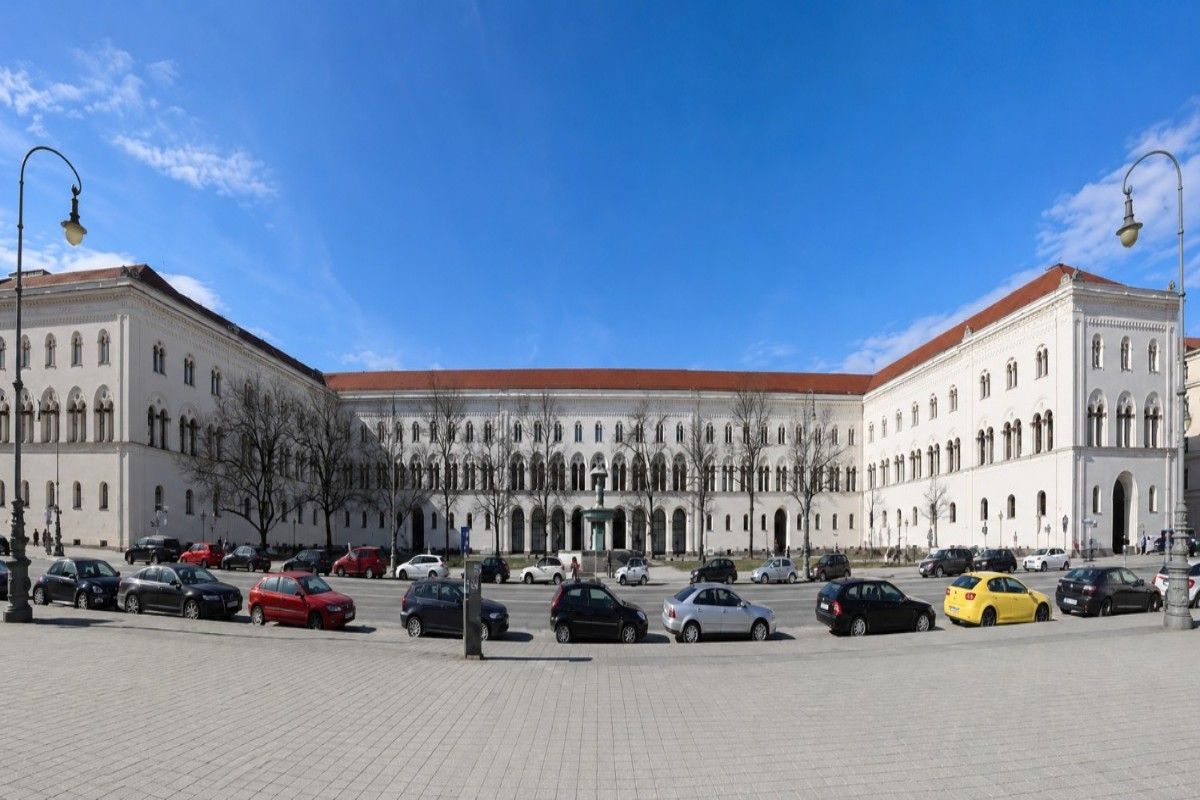
 Germany | Est. 1472
Germany | Governed under Germany's Approbationsordnung für Ärzte (Medical Licensing Regulations); leads to State Examination and Approbation | Primarily German medium
Expert will call you within 2 hours
The story of medicine at LMU Munich does not actually begin in Munich. It starts in 1472, when Duke Ludwig IX of Bavaria founded the University of Ingolstadt, and medicine was one of the four founding faculties alongside theology, law, and philosophy. For more than three centuries, doctors in Bavaria were trained in this small town on the Danube, long before Munich became the university's home. In 1800, facing the pressures of the Napoleonic wars, the university relocated to Landshut. It stayed there for just over two decades before making its final move to Munich in 1826, where it took its present name in honour of its two founders, Duke Ludwig IX and Elector Maximilian I. That final move to Munich is really what gave the medical faculty the identity it has today, placing it at the centre of Bavaria's capital and, eventually, next to some of Europe's most advanced hospital campuses.
The medical faculty grew alongside the city. Teaching hospitals opened near the old town centre through the nineteenth century, and by 1903, LMU had become the first medical faculty in the German Empire to train female physicians, a fact the university still highlights with some pride. As Munich expanded after the Second World War, the old city-centre clinics became too small for a faculty that kept growing in students, staff, and research output. In 1955, planners decided to build an entirely new hospital complex in Großhadern, on the edge of the city. It took about a decade to construct, and the first patient was finally admitted there in 1974. Today, that campus, together with the older Campus Innenstadt near the city centre, forms LMU Klinikum, one of the largest university hospital complexes in Germany and Europe, with more than 2,000 beds and around 500,000 patients treated every year.
Unlike the UK's MBBS system, German medical education runs on its own model, and it is worth understanding this before comparing LMU to schools abroad. Students at LMU do not earn a bachelor's-style MBBS degree. Instead, they complete Humanmedizin, a programme that leads to the Staatsexamen, or State Examination, and finally to the Approbation, the official licence to practise medicine in Germany. The course usually runs for six years and three months, structured as twelve semesters plus a final Practical Year (Praktisches Jahr). The first two years cover the pre-clinical basics, anatomy, physiology, biochemistry, and end with the First State Examination, often called the Physikum. From there, students move into the clinical years, working across LMU Klinikum's two campuses, before finishing with a full year of hospital-based practical training and the final State Examination.
One thing that surprises many international families is that LMU, like all German public universities, does not charge tuition fees, even for international students. This has been the case since the 2013/14 academic year. Students only pay a small semester contribution, currently in the range of roughly 140 to 150 euros per semester, which covers administrative costs and a public transport pass for Munich. So on paper, studying medicine at one of Europe's oldest and most respected universities costs almost nothing in tuition. In practice, though, the real cost of studying here comes from living in Munich itself, which is consistently ranked as one of the most expensive cities in Germany, particularly for rent.
The trade-off for tuition-free education is that admission to Humanmedizin at LMU is extraordinarily competitive, arguably more so than most fee-charging programmes elsewhere. Medicine, along with dentistry, veterinary medicine, and pharmacy, is a nationally restricted subject in Germany, meaning places are limited and allocated partly through the Numerus Clausus system, which is based on an applicant's Abitur grade or its recognised equivalent. For medicine specifically, competitive applicants typically need grades close to the top of the scale, often around 1.0 to 1.2 on the German grading system, where 1.0 is the best possible result. Many applicants also sit the TMS, a national test of medical study aptitude, which can strengthen a weaker grade profile.
For Indian students, the path here looks quite different from applying to a UK medical school straight after Class 12. A CBSE or ISC Class 12 certificate on its own is not treated as equivalent to the German Abitur. Most Indian applicants either need to have completed at least one year of a recognised bachelor's degree at a good Indian university before applying, or they need to attend a Studienkolleg, a one-year preparatory course in Germany, followed by an assessment exam called the Feststellungsprüfung. On top of that, since Humanmedizin at LMU is taught almost entirely in German, applicants need strong German language proficiency, generally at C1 level, demonstrated through tests like the TestDaF or DSH. Indian applicants are also usually asked to submit a certificate from the Akademische Prüfstelle (APS) at the German Embassy as part of verifying their academic background.
Because of these layers, non-EU applicants without a German-recognised qualification compete for a smaller pool of places set aside for international students, and the process can take considerably longer to plan than a straightforward MBBS application abroad. Living costs, meanwhile, are a bigger line item than tuition. Munich's own estimate for a student's monthly budget sits around 1,500 euros, covering rent, food, insurance, and daily expenses, with university-run halls of residence offering a cheaper but heavily oversubscribed alternative. Statutory health insurance is compulsory for every student in Germany and adds a further recurring cost throughout the six-plus years of study.
Where LMU clearly earns its reputation is once students are inside the system. LMU Klinikum's scale, spanning Campus Großhadern and Campus Innenstadt, gives students exposure across dozens of specialist clinics and interdisciplinary centres, alongside close ties to research institutions like the Max Planck Institutes nearby in Martinsried. The faculty has a long list of medical milestones behind it, including Germany's first heart transplant, performed at the Munich clinic in 1969. In short, LMU offers a rigorous, research-heavy medical education with essentially no tuition burden, but it demands near-perfect academic credentials, fluent German, and a longer, more complex route to admission than most international students may initially expect.
No hidden charges, no donation. The full picture of costs at MBBS at Ludwig Maximilian University of Munich (LMU) Medical.
Tuition Fee
approximately EUR 140-150 per semester
(EUR)~290 per year INR Rs. 0.28 lakh per year
Hostel Fee
(EUR)~4,800–7,200 per year
(EUR)~4,800–7,200 per year INR Rs. 4.61–6.91 lakh per year
Food & Meals
(EUR)~3,600–4,800 per year INR Rs. 3.46–4.61 lakh per year
PER MONTH
Insurance
(EUR)~1,400–1,500 per year INR Rs. 1.34–1.44 lakh per year
PER YEAR
Donation
No Donation
No Hideen fees
Total Estimated Cost
(EUR)~60,000–75,000 INR Rs. 57.6–72 lakh
6-YEAR
25–35%
Average FMGE first-attempt pass rates for students from many overseas medical universities. Students from structured programs consistently score higher.
Students returning to India need to clear the FMGE/NExT exam. MBBS at Ludwig Maximilian University of Munich (LMU) Medical integrates exam-oriented coaching into the regular curriculum so students are prepared from day one.
A structured program that takes you from foundational sciences to clinical mastery.
Ends with the First State Examination (Physikum)
Core basic sciences including anatomy, physiology, biochemistry, and early patient contact
Coverage of internal medicine, surgery, paediatrics, psychiatry, and other core specialties
Clinical rotations across LMU Klinikum's Campus Großhadern and Campus Innenstadt
Successful graduates receive the Approbation, the official licence to practise medicine in Germany
Full-time hospital-based training across internal medicine, surgery, and an elective specialty Concludes with the Second State Examination Approbation
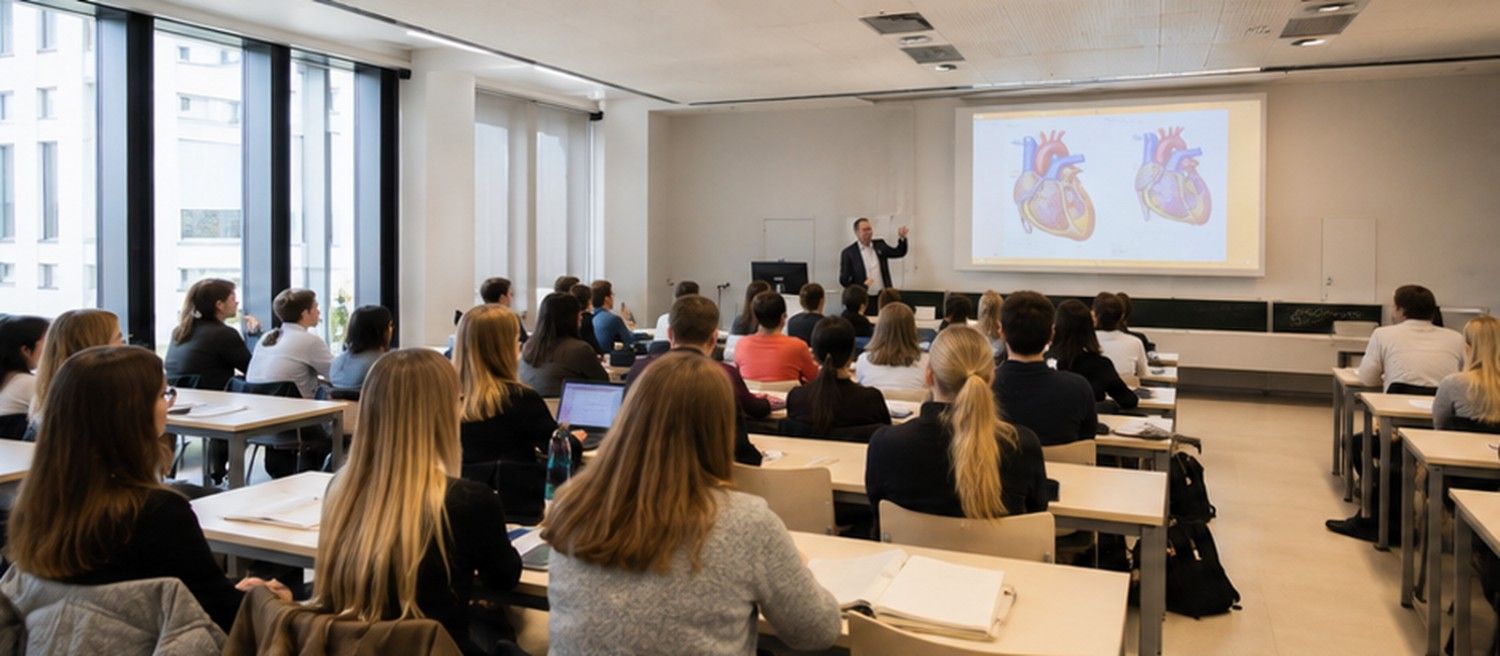

Furnished hostel rooms with Wi-Fi, laundry, 24/7 security, and Indian mess on or near campus.
Indian restaurants and mess facilities serving vegetarian and non-vegetarian home-style food daily.
Strong Indian community with cultural events, festival celebrations, and peer support groups.
Students get hands-on clinical training in government and private hospitals affiliated with the university.
Practical information for students planning to study at MBBS at Ludwig Maximilian University of Munich (LMU) Medical.
Prepare for all seasons. Thermal wear for winters, light clothing for summers. University provides heating in hostels.
Student visa processed with university invitation letter. Direct and connecting flights from major Indian cities.
Health insurance included in fees. Medical facility on campus plus city hospitals easily accessible.
Local SIM cards available. WhatsApp and video calls keep you connected with family back home.
Average monthly expenses of $150–$250 covering food, transport, and personal needs.
University library, online databases, and study groups. Seniors mentor juniors through academic challenges.
Our team guides you through every step — from application to arriving on campus.
Begin German lessons as early as possible, ideally alongside Class 11–12, targeting B1 within 12 months and progressing toward the required B2–C1 level.
Submit Class 10, 12, and any higher-education transcripts for verification. Processing typically takes 3–5 weeks; apply early, since this gates every subsequent step.
portal and apply to the correct track, the M-Kurs for medical aspirants, at your shortlisted Studienkolleg institutions.
Complete the roughly 10–12 month M-Kurs program covering Biology, Chemistry, Physics, and German, then pass the Feststellungsprüfung (FSP), the qualifying exam for university entry.
Submit applications to your shortlisted universities. Uni-assist fees run €75 for the first program and €30 for each additional program in the same semester.
University decisions follow Uni-assist’s document evaluation and forwarding; final admission is always the university’s own decision.
Deposit €11,904 into a blocked account (via Fintiba, Expatrio, or a similar provider) and arrange either public (€140–€160/month) or private health insurance; both are mandatory prerequisites for the visa stage.
Submit your visa application at the German consulate in India (Delhi, Mumbai, Bengaluru, or Chennai), with your admission letter, APS certificate, language proficiency proof, blocked account confirmation, and insurance proof. Realistic processing time is 6–12 weeks.
Bring originals of every document submitted digitally. Be prepared to discuss your study plans, financial arrangements, and reasons for choosing Germany.
Book travel around your intake date (October for Winter, April for Summer), and complete formal university enrollment on arrival. Medical study then begins with the Pre-Clinical phase.
Admission Helpline — Contact our counsellors for step-by-step assistance.
“The faculty here is incredibly supportive. The clinical training during hospital rotations has given me real confidence in patient care.”
“Affordable fees without compromising on quality. The campus facilities and hostel life made my transition abroad very smooth.”
“English medium instruction and WHO-recognized curriculum were the deciding factors for me. No regrets so far — excellent experience overall.”
“The university helped with everything from visa to accommodation. Hospital exposure from year three has been invaluable for my FMGE prep.”
“Just cleared my licensing exam on the first attempt. The structured coaching and mock exams during final year were a game-changer.”
“Safe campus, good food options, and a strong Indian student community. The teaching methodology is very practical and hands-on.”
A: Yes. Like all German public universities, LMU charges no tuition for medicine, only a small semester contribution of about EUR 140-150 twice a year.
A: No. Humanmedizin at LMU is taught almost entirely in German, so C1-level proficiency is generally required.
A: Admission is based mainly on Abitur-equivalent grades under the Numerus Clausus system; many applicants also take the TMS aptitude test.
A: Not usually. Most need at least one year of a recognised bachelor's degree, or a Studienkolleg year plus the Feststellungsprüfung.
A: NEET isn't part of LMU's own admissions process, but it may still matter for future NMC registration in India.
A: Possibly. Exemption rules depend on current NMC regulations, so students should verify this before enrolling.
A: Roughly EUR 60,000-75,000 over the full six-plus years, almost entirely from living costs rather than tuition.
A: No. Graduates complete the Staatsexamen (State Examination) and receive the Approbation, Germany's medical licence, rather than an MBBS.
A: Clinical years and the Practical Year take place across LMU Klinikum's Großhadern and Innenstadt campuses, among Europe's largest teaching hospitals.
A: Extremely. Competitive applicants often need Abitur-equivalent grades around 1.0 to 1.2, among the strictest thresholds at the university.


Our expert counsellors will guide you through the complete admission process — from documents to airport pickup.