
Q1. When was Three Counties Medical School established?
+It was established in 2023, welcoming its first cohort of 44 students, 20 UK-funded and 24 self-funded international students, that September.
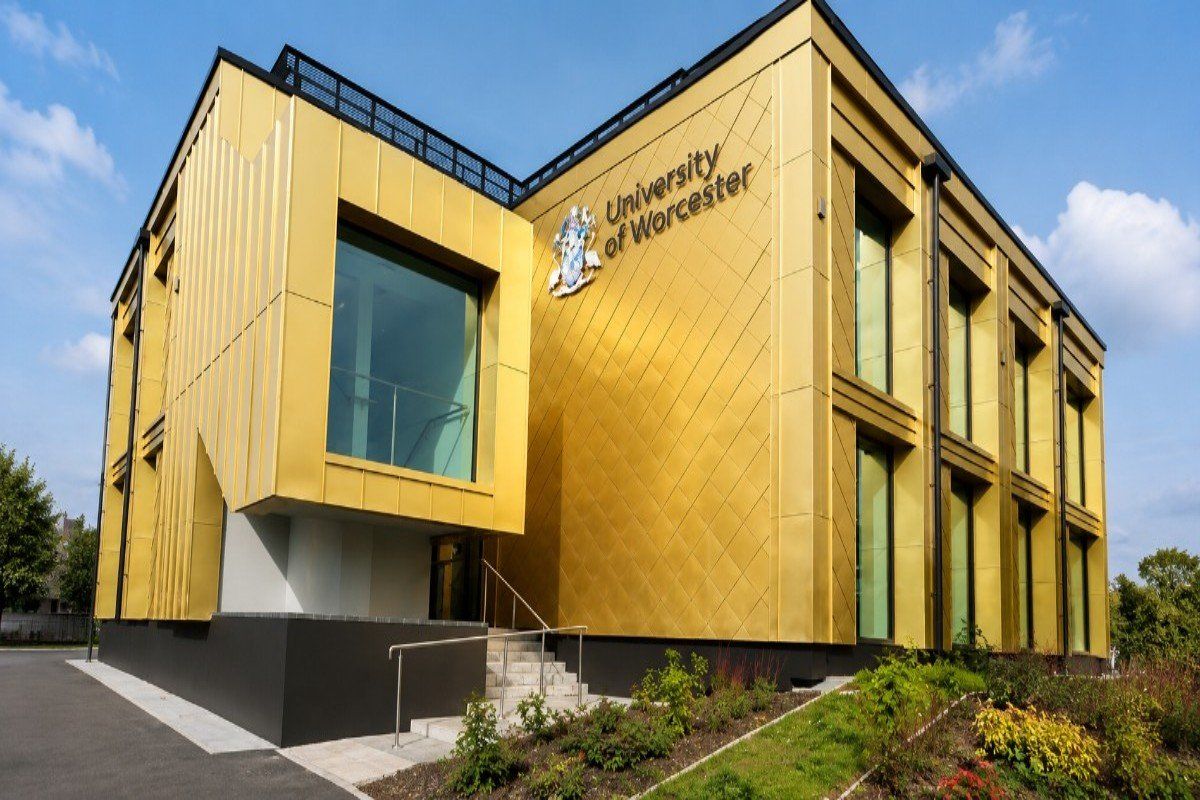
 Uk | Est. 1946
Uk | Working toward full GMC accreditation as a newly established UK medical school; Swansea Medical School serves as the named contingency partner for enrolled students. | English runs through the entire MBChB programme. medium
Expert will call you within 2 hours
People mostly just call it TCMS for short. The University of Worcester itself traces back to 1946, and it holds a genuinely significant regional role today as the sole provider of higher education based in Herefordshire and Worcestershire, a position that shapes much of how the university sees its own mission, including the creation of its medical school decades later.
Here's a fact most guides skip entirely, and it's genuinely specific and well documented. Three Counties Medical School welcomed its first-ever cohort of medical students in September 2023: 44 students in total, made up of 20 UK students, whose full four years of study were funded by the Kildare Trust and local NHS trusts, alongside 24 self-funded international students. The school's Dean, Professor Sandra Nicholson, described the moment as the result of many years of hard work, noting that a significant number of the first cohort were local to the region, with clinical placements running throughout their studies specifically within the three counties themselves. So, this school's founding wasn't a generic institutional announcement; it's tied to a specific, dated, named cohort with real financial backing behind it.
The school takes its name from the three counties it was specifically created to serve: Gloucestershire, Herefordshire, and Worcestershire, a region genuinely underserved by medical education until this school's creation, as part of a broader UK government initiative to expand medical school places nationally. For the 2024 entry, the school anticipated a considerably larger second cohort of 62 new students, reflecting its planned early growth.
A genuinely distinctive detail concerns risk management for a brand-new school. Three Counties Medical School's contingency partner is Swansea Medical School, an arrangement specifically designed to protect enrolled students' interests in case anything were to affect TCMS's own ability to deliver the full programme. So, applicants get a real, documented safety net built into the structure of this genuinely young school, not just a general assurance of stability.
The wider University of Worcester carries a genuinely strong recent track record across several major UK rankings: it was a University of the Year finalist at the Times Higher Education Awards 2025, ranked first in the UK for sustained employment or further study from any multidisciplinary university in the Longitudinal Education Outcomes measure covering 2017 to 2025, and jointly ranked first in the UK for quality education in the Times Higher Education's University Impact Rankings 2025.
Worcester is a historic cathedral city, roughly 40 minutes south of Birmingham and about an hour north of Bristol, with a history reaching back to Roman times and a genuine claim to fame as the origin of Worcestershire sauce. The University of Worcester describes itself as a campus university, meaning most of what students need sits on site, across green, well-connected campuses with on-site accommodation and parking.
Clinical training for TCMS students runs primarily within NHS trusts spread across the three counties themselves, offering extensive placements in general practices, community hospitals, and specialist care facilities right from the start of the programme, alongside interdisciplinary education involving other health professions and cutting-edge clinical skills training in a newly developed, purpose-built facility, including a state-of-the-art Anatomy Lab.
TCMS offers a single, distinctive route into medicine: the four-year Graduate Entry MBChB, UCAS code A101, open to graduates of any discipline, including entirely non-science backgrounds, provided they hold at least a 2:1 degree, or a 2:2 combined with a Master's qualification. Applicants without a science or healthcare degree specifically need two science GCSEs at grade C or above. There's no separate five-year school-leaver route here; this is genuinely graduate-entry only.
The curriculum runs on a problem-based learning model, working in small groups facilitated by practising doctors, often starting from real patient problems and building outward from both the doctor's and the patient's own perspective. Applicants sit either the UCAT or the GAMSAT, whichever suits them better, with no fixed cut-off score; the university instead reviews the overall shape of the applicant pool's results each year, though most shortlisted applicants have scored above roughly 50 out of 73 on GAMSAT, or above roughly 1,870 out of the newer, post-2025 UCAT maximum of 2,700. A CASPer situational judgement test applies only to applicants who are shortlisted after their initial UCAS application, followed by a Multiple Mini Interview and traditional panel interview combination held at the Worcester Health and Wellbeing Campus.
Fee figures here are genuinely worth setting out in detail, since Worcester runs a distinctive financial support structure for eligible Home students. The reported full Home tuition fee for 2027/28 entry is GBP 10,050 a year, but eligible Home students are only directly responsible for the first GBP 3,665 of that themselves; the remaining balance, up to GBP 6,125, can be covered through a non-means-tested tuition fee loan from Student Finance. International and EU students, meanwhile, pay a considerably higher rate: GBP 49,300 a year for 2026/27 entry, working out to roughly GBP 197,200 in tuition alone across the full four years, before accounting for typical annual inflation increases. It's worth noting specifically that Medicine MBChB students are excluded from Worcester's otherwise generous policy of charging EU students the same rate as Home students, so EU applicants to this particular programme pay the full international rate too.
International applicants need an IELTS score of at least 7.0 overall, with a minimum of 7.0 specifically in Speaking and 6.5 in each of Listening, Reading, and Writing, a genuinely detailed, component-specific requirement. NEET remains a genuine requirement for Indian applicants here, exactly as it does for most other MBBS-style destinations, and Indian graduates would still need to clear the FMGE or NExT exam to practise medicine back in India.
Parameter | Details |
Established | University of Worcester traces to 1946; Three Counties Medical School established 2023, first cohort of 44 students began September 2023 |
Institution Type | Public university; sole higher education provider based in Herefordshire and Worcestershire |
Location | Worcester (St John's), Worcestershire, England, United Kingdom |
Medicine (Graduate Entry) MBChB, UCAS code A101, open to graduates of any discipline | |
Duration | 4 years |
Medium of Instruction | English |
Foreign Quota Note | Three Counties Medical School welcomes international applicants; the first 2023 cohort included 24 self-funded international students alongside 20 funded UK students |
Teaching Hospital | Clinical placements run primarily within NHS trusts across Gloucestershire, Herefordshire, and Worcestershire, the "Three Counties" |
Fee Component | Amount | Notes |
Tuition Fee (Home/UK students, full fee) | GBP 10,050 (reported for 2027/28 entry) | Rises with inflation each year; a specific NHS-style bursary support structure applies |
Tuition Fee (Home students, self-funded portion) | GBP 3,665 per year, payable by the student | The remaining balance can be covered by a non-means-tested tuition fee loan |
Tuition Fee Loan (Home students) | Up to GBP 6,125 per year, from Student Finance | Non-means-tested, covers the balance of the fee beyond the self-funded portion |
Tuition Fee (International/EU students, 2026/27 entry) | GBP 49,300 per year | Medicine MBChB is specifically excluded from Worcester's general EU-home-fee-parity policy, so EU students pay this international rate too |
English Language Requirement (IELTS) | 7.0 overall, with 7.0 in Speaking, 6.5 in Listening/Reading/Writing | A genuinely demanding, component-specific threshold |
Most rival pages describing new medical schools speak only in general terms about their first intake. TCMS's own first cohort is documented down to specific numbers: 44 students total, 20 UK students with their entire four years funded by the Kildare Trust and local NHS trusts, and 24 self-funded international students. So, this school's founding rests on real, named, verifiable financial commitments, not a vague announcement.
Most guides describing brand-new medical schools don't address what happens if something goes wrong. TCMS names its specific contingency partner, Swansea Medical School, built directly into its structure to protect enrolled students. So, applicants get a real, documented safety net here, not just a general assurance that the school will be fine.
Be upfront about a few real considerations here. As one of the UK's newest medical schools, having taught its first cohort only from 2023, TCMS doesn't yet carry a long, multi-decade graduating track record, and there's currently no established ranking data available for this school specifically, given how recently it launched. International tuition, at roughly GBP 49,300 a year and rising, is genuinely significant, though it sits within the typical range for newer UK medical schools rather than at the very top.
So, who fits here best? Graduate applicants from any academic background, drawn to a genuinely community-focused, problem-based learning curriculum in a historically underserved region, and comfortable being part of a still-young school's early growth, fit well here. Students who value smaller cohorts and closer relationships with faculty fit well too. However, applicants who need a long-established medical school with decades of graduating classes and confirmed rankings should weigh TCMS carefully against more mature options. Still, the genuine, named financial backing for its founding cohort, the built-in Swansea contingency arrangement, and the University of Worcester's own strong recent institutional rankings are real, well-documented strengths.
No hidden charges, no donation. The full picture of costs at MBBS in University of Worcester Three Counties Medical School.
Tuition Fee
£10,050 per year for Home (UK) students and £49,300 per year
Approx. GBP 49,300 per year
Hostel Fee
£5,300 to £9,200 per year
GBP £590 to £1,020 per month
Food & Meals
GBP £150 and £300 per month
per month
Insurance
GBP £900 to £1,100 per year (INR 98,550 - INR 1,02,000)
per year
Donation
No donation
No hideen fees
Total Estimated Cost
GBP 197,200 to 205,000
4-YEAR
25–35%
Average FMGE first-attempt pass rates for students from many overseas medical universities. Students from structured programs consistently score higher.
Students returning to India need to clear the FMGE/NExT exam. MBBS in University of Worcester Three Counties Medical School integrates exam-oriented coaching into the regular curriculum so students are prepared from day one.
A structured program that takes you from foundational sciences to clinical mastery.
Introduces clinical placements in general practices and community settings from early in the programme.
Covers Anatomy, Physiology, and Biochemistry, delivered through problem-based learning built around real patient scenarios.
Builds interdisciplinary education alongside other health professions.
Covers Pathology, Microbiology, and Pharmacology, continuing the small-group, doctor-facilitated PBL approach.
Uses the school's purpose-built clinical skills training facilities, including its state-of-the-art Anatomy Lab.
covers Medicine, Surgery, and allied clinical subjects across NHS trust placements throughout the three counties.
Prepares students for the two-year Foundation Programme following graduation.
Builds toward independent clinical competence in community hospitals and specialist care facilities.
International graduates returning home face their own country's separate licensing requirements, such as India's FMGE or NExT.
Graduates enter the UK's two-year Foundation Programme before applying for specialty training posts.
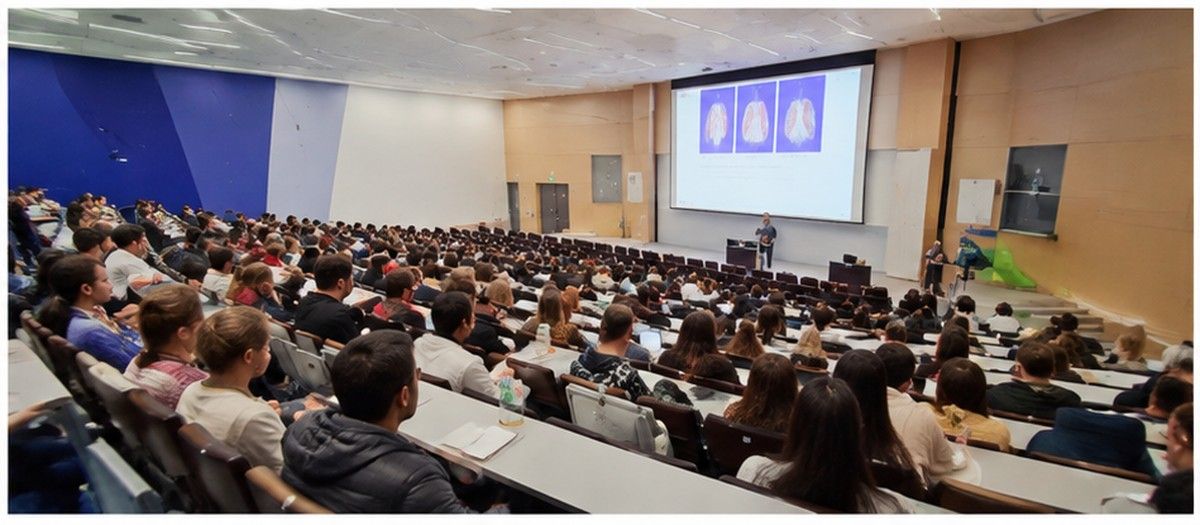

Furnished hostel rooms with Wi-Fi, laundry, 24/7 security, and Indian mess on or near campus.
Indian restaurants and mess facilities serving vegetarian and non-vegetarian home-style food daily.
Strong Indian community with cultural events, festival celebrations, and peer support groups.
Students get hands-on clinical training in government and private hospitals affiliated with the university.
Practical information for students planning to study at MBBS in University of Worcester Three Counties Medical School.
Prepare for all seasons. Thermal wear for winters, light clothing for summers. University provides heating in hostels.
Student visa processed with university invitation letter. Direct and connecting flights from major Indian cities.
Health insurance included in fees. Medical facility on campus plus city hospitals easily accessible.
Local SIM cards available. WhatsApp and video calls keep you connected with family back home.
Average monthly expenses of $150–$250 covering food, transport, and personal needs.
University library, online databases, and study groups. Seniors mentor juniors through academic challenges.
Our team guides you through every step — from application to arriving on campus.
Compare universities based on fees, city, UCAT requirements, and clinical exposure, starting 12–18 months before your intended entry, not the cycle you’re applying in.
Registration opens in May; the testing window runs July–September. Most successful applicants begin focused preparation 3–4 months ahead, alongside board exam preparation.
Book and complete IELTS, PTE, or TOEFL well ahead of the UCAS deadline, allowing time for a retake if needed.
Submit your application, including personal statement and up to 4 medicine choices, before the 15 October deadline.
Prepare for and attend interviews (MMI or Panel format) typically scheduled November through February.
Offers (conditional or unconditional) typically arrive through winter and spring; conditional offers require meeting stated academic and English-score conditions.
Once Class 12 results and any other conditions are confirmed, your university issues the Confirmation of Acceptance for Studies (CAS), which is required for your visa application.
Apply using your CAS reference number; arrange maintenance funds according to the 28-day rule well in advance rather than at the last minute.
Book flights, confirm accommodation, complete any on-arrival formalities during orientation week, open a local bank account, and begin building connections with your university’s Indian/South Asian student community.
Admission Helpline — Contact our counsellors for step-by-step assistance.
“The faculty here is incredibly supportive. The clinical training during hospital rotations has given me real confidence in patient care.”
“Affordable fees without compromising on quality. The campus facilities and hostel life made my transition abroad very smooth.”
“English medium instruction and WHO-recognized curriculum were the deciding factors for me. No regrets so far — excellent experience overall.”
“The university helped with everything from visa to accommodation. Hospital exposure from year three has been invaluable for my FMGE prep.”
“Just cleared my licensing exam on the first attempt. The structured coaching and mock exams during final year were a game-changer.”
“Safe campus, good food options, and a strong Indian student community. The teaching methodology is very practical and hands-on.”
It was established in 2023, welcoming its first cohort of 44 students, 20 UK-funded and 24 self-funded international students, that September.
No, this is a graduate-entry programme only, open to holders of a 2:1 degree or above in any discipline.
Either the UCAT or the GAMSAT, with no fixed cut-off score; most shortlisted applicants score above roughly 50/73 on GAMSAT or 1,870 on the current UCAT scale.
Yes, a valid, qualifying NEET score is required for Indian applicants under India's own national rules.
GBP 49,300 a year for 2026/27 entry, totalling roughly GBP 197,200 to 205,000 in tuition across the full four years.
Training runs primarily within NHS trusts across Gloucestershire, Herefordshire, and Worcestershire, the "Three Counties."
Swansea Medical School serves as the named contingency partner, specifically designed to protect enrolled students' interests.
It runs four years, structured specifically for graduate-entry applicants of any academic background.
No, applicants from any discipline can apply, provided they hold two science GCSEs if their degree isn't already in a science or healthcare subject.
A problem-based learning model in small groups facilitated by practising doctors, built around real patient scenarios from the very start.
Our expert counsellors will guide you through the complete admission process — from documents to airport pickup.