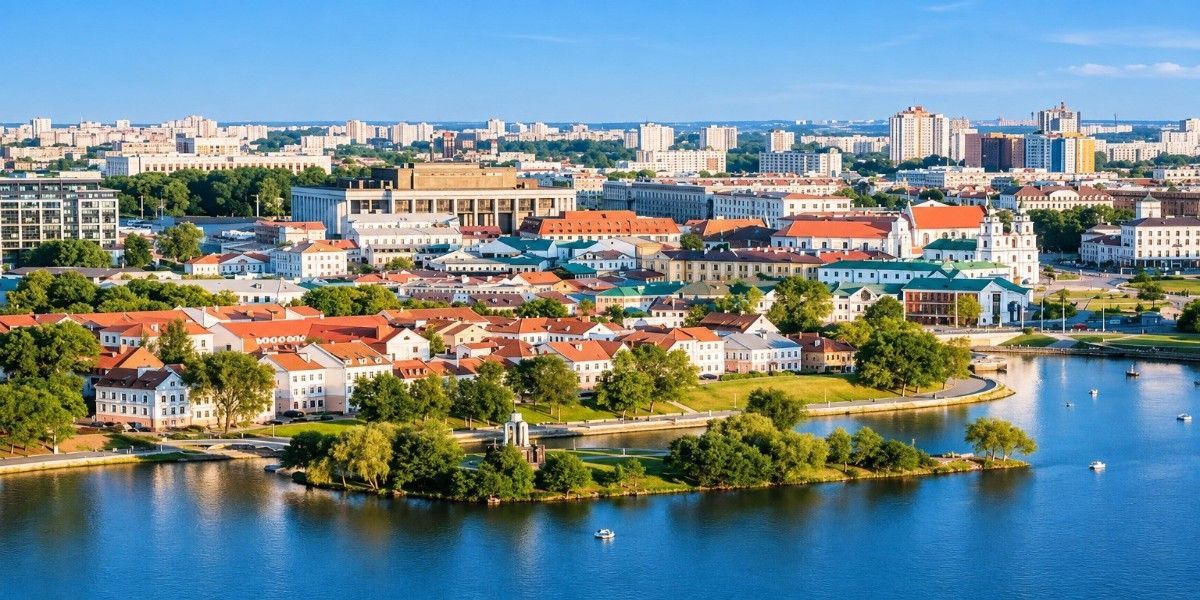
MBBS in Belarus is an option for Indian students looking for medical education in Europe at a comparatively moderate cost. Belarus has established public medical universities, teaching hospitals, international student programmes and structured medical education.
Students considering MBBS in Belarus for Indian students usually compare tuition fees, English-medium availability, clinical training, course duration, hostel facilities and future licensing requirements in India.
Medical programmes in Belarus are commonly offered as General Medicine and generally take around 6 years including internship. Indian students should verify the exact curriculum, medium of instruction, internship structure and eligibility for medical registration in Belarus before taking admission.
Before choosing a medical university in Belarus, students should carefully check the university's current programme details, tuition fee, clinical training, admission requirements, teaching language and compliance with applicable NMC regulations.
Why Study MBBS in Belarus?
Belarus has attracted international medical students because of its established government universities, comparatively affordable tuition, medical infrastructure and European academic environment.
Students planning to study MBBS in Belarus should evaluate the actual university rather than selecting the country only on the basis of low fees.
Established Medical Universities
Belarus has several public medical universities offering programmes in medicine, dentistry, pharmacy and related healthcare fields.
Major medical education centres include:
Universities in these cities provide access to academic departments, laboratories and affiliated healthcare institutions.
English-Medium Medical Education
English-medium medical education may be available to international students at selected universities and programmes.
However, Indian students should confirm whether the entire medical programme, including required clinical education, meets the English-medium requirement applicable to them.
Local language knowledge can still be important during clinical years because patients and hospital staff may communicate in Russian or Belarusian.
Affordable Tuition Fees
One of the main reasons students consider MBBS in Belarus is the cost of medical education.
Tuition at Belarusian medical universities commonly falls in the range of approximately USD 4,500–6,000 per year, depending on the university and academic session.
For example, current published and reported figures for some Belarus medical universities are in the several-thousand-dollar-per-year range. Students should verify the latest official university fee before payment.
Medical Infrastructure
Depending on the university, students may receive access to:
Facilities vary by institution, so students should compare the specific university and its clinical bases before admission.
Clinical Exposure
Medical students generally progress from basic medical sciences to clinical subjects and supervised hospital training.
Clinical exposure may involve patient history taking, physical examination, ward learning, case discussions and clinical rotations.
Indian students should pay particular attention to the language used during hospital training and whether the programme provides sufficient hands-on clinical education.
International Student Environment
Belarusian medical universities admit students from different countries. This creates an international academic environment and gives students exposure to people from different cultural and educational backgrounds.
Benefits of Studying MBBS in Belarus
The major benefits of studying MBBS in Belarus may include comparatively affordable tuition, public medical universities, hostel accommodation, structured medical education, clinical training and international student exposure.
However, these advantages depend on the individual university and programme. Students should verify all academic and regulatory requirements before admission.
About Belarus
Belarus is a landlocked country in Eastern Europe. Minsk is the capital and largest city, while Gomel, Grodno and Vitebsk are other important educational centres.
Students considering medical education in Belarus should prepare for a different climate, language and lifestyle compared with India.
Culture
Belarus has a European cultural environment influenced by its regional history and traditions.
International students may experience university events, local festivals, museums, cultural programmes and student activities.
Russian is widely used in everyday communication, so learning basic Russian can make daily life and clinical interaction easier.
Environment & Climate
Belarus has cold winters and comparatively mild summers.
Winter temperatures can be significantly lower than in most parts of India, so students should budget for proper winter clothing and heating-related living needs.
Food
International students may use university cafeterias, local restaurants, supermarkets and self-cooking facilities where available.
Indian food may be available in larger student centres, but students should confirm mess and cooking arrangements with the university or hostel before admission.
Student Life
Student life may include academics, sports, cultural programmes, research activities, university clubs, conferences and international student events.
MBBS in Belarus 2026–27: Quick Highlights
Particular | Details |
Course | General Medicine / Medical Degree |
Common Search Term | MBBS in Belarus |
Duration | 6 Years including internship |
Medium | English may be available at selected programmes |
NEET | Required for Indian students under applicable Indian rules |
Tuition Fee | Approx. USD 4,500–6,000+ per year |
Main Intake | Generally annual intake |
Major Cities | Minsk, Gomel, Grodno, Vitebsk |
Major Universities | BSMU, Gomel, Grodno and Vitebsk medical universities |
Clinical Training | Affiliated hospitals and clinical centres |
Local Language | Russian/Belarusian useful clinically |
India Registration | Subject to applicable NMC FMGL requirements |
MBBS in Belarus Course Duration & Structure
The MBBS in Belarus duration is generally around 6 years(including 1 year internship) for General Medicine programmes.
The programme typically progresses through basic medical sciences, pre-clinical subjects and clinical disciplines.
Students may study subjects such as Anatomy, Physiology, Biochemistry, Pathology, Pharmacology, Microbiology, Internal Medicine, Surgery, Pediatrics and Obstetrics & Gynaecology.
Indian students should not assume that every six-year programme automatically meets NMC requirements. The academic duration, internship and local licensing structure must be checked individually.
Medium of Instruction
Students searching for English medium MBBS in Belarus should verify the exact teaching language of the selected programme.
Some institutions offer medical education to foreign students in English, while Russian or Belarusian may still be required during clinical interaction.
Gomel State Medical University, for example, is listed with Russian, Belarusian and English among its languages of instruction.
Learning basic Russian can help students communicate with patients during clinical rotations and manage everyday activities such as shopping, transportation and local administration.
Intake for MBBS in Belarus
Medical universities in Belarus generally admit international students through an annual admission process. The main MBBS intake in Belarus typically starts in September or October each year, though the application and admission process opens months in advance.
It must be noted that the application dates vary between universities. Students should start preparing early because admission may involve academic verification, university assessment, medical documents, invitation processing and visa formalities.
The exact intake and reporting dates should always be confirmed through the current university admission notice.
MBBS in Belarus Fees
The MBBS in Belarus fees depend on the university, academic year and exchange rate.
Tuition fees at many medical universities are approximately:
USD 4,500–6,000 per year (around ₹4.33 lakh–₹5.78 lakh per year).
For a six-year medical course, total tuition may be approximately:
USD 27,000–36,000 (around ₹26 lakh–₹34.7 lakh).
For example, indicative 2026 tuition fees are:
Gomel State Medical University: Around USD 4,620 per year (₹4.45 lakh)
Vitebsk State Medical University: Around USD 5,250 per year (₹5.06 lakh)
These figures cover tuition only. Hostel, food, medical insurance, visa, travel and personal expenses are additional. Students should always confirm the latest official university fee before admission.
MBBS in Belarus Fee Structure 2026–27
Medical University | Indicative Annual Tuition |
Belarusian State Medical University | Approx. USD 5,000–6,000 |
Gomel State Medical University | Approx. USD 4,500–5,000 |
Grodno State Medical University | Approx. USD 4,500–5,000 |
Vitebsk State Medical University | Approx. USD 4,800–5,300 |
Fees vary by academic year and programme. Students should obtain an official fee letter before making any payment.
Hostel Fee
Hostel charges vary according to the university, room type and facilities.
Depending on the institution, accommodation may cost several hundred to around USD 1,000 or more per year.
Food Expenses
Food expenses depend on whether the student uses university cafeterias, cooks independently or eats at restaurants.
Students should include groceries, mess charges, drinking water and occasional restaurant expenses in their monthly budget.
Medical Insurance and Registration
International students may also need to budget for medical insurance, registration, medical examinations, document processing and residence-related formalities.
Approximate Total Cost
A practical total budget for MBBS in Belarus for Indian students may be approximately ₹30 lakh–₹45 lakh or more across the full course, depending on university fees, exchange rates, hostel, food, travel and lifestyle.
Students should calculate:
Tuition + hostel + food + insurance + documentation + travel + personal expenses
instead of relying only on the advertised tuition fee.
Eligibility for MBBS in Belarus
MBBS in Belarus eligibility depends on the university and regulations applicable to Indian students.
Applicants generally need to complete Class 12 or equivalent with Physics, Chemistry and Biology.
Academic Eligibility Requirements
Indian applicants generally need:
10+2 or equivalent qualification
Physics, Chemistry and Biology
Required PCB marks under applicable admission rules
Valid passport
NEET qualification where required under Indian regulations
University-specific eligibility
Some universities may also conduct an interview, entrance assessment or document evaluation.
NEET Qualification
Indian students pursuing MBBS in Belarus for Indian students with the intention of returning to India should satisfy applicable NEET requirements.
University admission and eligibility for future registration in India are separate issues. Admission into a foreign university does not automatically establish NMC eligibility.
Age Requirement
Applicants should satisfy the minimum age requirements applicable to undergraduate medical admission and the rules relevant to Indian students studying medicine abroad.
Students should verify the current requirements before applying.
NMC Rules for Indian Students Studying MBBS in Belarus
Indian students planning MBBS in Belarus should carefully evaluate the medical programme under the NMC Foreign Medical Graduate Licentiate Regulations.
Current FMGL requirements include a minimum of 54 months of medical education, a minimum 12-month internship in the same foreign medical institution, English as the medium of instruction, mandatory subjects and appropriate clinical training. The graduate must also satisfy the requirement relating to registration or licensing in the country where the medical degree is awarded.
Recognition and Eligibility of Belarus Medical Universities
Students should verify a Belarus medical university at multiple levels.
National Recognition
The university should be legally recognised and authorised to provide medical education in Belarus.
WDOMS / International Directory Check
Students may check the World Directory of Medical Schools for institutional information.
However, directory listing alone does not guarantee eligibility to practise medicine in India.
NMC Compliance
For Indian students, the important issue is whether the programme satisfies the applicable NMC requirements regarding duration, internship, medium of instruction, curriculum, clinical training and local licensing.
Top Medical Universities in Belarus for MBBS
Students searching for top medical universities in Belarus, best medical universities in Belarus for Indian students, Belarus MBBS universities or medical colleges in Belarus commonly consider the following institutions.
Medical University | City | Type |
Belarusian State Medical University | Minsk | Public |
Gomel State Medical University | Gomel | Public |
Grodno State Medical University | Grodno | Public |
Vitebsk State Medical University | Vitebsk | Public |
Belarusian State Medical University
Belarusian State Medical University is located in Minsk and is one of the country's established public medical institutions.
It traces its medical education history to 1921 and is listed as a public institution accredited under the Belarusian education system.
Students should verify the current English-medium programme, fee structure and internship arrangements before admission.
Gomel State Medical University
Gomel State Medical University is a public medical institution located in Gomel.
The World Higher Education Database identifies it as a public university offering medicine and lists Russian, Belarusian and English among its languages of instruction.
Students should confirm the current course structure and English-medium pathway applicable to international applicants.
Grodno State Medical University
Grodno State Medical University is another established medical university commonly considered by international students.
Students should compare its current tuition, accommodation, clinical facilities and teaching language before applying.
Vitebsk State Medical University
Vitebsk State Medical University is located in Vitebsk and admits international students into medical and related programmes.
Reported 2026–27 tuition for General Medicine is around USD 5,250 annually, although the official university fee applicable to the student's intake should always be confirmed.
Affordable Medical Universities in Belarus
Students searching for low cost MBBS in Belarus or affordable medical universities in Belarus should compare the complete cost rather than tuition alone.
A university with lower tuition may have different hostel fees, living expenses, insurance costs or clinical arrangements.
Important factors include the programme language, hospital training, internship, academic duration, local licensing eligibility and NMC compliance.
Hostel & Accommodation in Belarus
Many Belarusian universities offer hostel accommodation for international students, costing approximately BYN 160–320 (₹5,040–₹10,080) per month. Facilities may include furnished rooms, heating, shared kitchens, laundry, internet and security. Students should confirm hostel availability, fees and heating arrangements before admission.
Because Belarus has cold winters, students should specifically confirm heating arrangements in the hostel.
Food Facilities for Indian Students
Indian students can use university cafeterias, supermarkets, local restaurants and self-cooking facilities.
Indian food availability depends on the city. Minsk generally offers more international food options than smaller cities.
Vegetarian students should confirm kitchen access and nearby grocery options before admission.
Food expenses for Indian students studying MBBS in Belarus are approximately BYN 400–650 (₹12,600–₹20,475) per month, depending on dietary preferences and lifestyle.
Cost of Living in Belarus for Indian Students
The total monthly cost of living in Belarus for Indian students is approximately BYN 650–1,150 (₹20,475–₹36,225), including hostel accommodation, food, local transportation, internet and personal expenses.
These costs vary depending on the city, university facilities and lifestyle.
Expense | Typical Consideration |
Accommodation | University hostel or private accommodation |
Food | Cafeteria, groceries or self-cooking |
Transport | Bus, metro and local transport |
Mobile/Internet | Local plan |
Clothing | Winter clothing is important |
Study Material | Books, printing and equipment |
Personal Expenses | Daily needs and recreation |
Travel | India–Belarus travel |
Minsk can generally be more expensive than smaller cities such as Gomel or Vitebsk.
Scholarships for MBBS in Belarus
Scholarship availability for international medical students may be limited and university-specific.
Students should check whether any tuition discount or scholarship actually applies to the General Medicine programme and to international students.
Admission planning should not depend on an assumed scholarship unless it has been confirmed in writing.
Travel from India to Belarus
Indian students generally travel to Belarus by air. Flights may involve connections depending on the route and current airline schedules. Students should book travel only after receiving the required university documentation, visa approval and reporting instructions. Indian students pursuing MBBS in Belarus should budget approximately BYN 1,300–2,700 (₹41,000–₹85,000) for one-way travel, including economy-class flights to Minsk and local transportation. These costs vary depending on the departure city, airline, booking date, baggage allowance and travel season
Major Airport
Students travelling to Minsk generally use Minsk National Airport. Those studying in other cities may continue their journey by road or rail.
Student Visa for Belarus
Indian students pursuing MBBS in Belarus generally require a study visa, valid passport, university invitation and admission documents.
The approximate visa fee is €60 (₹6,390) for standard processing, excluding documentation, insurance and other charges. Students should confirm the latest visa requirements and fees with the Belarusian Embassy before applying.
Transportation in Belarus
Students may use buses, trolleybuses, trains, taxis and other local public transport. Minsk also has a metro system.
Rail and road connections link major university cities such as Minsk, Gomel, Grodno and Vitebsk.
Best Cities to Study MBBS in Belarus
Minsk
Minsk is the capital and largest city of Belarus.
It offers major universities, hospitals, public transport, international facilities and a wider range of food and accommodation choices. Living expenses may be higher than in smaller cities.
Gomel
Gomel is an important regional centre and home to Gomel State Medical University. The city offers university facilities, hospitals and student accommodation at potentially lower living costs than Minsk.
Grodno
Grodno is a university city in western Belarus and home to Grodno State Medical University. Students should compare hostel, transport and clinical facilities when considering the city.
Vitebsk
Vitebsk is another major medical education centre and home to Vitebsk State Medical University. It has a colder climate and an established international student community.
Sports, Extracurricular Activities & Student Life
Medical students may participate in sports, university clubs, cultural programmes, research activities, student conferences and international events.
Extracurricular activities can help international students adjust to the academic and social environment.
MBBS in Belarus vs MBBS in India
Feature | MBBS in Belarus | MBBS in India |
Duration | Generally Around 6 Years | About 5.5 Years |
Tuition | Moderate at public universities | Highly variable |
Medium | English may be available at selected programmes | English |
Local Language | Russian useful for clinical interaction | Local language useful clinically |
Clinical Environment | Belarusian healthcare system | Indian healthcare system |
NEET | Required for applicable Indian pathway | Required |
Registration in India | Foreign graduate pathway | Domestic pathway |
International Exposure | Higher | Depends on institution |
The appropriate choice depends on budget, university quality, clinical training, language adaptability and future career plans.
Belarus vs Other Popular MBBS Abroad Destinations
Country | Typical Duration | Tuition Level | Living Cost | Medium |
Belarus | Around 6 Years | Moderate | Moderate | English at selected programmes |
Russia | Around 6 Years | Moderate | Moderate | English / bilingual |
Georgia | Around 6 Years | Moderate | Moderate | English |
Uzbekistan | Around 6 Years | Lower–Moderate | Low | English at selected universities |
Kyrgyzstan | Around 5–6 Years | Lower | Low | English at selected programmes |
Kazakhstan | Around 5–6 Years | Moderate | Moderate | English at selected programmes |
Nepal | Around 5.5 Years | Moderate–High | Low–Moderate | English |
Students should compare universities individually instead of choosing only by country or tuition.
MBBS Syllabus in Belarus 2026–27
The MBBS syllabus in Belarus or General Medicine curriculum generally progresses from basic medical sciences to clinical training.
Academic Stage | Common Subjects |
Early Years | Anatomy, Histology, Biology, Chemistry, Physiology |
Pre-Clinical Stage | Biochemistry, Pathology, Microbiology, Pharmacology |
Clinical Stage | Internal Medicine, Surgery, Pediatrics, Obstetrics & Gynaecology |
Advanced Clinical Stage | Neurology, Psychiatry, Infectious Diseases, Emergency Medicine and Specialties |
Final Phase | Clinical Training / Internship as prescribed by programme |
The exact syllabus and internship structure differ between universities.
Clinical Training and Hospital Exposure in Belarus
Clinical education is one of the most important factors when choosing a Belarus medical university.
Students may receive practical learning through affiliated hospitals and clinical departments.
Training can include ward rounds, patient examination, history taking, case discussions, diagnostics, surgery observation and specialist rotations.
The amount of direct patient interaction can depend on the student's language ability, hospital and university.
Indian students should therefore ask specifically about bedside teaching, clinical language and hands-on exposure before admission.
Advantages of Studying MBBS in Belarus
Public Medical Universities
Several major medical universities in Belarus are state institutions with established academic structures.
Affordable Medical Education
Tuition can be lower than private medical education in India and some other international destinations.
European Academic Environment
Students experience a different healthcare and academic system while studying in Eastern Europe.
Hostel Facilities
University accommodation is commonly available for international students.
Clinical Training
Medical programmes include progressive clinical learning through hospitals and healthcare facilities.
International Exposure
Students may study alongside international classmates from several countries.
Things Indian Students Should Consider Before Choosing Belarus
Before taking admission, Indian students should carefully verify the university and the complete medical programme.
Check Medium of Instruction
Confirm in writing that the programme fulfils the English-medium requirement applicable to Indian foreign medical graduates.
Check Course Duration
Verify that the academic programme provides the required minimum duration under NMC regulations.
Check Internship
The internship arrangement is especially important. Students should confirm its duration, location and whether it forms part of the same foreign medical institution as required under applicable NMC rules.
Check Local Licensing Eligibility
Confirm whether completing the programme makes graduates eligible for registration or licensing in Belarus on terms applicable under the relevant regulations.
Check Clinical Training
Ask about affiliated hospitals, patient flow, clinical rotations and language used with patients.
Check Fees
Calculate tuition, hostel, food, insurance, documentation, travel and personal expenses.
Learn Basic Russian
Even where academic teaching is in English, Russian can be important for patient communication and everyday life.
Career Opportunities After MBBS in Belarus
Completing MBBS in Belarus may lead to different career pathways, subject to licensing requirements.
Returning to India
Indian graduates must satisfy the NMC foreign medical graduate requirements applicable to their admission batch before obtaining registration to practise medicine in India.
A foreign medical degree alone does not provide automatic registration.
Postgraduate Medical Education
Graduates may pursue postgraduate training after fulfilling the requirements of the relevant country and institution.
Specialties may include Internal Medicine, General Surgery, Pediatrics, Radiology, Dermatology, Psychiatry, Orthopaedics, Anaesthesiology and Obstetrics & Gynaecology.
USA
Graduates interested in the United States must satisfy applicable USMLE and ECFMG requirements.
United Kingdom
Graduates planning to practise in the UK must follow the applicable GMC registration pathway.
Australia
Students interested in Australia must follow applicable AMC and medical registration requirements.
MBBS in Belarus Admission Process
The MBBS in Belarus admission process varies by university.
Step 1: Check Eligibility
Verify academic qualification, PCB subjects, NEET status and university-specific criteria.
Step 2: Select the University
Compare tuition fees, teaching language, course duration, clinical hospitals, internship, hostel and NMC compatibility.
Step 3: Submit Application
Apply with the required academic and identification documents.
Step 4: Academic Assessment
The university may evaluate academic records or conduct an interview or entrance assessment.
Step 5: Receive Admission Confirmation
Eligible students receive the relevant university admission documentation.
Step 6: Invitation and Visa Documentation
Complete the required invitation, visa and supporting documentation process.
Step 7: Fee Payment
Pay fees only through an authorised university-approved method and keep official receipts.
Step 8: Student Visa
Apply for the appropriate Belarusian study visa according to current requirements.
Step 9: Travel to Belarus
Book travel after visa approval and university reporting confirmation.
Step 10: University Registration
Complete university registration, medical formalities, hostel allocation and other post-arrival requirements.
Documents Required for MBBS Admission in Belarus
Students applying to study MBBS in Belarus may commonly need:
Valid passport
Class 10 certificate and marksheet
Class 12 certificate and marksheet
PCB academic details
NEET scorecard
Passport-size photographs
Birth certificate where required
Medical fitness certificate
University application
Invitation letter
Additional documents required by the university
Documents may require translation, notarisation, apostille or other authentication depending on current admission and visa rules.