If you’ve spent any time researching MBBS in France, you’ve probably noticed something frustrating: no two websites agree on the basics. One says classes are in English. Another says, French. One says the course is 6 years, another says 11. One consultancy will tell you your degree is NMC-approved without blinking, and won’t mention that the entire instruction-language question has a real, unresolved wrinkle for MBBS in France for Indian students planning to return home.
This guide tries to do something different. We’re not going to tell you France is a shortcut to becoming a doctor, because it isn’t. We’re going to lay out exactly what the system looks like, what it cost of MBBS in France in 2026, where the real risk lies for Indian students, and who France genuinely makes sense for. If that’s not the pitch you were expecting, good, that’s the point.
MBBS in France At a Glance
Total duration | 9–11 years (including specialisation); (6–9 base + 3–6 specialisation) |
Language of instruction | French (B2 minimum required before enrolment; not an English-medium program) |
Tuition (public universities, non-EU, 2026-27) | €2,895/year (Bachelor’s/Cycle 1) and €3,941/year (Master’s/Cycle 2) under the new national fee reform |
Tuition (private medical schools) | €8,000–€18,000+/year |
Eligibility | 10+2 with PCB, 50%+ (as per NMC norms), NEET-UG qualifying score, age 17+ |
Intakes | Fall (September) primarily; a few institutions run a January entry for specific programs — always confirm per university. |
NMC/FMGL status | This is where you need to slow down. French-medium instruction raises a genuine compliance question under FMGL 2021 that most agencies gloss over. |
Degree recognised by | WHO, WDOMS-listed institutions; EU-wide practice rights via the Ordre des Médecins |
Why MBBS in France is 9–11 years? This isn't a longer version of a standard MBBS — it's the base medical degree (6–9 years) plus specialisation training (Internat, 3–6 years), similar to how an Indian MBBS graduate later does MD/MS. If your goal is just the base medical qualification, that's achievable in roughly 6–9 years. The 9–11 year figure reflects the full path to becoming a specialised, licensed doctor.
A note on accuracy before we start: This niche has an unusual amount of contradictory information floating around. Some sites claim classes are taught in English, some claim France’s course is fully NMC-compliant without qualification, and duration figures range from “6 years” to “11 years” depending on which site you land on. We’ve cross-checked every figure below against Campus France, the NMC’s FMGL Regulations 2021, and official university pages as of July 2026. Where something is genuinely unsettled or varies across institutions, we say so rather than picking a number that sounds cleaner.
France at a Glance: Country and Healthcare System
France runs one of the world’s more admired public healthcare systems. It’s a mixed model: a public hospital system (Assistance Publique, Hôpitaux de Paris, or AP-HP, the largest network) alongside private clinics, all under a national health insurance umbrella (Sécurité Sociale) that covers the vast majority of the population. Teaching hospitals attached to French medical faculties are where MBBS-equivalent students complete their clinical years, and the clinical exposure is genuinely dense. French hospitals see high patient volumes and expose students to a wide range of pathology early on.
Medical education itself sits inside the public university system, which means it’s heavily state-subsidised. That’s the entire reason France can advertise a €178/year registration fee for a program that actually costs the government roughly €10,000 per student per year to deliver. It’s not a marketing gimmick; it’s how French higher education has worked for decades. It’s also why the 2026 MBBS fee in France reform (more on that below) is such a big deal: it partially rolls back that subsidy specifically for non-EU students.
MBBS in France also has a genuine, if underused, academic collaboration channel with India, Indo-French mobility programs, joint research initiatives between French universities and Indian institutions, and a growing number of Erasmus+ partnerships. It’s smaller in scale than, say, Germany’s DAAD-linked ecosystem, but it exists.
A few things that might surprise you and have nothing to do with MBBS in France tuition fees: the Louvre alone pulls close to 9 million visitors a year, France is consistently the most-visited country on earth by tourist arrivals, and Paris essentially birthed cinema as a public spectacle (the Lumière brothers’ first paid screening was in 1895, a few streets from where several medical faculties sit today). None of this affects your degree, but it’s part of what daily life looks like for six-plus years.
Medical Education System: Untangling PASS, L.AS, and PACES
This is where a lot of students get genuinely confused, and it’s not really their fault that the naming conventions differ depending on which source, which reform era, and sometimes which university you’re reading about. Here’s the honest version.
France reformed its first-year medical entry system in 2020. Before that, the pathway was called PACES (Première Année Commune aux Études de Santé), a single, brutally competitive common first year for all health sciences, followed by a ranking exam that decided who got into medicine, dentistry, pharmacy, or midwifery.
Since 2020, PACES has been replaced by two parallel routes:
PASS (Parcours d’Accès Spécifique Santé), a dedicated first year focused on health sciences with a minor subject, run by universities with a medical faculty.
AS (Licence with a health-access option, Licence Accès Santé), you enrol in a regular Bachelor’s (say, biology or law) with a health-science option attached, giving you a second attempt route into medicine if PASS doesn’t work out or isn’t available at your university.
Both feed into the same second and third cycles. Different competitor sites will refer to “PACES,” “PASS/L.AS,” or occasionally still list the old PCEM/DCEM/DES terminology from the pre-2010 system, all of which is why the confusion persists. Here’s a clean map:
Old system (pre-2010) | Transition system (2010–2020) | Current system (2020–present) |
PCEM 1 & 2 | PACES | PASS or L.AS (Cycle 1, Year 1) |
DCEM 1–4 | DFASM/DFGSM | Cycle 2 (DFGSM + DFASM) |
Internat/Résidanat | Internat/Résidanat | Cycle 3, Internat (specialisation) |
The three-cycle structure of MBBS in France in practice:
Cycle | Duration | What happens |
Cycle 1 | 1–3 years (incl. PASS/L.AS entry year) | Foundational sciences, anatomy, biophysics, biochemistry, physiology; ends with a competitive ranking exam to progress. |
Cycle 2 | 3 years (DFGSM2-3, DFASM1-3) | Clinical sciences, pathology, internal medicine, surgery, paediatrics, and obstetrics; rotating hospital placements begin. |
Cycle 3 | 3–6 years, depending on speciality | Internat, residency-style specialisation (general medicine to surgical sub-specialities), entered via the national ranking exam (ECN) |
Total time from Cycle 1 entry to a fully licensed, specialised French doctor: 9 to 11+ years, which is longer than most Indian students expect when walking in. The “6-year MBBS” figure some sites quote refers only to reaching the base medical degree (before specialisation), not to being a practising, licensed physician.
Why Study MBBS in France
Academic rigour and research depth. French medical faculties are closely linked to INSERM (the national biomedical research institute) and produce high-quality research, especially in oncology, immunology, and cardiovascular medicine.
Public university affordability. with the 2026 caveat. Even after the fee reform, France remains cheaper than the UK, US, Australia, or Ireland for a comparable public medical education.
EU-wide career mobility. A French medical degree from a recognised institution, once you’re registered with the Ordre des Médecins, opens doors across all 27 EU member states via mutual recognition.
Modern teaching hospitals. AP-HP alone runs dozens of hospitals in the Paris region; regional centres in Lyon, Toulouse, and Bordeaux are similarly well-equipped.
International recognition. Degrees are WHO-listed and generally accepted for further study or licensing exams (USMLE, PLAB) abroad, subject to those exam bodies’ own requirements.
Who Should Choose MBBS in France
Students genuinely willing to reach French B2/C1 proficiency before and during their degree, not as a formality, but as a real, sustained commitment
Students who see themselves building a long-term career in Europe, not just returning to India immediately after graduation
Students drawn to research-integrated medical training
High academic performers who can handle a genuinely competitive, exam-heavy first year (PASS/L.AS attrition is steep
Students who want a public-university education and are comfortable with a longer overall timeline than most other MBBS-abroad destinations
Who Should Avoid MBBS in France
Almost nobody covers this honestly, because most sites are written to get you to apply, not to help you decide not to. Here it is straight:
If you want a short MBBS pathway. France’s 9–11-year total timeline (6–9 base + 3–6 specialisation) is among the longest of any popular MBBS-abroad destination. If duration is your primary constraint, look elsewhere.
If you’re not willing to learn French to a genuine working level. “I’ll pick it up along the way” does not work here; B2 is required before you can even sit in clinical classes, and clinical years demand near-native comprehension for patient interaction.
If you’re expecting English-medium clinical training. It doesn’t exist at France’s public medical universities. A small number of private institutions offer partial English tracks, but core clinical rotations are conducted in French regardless.
If your goal is an easy admission route. PASS/L.AS is a ranked, competitive filter; French students themselves fail out of it in large numbers. It is not an easier alternative to NEET; it’s a different, equally demanding filter.
If you’re assuming your degree guarantees smooth licensing back in India, there’s a real regulatory question here that deserves your full attention before you commit six-plus years and real money.
If two or more of these describe you, France probably isn’t the right call, and that’s a genuinely useful thing to know now rather than after Year 2.
Ideal Student Profile
Realistically, the student who thrives in the French system is: academically strong (competitive PASS/L.AS rankings reward this directly), linguistically adaptable (someone who picks up languages reasonably fast, ideally with some prior exposure to French or a Romance language), financially prepared for the post-2026 cost structure (not the outdated “€200/year” figure still floating around older blogs), oriented toward a long-term European or research career rather than a quick return to India, and comfortable with delayed gratification, this is a decade-long commitment before you’re a fully licensed specialist.
Two intake sessions of MBBS in France
Verified for 2026-27: This is one area where competitor sites genuinely conflict with each other (some list “Winter Feb–Apr + Spring Sept–Oct,” others “Fall Sept + Spring Jan”). The reliable pattern, confirmed against Campus France procedural timelines, is:
Intake | Application window (via Études en France) | Semester starts |
Main / Fall intake | October–January (previous year) | September |
Secondary intake (available at a minority of institutions, not universal) | Varies by university, typically closes by April | January |
Always verify directly with your target university’s admissions office; the “second intake” is not offered everywhere, and treating it as universal (as some sites do) sets students up for a wasted application cycle.
The French Language Question, The Section Every Other Site Gets Wrong
This is, without exaggeration, the single most important section on this page, because it’s the one area where the existing information online is genuinely contradictory, sometimes on the same website, in two different sections.
Here is the straight answer: classes at France’s public medical universities are conducted in French. Not English. There is no full English-medium MBBS-equivalent pathway at France’s major public universities, not at Sorbonne, not at Paris Cité, not at Paris-Saclay, not at Lyon, not anywhere in the standard PASS/L, AS system. A small number of private medical schools offer partially English-taught components, but the core academic pathway is PASS/L.AS entry, Cycle 2 clinical rotations, patient interviews, and hospital handovers, all run in French, because your patients, colleagues, and examiners are French.
This isn’t a minor administrative detail for MBBS in France. B2-level DELF or TCF certification is a prerequisite for enrolment, not something you pick up casually during your first year. Clinical years demand something closer to C1; you need to take a patient history, understand a consultant’s rapid-fire ward round instructions, and write clinical notes, all in French.
Why does this matter beyond daily comprehension? Because the NMC’s Foreign Medical Graduate Licentiate Regulations, 2021 (FMGL 2021), the rulebook that decides whether your foreign degree is even usable for practice in India, specifies under Regulation 4(a)(iii) that the medium of instruction for a recognised foreign medical qualification should be English. This is a real, documented regulatory position, not a competitor’s scare tactic. It’s the same reason some MBBS-abroad destinations market themselves aggressively as “English-medium”, because that specific clause matters enormously for Indian students planning to return and practice in India.
We’re not going to tell you this makes MBBS in France impossible, because the situation is genuinely more nuanced than a flat yes/no. It depends heavily on: - Whether the specific institution and program have any NMC-recognised English-medium component - Whether you intend to practice in France/the EU (where this clause is irrelevant) versus return to India (where it’s central) - How the NMC treats specific cases and any updates issued after this regulation.
What we can tell you, honestly, is that if returning to India to practice is part of your plan, this is not a detail to skim past or take a consultant’s verbal reassurance on. Get it in writing, verify directly against the current FMGL regulations and any NMC circulars at the time you apply, and don’t proceed on the assumption that “the course is internationally recognised” automatically resolves this question; recognition by WHO/WDOMS and compliance with NMC’s specific FMGL clauses are two different things.
IELTS/TOEFL: separate from the French requirement, some universities and most visa/application files still expect documented English proficiency, since your original academic transcripts and international correspondence are typically in English. Don’t assume the French requirement replaces this.
A learning roadmap, if you’re starting from zero French:
Stage | Target level | Typical timeframe |
Beginner | A1–A2 | 3–5 months of intensive classes |
Intermediate | B1 | +3–4 months |
Entry-ready | B2 (DELF/TCF) | +4–6 months, this is your enrolment gate |
Clinical-ready | C1 | Ongoing through Cycle 1–2 |
Practical tips that actually move the needle (rather than generic “practice daily” advice): work through past DELF B2 papers under timed conditions rather than just studying vocabulary lists; build a daily habit of French-language medical or news podcasts for listening comprehension (accent exposure matters more than most students expect); pair NEET revision with French study in fixed time blocks rather than sequentially, since you’ll likely be preparing for both simultaneously; and get spoken-French practice with a native or advanced speaker at least twice a week, DELF’s oral component trips up more Indian applicants than the written sections do.
MBBS in France Fees & Cost Analysis, 2026-27 Numbers (and Why They Changed)
This is the single biggest change for 2026, and most existing blog content hasn’t caught up. France announced a national tuition reform in 2026: from the 2026–27 academic year, most new non-EU students enrolling in public universities will pay a standardised “differentiated” tuition fee rather than the old, heavily subsidised rate. Only up to 10% of incoming international students can still receive an exemption, bringing the rate down to the old EU-equivalent level.
Fee type | Old EU-equivalent rate (pre-reform, still applies to grandfathered/exempted students) | New standard non-EU rate, 2026-27 |
Cycle 1 / Bachelor’s-equivalent registration | €178/year | €2,895/year |
Cycle 2 / Master ’s-equivalent registration | €254–€3,941/year (varied by program) | €3,941/year |
Private medical schools | — | €8,000–€18,000+/year |
If you’re reading a blog that still quotes “€170/year” as the typical fee for a new 2026-27 entrant without this context, that figure is now the exception, not the rule; it only applies to the roughly 10% who qualify for institutional or embassy exemption, or students who enrolled before this reform took effect.
University-wise fee reality check: the old “€170–€10,000” range that most sites quote isn’t wrong exactly, it’s just describing two completely different systems, subsidised public-university fees at one end, and private/Grande École-style tuition (like some Sciences Po-affiliated or specialised private medical tracks) at the other. For a new 2026-27 non-EU applicant at a standard public university, budget for the €2,895–€3,941/year bracket as your realistic default, not the outdated €170 figure.
Monthly cost of living (2026 estimate, 1 EUR = ₹110):
City tier | Monthly cost (rent + food + transport + misc.) | INR equivalent |
Paris (highest cost) | €1,100–€1,500 | ₹1.2L–₹1.65L |
Lyon, Toulouse, Bordeaux (mid-tier) | €800–€1,100 | ₹88K–₹1.2L |
Montpellier, Lille, Grenoble, Marseille (lower-cost) | €700–€950 | ₹77K–₹1.05L |
Annual estimated total budget (tuition + living, 2026-27, public university, non-exempted non-EU student):
Component | Annual cost (EUR) | Annual cost (INR, approx.) |
Tuition (Cycle 1) | €2,895 | ₹3.18L |
Accommodation (shared/CROUS hostel, where available) | €4,800–€7,200 | ₹5.3L–₹7.9L |
Food | €2,400–€3,600 | ₹2.6L–₹4L |
Health insurance | €300–€500 | ₹33K–₹55K |
Transport, books, misc. | €1,200–€1,800 | ₹1.3L–₹2L |
Total (excluding accommodation upgrades) | €11,600–€15,900 | ₹12.8L–₹17.5L |
These are estimates based on current public data and should be re-verified against your specific city and university before you commit to the cost of living, in particular, moves with inflation and rent trends.
Hidden Expenses Nobody Mentions Upfront
Language exam fees: DELF/TCF registration runs €150–€230 per attempt, and most students sit it more than once
Document translation and legalisation: certified French translation of academic transcripts, apostille processes; budget €200–€500 total
Airfare: €500–€900 round trip, depending on season, and you’ll likely be flying home at least once a year
Winter clothing: genuinely underestimated; a proper winter wardrobe for northern/central France runs €150–€300
Emergency fund: most visa applications require proof of funds anyway, but keep a separate buffer of at least €1,500–€2,000 beyond your calculated budget
Student residence formalities: CAF housing assistance applications, deposit requirements (often 1–2 months’ rent upfront)
Best Medical Universities for MBBS in France
University | City | QS World Rank 2026 | Type | Language | Approx. annual fee (2026-27, non-EU) |
Sorbonne Université | Paris | 72 | Public | French | €3,941 (Cycle 2) |
Université Paris-Saclay | Paris region (Orsay/Saint-Aubin) | 70 | Public | French | €3,941 (Cycle 2) |
Université Paris Cité | Paris | 300 | Public | French | €2,895–€3,941 |
Université de Lyon | Lyon | 205 (ENS Lyon component) | Public | French | €2,895–€3,941 |
Université de Bordeaux | Bordeaux | Top 500 band | Public | French | €2,895–€3,941 |
Université de Montpellier | Montpellier | Top 500 band | Public | French | €2,895–€3,941 |
Université de Strasbourg | Strasbourg | Top 500 band | Public | French | €2,895–€3,941 |
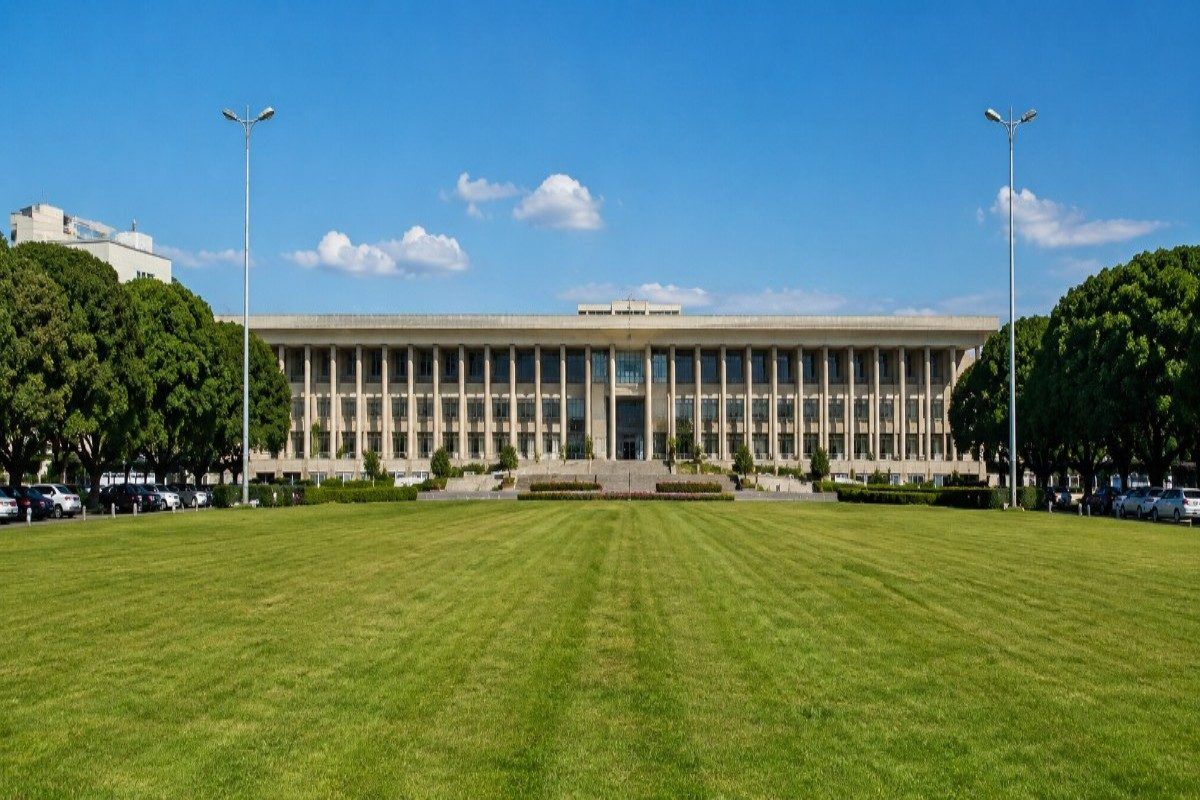
Sorbonne Université, formed from the 2018 merger of Paris-Sorbonne and Pierre-et-Marie-Curie universities, has one of the strongest international research networks among French institutions and has a long-standing reputation in the health sciences. Université Paris-Saclay climbed to 70th globally in the QS 2026 rankings, driven in part by improvements in sustainability metrics and the faculty-student ratio, and hosts a strong life sciences and health research cluster. Application deadlines for most of these run through Parcoursup/Études en France between October and January; always confirm the exact date directly with the university’s international office, since these shift year to year and aren’t reliably centralised anywhere.
Best Student Cities: A Real Comparison
Almost nobody does this properly; most sites list eight city names with no actual comparison. Here’s an attempt at one:
City | Cost of living | Safety | Student life | Transport | Indian food access | Climate |
Paris | High | Good, standard urban caution needed | Excellent, the largest Indian student community, the best international scene | Extensive metro/RER | Very good (Little India near La Chapelle) | Cold, wet winters; mild summers |
Lyon | Moderate | Very good | Strong, growing Indian student presence | Good tram/metro network | Decent, improving | Cold winters, warm summers |
Toulouse | Moderate-low | Very good | Strong (aerospace + medical student mix) | Good | Limited but present | Mild, sunnier than the north |
Bordeaux | Moderate | Very good | Growing, smaller Indian community | Good tram network | Limited | Mild, wine-country climate |
Montpellier | Lower | Very good | Large student population overall | Good, compact city | Moderate | Mediterranean, warm |
Lille | Lower | Good | Smaller Indian presence | Good | Limited | Cold, grey winters |
Marseille | Lower | Mixed pockets need more caution | Decent but less academic-focused vibe than Lyon/Toulouse | Good | Limited | Mediterranean, hot summers |
Grenoble | Lower | Very good | Strong (major science/engineering hub) | Good, compact | Limited | Alpine, cold, snowy winters |
If you want the lowest realistic MBBS in France cost of living without sacrificing safety or a workable Indian student community, Lyon or Montpellier tend to offer the best combination. Paris gives you the largest community and resources, but at a meaningfully higher cost.
FMGE / NExT Reality Check
Beyond the language-medium question, Indian students returning from any foreign medical program face a genuinely demanding curriculum-equivalence exam (FMGE, being phased into the unified NExT). Realistically, the longer, French-medium curriculum means less time spent explicitly “FMGE-prepping” during your degree, so self-study discipline in your final 1–2 years matters more than it would for a student in an English-medium destination. Clinical exposure in France is strong, which does help with the practical/clinical reasoning side of these exams. Still, the language transition back to English-medium testing is a real adjustment that shouldn’t be underestimated.
Career Opportunities after MBBS in France
In France: after Cycle 3 (Internat) and passing the ECN (Épreuves Classantes Nationales — France’s own national ranking exam that determines speciality and hospital placement, distinct from any Indian licensing exam), graduates register with the Ordre des Médecins and practice in public hospitals, private clinics, or independent practice.
Post-study work permit: France offers a one-year post-study residence permit (Autorisation Provisoire de Séjour, APS) for graduates to seek employment or transition into further training, a genuinely useful detail that most competitor content leaves out entirely.
In Europe more broadly, EU mutual recognition of the French degree, post-Ordre des Médecins registration, opens practice rights across the EU/EEA.
In India: subject to Section 13’s caveats, NEET, FMGE/NExT, and the FMGL compliance question all apply.
Elsewhere, USMLE (USA), PLAB (UK), and AMC (Australia) remain available routes, each with its own independent requirements regardless of where your MD/medical degree comes from.
Salary snapshot (France, 2026, gross annual, EUR and approximate INR at ₹110/EUR):
Role | Annual salary (EUR) | Approx. INR |
Junior hospital physician / General Physician (entry) | €55,000–€64,000 | ₹60.5L–₹70.4L |
General Physician (mid-career) | €70,000–€85,000 | ₹77L–₹93.5L |
Medical Officer / Hospital Practitioner (experienced) | €95,000–€111,000 | ₹104.5L–₹122L |
Surgeon (public sector) | €110,000–€150,000+ | ₹121L–₹165L+ |
Specialist / Consultant (private practice) | €120,000–€240,000+ | ₹132L–₹264L+ |
Pediatrician | €70,000–€100,000 | ₹77L–₹110L |
These figures vary heavily by sector (public vs private practice), region, and speciality; treat them as directional, not a guarantee.
MBBS in FRance Internship & Clinical Training
Clinical rotations begin in Cycle 2 and intensify through Cycle 3. Teaching hospitals under AP-HP (Paris) and equivalent regional centres in Lyon, Toulouse, and Bordeaux give students hands-on exposure across major departments, general medicine, surgery, obstetrics/gynaecology, paediatrics, psychiatry, and emergency medicine. All patient interaction, documentation, and ward communication happens in French; there’s no way around this by Cycle 2, regardless of what your first-year experience looked like.
MBBS in France Scholarships & Financial Aid (2026 figures)
Scholarship | Amount | Notes |
Eiffel Excellence Scholarship | €1,200/month (Master’s), €2,100/month (PhD), from Jan 2026 | Doesn’t cover tuition; you must be nominated by your university, not apply directly. The 2026 deadline was Jan 8; results from late March |
France Excellence Charpak (Indian students specifically, via the French Embassy in India) | €860/month stipend + visa fee waiver + housing support | For UG/PG, deadlines typically Feb–March |
Émile Boutmy Scholarship (Sciences Po) | Up to €18,500/year tuition waiver | Master ’s-level, non-EU students; can be combined with Eiffel |
Erasmus+ | Full tuition + travel + €1,000–€1,400/month living allowance | For eligible exchange/joint programs |
University-specific merit aid | Varies | Check individual university international offices |
Note: several older blog posts still cite outdated Eiffel stipend figures (€1,181, €1,700); the confirmed 2026 rate from Campus France is €1,200/month for Master ’s-level recipients.
Practical Student Guides for MBBS in France
Before paying any fees, verify: - The exact program duration in months (not the vague “5-year” label) - Whether English documentation is genuinely required alongside French instruction - The university’s current, official 2026-27 fee structure post-reform, not a screenshot from 2023 - Direct confirmation from the university’s international office on intake dates, rather than relying on any single blog.
Red flags in consultants/agents: anyone who tells you “the language doesn’t matter, most classes have English support” for a public French medical university; anyone who can’t produce the university’s current official fee circular; anyone unwilling to put admission promises in writing.
Data-accuracy warning: this niche has real, documented misinformation problems, outdated terminology (old MCI references instead of NMC), incorrect duration claims, and incorrect eligibility percentages appear across multiple sites. Cross-check any critical fact, duration, language of instruction, and current fees against at least two independent official sources (Campus France, the specific university, and NMC’s own FMGL text) before making a decision.
First 90 days: language immersion, opening a bank account, CAF housing aid application, registering with the local health insurance system, and building your first study group, ideally including at least one French national or fluent speaker.
MBBS in France vs Other MBBS-Abroad Destinations
Factor | France | Germany | Italy | Georgia | Kazakhstan |
Duration | 9–11 years (6–9 base + 3–6 specialisation) | 6 years (Staatsexamen) | 6 years | 6 years | 6 years |
Language | French (B2+ required) | German (B2+) or English tracks (limited) | Italian (some English-medium tracks) | English (widely available) | English/Russian |
Public tuition (non-EU, 2026-27) | €2,895–€3,941/year | Often €0–€500/semester | €900–€4,000/year | $6,000–$8,000/year | $4,000–$6,000/year |
NMC/FMGL language compliance | Requires verification (see Sec. 13) | Requires verification for German-medium tracks | Generally clearer for English-medium tracks | Generally straightforward | Generally straightforward |
Career flexibility | Strong within the EU | Strong within the EU | Strong within the EU | Moderate | Moderate |
MBBS in France vs India vs USA:
Factor | France (MD-equivalent) | India (MBBS) | USA (MD) |
Duration | 9–11 years (6–9 base + 3–6 specialisation) | 5.5 years (incl. internship) | 8 years (4 UG + 4 MD) + residency |
Total cost (approx.) | ₹1.3–1.8 Cr | ₹15L–1.2 Cr (govt vs private) | ₹3.5–6 Cr+ |
Entry test | NEET (for India-return eligibility) + PASS/L.AS | NEET | MCAT |
Language proficiency needed | French B2+ | None (English medium) | English (native-level expected) |
Average package post-qualification | €55K–€150K+ | ₹8L–₹25L (govt/private, early career) | $200K–$350K+ |
Decision-Making Section for MBBS in France
Honest pros: strong research ecosystem, EU-wide career mobility, genuinely subsidised base tuition even after the 2026 reform, world-class teaching hospitals, rich clinical exposure.
Honest cons: longest total duration among common MBBS-abroad destinations, a real and under-discussed FMGL language-of-instruction question for India-return students, steep French-language demands, and a meaningfully higher post-reform tuition bracket than the outdated “€200/year” figure still circulating.
Common myths vs reality: - “Classes are conducted in English at most universities.”, False for public medical universities; core instruction is in French. “Fees are still around €200/year for everyone.” Only true for the small exempted minority post-2026; most non-EU entrants now pay €2,895–€3,941/year. “An NMC-approved list confirms which French universities are fine.” The NMC no longer maintains a static approved list; it applies the FMGL 2021 criteria on a case-by-case basis, and the language-of-instruction clause is the one that requires individual verification.
Is France right for you? If you can commit to genuine French fluency, you’re building toward a European (not purely Indian) medical career, and you’ve verified the FMGL language question for your specific target university in writing. France is a strong, legitimate choice. If any of those three don’t hold, it’s worth seriously weighing before committing years and lakhs of rupees.
Latest Updates (2026)
Tuition reform: confirmed national rollout of differentiated non-EU fees (€2,895 Bachelor’s / €3,941 Master’s) from the 2026-27 academic year, replacing widespread fee waivers with a capped 10% exemption pool.
Scholarship reallocation: the French government has committed roughly 60% of scholarship funding toward priority fields (AI, quantum science, digital tech, biotech). Medicine isn’t explicitly excluded, but it isn’t a named priority field either, worth watching for future cycles.
Housing aid change: from July 1, 2026, non-EU/EEA/Swiss students need a social-criteria higher-education scholarship to access French housing aid (APL/ALF/ALS); the implementing decree was still pending as of this writing, so verify current status with CAF before budgeting on this support.
Bilateral mobility push: France has floated ambitions to grow Indian student numbers substantially by 2030, alongside broader India-France education initiatives, worth watching for any medicine-specific announcements.
Decision Scorecard
Factor | Rating (out of 5) |
Affordability | ★★★☆☆ (post-2026 reform pushed this down from ★★★★☆) |
Academic Quality | ★★★★★ (research-linked public universities, strong QS rankings) |
Clinical Exposure | ★★★★☆ |
Safety | ★★★★☆ |
Student Life | ★★★★☆ |
Cost of Living | ★★★☆☆ (Paris pulls the average down; smaller cities rate higher) |
International Recognition | ★★★★☆ (strong in EU; India-return path needs verification) |
Language Commitment Needed | ★★☆☆☆ (B2 French is a serious, non-negotiable barrier) |