03, April, 2026
Step-by-Step Guide to Study MBBS in Georgia After NEET
Table of Content
|
Why Choose
Georgia for MBBS After NEET? |
|
Is NEET Mandatory
for MBBS in Georgia? |
|
Eligibility
Criteria for Indian Students |
|
Step-by-Step
Admission Process for MBBS in Georgia |
|
Top Medical
Universities in Georgia |
|
Documents
Required for MBBS Admission in Georgia |
|
MBBS Fees
Structure in Georgia |
|
Cost of Living in
Georgia |
|
Visa Process for
Indian Students to Study MBBS in Georgia |
|
Is MBBS in
Georgia Valid in India? |
|
Advantages and
Disadvantages of Studying MBBS in Georgia |
|
Final Conclusion |
|
FAQs About MBBS
in Georgia After NEET |
In recent years, the dream of becoming a
doctor has driven thousands of Indian students to explore opportunities beyond
the boundaries of India. With intense competition for limited government
medical seats and the extremely high fees of private medical colleges, studying
MBBS abroad has emerged as a practical and attractive alternative. Among the
many international destinations available today, Georgia has rapidly gained
popularity as one of the most preferred choices for Indian medical aspirants.
Georgia is a beautiful country located at
the crossroads of Europe and Asia, known for its rich culture, safe
environment, and strong emphasis on education. Over the past decade, it has
built a solid reputation for offering high-quality medical education that meets
international standards. Medical universities in Georgia are recognized by
global organizations such as the World Health Organization (WHO) and are also
approved by the National Medical Commission (NMC) of India, making the degrees
valid for Indian students who wish to practice medicine in India after clearing
the required licensing exams.
One of the biggest reason’s students choose
Georgia is affordability. Compared to private medical colleges in India, where
the total cost of an MBBS degree can go up to ₹50 lakh to ₹1 crore or more, studying
MBBS in Georgia is
significantly more budget-friendly. The tuition fees are reasonable, and the
cost of living is also manageable for most middle-class families. This makes it
possible for students to pursue their medical dreams without putting excessive
financial pressure on their families.
Another major advantage is the availability
of English-medium programs. Most medical universities in Georgia offer MBBS
courses entirely in English, eliminating the language barrier that students
often face in countries like Russia, China, or Ukraine. This ensures that
Indian students can easily understand lectures, interact with faculty, and
perform well academically without the need to learn a new language for their
studies.
The infrastructure and teaching methods in
Georgian medical universities are also highly advanced. Students get access to
modern laboratories, well-equipped hospitals, digital classrooms, and practical
training from the early years of their course. The curriculum is designed to
match European standards, focusing not only on theoretical knowledge but also
on clinical exposure and hands-on experience. This helps students develop the
skills and confidence required to succeed in the medical profession globally.
Apart from academics, Georgia offers a safe
and welcoming environment for international students. Cities like Tbilisi are
known for their friendly locals, low crime rates, and vibrant student life.
Indian students can easily find Indian food, cultural communities, and support
networks, which makes adapting to a new country much easier. The multicultural
atmosphere also provides students with global exposure, helping them grow
personally and professionally.
Why Choose Georgia for MBBS After NEET?
Choosing the right country for pursuing
MBBS after qualifying NEET is one of the most important decisions for any
medical aspirant. With multiple options available worldwide, students often
look for a destination that offers quality education, affordability, global
recognition, and a comfortable living environment. In this context, Georgia has
emerged as a top choice for Indian students—and for good reason.
Let’s explore in detail why Georgia is
considered one of the best destinations for MBBS after NEET:
Affordable Tuition Fees Compared to India
One of the biggest advantages of studying MBBS in Georgia is
its affordability. In India, private medical colleges often charge extremely
high fees, sometimes ranging between ₹50 lakh to ₹1 crore for the entire
course. This makes it difficult for many deserving students to pursue their
medical dreams.
In contrast, medical universities in
Georgia offer MBBS programs at a much lower cost, typically ranging between ₹25
lakh to ₹40 lakh for the entire course. Despite the lower fees, the quality of
education remains high, making it a cost-effective option for Indian students.
Additionally, the cost of living in Georgia
is also reasonable, which further reduces the overall financial burden on
students and their families.
No Donation or Capitation Fee
Unlike many private medical colleges in
India, universities in Georgia do not require any donation or capitation fee
for admission. The admission process is purely merit-based and transparent.
This ensures that students are selected
based on their academic performance and eligibility criteria rather than financial
capability. It also eliminates the stress and uncertainty associated with high
upfront payments, making the process fair and accessible.
Globally Recognized Medical Degrees
Medical universities in Georgia are
recognized by major international bodies such as:
• World Health Organization (WHO)
• National Medical Commission (NMC), India
• Educational Commission for Foreign
Medical Graduates (ECFMG), USA
This global recognition allows students to
pursue medical careers not only in India but also in countries like the USA,
UK, Canada, and other parts of Europe, subject to clearing respective licensing
exams.
English-Medium Education
Language is a major concern for students
planning to study abroad. Fortunately, most universities in Georgia offer MBBS
programs entirely in English.
This eliminates the need to learn a new
language for academic purposes and allows students to focus completely on their
studies. It also makes communication with professors and patients during
clinical training much easier.
However, students may still learn basic
Georgian for daily communication, which can be helpful during hospital
interactions.
High FMGE Passing Rate (for Selected Universities)
For Indian students, clearing the Foreign
Medical Graduate Examination (FMGE) or the upcoming NExT exam is essential to
practice in India after completing MBBS
abroad.
Many reputed universities in Georgia have
shown relatively good FMGE passing rates compared to other countries. This is
mainly due to:
• Strong academic curriculum
• Focus on practical and clinical training
• Experienced faculty
However, it is important to note that the
passing rate also depends on the student’s dedication and preparation.
Safe and Student-Friendly Environment
Safety is a major concern for students and
parents when choosing a study destination abroad. Georgia is known for being
one of the safest countries in Europe.
• Low crime rates
• Friendly and helpful locals
• Welcoming attitude towards international
students
Universities also provide secure hostel
facilities and support services, ensuring a comfortable stay for students.
Modern Lifestyle in Tbilisi
The capital city, Tbilisi, offers a perfect
blend of modern infrastructure and cultural heritage. It is one of the most
popular cities among international students.
Students living in Tbilisi enjoy:
• Modern transportation and facilities
• Availability of Indian restaurants and
groceries
• Vibrant student life and multicultural
environment
• Affordable housing and accommodation
options
The city is well-developed yet not overly
expensive, making it ideal for students who want both comfort and
affordability.
Easy Admission Process
Another key advantage of choosing Georgia
is the simple and hassle-free admission process. Unlike India, where students
must go through intense competition and multiple counseling rounds, the process
in Georgia is straightforward.
• No entrance exam (apart from NEET
qualification for Indians)
• Direct admission based on eligibility
• Quick offer letter and visa process
This makes it easier for students to secure
admission without unnecessary delays.
Better Global Exposure
Studying in Georgia provides students with
international exposure, which is essential in today’s globalized world.
Students interact with peers from different countries, experience diverse
cultures, and gain a broader perspective on medical practices worldwide.
This exposure not only enhances their
academic knowledge but also helps in personality development and career growth.
Is NEET Mandatory for MBBS in Georgia?
Yes, NEET (National Eligibility cum
Entrance Test) is mandatory for Indian students who wish to pursue MBBS in
Georgia or any other country abroad. This rule has been clearly defined by the
National Medical Commission (NMC), which governs medical education and practice
for Indian students.
According to NMC guidelines, qualifying
NEET is a compulsory requirement if you plan to study MBBS abroad and later
return to India to practice as a doctor. Even though many universities in
Georgia do not require NEET as part of their direct admission process, Indian
students must still clear the exam to ensure their degree is valid in India.
There are a few key points every student
should understand:
• You must qualify NEET in the year of
admission or within the validity period.
• The NEET score is valid for 3 years for
students applying to MBBS programs abroad.
• Without NEET qualification, you will not
be eligible to appear for licensing exams in India such as FMGE or the upcoming
NExT.
This means that even if a student
successfully completes their MBBS degree from a recognized university in
Georgia, they will not be allowed to practice in India without having qualified
NEET beforehand. This is one of the most common mistakes students make when
planning to study abroad, often due to misinformation or guidance from
unreliable agents.
NEET serves as a basic eligibility test to
ensure that students have the required academic foundation in Physics,
Chemistry, and Biology before entering the medical field. It also maintains a
standard level of competence among Indian medical graduates, whether they study
in India or abroad.
Eligibility Criteria for Indian Students
To pursue MBBS in Georgia,
Indian students must meet certain basic eligibility requirements set by medical
universities as well as guidelines issued by the National Medical Commission
(NMC). These criteria ensure that students have the necessary academic
background and are eligible to practice medicine in India after completing
their degree.
First and foremost, students must have
completed their 10+2 (higher secondary education) with Physics, Chemistry, and
Biology (PCB) as their main subjects. A minimum of 50% marks in PCB is required
for general category students. For students belonging to reserved categories
(SC/ST/OBC), the minimum requirement is relaxed to 40%, making it more
accessible for a wider range of applicants.
Another essential requirement is qualifying
the NEET (National Eligibility cum Entrance Test). As per NMC regulations, NEET
qualification is mandatory for Indian students who wish to study MBBS abroad.
Without clearing NEET, students will not be eligible to appear for licensing
exams in India, which are required to practice as a doctor after completing
their degree.
In addition to academic qualifications,
students must be at least 17 years old at the time of admission or by 31st
December of the admission year. This age criterion is standard for medical
education across most countries.
Lastly, a valid passport is required to
apply for admission and process the student visa. It is advisable for students
to ensure that their passport is up-to-date before starting the admission
process.
Overall, the eligibility criteria for MBBS
in Georgia are straightforward and student-friendly, making it easier for
Indian aspirants to pursue their dream of becoming a doctor.
Step-by-Step Admission Process for MBBS in Georgia
Applying for MBBS in Georgia is a simple
and transparent process compared to many other countries. However, students
must follow each step carefully to avoid delays or mistakes. Below is a
detailed step-by-step guide to help you understand the complete admission
procedure:
Step 1: Research NMC-Approved Universities
The first and most important step is to
shortlist medical universities that are approved by the National Medical
Commission (NMC). Choosing an NMC-recognized university ensures that your MBBS
degree will be valid in India, allowing you to appear for licensing exams like FMGE/NExT
after graduation.
Step 2: Choose the Right Medical University
After shortlisting universities, compare
them based on several important factors such as:
• University ranking and reputation
• Tuition fees and overall cost
• FMGE passing rate of previous students
• Infrastructure and hospital facilities
Selecting the right university plays a
crucial role in your academic success and future career.
Step 3: Fill Out the Application Form
Once you finalize your university, the next
step is to fill out the application form. Most universities in Georgia offer an
online application process, which is quick and convenient. Students can apply
directly through the university’s official website or with the help of
authorized consultants.
Step 4: Submit Required Documents
After submitting the application, you will
need to provide the necessary documents for verification. These typically
include:
• 10th and 12th mark sheets
• NEET scorecard
• Valid passport
• Passport-size photographs
Make sure all documents are accurate and
properly scanned to avoid rejection or delays.
Step 5: Receive Offer Letter
Once your documents are verified by the
university, you will receive an official admission or offer letter. This
confirms that you have been selected for the MBBS program.
Step 6: Pay Initial Fees
After receiving the offer letter, you need
to pay the initial fees, which may include registration fees or a portion of
the first-year tuition fees. This step is essential to secure your seat in the
university.
Step 7: Apply for Student Visa
With your admission letter and fee receipt,
you can proceed to apply for a student visa. The visa process for Georgia is
generally smooth and requires submission of documents such as:
• Admission letter
• Passport
• Financial proof
• Medical certificate
Visa approval usually takes a few weeks.
Step 8: Book Travel & Prepare for Departure
Once your visa is approved, you can book
your flight tickets and start preparing for your journey. Make arrangements for
accommodation, pack essential items, and get ready to begin your MBBS journey
in Georgia.
Top Medical Universities in Georgia
Choosing the right medical university is
one of the most important steps for students planning to study MBBS in Georgia.
The country is home to several well-recognized institutions that offer
high-quality education, modern infrastructure, and global exposure. Below are
some of the top medical universities along with a brief overview of each:
Brief Overview of Top Universities
1. Akaki Tsereteli State University – Faculty of Medicine
Located in Kutaisi, this university is one
of the oldest and most reputed institutions in Georgia. It offers affordable
MBBS programs with a strong focus on practical training and clinical exposure.
2. Alte University – School of Medicine
Alte University is known for its modern
teaching methods and advanced infrastructure. It provides high-quality medical
education with an emphasis on research, innovation, and international
standards.
3. Caucasus International University – Faculty of Medicine
This university is popular among Indian
students due to its affordable fee structure and English-medium programs. It
offers good clinical exposure and a student-friendly environment.
4. International Black Sea University – School of Medicine
Known for its global approach to education,
this university focuses on developing strong medical foundations and practical
skills. It also provides a multicultural learning environment.
5. Tbilisi State Medical University – Faculty of Medicine
Located in Tbilisi, this is one of the most
prestigious medical universities in Georgia. It has a long history of
excellence and is widely recognized for its academic quality and experienced
faculty.
Comparison Table of Top Medical
Universities
|
University Name |
Location |
Key Highlights |
Medium of Teaching |
|
Kutaisi |
Oldest university, affordable fees, strong clinical exposure |
English |
|
|
Tbilisi |
Modern infrastructure, research-focused education |
English |
|
|
Tbilisi |
Popular among Indian students, budget-friendly |
English |
|
|
Tbilisi |
Global exposure, practical learning approach |
English |
|
|
Tbilisi |
Top-ranked, highly reputed, experienced faculty |
English |
Documents Required for MBBS Admission in Georgia
When applying for MBBS in Georgia,
preparing the correct set of documents is a crucial step in the admission
process. Proper documentation ensures a smooth application, quick verification,
and hassle-free visa approval. Any missing or incorrect document can delay your
admission or even lead to rejection, so students must be careful and organized.
Here is a detailed explanation of the
essential documents required:
Academic Certificates
Students must submit their 10th and 12th
mark sheets and passing certificates. These documents are required to verify
your academic background, especially your performance in Physics, Chemistry,
and Biology (PCB). Make sure that all certificates are clear, properly scanned,
and, if required, translated into English.
NEET Scorecard
As per the guidelines of the National
Medical Commission, Indian students must qualify NEET to study MBBS abroad. The
NEET scorecard is an essential document that proves your eligibility to pursue
medical education and practice in India after completing your degree.
Valid Passport
A valid passport is mandatory for
international travel and admission. Students must ensure that their passport is
valid for at least the duration of their course or has sufficient validity
remaining. If you do not have a passport, it is advisable to apply for one well
in advance.
Admission Letter
Once your application is accepted by a
university in Georgia, you will receive an official admission or offer letter.
This document confirms your seat in the MBBS program and is required for
further steps like fee payment and visa processing.
Visa Documents
To apply for a student visa, you will need
to submit several supporting documents, including:
• Admission letter from the university
• Valid passport
• Passport-size photographs
• Proof of fee payment
• Financial proof (bank statements or
sponsor letter)
These documents are necessary to
demonstrate that you are a genuine student and financially capable of studying
abroad.
Medical Certificate
Students are also required to provide a
medical fitness certificate issued by a registered doctor. This ensures that
the student is physically and mentally fit to pursue medical studies. In some
cases, additional medical tests or vaccination records may also be required.
MBBS Fees Structure in Georgia
One of the biggest reasons why Indian
students choose Georgia for MBBS is its highly affordable fee structure.
Compared to private medical colleges in India—where the total cost can range
from ₹50 lakh to ₹1 crore or even higher—Georgia offers quality medical
education at a much lower cost without compromising on standards.
On average, the tuition fees for MBBS in
Georgia range between $3,500 to $7,000 per year (approximately ₹3 lakh to ₹6
lakh per year). The total cost for the entire 6-year MBBS program generally
falls between ₹20 lakh to ₹40 lakh, making it a cost-effective option for
middle-class families.
Apart from tuition fees, students should
also consider additional expenses such as accommodation, food, medical
insurance, and other personal costs. However, even after including these
expenses, the overall cost remains significantly lower than studying in private
colleges in India.
Another advantage is that universities in
Georgia do not charge any donation or capitation fee, which is often a major
financial burden in India. The fee structure is transparent, and students are
usually required to pay on a yearly or semester basis, making it easier to
manage finances.
Estimated MBBS Fees in Georgia
|
Expense Type |
Cost (USD per Year) |
Cost (INR per Year approx.) |
|
Tuition Fees |
$3,500 – $7,000 |
₹3,00,000 – ₹6,00,000 |
|
Hostel/Accommodation |
$1,000 – $2,500 |
₹80,000 – ₹2,00,000 |
|
Food & Living Expenses |
$1,200 – $2,000 |
₹1,00,000 – ₹1,70,000 |
|
Medical Insurance & Misc. |
$300 – $500 |
₹25,000 – ₹40,000 |
|
Total Estimated Cost |
$6,000 – $12,000 |
₹5,00,000 – ₹10,00,000 |
Cost of Living in Georgia
Apart from tuition fees, understanding the
cost of living is very important for students planning to study MBBS in
Georgia. One of the major advantages of studying in Georgia is that the living
expenses are quite affordable compared to many other European countries. This
makes it a suitable option for Indian students who want quality education
without a high financial burden.
On average, the monthly cost of living for a
student in Georgia ranges between ₹20,000 to ₹35,000, depending on lifestyle,
city, and personal spending habits. Cities like Tbilisi may be slightly more
expensive than smaller cities, but they also offer better facilities and
student support.
Accommodation
Accommodation is one of the biggest monthly
expenses. Students can choose between university hostels and private
apartments.
• University hostels: ₹10,000 – ₹15,000 per
month
• Private apartments (shared): ₹15,000 –
₹20,000 per month
Hostels are usually more affordable and
convenient, especially for first-year students, as they are located near the
campus and provide basic facilities.
Food & Groceries
Food expenses are also manageable in
Georgia. Students can either cook their own meals or eat at restaurants.
• Monthly food cost: ₹8,000 – ₹12,000
Indian food is easily available in cities
like Tbilisi, and many students prefer cooking at home to save money and
maintain their diet.
Transportation
Public transportation in Georgia is
efficient and budget-friendly.
• Monthly transport cost: ₹2,000 – ₹3,000
Students can use buses, metro, and shared
taxis to travel within the city at low cost.
Other Expenses
Additional monthly expenses may include:
• Mobile and internet: ₹500 – ₹1,000
• Utilities (electricity, water, heating):
₹2,000 – ₹4,000
• Personal expenses: ₹2,000 – ₹5,000
Estimated Monthly Cost Breakdown
|
Expense
Category |
Monthly
Cost (INR) |
|
Accommodation |
₹10,000
– ₹20,000 |
|
Food |
₹8,000
– ₹12,000 |
|
Transport |
₹2,000
– ₹3,000 |
|
Other
Expenses |
₹3,000
– ₹8,000 |
|
Total |
₹20,000
– ₹35,000 |
Visa Process for Indian Students to Study MBBS in Georgia
For Indian students planning to pursue MBBS
in Georgia, the visa process is relatively simple, transparent, and has a high
approval rate compared to many other countries. With proper documentation and
timely application, students can complete the process smoothly without
unnecessary complications.
Here is a detailed step-by-step guide to
the student visa process:
Step 1: Get Admission Letter
The first step is to secure admission in a
recognized medical university in Georgia. Once your application is accepted,
the university will issue an official admission or offer letter. This document
is essential, as it confirms your enrollment and is required for visa
application.
Step 2: Prepare and Submit Documents
After receiving the admission letter,
students need to prepare and submit the required documents for the visa
application. These typically include:
• Valid passport
• Admission letter from the university
• Passport-size photographs
• Proof of fee payment
• Financial proof (bank statements or
sponsor letter)
• Medical fitness certificate
Make sure all documents are accurate and
properly organized to avoid delays or rejection.
Step 3: Attend Visa Interview (If Required)
In some cases, students may be required to
attend a visa interview. During the interview, you may be asked basic questions
about your course, university, financial status, and future plans.
The interview process is generally
straightforward. As long as your documents are genuine and your intentions are
clear, there is nothing to worry about.
Step 4: Wait for Visa Approval
Once you have submitted your application
and completed all formalities, the next step is to wait for visa approval. The
processing time usually takes 2 to 4 weeks, depending on the application volume
and documentation.
Students are advised to apply well in
advance to avoid last-minute stress.
High Visa Success Rate
One of the major advantages of choosing
Georgia is its high student visa success rate. Unlike some countries where visa
rejection is common, Georgia has a more student-friendly approach, especially
for applicants with complete and genuine documentation.
Student Life in Tbilisi
Student life in Tbilisi is vibrant,
comfortable, and well-suited for international students, especially those
coming from India. As the capital city of Georgia, Tbilisi offers a perfect mix
of modern lifestyle, cultural diversity, and student-friendly facilities,
making it one of the most preferred cities for MBBS students.
One of the biggest advantages for Indian
students is the easy availability of Indian food. There are several Indian
restaurants and grocery stores in Tbilisi where students can find familiar
spices, ingredients, and meals. Additionally, many students prefer cooking
their own food in hostel kitchens or shared apartments, which helps them
maintain their diet and save money.
Safety is another important factor that makes
Tbilisi an ideal study destination. The city is known for its low crime rate
and friendly locals. Students can move around freely, even during late hours,
without major concerns. Universities also provide secure hostel accommodations
with basic amenities, ensuring a safe and comfortable stay.
Tbilisi is a multicultural city that
attracts students from various countries. This provides excellent global
exposure, allowing students to interact with peers from different backgrounds
and cultures. Such an environment helps in personal development, improves
communication skills, and broadens perspectives—an important aspect for future
medical professionals.
Is MBBS in Georgia Valid in India?
Yes, an MBBS degree from Georgia is valid
in India—but only if certain important conditions are met as per the guidelines
of the National Medical Commission (NMC). Indian students must clearly
understand these requirements before choosing any university abroad to avoid
future complications in their medical career.
The first and most important condition is
that the university you choose must be approved or recognized by the NMC. Studying in an NMC-approved university
ensures that your degree is considered valid in India. If a student graduates
from a university that is not recognized, they may face serious issues while
applying for licensing exams or practicing medicine in India.
The second key requirement is clearing the
licensing examination after completing your MBBS degree. Currently, Indian
students who study abroad must pass the Foreign Medical Graduate Examination
(FMGE) conducted in India. In the coming years, FMGE is expected to be replaced
by the National Exit Test (NExT), which will serve as a common licensing exam
for both Indian and foreign medical graduates.
Clearing FMGE or NExT is mandatory to
obtain a license to practice medicine in India. Without passing this exam,
students cannot register as doctors, even if they have completed their MBBS
from a recognized university in Georgia.
Advantages and Disadvantages of Studying MBBS in Georgia
Choosing to study MBBS in Georgia comes
with several benefits, but like any international education option, it also has
a few challenges. Understanding both the advantages and disadvantages will help
students make an informed decision and prepare better for their journey abroad.
Advantages
1. Affordable Education
One of the biggest advantages is the
affordability. Compared to private medical colleges in India, Georgia offers
MBBS at a much lower cost while maintaining good educational standards. This
makes it an excellent option for middle-class families.
2. No Donation or Capitation Fee
Unlike many Indian private colleges,
universities in Georgia do not require any donation. The admission process is
transparent and purely based on eligibility, which reduces financial pressure
and ensures fairness.
3. Global Exposure
Studying in Georgia gives students
international exposure. They get the opportunity to interact with students from
different countries, experience diverse cultures, and gain a broader
perspective on medical practices. This exposure is highly beneficial for
personal and professional growth.
4. English-Medium Education
Most universities offer MBBS programs in
English, making it easier for Indian students to adapt without worrying about
language barriers in academics.
5. Modern Infrastructure & Facilities
Universities in Georgia are equipped with
modern labs, hospitals, and advanced teaching methods, which enhance practical
learning and clinical experience.
Disadvantages
1. Need to Clear FMGE/NExT
After completing MBBS, students must clear
licensing exams like FMGE
or NExT to practice in India, as per the National Medical Commission
guidelines. This requires additional preparation and effort.
2. Climate Adjustment
Georgia experiences colder weather compared
to most parts of India. Students may initially find it difficult to adjust,
especially during winters.
3. Language Barrier (Outside Campus)
While education is in English, the local
language (Georgian) is commonly used outside campus. This can sometimes create
communication challenges in daily life or during clinical interactions with
local patients.
Advantages vs Disadvantages Table
|
Advantages |
Disadvantages |
|
Affordable tuition fees |
Must clear FMGE/NExT to practice in India |
|
No donation or hidden charges |
Cold climate may be challenging |
|
Global exposure & multicultural environment |
Language barrier outside campus |
|
English-medium education |
Adjustment to new culture and lifestyle |
|
Modern infrastructure & facilities |
Self-discipline required for exam preparation |
Final Conclusion
Studying MBBS in Georgia after qualifying
NEET has emerged as a highly promising and practical option for Indian students
who are looking for quality medical education at an affordable cost. With
increasing competition for government medical seats in India and the high fees
of private colleges, Georgia provides a balanced alternative where students can
pursue their dream of becoming a doctor without excessive financial burden.
One of the key strengths of choosing
Georgia is its globally recognized education system, modern infrastructure, and
English-medium programs, which make it easier for Indian students to adapt
academically and socially. The presence of NMC-approved universities ensures
that students remain eligible to return to India and practice medicine after
clearing licensing exams such as FMGE or the upcoming NExT, as required by the
National Medical Commission.
However, success in this journey depends
largely on making informed decisions. Choosing the right university,
understanding the admission process, preparing all required documents, and
planning finances in advance are crucial steps. Additionally, students must stay
focused on their studies and begin early preparation for licensing exams to
secure their future career in India or abroad.
FAQs About MBBS in Georgia After NEET
Q1. Is Georgia safe for Indian students?
Yes, Georgia is considered one of the
safest countries for international students, including Indians. Cities like
Tbilisi have a low crime rate and a friendly environment. Universities also
provide hostel facilities with proper security, making it comfortable for
students to live and study without major concerns.
Q2. Can Indian students work while studying MBBS in Georgia?
Yes, students can explore limited part-time
work opportunities while studying. However, since MBBS is a demanding course,
it is recommended to focus more on academics. Some students manage small jobs
in cafes, stores, or freelance work to support their daily expenses.
Q3. Is IELTS or TOEFL required for MBBS in Georgia?
Most Georgian universities do not require
IELTS or TOEFL for admission. Students may need to attend a basic English
proficiency interview conducted by the university. Since the medium of
instruction is English, having basic communication skills is important.
Q4. What is the duration of MBBS in Georgia?
The MBBS program in Georgia typically lasts
6 years, which includes 5 years of academic study and 1 year of clinical
internship. The course structure is similar to international medical standards,
ensuring strong theoretical and practical knowledge.
Q5. Is MBBS in Georgia valid in India?
Yes, MBBS in Georgia is valid in India if
the university is approved by the National Medical Commission. After completing
the degree, students must clear licensing exams like FMGE or the upcoming NExT
to practice medicine in India.
Latest Blogs
View All Blogs
02, April, 2026
MBBS in France 2026: Complete Guide for Indian Stu...
Table of Content Introduction to MBBS in...
Read More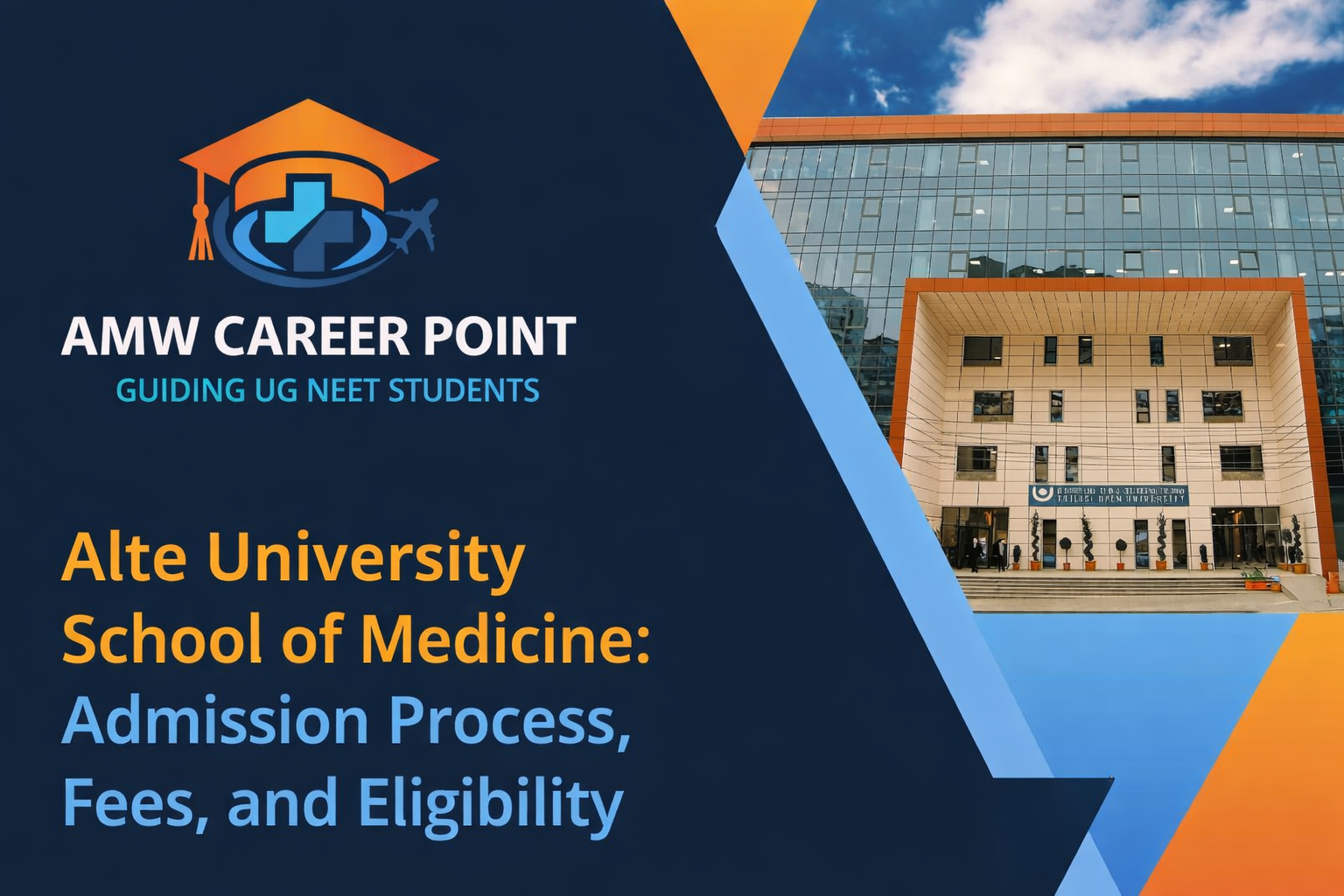
31, March, 2026

30, March, 2026
Everything You Need to Know About MBBS in Ireland...
Choosing the right destination for medical educati...
Read More