
Q1. Is the programme fully in English?
+Yes. The MD programme is taught entirely in English. Greek language is taught within the curriculum for patient communication. No prior Greek knowledge is needed for admission.

 Greece | Est. 1925
Greece | NMC (India); verify at nmc.org.in; Greek Ministry of Education; EU Professional Qualifications Directive 2005/36/EC; WDOMS listed; EUA member | English (primary); Greek language taught within curriculum for clinical communication; B2 English required (IELTS 6.0 or medium
Expert will call you within 2 hours
The School of Medicine at the Aristotle University of Thessaloniki, widely known as AUTH, is one of Greece's oldest and largest medical institutions. Founded in 1942, it has spent over eight decades building a strong reputation. It is firmly among the top medical schools in the country. The university itself was established in 1926. This makes it the largest university in Greece by student enrolment. The medical school has been a central part of its academic identity from its early years.
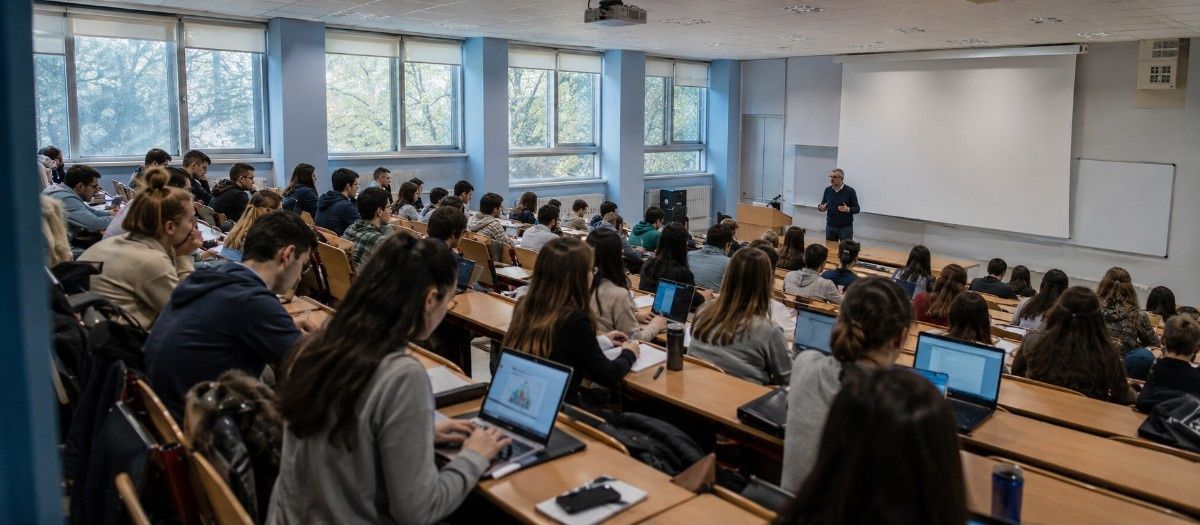
AUTH's medical school is located on the main university campus. You will find it in the heart of Thessaloniki, Greece's second-largest city. This is not a remote academic campus isolated from the real world. It is embedded in a living urban environment. Students have direct access to the city's major public hospitals. The primary teaching hospital is AHEPA University General Hospital. It is strongly associated with AUTH and serves as the main tertiary care centre for the region. Students also rotate through other affiliated hospitals in Thessaloniki, including Ippokratio, Papanikolaou, Papageorgiou, and others. The sheer volume and variety of clinical cases across this hospital network is one of the school's most practical advantages. Thessaloniki serves the entire population of Northern Greece. So the patient diversity that students encounter during clinical training is substantial and rich. This means real-world exposure to different diseases, conditions, and patient populations. You learn from experience, not just textbooks.
What sets AUTH apart from many other European medical options is that the medical degree is now available in English. This is huge. The English-taught MD programme was launched specifically for international students. It has already attracted students from more than 27 countries across five continents. This global diversity strengthens the learning environment. You study alongside peers from different backgrounds. You learn different perspectives on medicine and healthcare. Each academic year, 60 places are available for new international students. This limited intake keeps the programme selective. It means the teaching environment stays manageable. Classrooms are not overcrowded. Professors know students by name. You get attention and support. This matters in medical education.
The programme lasts six years. It follows the European Bologna Process framework. It is worth 360 ECTS credits. Upon graduation, students receive the Ptychion Iatrikes, the Greek Medical Diploma. This is fully recognised within the European Union under Directive 2005/36/EC. This is not a secondary qualification. This is an EU-standard medical degree. It carries weight and credibility across all EU member states. For Indian students, this matters enormously. An EU-recognised degree opens doors you cannot access with degrees from many other countries.
The academic standing of AUTH is well-established and strong. The university is ranked 485th globally in the QS World University Rankings 2026. It holds a position in the top 501 in the Academic Ranking of World Universities, also known as Shanghai Rankings. In Europe, AUTH consistently ranks among the leading public universities. It is the second-ranked university in Greece overall. This is not a newly launched programme with unproven credentials. AUTH has decades of experience. It has built research output across oncology, cardiology, neuroscience, pharmacology, and epidemiology. It has active international collaborations. This research activity translates into better teaching. Your professors are active researchers. They teach the latest developments in medicine.
AUTH is a member of several prestigious international academic networks. It is part of the European University Association (EUA). It belongs to the Coimbra Group. It participates in the Utrecht Network. These are not random memberships. These are networks of respected universities across Europe. AUTH also participates in the Erasmus+ programme. This gives medicine students access to exchange opportunities across Europe. You can study abroad for a semester or do a clinical rotation in another European country. This adds international experience to your CV. The institution has over 250 laboratories. There is a dedicated clinical skills and simulation centre. This is where students practise procedural techniques before working with real patients. You learn procedures safely first. Then you apply them in real clinical settings.
For Indian students, AUTH represents a genuinely strong option. The NMC of India lists it for NExT eligibility verification. The EU-recognised degree opens career pathways across all 27 EU member states. You are not confined to one country after graduation. You can work in any EU member state. You can pursue postgraduate training anywhere in Europe. You can return to India and take NExT. You have options. Real options. This flexibility is powerful.
Tuition is set at €12,000 per year for international students. This is higher than some Eastern European alternatives. But it reflects the quality of the programme. It reflects English-medium delivery. It reflects the EU country advantage. You get what you pay for. The programme is rigorous. The teaching is excellent. The degree carries weight globally.
Thessaloniki itself is one of the more affordable cities in the EU. Accommodation costs are significantly cheaper than Western European capitals. Food costs are reasonable. Transport is inexpensive. Making the overall cost of living reasonable for international students. Yes, tuition is €12,000 per year. But your total budget per year stays manageable because living costs are low.
This is a key advantage over Western Europe. You get an EU-standard education. You do not pay Western European prices. The city has over 100,000 university students. There is a vibrant cultural scene. There is a strong international atmosphere. This matters when you are moving far from home for six years. You will not feel isolated. You will find community. You will find people like you; other international students, other young professionals, people trying to build their careers.
Thessaloniki has rich history and culture. It sits on the coast of the Thermaic Gulf. The city blends ancient Greek heritage with modern urban life. There are museums. There are historic sites. There are beaches nearby. There are mountains for hiking. Student life here is active and engaging. The city never feels claustrophobic. You have access to both urban culture and natural recreation.
No hidden charges, no donation. The full picture of costs at MBBS in Aristotle University of Thessaloniki.
Tuition Fee
€12,000/year (approx. ₹10.8–11 lakh/year); total 6-year tuition €72,000 / ₹65 lakh; living costs approx. €600–900/month
€12,000/year €72,000 total
Hostel Fee
€380 and €650 per month
between €380 and €650 per month for a room or small apartment
Food & Meals
€200–350/month (€2,400–4,200/year) €14,400–25,200 total
per month
Insurance
€200–400/year €1,200–2,400 total
per year
Donation
no Donation fee
no Hidden Fee
Total Estimated Cost
Approx. €18,000–20,000/year €100,000–115,000 / ₹90–104 lakh
6 year
25–35%
Average FMGE first-attempt pass rates for students from many overseas medical universities. Students from structured programs consistently score higher.
Students returning to India need to clear the FMGE/NExT exam. MBBS in Aristotle University of Thessaloniki integrates exam-oriented coaching into the regular curriculum so students are prepared from day one.
A structured program that takes you from foundational sciences to clinical mastery.
The first year builds your scientific foundation. You learn anatomy through cadaveric dissection and histology. Medical ethics starts from day one.
Anatomy I (Gross Anatomy & Histology), Cell Biology, Biochemistry I, Medical Physiology I, Biophysics, Introduction to Medicine & Medical Ethics, Greek Language I.
Year Two deepens your understanding with a systems approach. You learn how body systems work together and how diseases develop.
Anatomy II (Neuroanatomy & Topographic), Physiology II, Biochemistry II, Medical Genetics, Microbiology & Immunology I, Introduction to Pathology, Greek Language II.
Examination, Evidence-Based Medicine, Research Methods. This bridge year connects basic science to clinical practice. You begin supervised patient encounters and learn clinical examination techniques.
Systemic Pathology, Pharmacology I & II, Microbiology & Immunology II, Epidemiology & Biostatistics, Clinical Semiology & Physical
Your first clinical year at AHEPA University Hospital. You join ward rounds, clerk patients, and present cases under supervision.
Internal Medicine I, General Surgery I, Obstetrics & Gynaecology I, Paediatrics I, Psychiatry & Mental Health, Radiology & Diagnostic Imaging.
Year Five expands your specialty exposure across Thessaloniki's hospital network. You gain experience in primary care and diverse specialities.
Internal Medicine II, Surgery II, Family & Community Medicine, Neurology, ENT, Ophthalmology, Dermatology, Orthopaedics & Trauma, Emergency Medicine.
The final year consolidates your clinical skills. You complete and defend your dissertation. You graduate with the Ptychion Iatrikes degree. NMC-mandated internship in India happens after NExT clearance and is separate from this Greek programme.
Thesis Advanced clinical rotations across all core and elective disciplines; Medical Dissertation.

Furnished hostel rooms with Wi-Fi, laundry, 24/7 security, and Indian mess on or near campus.
Indian restaurants and mess facilities serving vegetarian and non-vegetarian home-style food daily.
Strong Indian community with cultural events, festival celebrations, and peer support groups.
Students get hands-on clinical training in government and private hospitals affiliated with the university.
Practical information for students planning to study at MBBS in Aristotle University of Thessaloniki.
Prepare for all seasons. Thermal wear for winters, light clothing for summers. University provides heating in hostels.
Student visa processed with university invitation letter. Direct and connecting flights from major Indian cities.
Health insurance included in fees. Medical facility on campus plus city hospitals easily accessible.
Local SIM cards available. WhatsApp and video calls keep you connected with family back home.
Average monthly expenses of $150–$250 covering food, transport, and personal needs.
University library, online databases, and study groups. Seniors mentor juniors through academic challenges.
Our team guides you through every step — from application to arriving on campus.
Our Greece specialist assesses Greek language readiness and academic profile, and the public Greek-medium pathway vs the English-medium private option.
For the public pathway, we connect you with certified Greek language instructors. B2 proficiency target before admission.
Full Greek admission and visa document set, which includes translated academic certificates.
We submit documents to Aristotle University of Thessaloniki or an approved Greek partner.
Receives offer letter from the university, explains terms, and manages initial fee payment.
Full visa documentation prepared and submitted to the Greek Embassy in New Delhi.
Thessaloniki or Athens city orientation, accommodation, transport, banking, SIM card, and first-week logistics
We advise on routing to Thessaloniki (SKG) or Athens (ATH). Local team confirms arrival.
Our local Greece team coordinates pickup and first-week setup.
We manage Greek residence permits for studies filed and renewed annually.
Admission Helpline — Contact our counsellors for step-by-step assistance.
“The faculty here is incredibly supportive. The clinical training during hospital rotations has given me real confidence in patient care.”
“Affordable fees without compromising on quality. The campus facilities and hostel life made my transition abroad very smooth.”
“English medium instruction and WHO-recognized curriculum were the deciding factors for me. No regrets so far — excellent experience overall.”
“The university helped with everything from visa to accommodation. Hospital exposure from year three has been invaluable for my FMGE prep.”
“Just cleared my licensing exam on the first attempt. The structured coaching and mock exams during final year were a game-changer.”
“Safe campus, good food options, and a strong Indian student community. The teaching methodology is very practical and hands-on.”
Yes. The MD programme is taught entirely in English. Greek language is taught within the curriculum for patient communication. No prior Greek knowledge is needed for admission.
B2 level is required. IELTS minimum 6.0 or TOEFL minimum 79 out of 120 are accepted.
Yes. NEET is mandatory for NMC regulations. Submit your NEET score as part of your application.
AHEPA University General Hospital is the primary teaching hospital. Clinical rotations also happen at Ippokratio, Papanikolaou, Papageorgiou, and other Thessaloniki public hospitals across Northern Greece.
Yes. After NExT clearance, you can complete the mandatory internship in India. Then you register with the NMC to practice in India.
Very competitive. Only 60 places are available yearly for international students. The admission process includes an online entrance examination comprising 60 questions on Biology, Chemistry, and General Reasoning. Exemption from the examination is possible if one has taken the BMAT, MediTest-EU or A-Levels with at least AAB grades.
One can practice in any of the 27 EU countries due to the EU recognition of degree. One can also take up USMLE through ECFMG. One can join the register in UK through PLAB or portfolio route. One can come back to India through NExT.
Thessaloniki is affordable. Budget €600–900 per month for accommodation, food, transport, and personal expenses. University dormitories offer the cheapest option if secured early.
Yes. AUTH is listed in the World Directory of Medical Schools. This is required for NMC eligibility in India and ECFMG eligibility in the United States.
Yes. Enrolled students can access international clinical rotation opportunities through partner hospitals in the UK, Ireland, USA, Canada, and Australia. These must be applied for separately and match AUTH programme requirements.

Our expert counsellors will guide you through the complete admission process — from documents to airport pickup.