

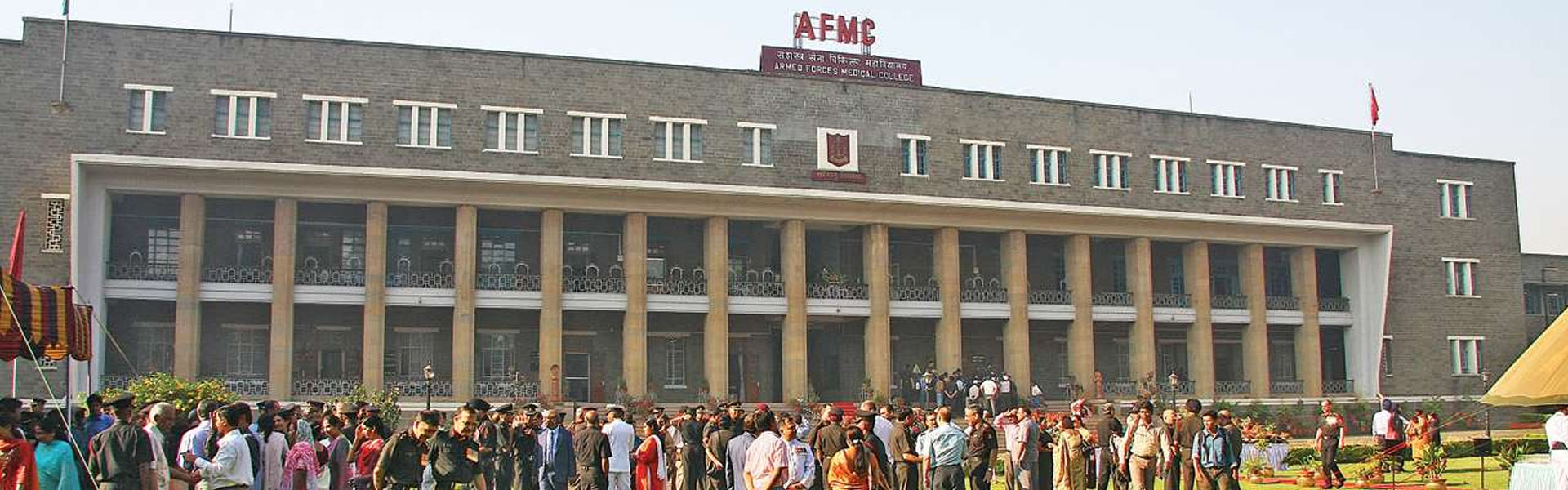
Armed Forces Medical College, Pune

General Information
The Armed Forces Medical College (AFMC), Pune, is a unique and prestigious Government Medical College under the Ministry of Defence, Government of India. Established in 1948, AFMC's primary mission is to provide excellent medical education and train doctors for compulsory service in the Armed Forces Medical Services (AFMS).
| Parameter | Detail |
| Establishment Year | 1948 (As a medical college in 1962) |
| Institute Type | Government (Ministry of Defence, Govt. of India) |
| Recognition | National Medical Commission (NMC) Approved |
| Affiliation | Maharashtra University of Health Sciences (MUHS), Nashik |
| Location | Solapur Road, Pune, Maharashtra |
| Annual MBBS Intake | 150 seats (115 Boys, 30 Girls, 5 Foreign/Sponsored) |
| Courses Offered | MBBS, MD/MS (Multiple specialties), and DM/M.Ch. |
| Admission Process | Based on NEET-UG rank, followed by a mandatory screening test (ToGGER/PAT), interview, and medical examination conducted solely by AFMC. |
Campus Facilities
Campus Size: Sprawls over a vast 113-acre campus that houses the college, military hospital, training facilities, and residential quarters.
Academic Facilities: Features modern, well-equipped Lecture Halls, extensive departmental Laboratories, and a substantial Central Library with a dedicated digital section.
Unique Facilities: Includes specialized Combat Medical Training areas, advanced simulation labs, and dedicated military sports facilities.
Hospital & Medical Facilities
Leading tertiary care hospital attached to the institution
Teaching Hospital: The college is attached to the integrated Command Hospital (Southern Command) and Military Hospital, Kirkee.
Bed Capacity: The affiliated hospital complex provides 1000+ teaching beds.
Clinical Focus: Provides high-level tertiary care to armed forces personnel, veterans, and their families, ensuring a high and diverse patient load for clinical training.
Advanced Care: Equipped with state-of-the-art specialized units and advanced ICUs for medical, surgical, and cardiac cases.
Fee Structure
State University Affordability
| Fee Component (MBBS - Total for 4.5 Years) | Amount (INR) | Note |
| Total Academic Fees (Nominal) | Approx. ₹70,000/- to ₹80,000/- | Includes tuition, admission, library, university, and medical exam fees for the entire 5 years. |
| Messing Fees | Approx. ₹3,000/- per month | Paid annually; Mess fees are highly regulated. |
| Stipend (Final Year/Internship) | ₹25,000/- to ₹30,000/- per month | Students receive pay as a Lieutenant (equivalent rank) during the compulsory service period. |
City Details
Hostel & Mess
Mandatory Residency: Hostel stay is compulsory for all selected cadets (both boys and girls) for the entire duration of the MBBS course.
Rooms: Students are provided with well-furnished, single-occupancy rooms from the first year onwards. This is a unique and significant advantage compared to most colleges where single rooms are reserved for post-graduates or seniors.
Facilities: Hostels are secure, featuring attached or common toilet/bath facilities for a set number of rooms. They include common rooms, reading rooms, basic recreational areas, and essential services (laundry, barber shop, etc.) managed within the campus complex.
Discipline: The residential areas are governed by strict military discipline and rules, including fixed timings, roll calls, and dress codes within the campus premises.
| Fee Component | Amount (Approximate Annual/Total INR) | Notes |
| Hostel Rent | Nominal (Often ₹0 to ₹1,800) | Included within the annual Institutional charges (very low). |
| Messing Fees (Mandatory) | Approx. ₹35,000 – ₹55,000 | This is the subsidized cost for food per year (paid annually). |
| Total Annual Residential Cost | Approx. ₹50,000 – ₹70,000 | Includes Messing, electricity, water, and incidental charges. |
| Caution Deposit | ₹1,000 – ₹5,000 | One-time, refundable deposit for the hostel. |
Mess System: The mess operates under a centralized system governed by the college administration, similar to defense establishments.
Food Quality: The food quality is generally reported as good, hygienic, and nutritious, with a menu designed to cater to a diverse national demographic (North Indian, South Indian, and mixed cuisine).
Diet: The diet is typically fixed, balanced, and strictly monitored to ensure the nutritional requirements of the cadets are met, emphasizing physical fitness and discipline.
Miscellaneous
Eligibility: Must be an Indian citizen and medically fit. Candidates must take NEET-UG and meet the high academic cutoffs.
Selection Process: The selection is two-tiered after the NEET cutoff:
Screening: Based on NEET score and performance in the Test of English Language, Comprehension, Logic, and Reasoning (ToGGER) and a Psychological Assessment Test (PAT).
Interview: A formal personal interview (50 marks).
Service Obligation (Compulsory Bond): All successful Indian candidates must sign a bond and agree to serve as Commissioned Officers in the Armed Forces Medical Services (AFMS) after graduation for a period of 7 years (subject to medical fitness and the requirements of the AFMS).
Penalty for Non-Compliance: If a candidate defaults on the service bond, the financial penalty is exceptionally high, reportedly ₹60,00,000/- (Sixty Lakhs), which the candidate or guardian must pay.
NRI/Foreign Seats: 5 seats are available for sponsored foreign students, with separate, high fees set by the Ministry of External Affairs.
Collage Images Gallery
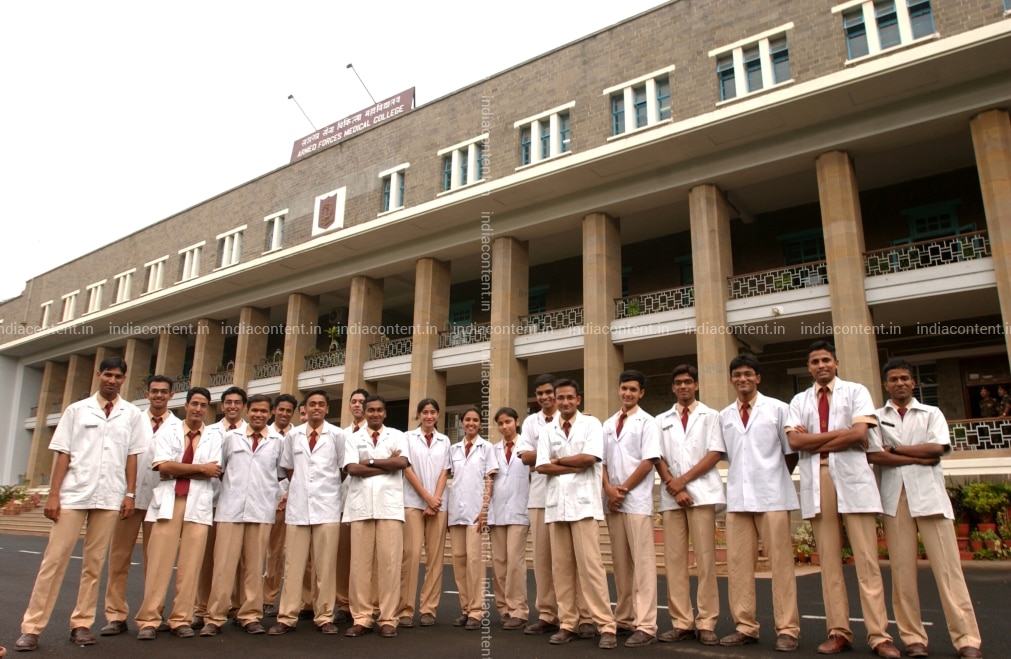
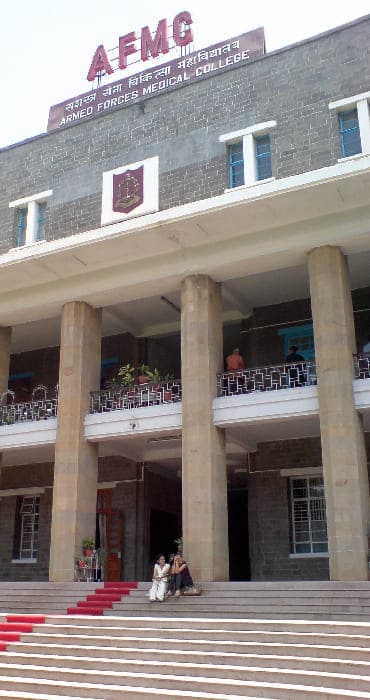
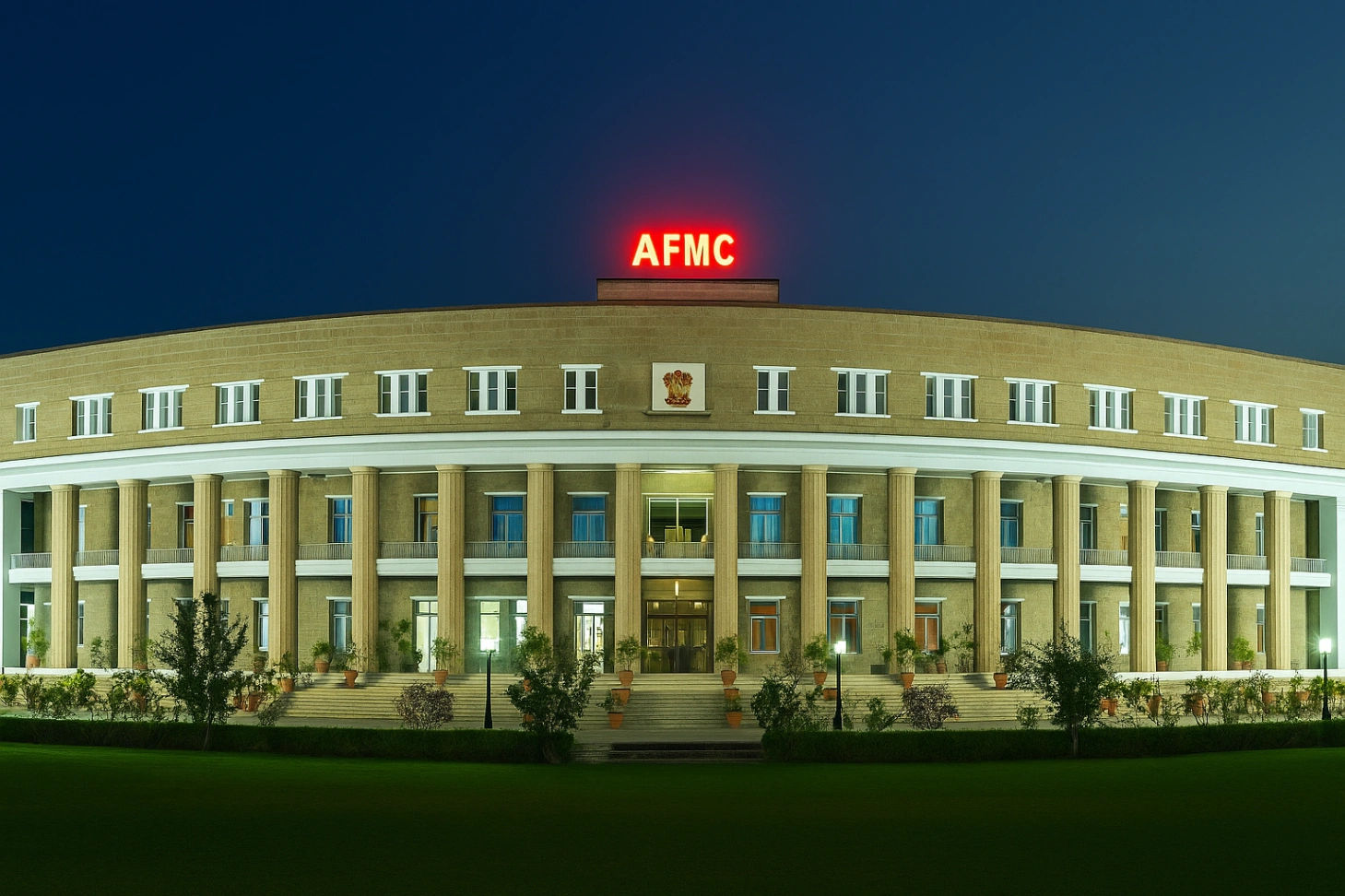

Facilities & Campus Life

Well-equipped Library

Experienced Faculty

Computer Lab

Sports Activities

Heritage Campus


Frequently Asked Questions
Why Consult With Us?
- 15+ years of experience in medical education counseling
- 5000+ students successfully guided
- 50+ partner universities worldwide
- Free initial consultation with no obligation