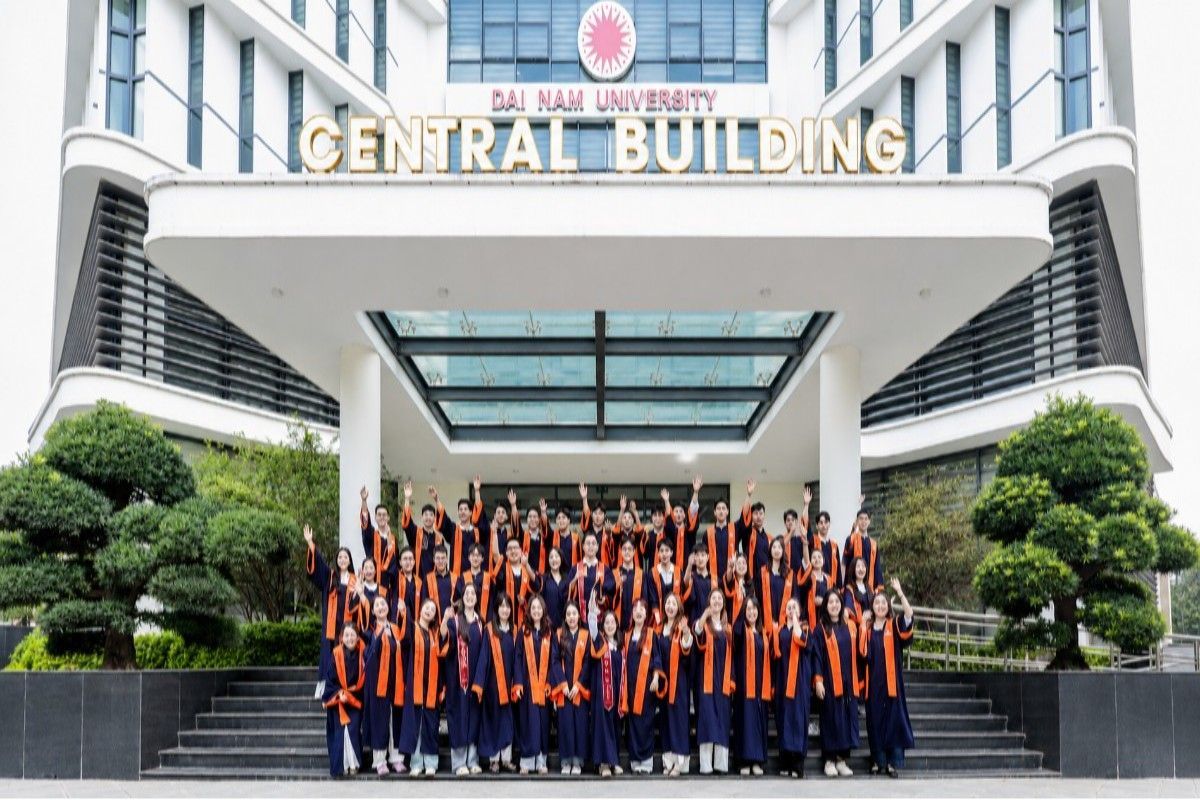
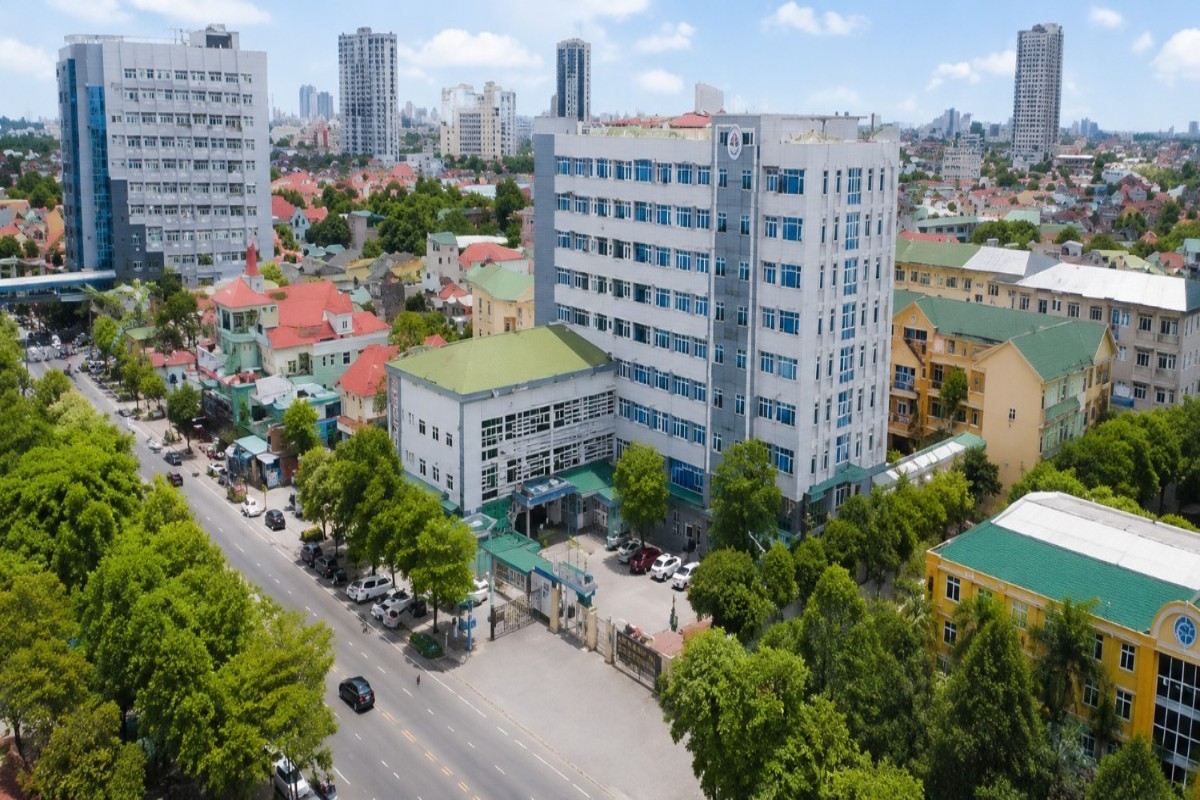
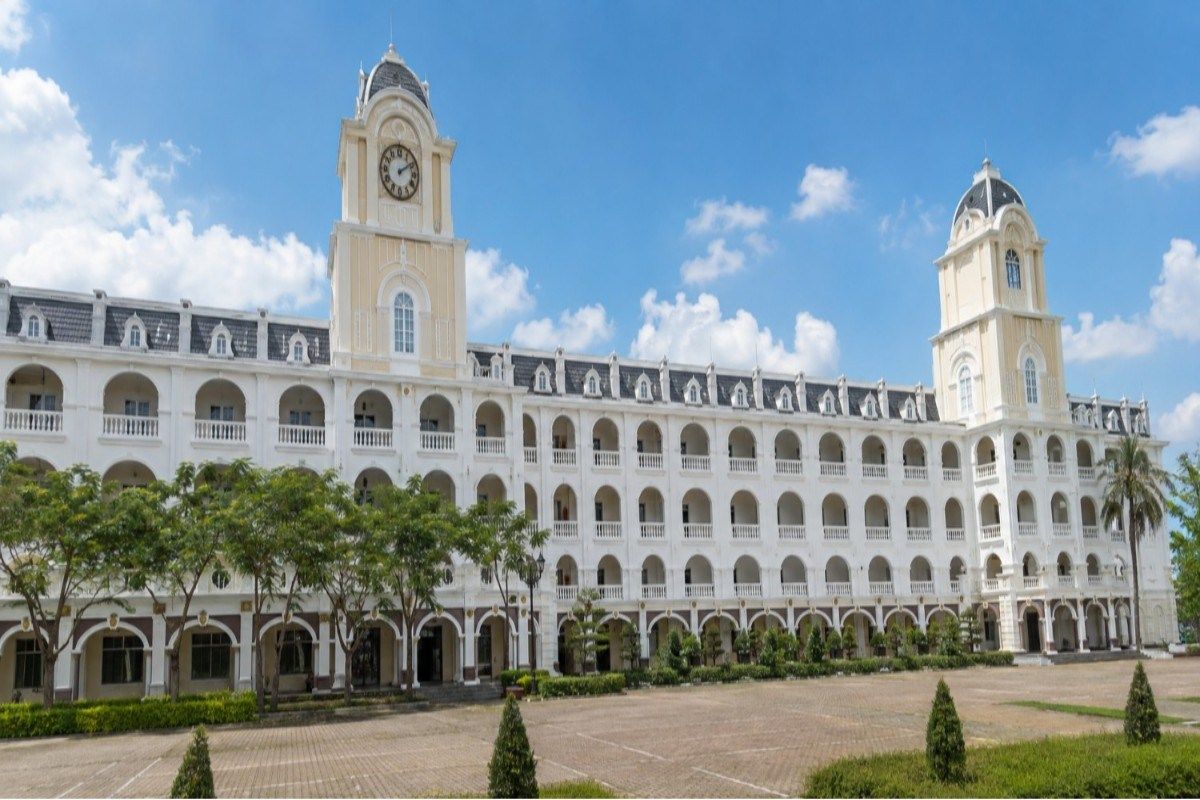
Dai Nam University Faculty of Medicine sits at No. 1 Xom Street, Phu Lam ward, Ha Dong, Hanoi. Hanoi is the capital of Viet Nam. The university opened in 2007 as a private institution. It now teaches close to 25,000 students. It runs 42 bachelor courses, five master courses and one doctoral course. Health science is its lead field. The Faculty of Medicine sits at the centre of that block. It shares the campus with the Faculty of Pharmacy and the Faculty of Nursing.
The school is listed in the World Directory of Medical Schools. Its FAIMER school ID is F0006909. The listed name is Dai Nam University Faculty of Medicine. The directory records the school as private, operational, with medical teaching from 2007. It also shows two separate tracks. The older track is the Vietnamese medical degree, Bang Bac Si, taught since 2007. The second track is the Doctor of Medicine, or M.D., which began in 2020. This M.D. track runs for six years. Its listed teaching languages are Vietnamese and English. The directory confirms that foreign students are admitted and that all students pay tuition. It also notes that the school itself does not require an entrance exam.
The big change for overseas students came in 2025. On 10 October 2025 the university opened its first full time medical intake for international students. It is taught only in English. VnExpress reported 208 Indian students in that first batch. The Ambassador of India to Viet Nam attended the launch. So did the Ambassador of Viet Nam to India. Senior staff from the Ministry of Health and the Ministry of Education and Training were there as well. This was the first programme of its kind in Hanoi. The original plan was to take about 100 students. Demand pushed the number past 200.
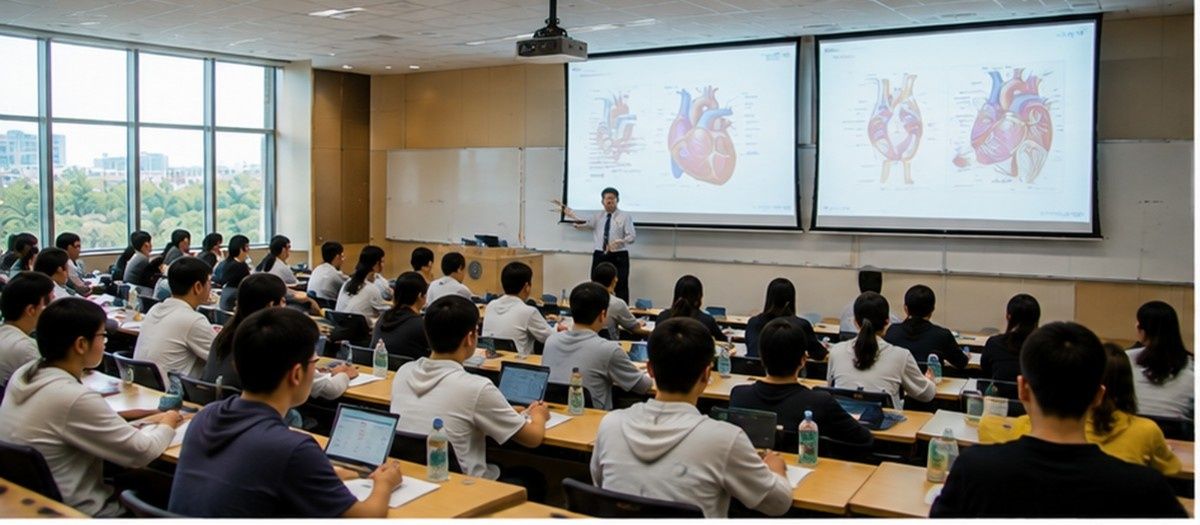
The shape of the course is easy to follow. The first two years are spent on campus. They cover basic and pre clinical science. The next four years are built around hospital work in Hanoi. The university lists eleven affiliated hospitals for teaching. These are city and central level hospitals, so students see a wide case mix on busy wards. The university has also said it plans to build its own hospital. That would give the faculty a training base under its own control.
The teaching staff come from two groups. The first is Vietnamese. It includes lecturers with master and doctoral degrees, professors and senior clinicians. Many of them teach at other medical schools or work in central hospitals in Hanoi. Several trained or did research abroad, in the United States, South Korea and other countries. The English track is run by the International Medical Training Institute. Its senior staff have worked on global health projects, including work with the World Health Organization. The second group is made up of Indian doctors and teachers. They help students with the parts of the course that matter for licensing exams back home. The rector of the university is Associate Professor Dr Dao Thi Thu Giang.
Language is handled in a practical way. All medical subjects on the international track are taught and examined in English. So students do not need Vietnamese for class or for written papers. Vietnamese classes still run through the early years and they are compulsory. There is a good reason. From year three students take case histories at the bedside, and most patients in Hanoi speak only Vietnamese. Students who work at the language get far more out of their ward years.
Cost is the main reason many families look here. Tuition for the international medical programme is USD 5,000 per year, quoted by the university as about 125 million Vietnamese dong. Over six years that is USD 30,000 in tuition. Private medical colleges in India often charge from about USD 8,400 to USD 31,000 a year. So the gap is wide. Living costs in Hanoi are also moderate. The university runs hostels for international students and arranges Indian food on campus. It also runs a Viet Nam and India cultural orientation programme, basic Vietnamese classes and soft skills training. That removes several common worries for families sending a child abroad for the first time.
Hanoi shapes the whole experience. About eight million people live there. The city has a long history, a busy old quarter, lakes, parks and famous street food. Ha Dong is linked to central Hanoi by the metro line and by bus. It is quieter and cheaper than the middle of town, which suits students on a budget. Summers are hot and damp and winters are cool and dry. Most students from South Asia settle in without much trouble. Crime rates are low, and Viet Nam is widely seen as a safe country for foreign students.
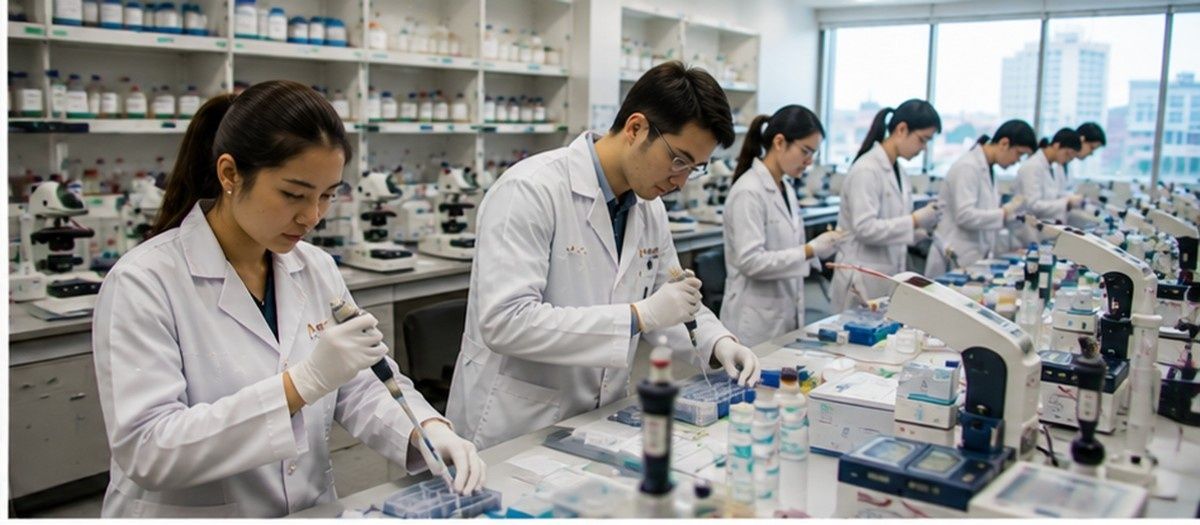
Campus facilities include labs for anatomy, physiology, biochemistry, microbiology and pathology. There is a skills and simulation area. The library offers digital access. An online learning system holds lecture notes, reading lists and assessments. The university calls itself an applied science institution with a focus on innovation and enterprise. It has spent heavily on buildings and equipment over the past decade. Sports grounds, student clubs and a large auditorium sit beside the academic blocks, so student life goes well past the lecture hall.
The daily rhythm is worth knowing. Classes usually start early, which is normal across Vietnamese universities. Labs and small group tutorials fill much of the first two years. Once rotations begin, students spend mornings on the ward and afternoons in seminars or self study. Attendance is tracked and internal assessments run through each semester, so steady work beats last minute revision.
Applicants should be clear about a few points. The English medium intake is new. The first group started in October 2025 and no batch has graduated from it yet. So there is no completed record of exam results or licensing outcomes to study. The university states that it is recognised under the Indian National Medical Commission framework. Every Indian applicant should verify that first hand. The National Medical Commission does not publish a simple approved list of foreign colleges. Instead it sets rules under the Foreign Medical Graduate Licentiate Regulations. Those rules cover course length, teaching language, internship location and registration in the country of study. They also change from time to time. Check the current text before you pay any deposit.
The wider picture is easier to judge. Viet Nam has a stable health system that keeps improving. Hanoi has a large hospital network. The government is keen to attract foreign students into health courses. Dai Nam has the funding, the campus and the hospital agreements to run a serious programme, and it has put a strong faculty group behind the English track. For a student who wants an English taught six year medical course at a fair price, in a safe Asian country close to home, this is a fair option to examine closely.
Here is the honest summary. Dai Nam offers a well priced six year medical degree taught in English, in a capital city with strong clinical exposure and a well credentialled teaching team. The international track is still young. So run your own checks on recognition and on licence rules at home, and speak to current students before you commit. Ask them about class hours, ward time, hostel food and staff support. Their answers will tell you more than any brochure.