
Health and Medical University (HMU) Potsdam

General Information
The HMU Health and Medical University Potsdam is a private, state-recognized university that stands as a modern beacon of interdisciplinary healthcare education in Germany. With a philosophy centered on "interprofessionalism," HMU bridges the gap between different healthcare roles, training physicians alongside psychologists and health managers. Operating as a part of a larger network of specialized colleges, it offers a high-tech, application-oriented environment in the historic cultural landscape of Potsdam.
General Info
- Established: 2020 (Teaching started in the Winter Semester).
- Primary Location: > Olympischer Weg 1, 14471 Potsdam, Germany (Head office: Villa Carlshagen).
- Academic Model: Staatsexamen (State Examination) for Human Medicine; Bachelor and Master models for Health Sciences.
- Structure: * Human Medicine: A 6-year program (12 semesters) following the German national licensing regulations.
- Health Sciences: Standard 3-year Bachelor’s and 2-year Master’s tracks (B.Sc./M.Sc.).
- Clinical Focus: The university utilizes a "team-based" training approach, emphasizing the cooperation between medical doctors, psychotherapists, and medical controllers to prepare graduates for a modern, integrated healthcare system.
- Instruction Language: Primarily German. A proficiency level of at least B2/C1 is required for most programs. Medical English is offered as a supplementary course.
- Specialized Degrees: Offers unique tracks such as Medical Controlling and Management (B.Sc.) and Medical Education (M.Ed.), which are rare in the traditional public university system.
- Admission: Restricted via an internal Selection Procedure. Instead of a pure GPA focus, applicants undergo a written application and a personal interview/selection day including a university-specific medical test.
Campus Facilities
HMU Potsdam is distributed across three distinct, high-character locations that blend historic architecture with cutting-edge medical labs.
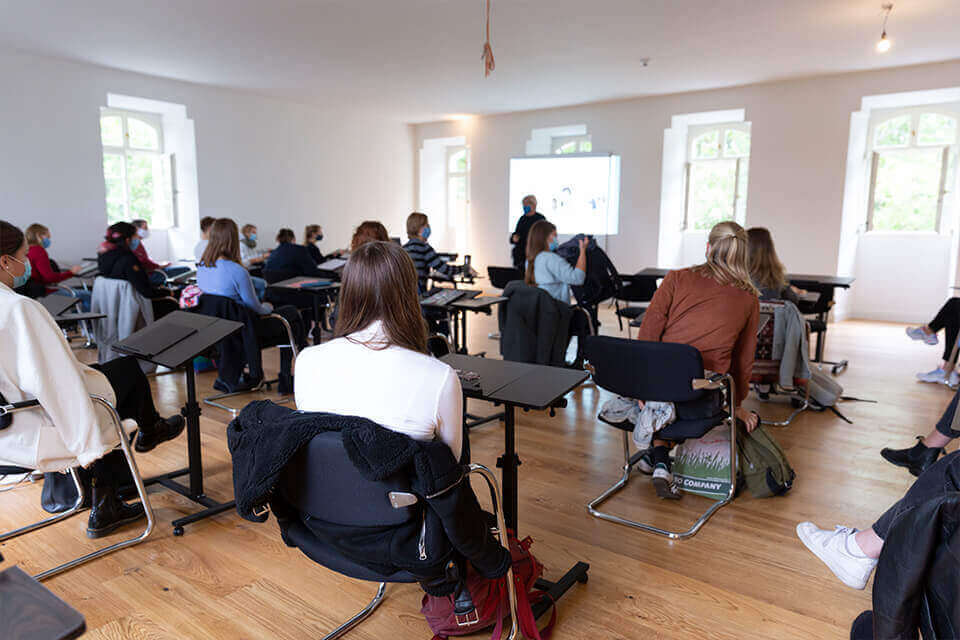
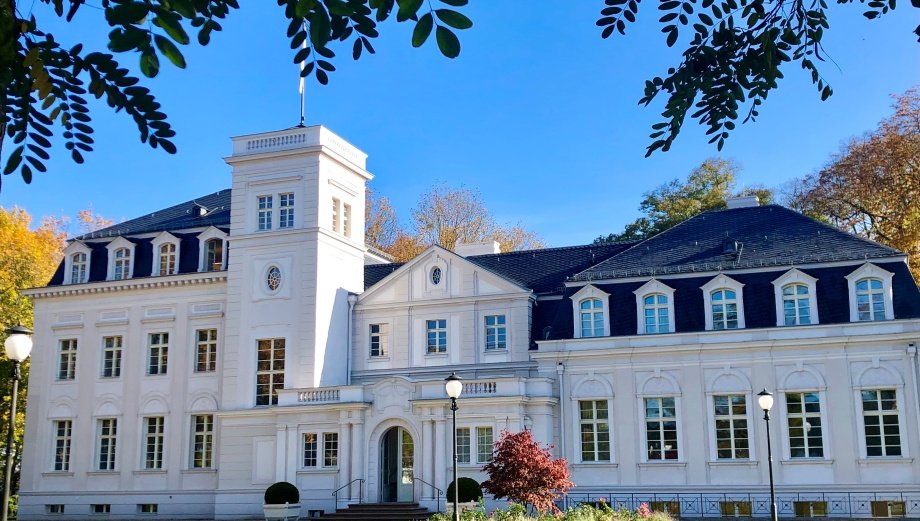
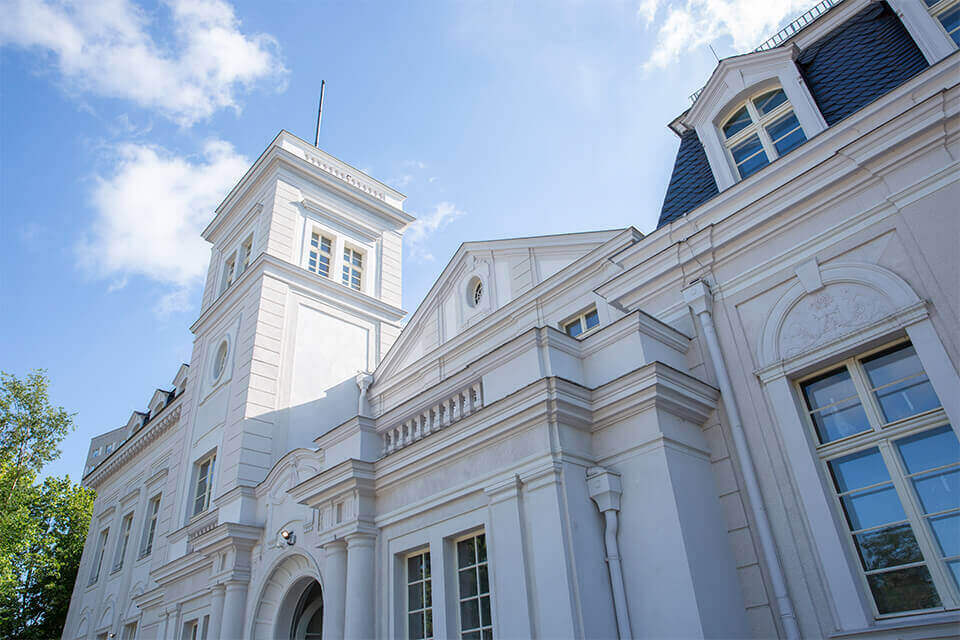
- Villa Carlshagen Campus: The administrative and social heart of the university, located in a renovated historic villa that provides a high-end, boutique atmosphere for student seminars.
- Schiffbauergasse Campus: Situated in the "ex-Oracle" building within Potsdam's cultural district, this site features modern lecture halls and expansive views of the Havel River.
- Ernst von Bergmann Clinic Labs: Practical training and clinical laboratories are integrated directly into the Ernst von Bergmann Klinikum, allowing students to learn in a live hospital environment.
- SkillsLab & Simulation Hub: A dedicated space where students practice clinical skills such as physical exams and surgical suturing on high-fidelity mannequins before entering clinical rotations.
- Interdisciplinary Research Clusters: The campus houses developing clusters for Aging Research, Preventive Medicine, and Systematic Neurosciences, focusing on the future of geriatric care.
- PULS Digital Learning Platform: A comprehensive e-learning infrastructure that hosts recorded lectures, digital course catalogs, and a centralized exam organization system.
- Specialized Health Library: HMU members have access to a vast network of physical and digital media, including over 26,000 e-books and 55 medical databases.
- Foreign Language Center: While focused on German instruction, the campus offers specialized Medical English and other language electives (French, Spanish, Chinese) to prepare students for global healthcare mobility.
- Joint Faculty of Health Sciences: A collaborative hub with the University of Potsdam and the Brandenburg University of Technology, expanding the network of available research facilities.
- University Sports Center: In cooperation with the Potsdam University Sports Center, HMU students have access to a wide range of athletic programs, from rowing on the Havel to traditional team sports.
Hospital & Medical Facilities
Leading tertiary care hospital attached to the institution
HMU is deeply integrated with the regional healthcare network of Brandenburg and beyond.
- Primary Partner: The Klinikum Ernst von Bergmann (Potsdam) serves as the central clinical training site, a maximum-care provider with over 1,100 beds.
- Multi-Location Network: Human Medicine students may also complete clinical phases at partner hospitals in Düsseldorf and Krefeld, providing a diverse patient demographic.
- Interprofessional Wards: Students participate in specialized wards where medical, nursing, and therapy students work together to manage patient cases under supervision.
Fee Structure
State University Affordability
As a private institution, HMU charges tuition to fund its small-group teaching model and advanced facilities.
Scholarship
- HMU Excellence Scholarship: Awarded to students with outstanding academic performance and social commitment during the selection process.
- KfW Student Loan: Available for domestic and eligible international students to cover tuition installments independently of parental income.
- BAföG: Many HMU programs are state-recognized and eligible for German federal student financial aid.
- BVB Scholarship: In partnership with the University of Europe, unique scholarships are sometimes available for health and sports-related tracks.
City Details
- The Vibe: Potsdam is a UNESCO World Heritage city, known for its Prussian palaces (Sanssouci) and deep film history (Babelsberg). It offers a peaceful, green environment just minutes from the intensity of Berlin.
- Connectivity:
- Public Transport: Excellent. The S-Bahn (S7) connects Potsdam to Berlin City Center in about 30–40 mins.
- Semesterticket: Included in the social contribution, providing free transport across Berlin and Brandenburg.
- Safety: Potsdam is consistently ranked as one of Germany's safest and most family-friendly cities.
Hostel & Mess
- Accommodation: The university does not own its own dormitories.
- Studierendenwerk West:Brandenburg: Provides the most affordable dorms (300 € – 400 €), but demand is extremely high.
- Private Residences: Students often live in "BaseCamp" or "Zimmerei" private dorms. A furnished room in a shared flat (WG) costs between 550 € and 850 €/month.
- Dining: Students have access to the public Mensa at the University of Potsdam and the clinic's staff cafeterias, offering subsidized meals (approx. 4 € – 7 €).
- Cost of Living: Potsdam is a high-cost area. A total monthly budget of 1,200 € – 1,500 € is recommended to cover all expenses.
Miscellaneous
- Deadlines: Applications are typically accepted on a rolling basis, but early submission is advised for the selection days.
- Documents: Requires a transcript of records, a motivation letter, and proof of health insurance.
- Pathways: Unique for allowing students to switch between "University" (Theory-heavy) and "University of Applied Sciences" (Practice-heavy) tracks within the same institution.
Collage Images Gallery
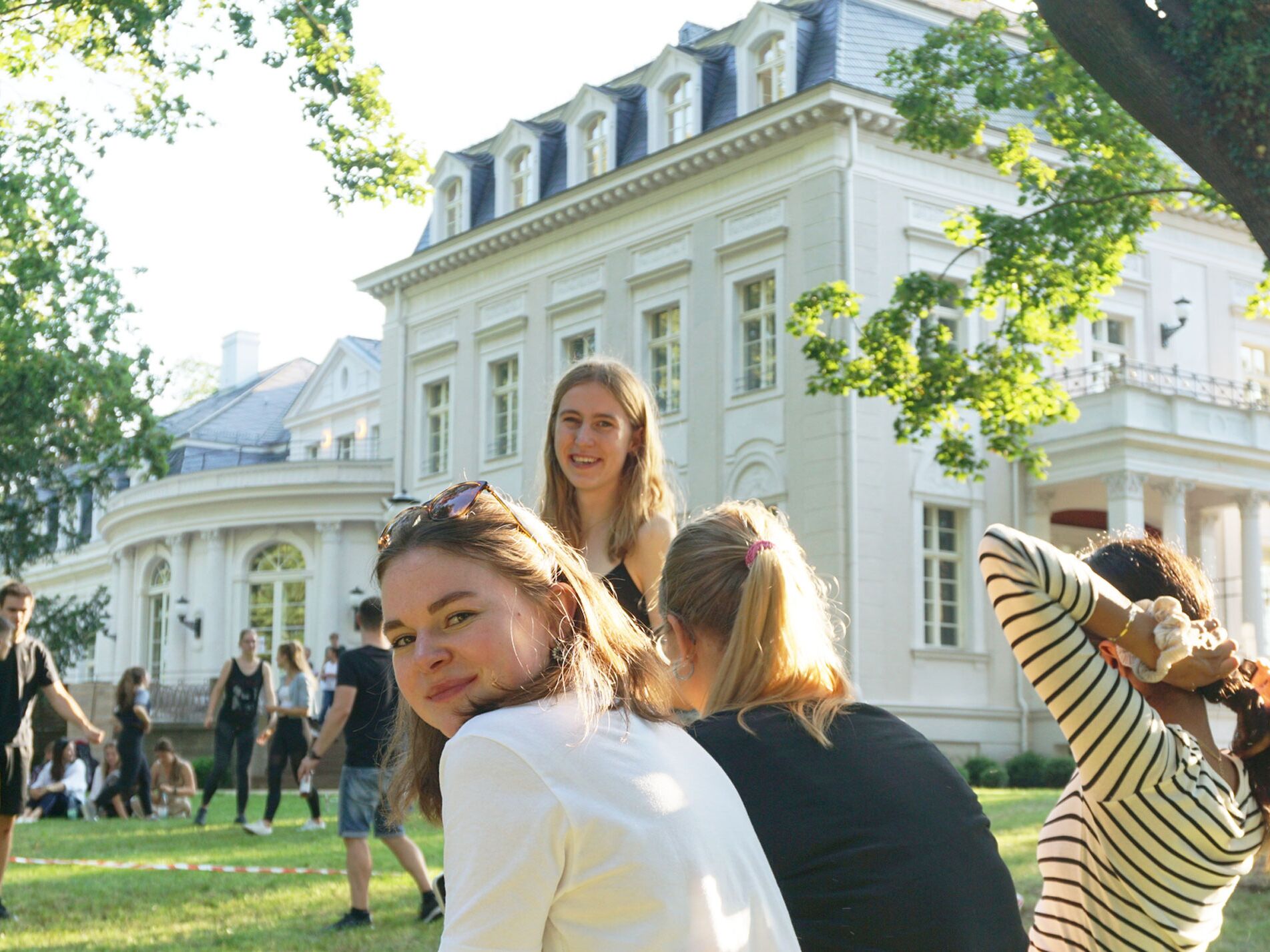
Facilities & Campus Life

Well-equipped Library

Experienced Faculty

Computer Lab

Sports Activities

Heritage Campus


Frequently Asked Questions
Why Consult With Us?
- 15+ years of experience in medical education counseling
- 5000+ students successfully guided
- 50+ partner universities worldwide
- Free initial consultation with no obligation