
Jalal-Abad People's Friendship University

General Information
The Jalal-Abad People's Friendship University named after A. Batirov Medical Faculty (JAPFU) is a private medical institution in Jalal-Abad, Kyrgyzstan, focused on providing medical education under state accreditation and NMC recognition.
General Information
Core Institutional & Program Facts
Official Designation: Jalal-Abad People's Friendship University named after A. Batirov Medical Faculty.
Founding Year: The medical faculty was established to meet the demand for international medical education, operating under state accreditation since inception.
Institutional Status: Functions as a Private University, holding full state accreditation from the Ministry of Education and Science, Kyrgyz Republic.
Recognition & Governance: Adheres strictly to national educational standards and operates under the Ministry of Health's oversight.
Degree Awarded: Graduates receive the Doctor of Medicine (MD) in General Medicine.
NMC Compliance: Fully NMC Approved. The MD degree is accepted as equivalent to MBBS for Indian licensing, subject to clearing the NExT exam.
Program Duration: The course is typically 5 Years (academic and clinical training combined) plus a mandatory 1 year internship, totaling a mandatory 6 years for Indian students.
Instruction Language: The entire program for the international cohort is conducted exclusively in English Medium.
Global Recognition: Recognized by WHO WDOMS, ECFMG, and WFME.
Annual Intake: Maintains an approved intake capacity for international students, with specific approvals for the General Medicine program.
Entry Requirement: Mandatory NEET UG qualification for Indian citizens (minimum 50% in 10+2 PCB).
Academic Philosophy: Focuses on integrating core medical knowledge with early clinical exposure and essential practical skills training.
Location: Strategically located in Jalal-Abad, a major regional city in the southern part of Kyrgyzstan.
Faculty Profile: Features qualified faculty, including specialists recruited specifically for the international English program.
Campus Facilities
JAPFU operates from its integrated facilities in Jalal-Abad, providing centralized academic and administrative functions.
Physical Infrastructure & Learning Environment
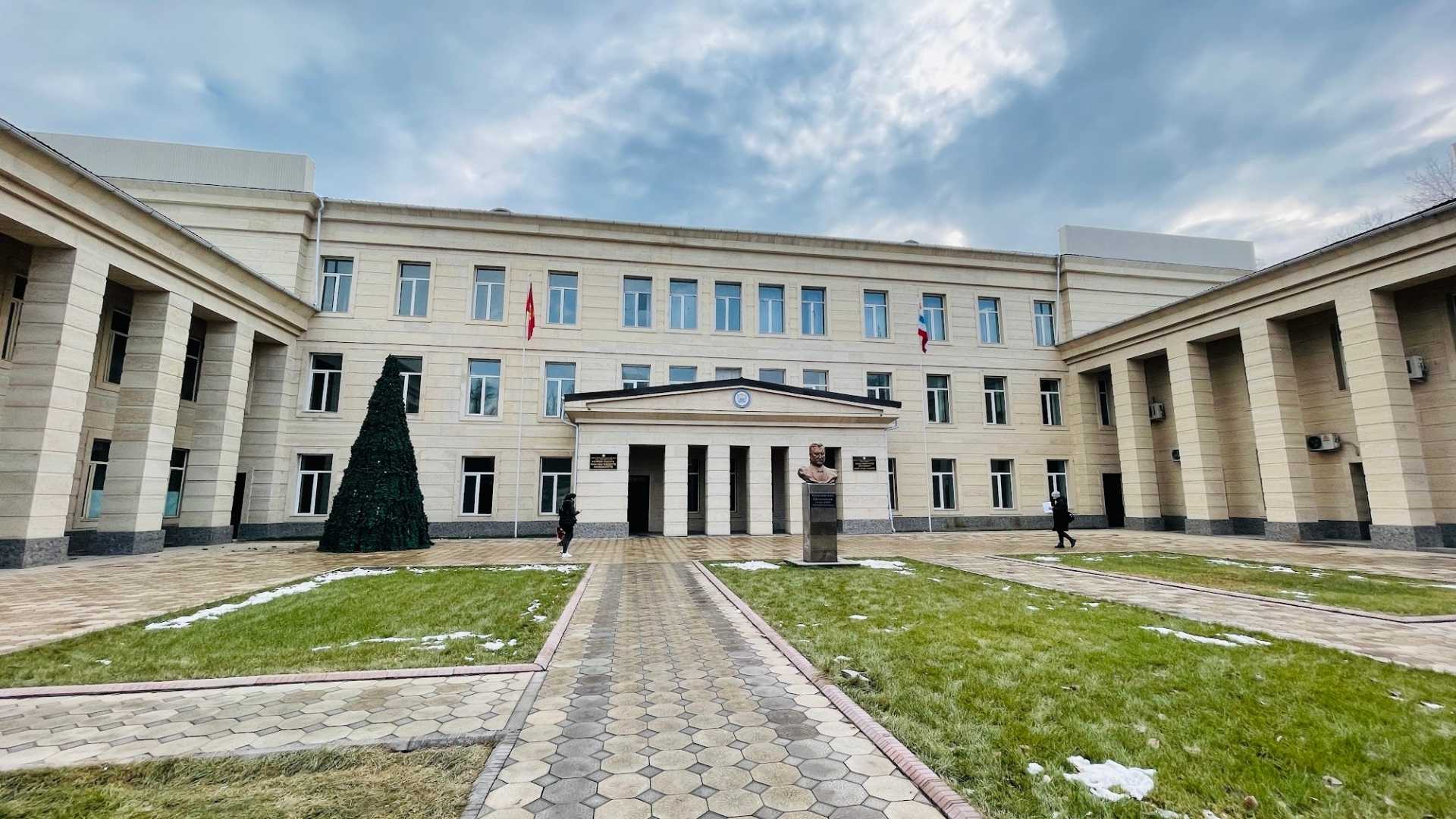
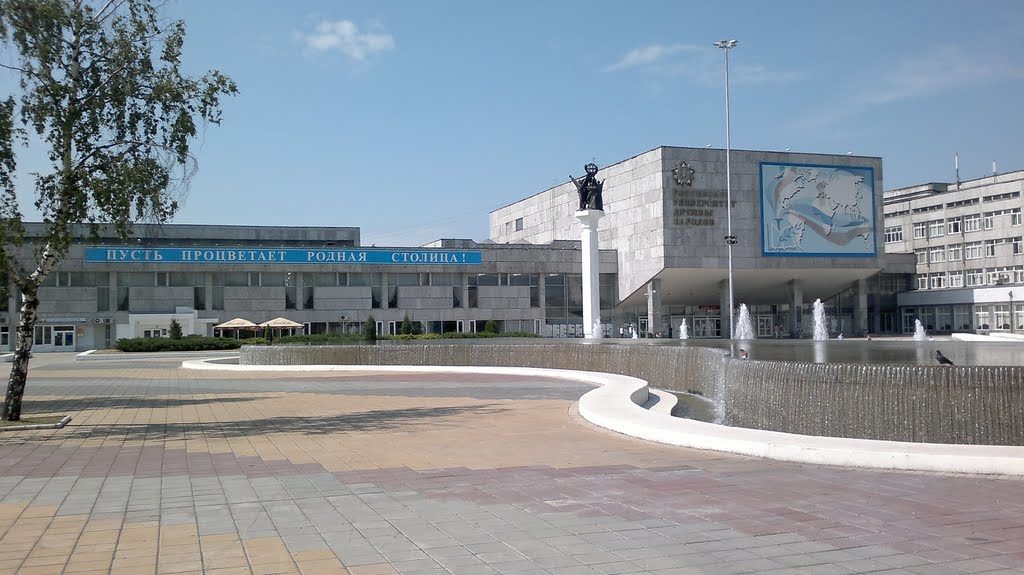
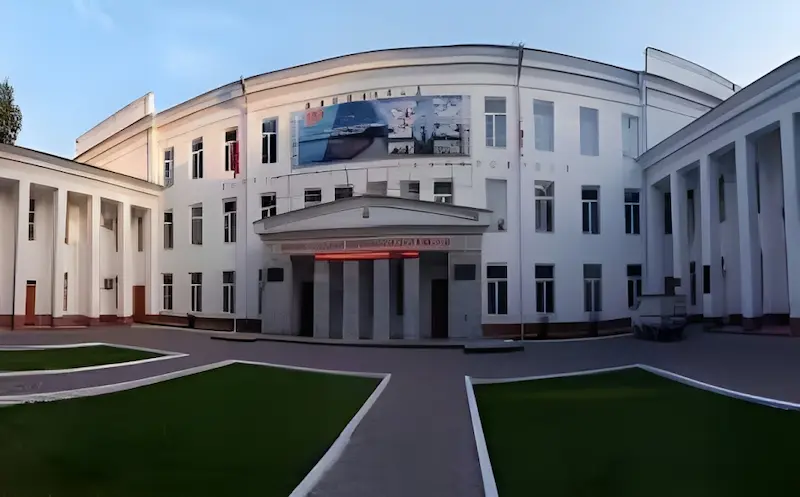
Campus Layout: The university complex is well-integrated into the urban area of Jalal-Abad, featuring modern academic and administrative blocks.
Academic Blocks: Houses modern academic blocks with spacious Lecture Halls (gallery-style) equipped with contemporary A/V teaching aids and multimedia systems.
Digital Classrooms: Equipped with advanced digital aids and smart boards for interactive teaching and clinical case studies.
Simulation Centers: Maintains functional Clinical Skills Centers and Simulation Labs for mandatory procedural training (e.g., intubation, first aid).
Anatomy Facilities: Features dedicated Anatomy Labs and dissection halls, ensuring adequate practical resources.
Departmental Labs: Extensive laboratories are provided for foundational sciences (e.g., Biochemistry, Microbiology, Pathology).
Central Library: Maintains a large, specialized Medical Library with a comprehensive collection of print and digital resources.
Digital Access: Provides institutional access to essential digital medical databases and e-journals.
Reading Halls: Provides numerous spacious reading halls with ample seating capacity for focused study.
Wi-Fi Connectivity: High-speed Wi-Fi access is provided across academic buildings and libraries.
Internal Canteens: Multiple student canteens and cafeterias are available, often catering specifically to Indian cuisine.
Security: The academic areas are monitored by 24/7 security personnel and CCTV surveillance.
Heating & Utilities: Centralized utility management ensures effective heating and ventilation in all blocks.
Proximity: The campus maintains close proximity or dedicated transport links to affiliated clinical bases.
Hospital & Medical Facilities
Leading tertiary care hospital attached to the institution
Clinical exposure is rigorous and mandatory, utilizing major state clinical bases in Jalal-Abad.
Clinical Facilities & Exposure
Clinical rotations are mandatory at major Regional and City Hospitals in Jalal-Abad, as mandated by the NMC for practical exposure.
Students rotate across a collective clinical network utilizing 700+ teaching beds across affiliated bases.
Exposure is guaranteed to a high volume of diverse pathology in the regional referral centers.
Core training method involves intensive bedside teaching and supervised patient interaction from the clinical years onwards.
Significant Surgical Exposure is provided in affiliated hospital Operating Theatres.
Direct exposure and practical training using advanced imaging technologies (MRI, CT, Angiography).
Structured, compulsory rotations in Internal Medicine, General Surgery, OBGYN, Pediatrics, and Traumatology.
Dedicated postings in high-traffic Emergency and Trauma Departments are compulsory.
Clinical training is directly supervised by senior specialists and clinical faculty.
Practical application of Kyrgyz/Russian language skills is mandatory during patient interaction.
Fee Structure
State University Affordability
The financial structure is highly economical and competitive, typical of private medical universities in Kyrgyzstan.
Financial Commitments
Annual Tuition Fee: Approx. $4,000 – $6,000 USD per year.
Total 5-Year Tuition: Approx. $20,000 – $30,000 USD (total academic fee).
Payment Mode: Fees are payable annually in USD or the KGS (Kyrgyzstani Som) equivalent.
Tuition Stability: Fees are generally stable, subject to minor annual revisions by the university.
Hostel Fees (Annual): Approx. $400 – $700 USD per year (residential rent).
Mandatory Medical Insurance: Approx. $100 – $200 USD per year.
Mandatory Visa/Residency Permit Fee: Approx. $100 – $200 USD per year.
Initial Registration Fee: A small, non-refundable one-time enrollment fee is collected in the first year.
Caution Deposit (Refundable): A refundable caution deposit is collected once (amount varies).
No Capitation Fee: Absolutely no non-refundable development or capitation fees are charged.
Total 1st Year Payment (Approx.): Estimated to be between $5,000 – $7,000 USD (includes tuition, mandatory fees, and deposits).
City Details
Jalal-Abad is a smaller, historic city in Southern Kyrgyzstan, serving as a regional administrative and cultural center.
Life in Jalal-Abad
General Atmosphere: Jalal-Abad offers a peaceful, traditional Central Asian environment, known for its historic sites and regional focus.
Safety Profile: The city is generally regarded as safe for international students, with a calm environment.
Student Life: Life is predominantly focused on academics and local cultural events.
Climate: Experiences a continental climate with hot summers and cold winters.
Transportation: Local public transport is reliable and highly affordable.
Famous Food: Local cuisine is rich in Central Asian flavors, emphasizing Lagman and meat dishes.
Indian Food Accessibility: Availability of specialized Indian restaurants or grocery stores is very limited, making the self-cooking model essential.
Language in Daily Life: Both Kyrgyz and Russian are widely spoken in public.
Accommodation Areas: Students primarily reside in secure university hostels.
Cost of Living: The average monthly cost of living is highly economical.
Hostel & Mess
Residential living is structured, secured, and features a highly efficient self-sufficient model.
Residential Details
Hostel Policy: Mandatory on-campus residency is usually required for the first year.
Accommodation Type: Rooms are located in secure, university-managed dormitory blocks.
Room Configuration: Primarily 2-seater or 3-seater shared occupancy.
Furnishings: Rooms include beds, study desks, chairs, and individual heating radiators.
Security: Hostels maintain robust 24/7 security staff presence and CCTV surveillance.
Heating System: Equipped with effective centralized heating systems.
Kitchen Facilities: Common kitchen areas are provided on each floor or wing.
Mess System (Self-Catering): The standard model is self-cooking.
Dietary Control: This allows Indian students complete adherence to specific dietary requirements.
Study Halls: Dedicated, quiet Study Halls/Reading Rooms are provided within the hostel blocks.
Miscellaneous
Key Student Obligations & Career Pathways
Admission Selection: Based on NEET UG merit and subsequent institutional screening.
No Service Bond: No mandatory service bond or financial penalty is imposed by the university or the Kyrgyz government.
Internship Requirement: Students must complete the 6-year duration (including the mandatory 1-year internship) to be eligible for the NExT exam in India.
NExT Eligibility: Graduates must successfully complete the required duration and pass the NExT to secure a license to practice in India.
Visa Requirements: Requires annual student visa and residency permit renewal coordinated through the university.
Language Requirement: Mandatory language training (Kyrgyz/Russian) is required for clinical posting eligibility.
Academic Calendar: The session typically commences in September/October.
Part-Time Work: Generally restricted on international student visas.
Age Requirement: Students must be 17 years old by December 31st of the admission year.
Postgraduate Options: Residency options are available locally.
Collage Images Gallery


Facilities & Campus Life

Well-equipped Library

Experienced Faculty

Computer Lab

Sports Activities

Heritage Campus


Frequently Asked Questions
Why Consult With Us?
- 15+ years of experience in medical education counseling
- 5000+ students successfully guided
- 50+ partner universities worldwide
- Free initial consultation with no obligation