

Kharkiv National Medical

General Information
Founded in 1805, Kharkiv National Medical University is one of the oldest and most historically significant medical institutions in Ukraine. It has a long-standing reputation for producing high-caliber medical professionals and was a top choi
General Info
Primary Location: 4 Nauky Avenue, Kharkiv, Ukraine – 61022.
Degree Awarded: MD (Equivalent to MBBS in India).
Course Duration: 6 Years (5 years academic + 1 year internship).
Language of Instruction: English (Bilingual options for Russian/Ukrainian also exist).
Accreditation & Recognition:
Recognized by the WHO, UNESCO, and National Medical Commission (NMC).
Accredited by the Ministry of Education and Science of Ukraine.
Admission Requirements:
Selection: Based on NEET-UG qualification (for Indian students).
Eligibility: 10+2 with Physics, Chemistry, Biology, and English (Minimum 50% for General, 40% for Reserved).
Campus Facilities
The university features a massive urban campus integrated into the "Student City" of Kharkiv.
Historical Academic Blocks: Majestic 19th-century buildings equipped with modern lecture halls and smart boards.
Specialized Museums: Includes a world-renowned Anatomy Museum and a Museum of History of Medicine.
Central Research Laboratory: A high-tech facility for biochemical and genetic research.
Scientific Library: Houses over 1 million volumes, including rare medical manuscripts and a comprehensive digital database.
Simulation Center: Features state-of-the-art medical manikins for hands-on training in emergency medicine and surgery.
Hospital & Medical Facilities
Leading tertiary care hospital attached to the institution
KNMU is affiliated with a vast network of specialized clinics and hospitals in Kharkiv.
47 Attached Clinics: Students rotate through diverse medical environments including the University Dental Center and the University Hospital.
Clinical Training: Senior students (Years 4–6) participate in "bedside learning," taking medical histories and assisting in surgeries under supervision.
Specialized Institutes: Includes the Institute of Occupational Hygiene and Occupational Diseases and the Institute of Medical Genetics.
Fee Structure
State University Affordability
Fees are estimated based on current government-regulated rates for international students.
| Fee Category | Amount (Approx. Annual) | Notes |
| Tuition Fee (English) | $4,800 | Approx. ₹4,00,000 per year. |
| Hostel Fee | $800 – $1,200 | Depends on the specific hostel and occupancy. |
| One-Time Charges | $1,500 – $2,000 | Covers Visa, Invitation, and Registration. |
| Insurance & Medical | $200 | Annual mandatory medical insurance. |
Monthly Living Cost: Approx. $200 – $300 (₹16,000 – ₹25,000) for food and transit.
Note: During periods of online learning, hostel fees may be waived or reduced.
Scholarships
Government Subsidies: The university offers competitive tuition rates as a state-funded institution.
Merit-Based Incentives: High-performing students may receive small grants or concessions during their clinical years.
Internship Stipend: Internships in Ukraine are generally unpaid for international students, though this depends on the specific hospital contract.
City Details
The Vibe: Kharkiv is known as the "Intellectual Capital" of Ukraine. It is a city of parks, theaters, and over 60 higher education institutions.
Connectivity:
Air: Kharkiv International Airport (HRK); however, most students currently travel via Poland (Krakow/Warsaw) or Romania and then enter Ukraine by train/bus.
Local: An extensive metro system connects all university departments and hospitals.
Hostel & Mess
Accommodation: The university has 6 large hostels with triple-sharing rooms, kitchens, and laundry facilities.
Indian Mess: Prior to the conflict, multiple private Indian messes operated near the hostels. Currently, students often use shared kitchens to cook for themselves.
Safety: In normal times, Kharkiv is a vibrant student town. Currently, the university provides extensive Psychological Support Services for students affected by the regional instability.
Student Societies: Active Scientific Student Societies allow juniors to participate in research from the first year.
Miscellaneous
Distance Learning: KNMU has successfully implemented a robust Distance Learning System (Moodle/Zoom) to ensure academic continuity.
KROK Exams: Students must pass the KROK-1 (after 3rd year) and KROK-2 (after 6th year) state exams to receive their degree.
Collage Images Gallery
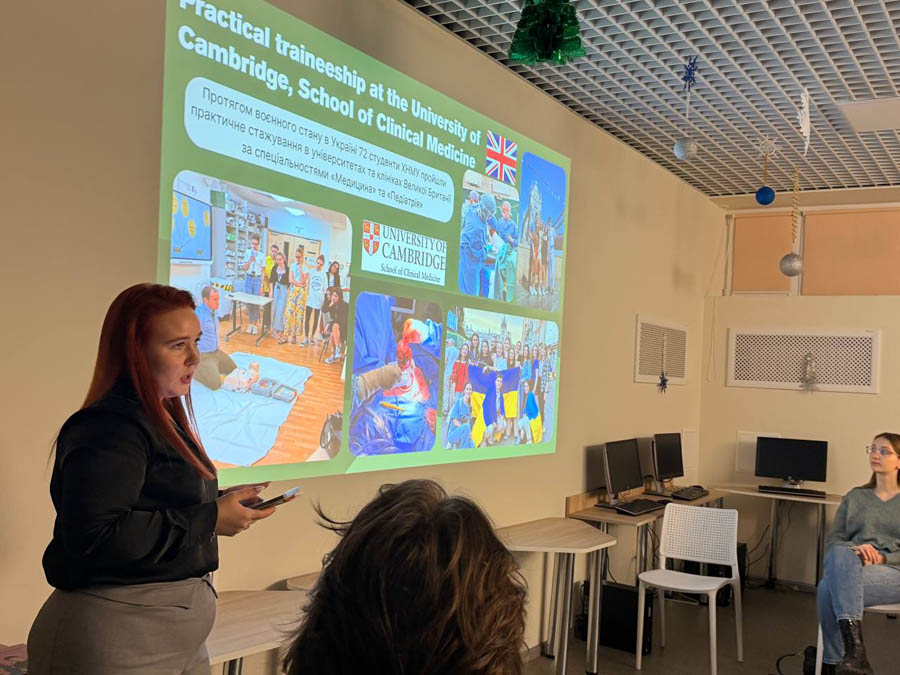

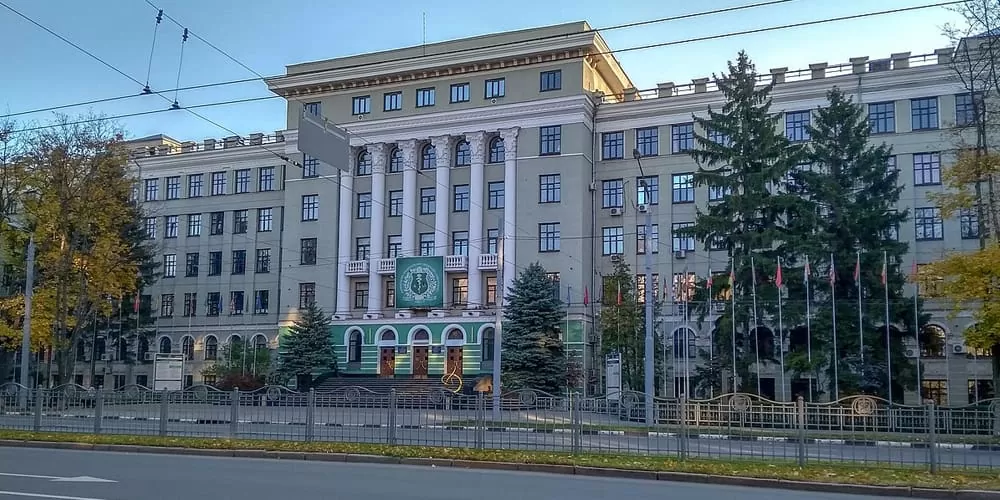
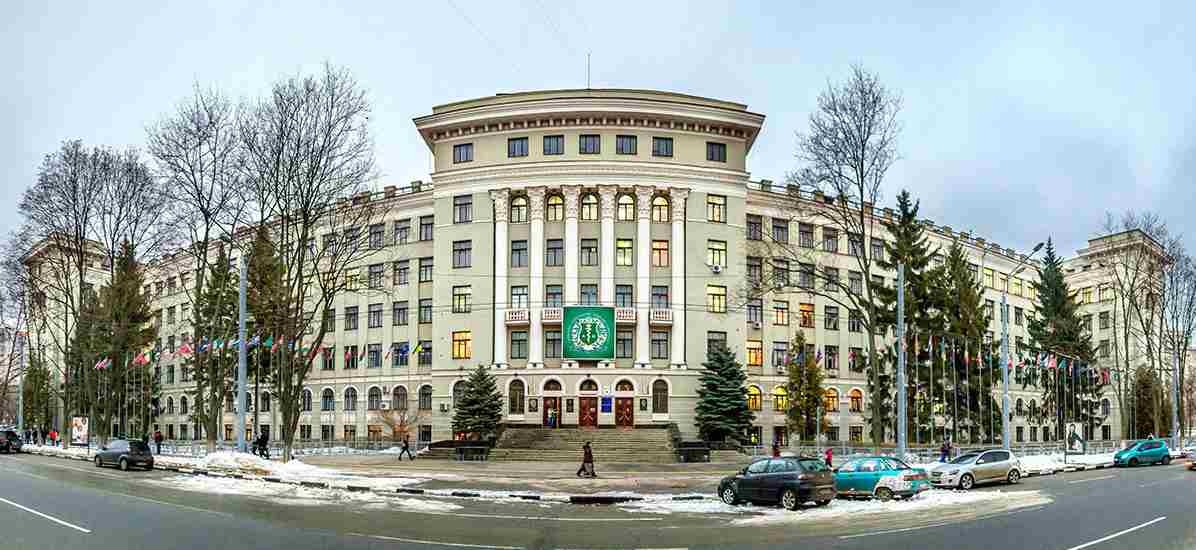
Facilities & Campus Life

Well-equipped Library

Experienced Faculty

Computer Lab

Sports Activities

Heritage Campus


Frequently Asked Questions
Why Consult With Us?
- 15+ years of experience in medical education counseling
- 5000+ students successfully guided
- 50+ partner universities worldwide
- Free initial consultation with no obligation