
Martin-Luther-Universität Halle-Wittenberg Medizinische Fakultät

General Information
The Medical Faculty of Martin Luther University Halle-Wittenberg is one of the oldest and most traditional medical schools in Germany, with medical teaching dating back to 1694. Located in the cultural and scientific hub of Halle (Saale), the faculty is renowned for its focus on "Aging Medicine" and molecular signal transduction. It serves as a central pillar of healthcare in southern Saxony-Anhalt, combining centuries of academic heritage with cutting-edge clinical research and a massive learning clinic.
General Info
- Established: 1694 (Medicine has been taught in Halle since the university's early years).
- Primary Location: > Magdeburger Straße 8, 06112 Halle (Saale), Germany.
- Academic Model: Staatsexamen (German State Examination).
- Structure: A 6.3-year program (13 semesters).
- Pre-clinical Phase: Focuses on the basics of human biology, physics, and chemistry.
- Clinical Phase: Hands-on training in clinics and institutes, often utilizing one of Germany's largest learning clinics.
- Practical Year (PJ): The final year of full-time clinical internship.
- Clinical Focus: Major research and teaching priorities include Cardiovascular Diseases, Oncology, and Aging Medicine (ZASSA).
- Instruction: 100% German. C1 level proficiency (DSH-2 or TestDaF 4x4) is strictly required for the MD program.
- Interdisciplinary Tracks: Offers programs in Evidence-Based Nursing, Midwifery, and Health and Nursing Sciences alongside Human Medicine and Dentistry.
- Admission: Restricted (Numerus Clausus). Based on the Abitur/High School grade and the TMS (Test for Medical Studies).
Campus Facilities
The medical campus is characterized by "short distances" and high-tech facilities, mostly centered around the Magdeburger Straße and the Weinberg Campus.
- Dorothea Erxleben Learning Center (DELH): One of the largest and most advanced learning clinics in Germany, where students practice clinical skills in a realistic, simulated hospital environment.
- Charles Tanford Protein Center: A high-end research facility with over 5,000 m² of space dedicated to protein research and molecular medicine.
- Core Facility Imaging: Provides students and researchers with world-class microscopy and image acquisition tools, integrated into the German BioImaging network.
- Zentrum für Medizinische Grundlagenforschung (ZMG): The central hub for basic medical research, housing core facilities for flow cytometry, biobanking, and mass spectrometry.
- HALOmem: A specialized center for innovation competence focusing on membrane proteins, offering unique research opportunities for molecular-minded students.
- ZASSA (Center for Ageing Medicine): A flagship research center in Southern Saxony-Anhalt dedicated to the challenges of geriatric medicine and self-management in old age.
- Weinberg Campus Technology Park: The second-largest technology park in eastern Germany, providing a direct link between the medical faculty and various Max Planck and Fraunhofer institutes.
- Main MR Imaging Facility: A dedicated center for advanced magnetic resonance imaging research and diagnostics.
- Clinical Research Unit (ECTU): A specialized facility for early clinical trials, giving students insight into how new drugs are brought to market.
- Medical Library (Ha 4): A branch of the University and State Library (ULB) specifically for medicine, providing 24/7 access to clinical textbooks and databases.
Hospital & Medical Facilities
Leading tertiary care hospital attached to the institution
The Universitätsklinikum Halle (Saale) (UMH) is the maximum-care provider for the region:
- Capacity: Includes over 30 specialized clinics and institutes with approximately 1,000 beds.
- Patient Care: Treats roughly 40,000 inpatients and 195,000 outpatients annually.
- Krukenberg Cancer Center (KKH): A specialized interdisciplinary center for oncology, focusing on individualized cancer therapy.
- Mid-German Heart Center: A high-volume facility for cardiovascular research and complex heart surgeries.
Fee Structure
State University Affordability
MLU Halle-Wittenberg is a public university and does not charge tuition fees for the medical degree.
Scholarship
- Deutschlandstipendium: 300 €/month for students with excellent academic records and social engagement.
- HAL-OX Research Network: Specific scholarships for international research exchange, particularly with Oxford University (up to 1,500 €/month).
- DAAD Graduation Grants: Financial aid for international students in the final phase of their medical studies.
- Graduiertenstipendien: Available for students pursuing a doctoral degree (Dr. med.) in one of the faculty's core research areas.
City Details
- The Vibe: Halle is a "Green City" on the Saale river, known for its rich musical history (Handel’s birthplace) and vibrant student life. It offers a cozy, historic atmosphere with modern scientific infrastructure.
- Connectivity:
- Public Transport: Excellent tram network; the "Semesterticket" covers the entire MDV area (Central German Transport Association).
- Proximity to Leipzig: Only 20–30 minutes away by S-Bahn, offering double the cultural and nightlife options.
- Safety: A safe, medium-sized city with a very high density of researchers and students.
Hostel & Mess
- Accommodation: Managed by Studentenwerk Halle.
- Student Dorms: Rent is remarkably low, ranging from 180 € to 350 €/month. Many dorms are centrally located near the Weinberg or Medical Campus.
- Private Housing: Very accessible; a room in a shared flat (WG) typically costs 250 € – 450 €/month.
- Dining: The Mensa Tulpe and Mensa am Weinberg offer subsidized meals for students (approx. 3.00 € – 6.00 €) and are popular social hubs.
Miscellaneous
- APS Certificate: Mandatory for applicants from India, China, and Vietnam.
- Uni-assist: Non-EU applicants must submit their documents via uni-assist to receive a VPD.
- Deadline: July 15 for the Winter Semester (the only intake for Medicine).
Collage Images Gallery
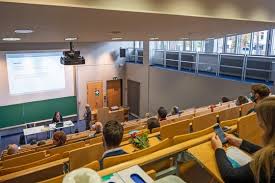
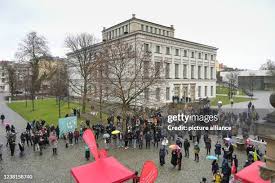
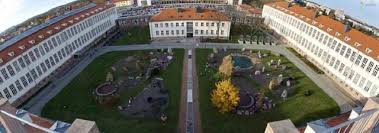
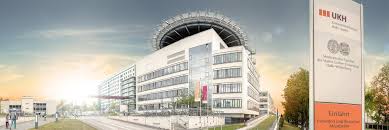
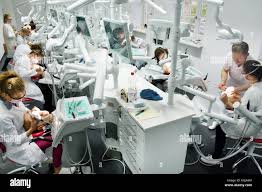
Facilities & Campus Life

Well-equipped Library

Experienced Faculty

Computer Lab

Sports Activities

Heritage Campus


Frequently Asked Questions
Why Consult With Us?
- 15+ years of experience in medical education counseling
- 5000+ students successfully guided
- 50+ partner universities worldwide
- Free initial consultation with no obligation