
1. Is the whole degree taught in English?
+Yes. All six years run in English, and you take Bulgarian as a subject so you can speak to patients on the wards.
 Bulgaria | Est. 1961
Bulgaria | National Evaluation and Accreditation Agency of Bulgaria; Ministry of Education and Science; listed in the World Directory of Medical Schools, school ID F0000283 | English medium
Expert will call you within 2 hours
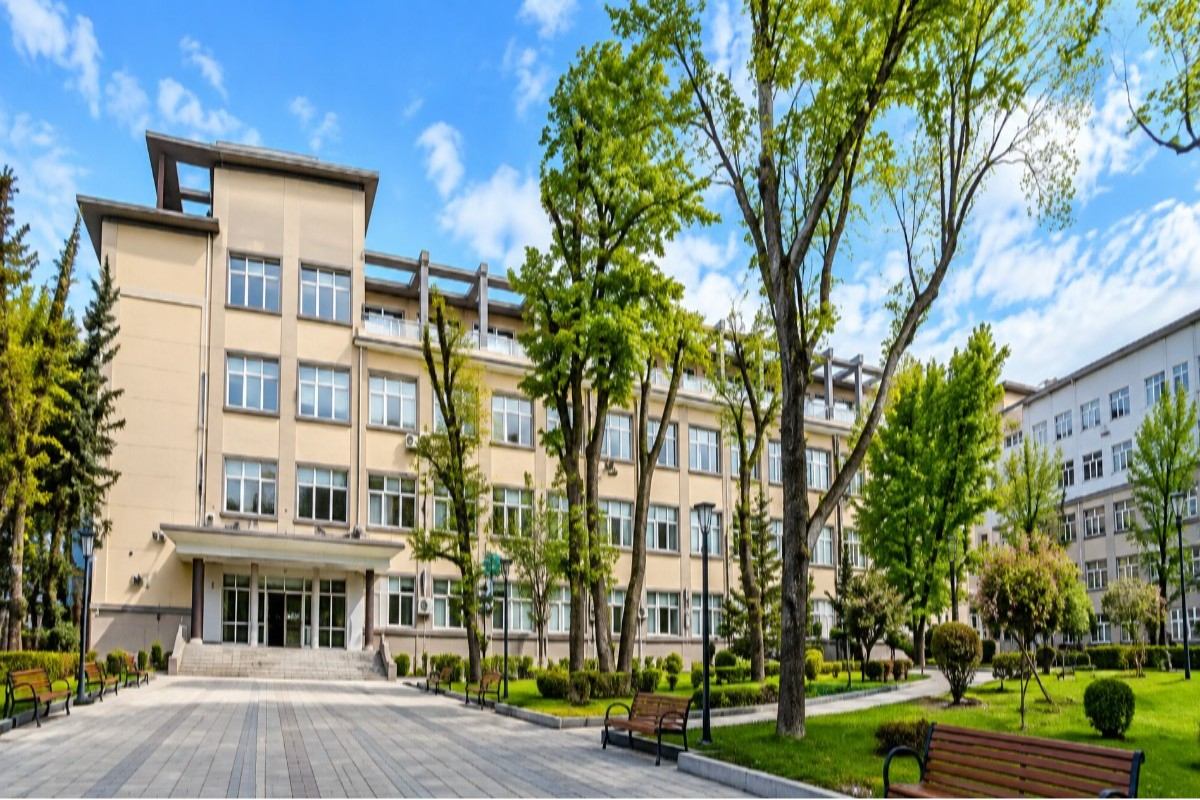
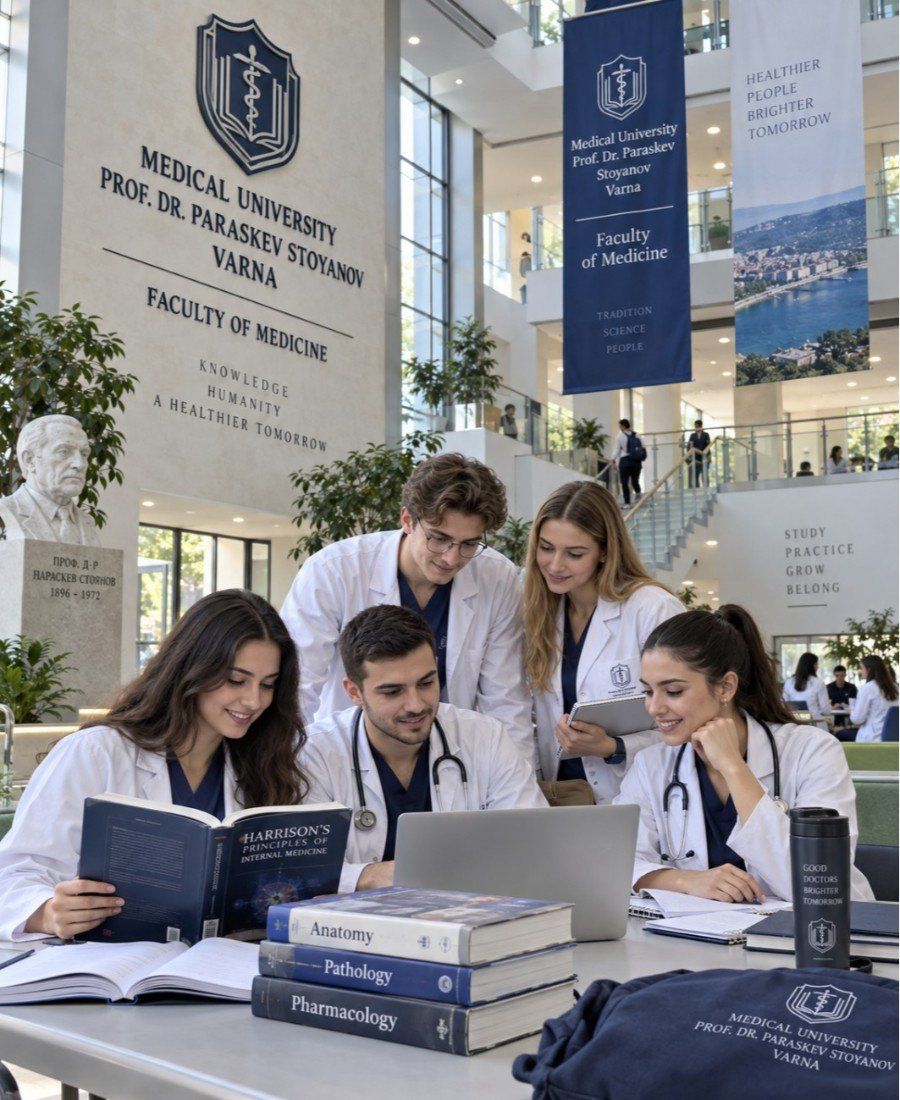
The Faculty of Medicine at Medical University Varna offers medicine to people. The school is located on a small campus in the city, just a short walk from the Black Sea. The university is named after Prof. Dr. Paraskev Stoyanov, a surgeon who is known as the founder of modern Bulgarian surgery. It opened in 1961 as a medical school for people in the northeast of Bulgaria. It is now a state university run by the Bulgarian Ministry of Education and Science. The medical degree it gives meets the requirements for Bulgaria to be a member of the European Union.
Here, you study medicine for six years and get a Master's degree in medicine, which is what Bulgarian law says a doctor must have. The university teaches the whole program in English for international students, and there is also a stream that is taught in Bulgarian. But you have to learn Bulgarian before you start working on the wards in the third year. You don't need to know Bulgarian to get into the English track, but the university makes you do it during the pre-clinical years. Because of this, medical Bulgarian is on the schedule as a marked subject, and you don't just do it for the sake of doing it.
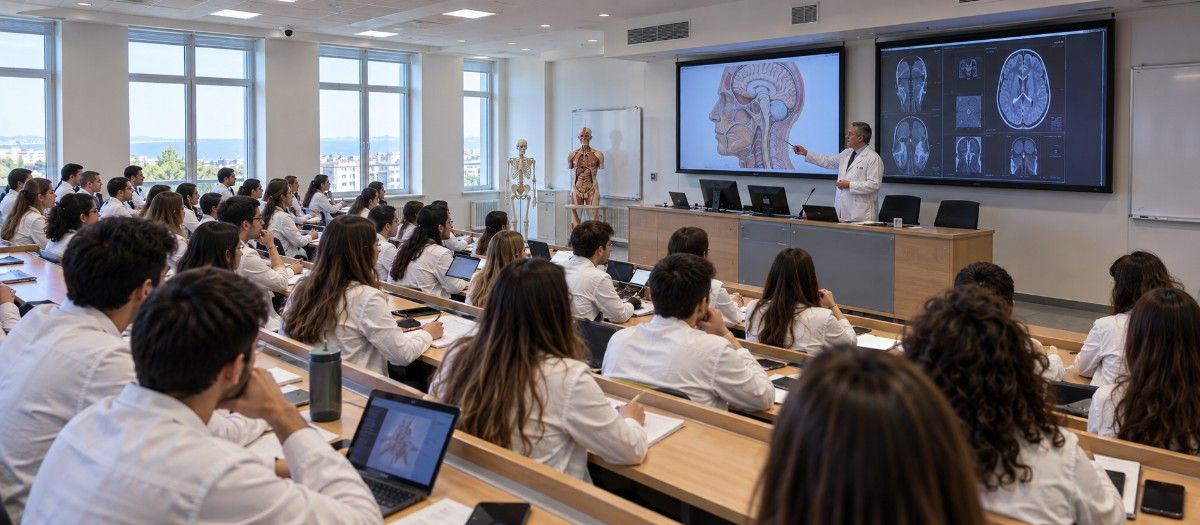
The academic system breaks apart clearly. In years one and two, students learn the basics of biology, chemistry, mechanics, physiology, anatomy in the dissection hall, and biochemistry. When you study anatomy, you work with real body parts from dead people, so you don't just learn about structure from models and screens. In years three and four, you learn about pathology, pharmacology, microbiology, and clinical subjects. You also start clinical clerkships at hospitals that are affiliated with the university. In years five and six, you work full-time in a hospital and do rounds in adult medicine, surgery, obstetrics and gynecology, pediatrics, neurology, psychiatry, and emergency medicine. On the wards, the sixth year is like a job before graduation; it's a year of study that ends with state exams.
The hospital network in Varna is important for clinical training, and it's also the best reason to study here. The university teaches at St. Marina University Hospital, which is the most important and largest hospital in northeastern Bulgaria and the main center for heart surgery, neurosurgery, oncology, and organ transplants in the region. The Naval Hospital, the oncology center, the St. Anna University Hospital, and the obstetrics and pediatrics expert centers are also places where students can learn. About a million people live in the area that Varna serves, so the case mix gets to you instead of just passing you by. You see sudden heart problems, injuries from a busy port city, and the long-term illnesses that come with an aging population.
The school spends money on simulations. It has a training center with high-fidelity manikins, birthing simulators, laparoscopic trainers, and ultrasound phantoms that are used for organized objective exams by the departments. In the training rooms, you practice cannulation, managing an airway, suturing, and basic life support before you do them on a real patient. Instead of replacing the anatomy hall, the virtual dissection table adds to it.
Marine and coastal medicine, cardiovascular disease, cancer, medical genetics, and public health are the main areas of research at Varna. The university also has a Center of Competence in Personalized Medicine with genomics and 3D bioprinting labs. The second year is when you can join a student scientific society. Before you graduate, you can also give a talk at the annual student research meeting and have your name on a poster. This is the way for students who want to get into competitive residencies.
The experience is shaped by Varna itself. About 340,000 people live in the city, which is on the Black Sea and is supported by students from the medical, technical, and economics universities. The rent stays less than in Sofia. The beach, the Sea Garden, and the summer give you a place to go when the school year is over. By Eastern European standards, the winters stay mild, and the airport is directly linked to several European hubs, which is useful when you fly home twice a year.
A lot of international students have been coming to this school for a long time. This school has students from Germany, the UK, Greece, Turkey, India, Israel, and the Gulf states. The foreign office is in charge of residence permits, insurance registration, and renewing permits every year. The university has a preparatory year for people who want to go but need to improve their biology, chemistry, or academic English before they can start. If you went to a different school system, this year helps you get used to the university system.
You should have a good idea of how to get in. International candidates can get into the university if they have good grades in biology and chemistry when they leave school. The university also gives tests in both subjects. Applicants who get the required grades on their school certificate may not have to take the test. The rules for this change every year, so check the most recent admissions announcement instead of an old forum post. Indian applicants also need to have a qualifying NEET score. This is because the National Medical Commission needs it before you leave India and again when you come back to take the licensing test.
The European structure is used for recognition. The degree is listed in the World Directory of Medical Schools with the school ID F0000283. Graduates can apply for ECFMG licensing and the USMLE pathway. The award meets EU Directive 2005/36/EC on the recognition of professional qualifications. This means that once you pass the state exams, it will be automatically recognized in all EU and EEA member states. Graduates who are going back to India take the licensing exam that is currently run by the NMC. Graduates who are going to the UK apply through the GMC.
Costs of living stay about the same. It is much cheaper to live in a room at university than to rent a private apartment, and shared apartments near campus are still cheap compared to Western Europe. Your monthly spending stays in a stable range, you cook for yourself, and you use the tram and bus system. For everything else, most students set aside between 350 and 500 EUR per month.
The university runs a swimming pool, a sports center, a library with online access to major medical sources, and a student council that plans events for students and the university. National student leagues are made up of sports teams, and the medical student group hosts workshops on clinical skills and exchange placements through IFMSA.
Tell yourself the truth about how much work you have. Oral exams are still the most important part of medical education in Bulgaria. The test is given in person, and you have to defend your answer. The most retakes happen in anatomy in the first year and pathophysiology in the third. Students who plan to cram the whole year into the last three weeks usually don't pass. Students who treat the semester as one long work period usually do.
No hidden charges, no donation. The full picture of costs at MBBS in Medical University "Prof. Dr. Paraskev Stoyanov" Varna Faculty of Medicine.
Tuition Fee
EUR 8,000 per year (approx. USD 8,640 / INR 7,60,320)
EUR 8,000 per year (approx. USD 8,640 / INR 7,60,320)
Hostel Fee
EUR 1,100 per year (approx. USD 1,190 / INR 1,04,720)
EUR 1,100 per year (approx. USD 1,190 / INR 1,04,720)
Food & Meals
EUR 2,400 (approx. USD 2,590 / INR 2,27,920)
per year
Insurance
EUR 300 (approx. USD 325 / INR 28,600)
per year
Donation
No doantion fee
No hidden fee
Total Estimated Cost
EUR 12,200 (approx. USD 13,177 / INR 11,59,576)
6 year
25–35%
Average FMGE first-attempt pass rates for students from many overseas medical universities. Students from structured programs consistently score higher.
Students returning to India need to clear the FMGE/NExT exam. MBBS in Medical University "Prof. Dr. Paraskev Stoyanov" Varna Faculty of Medicine integrates exam-oriented coaching into the regular curriculum so students are prepared from day one.
A structured program that takes you from foundational sciences to clinical mastery.
First aid You spend the year on structure. Anatomy dominates the timetable, and you work with cadaveric specimens in the dissection hall rather than only with atlases. Bulgarian language starts now because you need it on the wards later.
Human anatomy, histology and embryology, medical biology, medical chemistry, biophysics, Latin terminology, Bulgarian language,
You move from structure to function. Physiology and biochemistry explain how the body works and how it fails, and microbiology introduces the organisms behind infectious disease. Oral examinations in physiology set the pace for the rest of the degree.
Physiology, biochemistry, microbiology, medical ethics, medical Bulgarian, social medicine, hygiene
Clinical work begins. Propaedeutics teaches you history taking, physical examination and case presentation, and you apply it on real patients in the teaching hospitals. Pathophysiology links the basic sciences to disease.
Pathoanatomy, pathophysiology, pharmacology, propaedeutics of internal medicine, general surgery, medical imaging, epidemiology
You rotate through the major specialties and carry patients through admission, investigation and treatment. Ward rounds, case discussions and bedside teaching replace most lecture time.
Internal medicine, surgery, paediatrics, obstetrics and gynaecology, neurology, dermatology, infectious diseases, clinical laboratory
Subspecialty rotations sharpen your reasoning. You manage complex cases under supervision, present at clinical meetings, and prepare for the state examinations that follow.
Cardiology, gastroenterology, nephrology, endocrinology, psychiatry, ophthalmology, ENT, orthopaedics, urology, anaesthesiology, oncology, forensic medicine
You work as part of the clinical team for the full year, on rotation through the core disciplines. The year ends with state examinations, and passing them earns you the Master's degree in Medicine.
Pre-graduation internship in internal medicine, surgery, obstetrics and gynaecology, paediatrics, emergency medicine, general practice
Furnished hostel rooms with Wi-Fi, laundry, 24/7 security, and Indian mess on or near campus.
Indian restaurants and mess facilities serving vegetarian and non-vegetarian home-style food daily.
Strong Indian community with cultural events, festival celebrations, and peer support groups.
Students get hands-on clinical training in government and private hospitals affiliated with the university.
Practical information for students planning to study at MBBS in Medical University "Prof. Dr. Paraskev Stoyanov" Varna Faculty of Medicine.
Prepare for all seasons. Thermal wear for winters, light clothing for summers. University provides heating in hostels.
Student visa processed with university invitation letter. Direct and connecting flights from major Indian cities.
Health insurance included in fees. Medical facility on campus plus city hospitals easily accessible.
Local SIM cards available. WhatsApp and video calls keep you connected with family back home.
Average monthly expenses of $150–$250 covering food, transport, and personal needs.
University library, online databases, and study groups. Seniors mentor juniors through academic challenges.
Our team guides you through every step — from application to arriving on campus.
Compare universities based on fees, location, and entrance exam format, using the university-wise fee and profile tables earlier in this guide.
Confirm your qualifying NEET score, PCB percentage, and age meet the eligibility criteria detailed above.
Gather certificates, passport, photographs, and a medical certificate as per the Documents Checklist.
Complete apostille or embassy attestation on academic documents where required.
Submit your application to your chosen university, directly or via a registered representative.
Format depends on the university, typically Biology and Chemistry, occasionally with an interview.
Universities release ranking or selection outcomes after processing entrance-exam results.
This letter is required for both the visa application and your financial planning.
Confirm your seat by paying the first-year tuition fee as invoiced by the university.
Apply at the Bulgarian embassy/consulate in India, with a realistic processing time of 4–8 weeks.
Admission Helpline — Contact our counsellors for step-by-step assistance.
“The faculty here is incredibly supportive. The clinical training during hospital rotations has given me real confidence in patient care.”
“Affordable fees without compromising on quality. The campus facilities and hostel life made my transition abroad very smooth.”
“English medium instruction and WHO-recognized curriculum were the deciding factors for me. No regrets so far — excellent experience overall.”
“The university helped with everything from visa to accommodation. Hospital exposure from year three has been invaluable for my FMGE prep.”
“Just cleared my licensing exam on the first attempt. The structured coaching and mock exams during final year were a game-changer.”
“Safe campus, good food options, and a strong Indian student community. The teaching methodology is very practical and hands-on.”
Yes. All six years run in English, and you take Bulgarian as a subject so you can speak to patients on the wards.
Six years, with the final year spent as a supervised pre-graduation internship.
Yes, if you are an Indian citizen. The NMC requires a qualifying score before you leave and again for the licensing examination.
Yes, in biology and chemistry. Strong school-leaving grades in both subjects can earn you an exemption.
Around EUR 12,200 including tuition, accommodation, food, insurance and documents.
Most first-year students take university dormitory rooms, then move to shared private flats near the campus.
In the third year, through propaedeutics and ward placements at the teaching hospitals.
Yes. The degree meets EU Directive 2005/36/EC, so it carries automatic recognition across EU and EEA states.
Yes. The international office handles registration and the annual renewal.
Demanding. Most are oral, and anatomy and pathophysiology cause the highest failure rates.
Our expert counsellors will guide you through the complete admission process — from documents to airport pickup.