
Medizinische Fakultät Carl Gustav Carus, Technische Universität Dresden

General Information
The Medical Faculty of TU Dresden is named after the legendary 19th-century physician and polymath Carl Gustav Carus. It is a cornerstone of the only "University of Excellence" in eastern Germany (outside Berlin). The faculty is world-renowned for its "Dresden Model" a deep integration between the university, the university hospital, and non-university research giants like the Max Planck and Helmholtz Institutes. This synergy has made Dresden a global leader in oncology, metabolic research, and regenerative therapies.
General Info
- Established: 1954 (Medical Academy); 1993 (Integration into TU Dresden).
- Primary Location: > Fetscherstraße 74, 01307 Dresden, Germany.
- Academic Model: Offers both the Standard Program (Dresden Campus) and the Model Degree Program (Chemnitz Campus).
- Structure: A 6.3-year program (13 semesters).
- Vorklinik: Years 1–2 focus on scientific fundamentals, with a remarkably high success rate in the national M1 (Physikum) exam (consistently above 85%).
- Klinik: Years 3–5 focus on patient-centered training using modular teaching.
- Practical Year (PJ): The final year involves rotations with opportunities at elite global partners like King's College (UK) and Shinshu University (Japan).
- Clinical Focus: Research focuses on Oncology, Metabolism (Diabetes), and Neurological/Psychiatric Disorders.
- Instruction: 100% German. C1 level proficiency (DSH-2 or TestDaF 4x4) is required for the MD program.
- Admission: Restricted (Numerus Clausus). Selection uses a quota system based on GPA and the TMS (Test for Medical Studies).
Campus Facilities
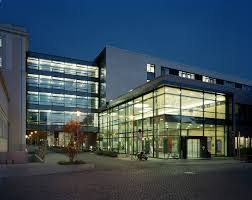
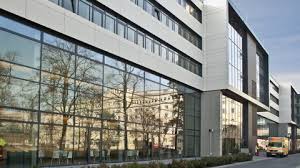
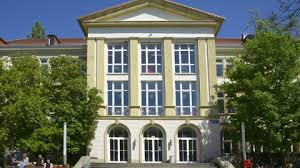
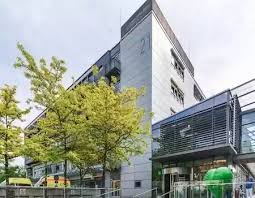
The medical campus is an "innovation mile" in the Johannstadt district, where historic clinic buildings sit alongside glass-and-steel research hubs.
- Medizinisch-Interprofessionelles Trainingszentrum (MITZ): A premier skills lab where students practice everything from basic physical exams to high-stakes emergency simulations in a risk-free environment.
- Telepresence & Robotics: The campus uses mobile Telepresence Robots (TPR), allowing students to virtually attend surgeries or visit sensitive wards when physical presence is restricted.
- Virtual Reality (VR) Autopsy: Dresden is a pioneer in using VR glasses for simulated autopsies, allowing students to learn human anatomy and forensic medicine in a protected, immersive setting.
- OncoRay – Center for Radiation Research: A leading global center for proton therapy and radiation oncology, providing students with exposure to the future of cancer treatment.
- Dresden Integrated Liquid Biobank (DILB): A central facility for sample screening and biobanking, supporting large-scale clinical and genomic studies.
- Paul Langerhans Institute: A dedicated hub for diabetes research, focusing on beta-cell regeneration and innovative metabolic therapies.
- Center for Regenerative Therapies Dresden (CRTD): An Excellence Cluster where clinicians and biologists work on "repairing" the human body using stem cells.
- AMBOSS Partnership: All students and teachers have free, full access to the AMBOSS knowledge database, integrated into the curriculum for exam preparation and clinical decision support.
- National Center for Tumor Diseases (NCT/UCC): A joint venture with the German Cancer Research Center (DKFZ), ensuring students learn oncology at the absolute cutting edge.
- Medical Library (Zweigbibliothek Medizin): A high-tech branch of the SLUB (State and University Library), offering 24/7 digital access and specialized medical databases.
Hospital & Medical Facilities
Leading tertiary care hospital attached to the institution
The Universitätsklinikum Carl Gustav Carus is Dresden’s "Maximum Care" provider:
- Capacity: Over 26 specialized clinics, 4 institutes, and 17 interdisciplinary centers with roughly 1,300 beds.
- Clinical Volume: Treats approximately 60,000 inpatients and 280,000 outpatients annually.
- Reputation: Consistently ranked as one of Germany's most reputable medical facilities by Focus magazine.
- Specialized Units: Home to the only Proton Therapy Center in eastern Germany and a leading center for cochlear implants and robotic surgery.
Fee Structure
State University Affordability
As a public university in Saxony, TU Dresden does not charge tuition fees for the medical degree.
Scholarship
- Deutschlandstipendium: 300 €/month based on grades and social commitment.
- DAAD-STIBET: Graduation scholarships and grants for "Highly Committed" international students.
- CarusCampus Funding: The alumni and support network provides specific grants for student research projects and travel for international PJ segments.
- Graduate Academy Grants: Specialized funding for international students pursuing a doctorate (Dr. med.) in Dresden.
City Details
- The Vibe: Known as the "Florence on the Elbe," Dresden is a stunning mix of Baroque architecture and high-tech "Silicon Saxony" industry. It offers a very high quality of life with extensive parks and the nearby Saxon Switzerland National Park.
- Connectivity:
- Public Transport: Excellent tram and S-Bahn network; the medical campus is a major hub.
- Proximity: Only 2 hours by train to Berlin and 2 hours to Prague (Czech Republic).
- Safety: A safe, vibrant city with a strong international scientific community.
Hostel & Mess
- Accommodation: Managed by Studentenwerk Dresden.
- Student Dorms: Rent is very competitive, ranging from 230 € to 390 €/month. The dorms on Güntzstraße are especially popular for medical students.
- Private Housing: A room in a shared flat (WG) typically costs 350 € – 550 €/month.
- Dining: The Mensa Siedepunkt and Mensa Medizin are located directly on the medical campus, providing subsidized, high-quality meals (approx. 3.50 € – 6.50 €).
Miscellaneous
- APS Certificate: Mandatory for applicants from India, China, and Vietnam.
- Application Portal: Non-EU international students usually apply via the university's internal portal or uni-assist for the preliminary review (VPD).
- Application Period: Ends July 15 for the Winter Semester (the only medical intake).
Collage Images Gallery
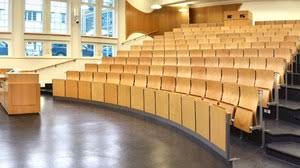
Facilities & Campus Life

Well-equipped Library

Experienced Faculty

Computer Lab

Sports Activities

Heritage Campus


Frequently Asked Questions
Why Consult With Us?
- 15+ years of experience in medical education counseling
- 5000+ students successfully guided
- 50+ partner universities worldwide
- Free initial consultation with no obligation